
Weather forecasts help you time your nitrogen applications more accurately by predicting short-term conditions like rainfall and temperature. When you know upcoming weather patterns, you can prevent nitrogen losses from leaching or volatilization, saving money and protecting the environment. Accurate forecasts also allow you to adjust your fertilization plans proactively, ensuring your crops get nutrients when they need them most. Keep exploring to discover how advanced models improve these decisions even further.
Key Takeaways
- Accurate weather forecasts enable precise timing of nitrogen applications, reducing waste and environmental impact.
- Forecast predictions help farmers adjust fertilization strategies in response to short-term weather changes.
- Advanced models improve forecast reliability, supporting proactive nitrogen management decisions.
- Understanding weather patterns guides mitigation of nitrogen losses from leaching and volatilization.
- Long-term weather trend data aids in developing resilient nitrogen management plans aligned with climate variability.
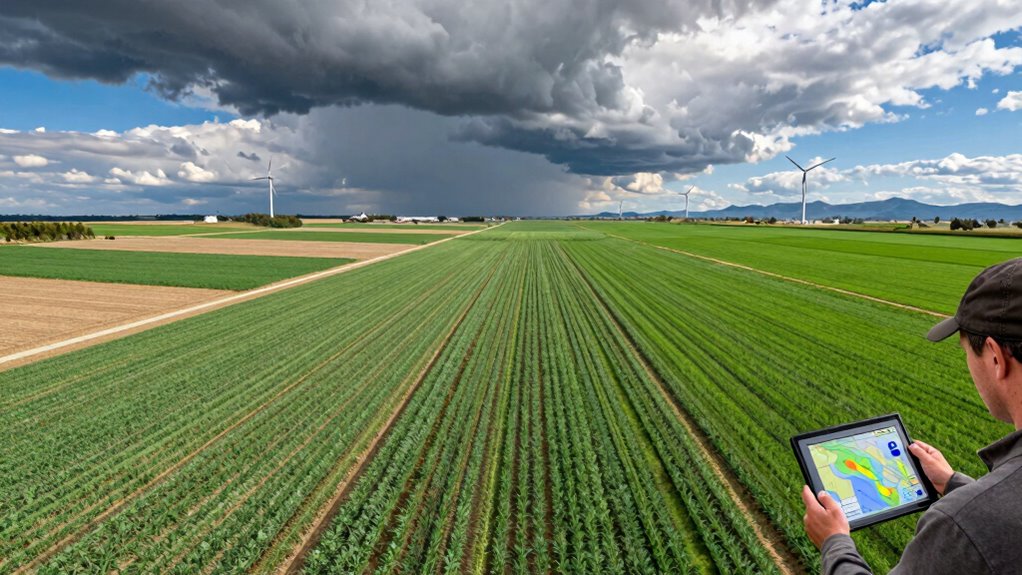
Accurate weather forecasts are essential tools for making informed nitrogen management decisions in agriculture. They help you determine the right timing and amount of nitrogen to apply, guaranteeing your crops get the nutrients they need without waste or environmental harm. As climate variability becomes more pronounced, the importance of reliable weather predictions increases. Unpredictable shifts in temperature, rainfall, and humidity can drastically affect nitrogen availability and uptake. By staying updated on short-term weather patterns, you can adapt your fertilization strategies to minimize leaching or volatilization losses, which are common when weather conditions aren’t ideal. Incorporating weather forecast accuracy improvements into your planning can significantly enhance nitrogen use efficiency. Additionally, understanding climate variability can help you anticipate long-term trends that influence nitrogen management strategies over multiple growing seasons. Leveraging advanced forecasting models can further improve your ability to respond proactively to changing weather conditions, ensuring optimal crop health and productivity. Recognizing the impact of predictable weather patterns can also assist in developing more resilient nitrogen management plans, especially in regions prone to extreme weather events. Moreover, understanding the interplay between weather and soil conditions can provide deeper insights for more precise nitrogen application timing.

Forecasts: A Story of Weather and Finance at the Edge of Disaster (EthnoGRAPHIC)
As an affiliate, we earn on qualifying purchases.
As an affiliate, we earn on qualifying purchases.
Frequently Asked Questions
How Accurate Are Long-Term Weather Forecasts for Agricultural Planning?
Long-term weather forecasts can be quite uncertain, often varying in accuracy beyond a week. You should use them cautiously for agricultural planning, especially for critical tasks like managing soil moisture and pest control. These forecasts help you anticipate rainfall patterns, but since they aren’t always precise, it’s wise to combine them with local observations and flexible strategies to guarantee effective crop management and nitrogen application.
Do Weather Forecasts Account for Local Microclimates Affecting Nitrogen Use?
A stitch in time saves nine, and understanding localized weather matters. Weather forecasts often don’t fully account for microclimate variability, which can substantially impact nitrogen use decisions. Localized weather conditions—like temperature, wind, and moisture—affect how your crops absorb nitrogen. By considering these microclimates, you can fine-tune your fertilizer application, optimize crop growth, and reduce waste. Don’t rely solely on general forecasts; pay attention to your farm’s specific microclimate.
How Do Sudden Weather Changes Impact Nitrogen Application Schedules?
Sudden weather changes, like temperature shifts or unexpected rain, can disrupt your nitrogen application schedule. If rain is predicted, you might delay or reduce your nitrogen application to prevent runoff and leaching. Temperature fluctuations also influence soil absorption rates and plant uptake. Staying updated with real-time weather forecasts helps you adapt quickly, ensuring best nitrogen use, minimizing waste, and protecting environmental health.
Are There Technological Tools That Integrate Weather Data With Nitrogen Management?
Imagine a control room where your fields’ health is mapped in real-time; yes, there are technological tools like remote sensing and data analytics that seamlessly integrate weather data with nitrogen management. These tools provide precise, timely insights, helping you adjust application plans based on upcoming weather patterns. They turn complex weather forecasts into actionable strategies, ensuring your nitrogen use is optimized, efficient, and environmentally responsible.
How Does Climate Variability Influence Future Nitrogen Decision Strategies?
Climate variability prompts you to develop resilient nitrogen strategies by adapting to changing weather patterns. You should monitor long-term climate trends and incorporate flexible plans that respond to unpredictable conditions. By emphasizing weather adaptation, you can optimize nitrogen use, minimize waste, and maintain crop productivity despite climate challenges. This proactive approach enhances climate resilience, ensuring your farming practices remain sustainable and effective in the face of future climate fluctuations.
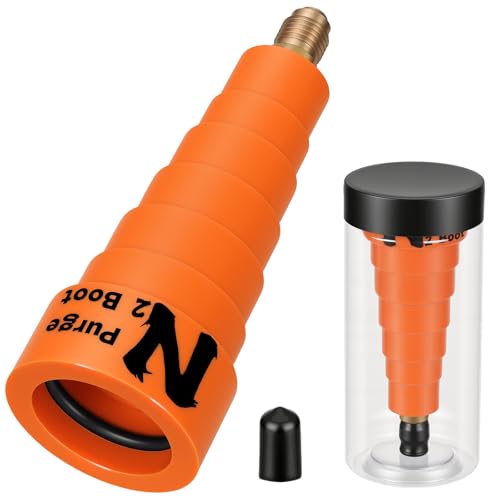
Nitrogen Purge Boot for HVAC Brazing – Hands-Free Nitrogen Purge Tool
- Hands-Free Nitrogen Purging: Stable seal for cleaner brazes
- Air-Tight O-Ring Seal: Prevents air infiltration during brazing
- Standard 1/4” SAE Connection: Quick and easy setup
As an affiliate, we earn on qualifying purchases.
As an affiliate, we earn on qualifying purchases.
Conclusion
By paying close attention to weather forecasts, you can steer your nitrogen decisions like a captain maneuvering through shifting seas. Accurate forecasts act as your compass, guiding you to apply fertilizer at the right moment and avoid wastage or environmental harm. When you harness the power of weather insights, you turn unpredictable skies into a strategic ally, ensuring your crop’s health and your farm’s sustainability sail smoothly toward success.
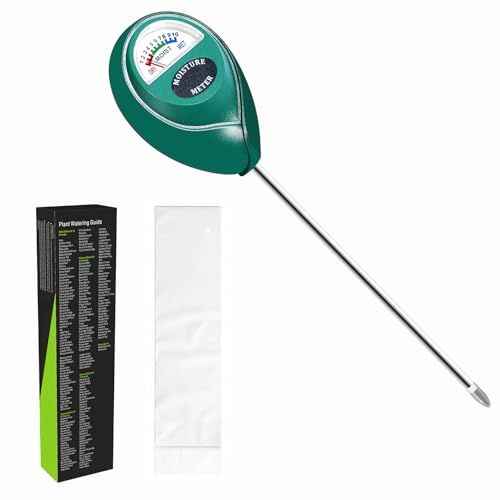
XLUX Plant Soil Moisture Meter, for Indoor and Outdoor use, Battery-Free
- Trusted Since 2015: Reliable and accurate soil moisture readings
- Battery-Free Design: No batteries or charging required
- Deep Root Zone Measurement: Probes soil at root level for accuracy
As an affiliate, we earn on qualifying purchases.
As an affiliate, we earn on qualifying purchases.
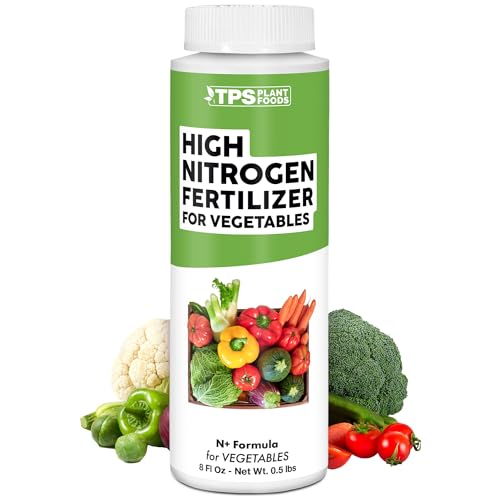
High Nitrogen Vegetable Fertilizer – Promotes Lush Growth, 8 oz
- High Nitrogen Content: Supports lush leafy growth
- Promotes Healthy Development: Maintains balanced plant vitality
- Suitable for Vegetables: Ideal for greens, herbs, and vegetables
As an affiliate, we earn on qualifying purchases.
As an affiliate, we earn on qualifying purchases.