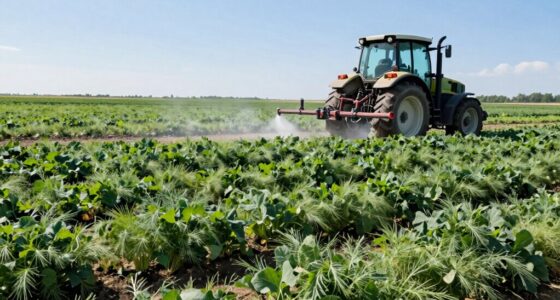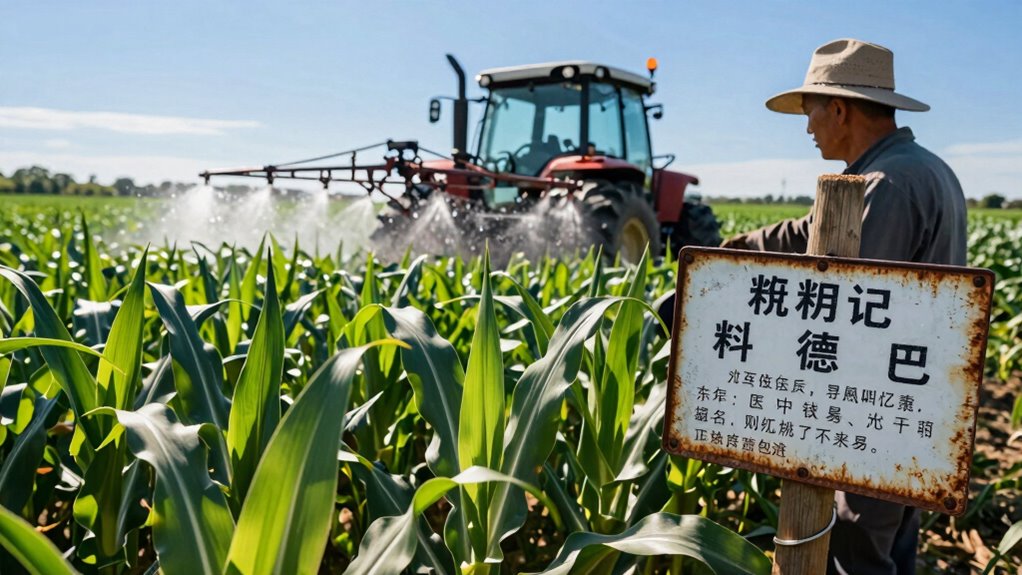

Many farmers believe organic methods can’t supply enough nitrogen, but cover crops like legumes naturally fix atmospheric nitrogen, providing a steady supply. Compost releases nutrients gradually without causing spikes, and proper soil management improves nutrient cycling. Practices like crop rotation and soil testing help tailor organic inputs for better results. If you keep an open mind, you’ll discover how these sustainable techniques can meet your nitrogen needs effectively and benefit your soil’s health in the long run.

Prime made for students and young adults
- Fast, free delivery for dorm and study essentials
- Prime Video and Amazon Music included
- Member-only deals
Key Takeaways
- Many farmers believe synthetic nitrogen fertilizers are always necessary, overlooking organic methods like cover crops and compost for nitrogen supply.
- Some assume organic nitrogen sources can’t meet crop needs, despite evidence that legumes and composts can provide sufficient nutrients.
- There’s a misconception that nitrogen fixation by cover crops is too slow to support high crop yields.
- Farmers often think soil testing isn’t essential, leading to improper organic nutrient management.
- Belief persists that organic methods take longer to show results, causing reluctance to adopt sustainable nitrogen practices.
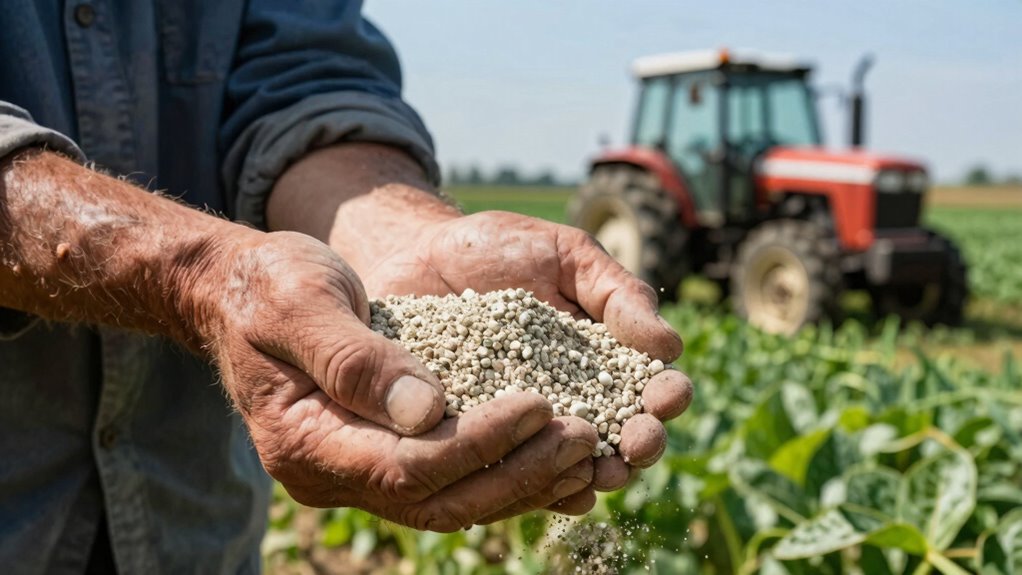
Many farmers believe that organic alternatives won’t provide enough nitrogen or that they’re too complicated to implement. However, with proper planning, integrating cover crops like legumes or applying compost can greatly boost nitrogen levels naturally. Cover crops fix atmospheric nitrogen, converting it into a form usable by your main crops, while compost slowly releases nutrients, providing a steady supply of nitrogen without the spikes and crashes typical of chemical fertilizers. These practices not only help maintain soil health but also reduce your dependence on external inputs, cutting costs and increasing sustainability. Additionally, understanding the soil nutrient cycle can help farmers optimize their use of organic methods for better long-term results. Recognizing the importance of soil health is crucial for sustainable farming, as healthy soil supports efficient nutrient cycling and crop resilience. Implementing organic fertilization techniques can further enhance nutrient availability and foster a more resilient farming system. Using practices like crop rotation and composting also supports the soil structure, which is vital for healthy root development and nutrient uptake. Moreover, adopting soil testing can provide precise information about nutrient needs, ensuring that organic methods are effectively tailored to your farm’s specific conditions.
organic cover crop seeds for nitrogen fixation
As an affiliate, we earn on qualifying purchases.
As an affiliate, we earn on qualifying purchases.
Frequently Asked Questions
How Does Nitrogen Fertilizer Impact Soil Health Long-Term?
Nitrogen fertilizer can impact your soil health long-term by disrupting soil microbial communities, which are crucial for nutrient cycling. Overuse may reduce microbial diversity, impairing natural nutrient breakdown and uptake. This can lead to soil degradation, decreased fertility, and increased dependency on chemical inputs. To maintain healthy soil, balance nitrogen application and promote microbial activity through organic matter addition, ensuring sustainable nutrient cycling and long-term soil resilience.
Are Organic Fertilizers a Better Alternative to Nitrogen-Based Ones?
Organic fertilizers often provide better organic benefits like improving soil structure, enhancing microbial activity, and releasing nutrients slowly. Fertilizer comparisons show that organic options tend to be more sustainable long-term and reduce environmental risks. While nitrogen-based fertilizers can boost immediate crop growth, organic fertilizers support soil health over time. You should consider your soil needs and crop goals to choose the best fertilizer type for sustainable farming.
Can Overuse of Nitrogen Fertilizer Cause Environmental Pollution?
Overusing nitrogen fertilizer can definitely cause environmental pollution. Think of it like pouring too much dye into a river—excess nitrogen runoff and fertilizer leaching contaminate water sources, harming ecosystems. When you overapply, nitrogen escapes into the environment, leading to issues like algal blooms and groundwater contamination. Proper application minimizes these risks, protecting both your crop yield and the health of surrounding ecosystems.
What Are the Signs of Nitrogen Deficiency in Crops?
If your crops show leaf discoloration, especially yellowing, and experience stunted growth, they likely suffer from nitrogen deficiency. You might notice older leaves turning pale or yellow first, as nitrogen moves upwards in the plant. This deficiency hampers overall development, resulting in weak stems and reduced yields. To confirm, consider testing your soil’s nitrogen levels and adjust your fertilization practices accordingly to promote healthy, vigorous crop growth.
Is There a Universal Optimal Amount of Nitrogen Fertilizer for All Crops?
There isn’t a universal ideal amount of nitrogen fertilizer for all crops because it varies based on crop type, soil conditions, and environmental factors. Applying too much can harm crop yield and reduce fertilizer efficiency, while too little limits growth. To maximize crop yield, you should tailor your nitrogen application to specific crop needs and soil tests, ensuring efficient use of fertilizer for healthy, productive plants.
As an affiliate, we earn on qualifying purchases.
Conclusion
So, next time you hear that more nitrogen means endless green fields or that you should dump fertilizer in every rainstorm, remember these myths are just as outdated as your grandma’s wireless phone. Don’t fall for the hype—your crops, wallet, and the planet will thank you. After all, who needs scientific facts when you can trust old wives’ tales? Just keep fertilizing blindly and hope for the best—what could possibly go wrong?
As an affiliate, we earn on qualifying purchases.
legume seeds for nitrogen fixing
As an affiliate, we earn on qualifying purchases.
As an affiliate, we earn on qualifying purchases.
Fall Picks
fall essentials
As an affiliate, we earn on qualifying purchases.