Plant Growth Regulators in greenhouse production help you optimize plant growth, improve crop quality, and guarantee uniformity. By applying hormones through sprays, drenches, or injections at the right times, you can control flowering, fruiting, and elongation. Environmental factors like temperature and light also impact how these PGRs work. Monitoring plant responses allows you to adjust methods for better results. Keep exploring to discover more ways these tools can boost your greenhouse success.
Key Takeaways
- PGRs optimize plant growth, flowering, and fruiting, enhancing crop quality and uniformity in greenhouse production.
- Proper application methods and timing are crucial for effective PGR performance and desired growth responses.
- Environmental factors like temperature and light influence PGR absorption and efficacy.
- Regular monitoring allows for adjustments, ensuring optimal hormone effects and crop outcomes.
- Understanding PGR functions enables precise use for higher yields and improved crop quality.

Plant growth regulators (PGRs) play a vital role in optimizing greenhouse production by controlling plant development and improving crop quality. When you apply hormones through PGRs, you’re fundamentally directing how your plants grow, flower, and fruit. The key to successful greenhouse management lies in understanding hormone application and guaranteeing PGR effectiveness. Properly timed and accurate hormone application can lead to more uniform growth, stronger plants, and better yields. You need to know which PGRs to use for specific outcomes—whether you’re aiming to inhibit excessive elongation, promote flowering, or enhance fruit set.
Effective PGR use ensures healthier, more uniform crops with improved yields and quality.
The effectiveness of PGRs depends largely on how you apply them. For example, foliar sprays, drenches, or trunk injections each have different levels of absorption and influence on plant tissues. When you focus on optimizing PGR effectiveness, you guarantee that the hormone reaches its target site in the right concentration, at the right time. Misapplication or incorrect dosage can diminish results or even cause undesirable effects like stunted growth or uneven development. Hence, understanding the precise timing for hormone application is vital. For instance, applying gibberellins too early might lead to overly tall, weak plants, while late application can fail to promote desired stem elongation.
You should also consider environmental factors such as temperature, humidity, and light, which can influence how PGRs behave once applied. These factors affect hormone uptake and translocation within the plant, impacting overall PGR effectiveness. Using the correct concentration and application method tailored to your crop’s growth stage maximizes benefits. For example, in tomato production, applying cytokinins at specific stages can boost fruit size and quality, but only if the hormone is effectively absorbed and transported within the plant tissues. Environmental conditions can further influence hormone efficacy and should be carefully managed. Recognizing how plant physiology interacts with external factors can help refine application techniques and improve outcomes. Additionally, understanding plant growth regulators and their specific functions enables precise application strategies that align with crop development needs.
Consistently monitoring your plants’ responses helps you gauge the success of hormone application and PGR effectiveness. Adjustments based on observed growth patterns and crop responses ensure you get the most out of your PGR use. Proper training and adherence to guidelines provided by manufacturers will help you fine-tune your application techniques. Ultimately, the goal is to harness the full potential of PGRs to produce healthier, more uniform crops with higher yields and better quality. When you master hormone application and guarantee PGR effectiveness, you set the foundation for a highly productive and efficient greenhouse operation. Recognizing the role of environmental conditions can further enhance how PGRs perform in your growing environment.
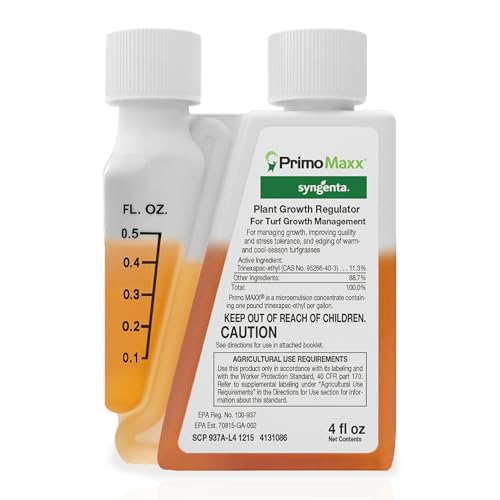
Primo Maxx Plant Growth Regulator
- Eases maintenance of tough turf areas: Reduces need for edging and mowing
- Enhances drought resistance: Multiple applications lower water usage
As an affiliate, we earn on qualifying purchases.
As an affiliate, we earn on qualifying purchases.
Frequently Asked Questions
Are Plant Growth Regulators Safe for Human Health?
Plant growth regulators are generally safe for human health when used according to regulatory standards. While there’s a potential health risk if misused or handled improperly, proper safety measures minimize this risk. Regulatory agencies set strict guidelines to guarantee safe application. If you follow these standards and handle the chemicals responsibly, you reduce the chances of health issues, making their use in greenhouse production relatively safe for you.
How Do PGRS Affect Plant Nutrient Uptake?
Plant growth regulators (PGRs) influence nutrient uptake by affecting root absorption and hormonal balance. When you apply PGRs, they can enhance root development, allowing plants to absorb nutrients more efficiently. They also modify hormonal signals, which regulate how plants allocate nutrients. As a result, PGRs can improve overall nutrient use, promoting healthier growth. However, improper use might disrupt hormonal balance, potentially leading to reduced nutrient uptake or growth issues.
Can PGRS Be Used on Organic Greenhouse Crops?
You can use PGRs on organic greenhouse crops, but you must consider organic certification standards first. Not all PGRs are approved for organic use, so check labels and regulations carefully. Timing of application is essential; applying at the right growth stage maximizes benefits and minimizes concerns. If you select approved PGRs and follow proper timing, you can effectively manage plant growth while maintaining your organic status.
What Are the Environmental Impacts of PGR Runoff?
Runoff of plant growth regulators can cause environmental contamination, affecting nearby water sources and soil health. When PGRs enter ecosystems, they may disrupt plant growth and harm aquatic life, leading to ecosystem disruption. You should minimize runoff by applying PGRs carefully, using buffer zones, and following proper application guidelines. This way, you protect the environment from potential negative impacts and maintain ecological balance.
How Do PGRS Influence Flowering Timing?
Plant growth regulators influence flowering timing through hormone manipulation, helping you achieve flowering synchronization. By adjusting levels of hormones like gibberellins or auxins, PGRs can accelerate or delay flowering, guaranteeing plants bloom at the right time. This control allows you to coordinate flowering for market demands or aesthetic purposes, improving greenhouse efficiency. Proper use of PGRs ensures uniform flowering and better crop management, ultimately boosting your production quality and schedule.

Trifecta Crop Control Super Concentrate | 4 oz
- Natural Pest and Mold Solution: Protects against mildew, mites, and mold
- Highly Concentrated Formula: Mixes with water to make 1 gallon spray
- Easy to Use: Simple mixing and spraying process
As an affiliate, we earn on qualifying purchases.
As an affiliate, we earn on qualifying purchases.
Conclusion
Incorporating plant growth regulators in greenhouse growing grants you greater growth, guiding plants gracefully from germination to glory. By balancing blooms and boosting buds, you build a better, brighter botanical bounty. Mastering methods, managing moisture, and manipulating mechanisms maximizes your mastery over marvelous, mesmerizing plants. With wisdom and wit, you wield these wondrous regulators, working wisely to welcome wonderful, winning results. Your greenhouse growth gains greatness, growing greener and grander with each guided step.

Vegetables Love Flowers: Companion Planting for Beauty and Bounty
As an affiliate, we earn on qualifying purchases.
As an affiliate, we earn on qualifying purchases.
Primo Maxx Plant Growth Regulator
- Eases maintenance of tough turf areas: Reduces need for edging and mowing
- Enhances drought resistance: Multiple applications lower water usage
As an affiliate, we earn on qualifying purchases.
As an affiliate, we earn on qualifying purchases.