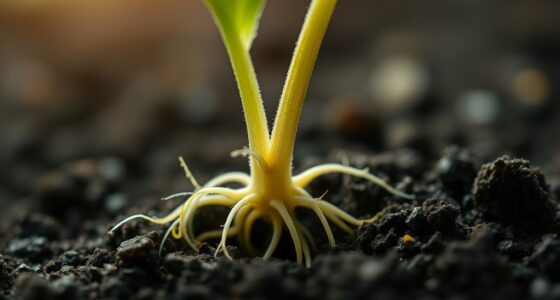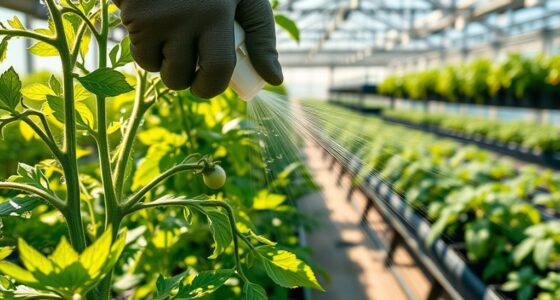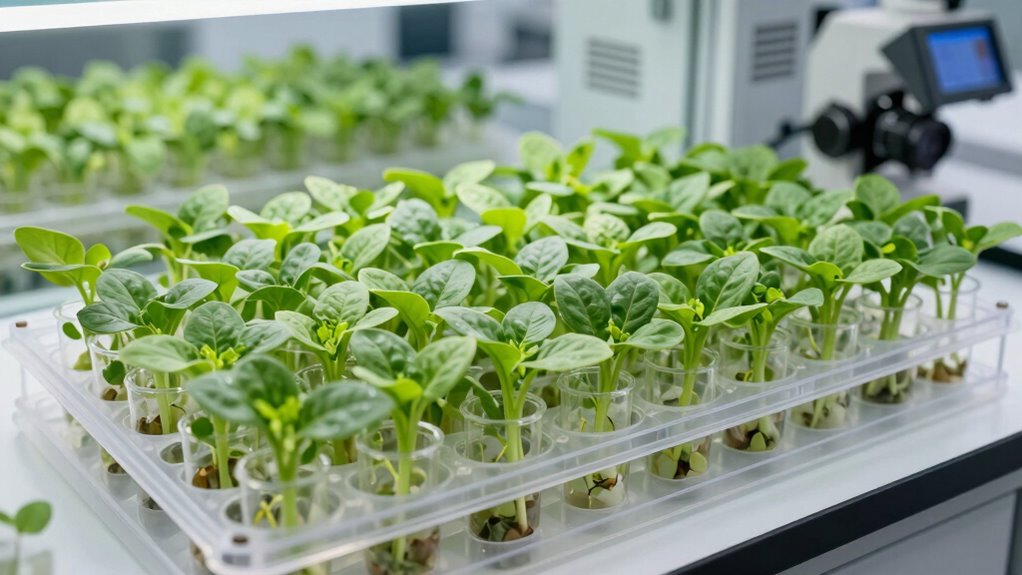

Plant tissue culture racks are essential for maintaining a sterile and controlled environment to propagate plants successfully. They feature adjustable lighting to optimize growth, sealed structures with HEPA filters to prevent contamination, and materials that withstand sterilization processes. Proper design ensures good air circulation and easy cleaning, reducing risks of contamination. Implementing these features helps you achieve healthy, consistent cultures. Keep exploring to discover how to maximize your tissue culture success with effective rack setups.
Listen free for 30 days with Audible
Thousands of audiobooks and originals — cancel anytime.
As an affiliate, we earn on qualifying purchases.
Key Takeaways
- Racks are designed with sterilizable materials and sealed environments to maintain contamination-free tissue culture conditions.
- Adjustable LED lighting systems optimize light quality, intensity, and duration for healthy plant tissue development.
- HEPA filtration and proper air circulation reduce airborne pathogens, ensuring sterile propagation environments.
- Strict sterilization protocols for tools, media, and workspace are essential for preventing contamination.
- Environmental controls and monitoring ensure consistent conditions, promoting reliable and high-quality tissue culture growth.
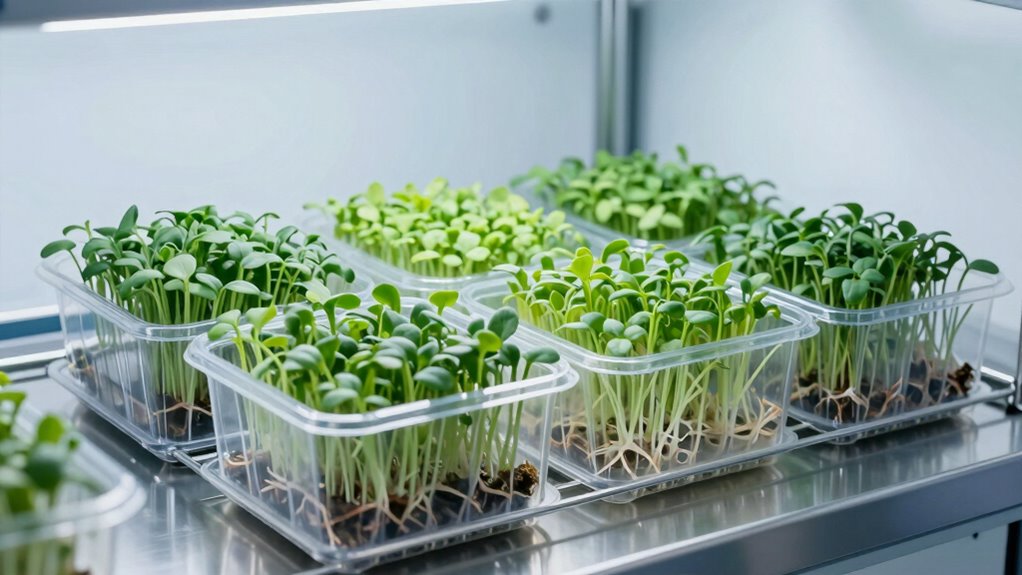
Have you ever wondered how scientists efficiently grow and organize delicate plant tissues in a controlled environment? It all comes down to carefully designed plant tissue culture racks that optimize every factor influencing growth. One of the most critical aspects is lighting optimization. You need to provide the right amount and quality of light to ensure healthy tissue development. Too much light can cause stress or abnormal growth, while too little hampers photosynthesis and slows down propagation. Modern racks are equipped with adjustable LED lighting systems that allow you to fine-tune intensity, spectrum, and duration, creating ideal conditions for each plant species. These lighting controls help promote uniform growth and reduce variability, which is crucial for consistent results in tissue culture. Proper lighting control is essential for achieving reliable and high-quality propagation outcomes.
Contamination control is equally essential in maintaining healthy cultures. When working with fragile plant tissues, even a tiny contamination can ruin an entire batch. That’s why your tissue culture racks are designed with features that minimize the risk of contamination. Sealed environments, HEPA filters, and sterilizable surfaces are common components that keep airborne spores, bacteria, and fungi at bay. You also need to follow strict sterilization protocols for tools, media, and workspace to prevent introducing contaminants. The racks themselves are often made from materials like stainless steel or autoclavable plastics, which withstand sterilization procedures without degrading. Proper air circulation within the racks ensures fresh, clean air reaches the tissues while preventing dead zones where contaminants could settle. Incorporating contamination prevention measures helps safeguard your cultures and maintain a sterile environment throughout the propagation process. Additionally, understanding the importance of cleanroom standards can further enhance contamination control in tissue culture labs. Implementing proper sterilization techniques and regular monitoring can significantly reduce contamination risks, ensuring healthy culture growth. Maintaining a sterile environment is also aided by air filtration systems, which remove airborne particles and microbes from the workspace.
plant tissue culture rack with adjustable LED lighting
As an affiliate, we earn on qualifying purchases.
As an affiliate, we earn on qualifying purchases.
Frequently Asked Questions
What Are the Most Common Materials Used for Tissue Culture Racks?
You’ll find that common materials for tissue culture racks include plastics like polypropylene and polycarbonate because of their material durability and resistance to chemicals. Metal racks, such as stainless steel, are also popular due to their strength and longevity. When choosing, consider rack design compatibility with your workspace and needs, ensuring it provides proper support and accessibility. These materials help maintain a clean, durable, and efficient environment for tissue culture propagation.
How Do Racks Prevent Contamination During Propagation?
Think of racks as guardians standing guard over your plants, shielding them from contamination sources like airborne particles and microbes. They prevent contamination by using sterilization techniques such as autoclaving or chemical disinfectants, ensuring every surface is pristine. This way, your tissue cultures stay safe from unwanted invaders, allowing healthy growth. Properly sterilized racks act as a fortress, maintaining a sterile environment essential for successful propagation.
Are There Eco-Friendly Alternatives to Plastic Tissue Culture Racks?
Yes, you can opt for eco-friendly materials like bamboo, recycled plastics, or biodegradable plastics as alternatives to traditional plastic tissue culture racks. These materials promote sustainable design and reduce environmental impact. By choosing these eco-friendly options, you help diminish plastic waste while maintaining effective propagation systems. Incorporating sustainable design principles ensures your plant tissue culture practices are more environmentally responsible and compatible with eco-conscious gardening or research initiatives.
How Often Should Tissue Culture Racks Be Disinfected?
You should disinfect tissue culture racks after each use to keep your work sterile and prevent contamination. Follow proper sterilization procedures, like soaking in disinfectant or autoclaving if the racks are durable enough. Racks with high durability can withstand more rigorous cleaning, but always guarantee thorough sterilization. Think of it as giving your racks a fresh start—regular cleaning keeps your tissue culture environment healthy and productive.
Can Racks Be Customized for Different Plant Species?
Yes, racks can be customized for different plant species. You can opt for custom rack designs that cater to specific needs, such as varying sizes, shapes, or airflow requirements. Species-specific configurations help optimize growth conditions and improve efficiency. By customizing racks, you guarantee each plant receives the right amount of light, humidity, and space, ultimately enhancing your tissue culture results and making propagation more effective and tailored to each plant’s unique needs.
sterilizable plant tissue culture rack
As an affiliate, we earn on qualifying purchases.
As an affiliate, we earn on qualifying purchases.
Conclusion
Think of your plant tissue culture racks as the nurturing cradle where tiny life begins. Just like a gardener carefully tends young seedlings, you provide the perfect environment for growth and development. When you optimize your racks, you’re planting the seeds for a thriving future—much like a single, well-placed seed can grow into a lush garden. With careful attention, your controlled propagation becomes a powerful tool for cultivating a greener, healthier world.
HEPA filter plant propagation chamber
As an affiliate, we earn on qualifying purchases.
As an affiliate, we earn on qualifying purchases.
autoclavable plant tissue culture container
As an affiliate, we earn on qualifying purchases.
As an affiliate, we earn on qualifying purchases.
Fall yard work Picks
leaf blowers
As an affiliate, we earn on qualifying purchases.