Anatomy models for students vary widely: some make organ placement tangible, while others focus on bones, muscles, or review away from a desk. I name the Learning Resources Anatomy Models Bundle Set my best overall pick for its broad range of physical learning aids. The EVOTECH SCIENTIFIC 17-Inch Human Torso stands out for students who want removable parts, while the EVOTECH SCIENTIFIC 67-Inch Skeleton suits learners who need a full-size reference. The main tradeoffs are anatomical breadth versus detail, portability versus scale, and hands-on assembly versus text-based practice. Read on for the full breakdown and guidance on matching a model to a student’s age, coursework, and study space.

Prime made for students and young adults
- Fast, free delivery for dorm and study essentials
- Prime Video and Amazon Music included
- Member-only deals
Key Takeaways
- Different formats teach different things: torso models help explain organ placement, skeletons clarify bone structure, and the Kaplan coloring book supports label practice and recall.
- The Learning Resources bundle is the broadest starting point: its multi-model approach serves students comparing body systems, while a single torso offers more focused study.
- Removable parts are useful only when the student will use them: the 16-part EVOTECH torso offers hands-on exploration, but simpler models may be easier for quick review.
- Full-size scale comes with a space tradeoff: the 67-inch EVOTECH skeleton and Breesky life-size skeleton provide a larger visual reference than compact desk models, but need room for display and storage.
- Small study tools serve a different job: the anatomy cube and coloring book are portable review aids, not substitutes for a three-dimensional torso or skeleton.
| Learning Resources Anatomy Models Bundle Set |  | Best Multi-System Starter Set | Included models: Heart, brain, body, and skeleton | Set size: 4 models | Material: Plastic | VIEW LATEST PRICE | See Our Full Breakdown |
| Be Amazing! Toys Interactive Human Body Anatomy Figure, 60 Pieces, Ages 8+ |  | Best for Hands-On Body-System Assembly | Height: 14 inches | Pieces: 60 | Age range: 8+ | VIEW LATEST PRICE | See Our Full Breakdown |
| EVOTECH SCIENTIFIC 15-Piece Human Torso Anatomy Model, 11 Inch |  | Best Compact Removable-Organ Torso | Model type: Human torso | Height: 11 inches | Removable pieces: 15 | VIEW LATEST PRICE | See Our Full Breakdown |
| Human Skeleton Model for Anatomy: 17.7-inch with Movable Arms and Legs |  | Best Compact Skeleton Display | Model type: Human skeleton | Height: 17.7 inches | Base dimensions: 4.75 × 4.75 inches | VIEW LATEST PRICE | See Our Full Breakdown |
| Kaplan Anatomy Coloring Book with 450+ Realistic Medical Illustrations and Quizzes |  | Best for Exam-Focused Visual Review | Format: Anatomy coloring book | Illustrations: 450+ realistic medical illustrations | Study features: Quizzes for each illustration | VIEW LATEST PRICE | See Our Full Breakdown |
| EVOTECH SCIENTIFIC Disarticulated Human Skeleton Model, 67 Inch Full Size |  | Best for Full-Scale Bone Study | Brand: EVOTECH SCIENTIFIC | Height: 67 inches | Scale: 1:1 full size | VIEW LATEST PRICE | See Our Full Breakdown |
| NLShan 17″ Human Skeleton Anatomy Model with Movable Arms, Legs & Display Stand | 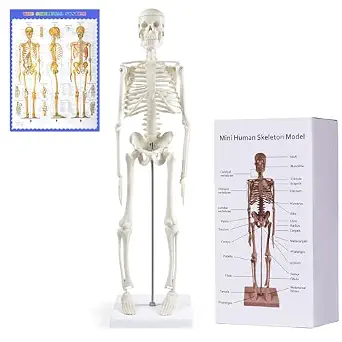 | Best for Learning Skeleton Movement | Manufacturer: NLShan | Height: 17.7 inches | Base size: 4.75 x 4.75 inches | VIEW LATEST PRICE | See Our Full Breakdown |
| 15-Piece Detachable Human Body Anatomy Model (11 Inches) |  | Best Compact Organ Study Model | Height: 11 inches | Piece count: 15 | Material: Plastic | VIEW LATEST PRICE | See Our Full Breakdown |
| Human Anatomical Body Skeleton Heart Skull with Brain Models and Cubes Set |  | Best for a Multi-Model Study Station | Skeleton height: 17.7 inches | Torso height: 11 inches | Heart height: 8 inches | VIEW LATEST PRICE | See Our Full Breakdown |
| EVOTECH SCIENTIFIC 17-Inch Human Torso Anatomy Model, 16 Removable Parts |  | Best for Broad Internal Anatomy Study | Height: 17 inches | Removable parts: 16 | Material: Non-toxic PVC | VIEW LATEST PRICE | See Our Full Breakdown |
| Breesky Life-Size Human Skeleton Model with Nervous System and Rolling Stand |  | Best for Full-Scale Skeletal Study | Brand: Breesky | Material: Polyvinyl Chloride (PVC) | Height: 70.8 inches | VIEW LATEST PRICE | See Our Full Breakdown |
| Science Can Interactive Human Body Anatomy Model for Kids |  | Best for Young Beginners | Brand: Science Can | Age range: 6–12 years | Dimensions: 11 inches | VIEW LATEST PRICE | See Our Full Breakdown |
| Human Anatomy Study Cube |  | Best Compact Review Aid | Brand: Kits of Medicine | Material: Plastic | Dimensions: 2.76 × 2.76 × 2.76 inches (7 × 7 × 7 cm) | VIEW LATEST PRICE | See Our Full Breakdown |
| Human Body Deluxe Musculature Model, 17 Inch Torso with 16 Removable Parts |  | Best for Detailed Torso Study | Brand: NEW HORIZON | Material: Non-toxic PVC | Base material: Oak wood | VIEW LATEST PRICE | See Our Full Breakdown |
| EVOTECH SCIENTIFIC Human Anatomy Model Set: Body, Skeleton, Heart, and Half-Size Skull with Brain |  | Best Multi-Model Study Set | Brand: EVOTECH SCIENTIFIC | Included models: Human body, skeleton, heart, and half-size skull with brain | Skeleton height: About 17.7 inches | VIEW LATEST PRICE | See Our Full Breakdown |
| anatomy models for student | Material | Height |
|---|---|---|
| Learning Resources Anatomy Mod | Plastic | — |
| Be Amazing! Toys Interactive H | Hard plastic | 14 inches |
| EVOTECH SCIENTIFIC 15-Piece Hu | Non-toxic PVC | 11 inches |
| Human Skeleton Model for Anato | Plastic (implied) | 17.7 inches |
| Kaplan Anatomy Coloring Book w | — | — |
| EVOTECH SCIENTIFIC Disarticula | PVC plastic | 67 inches |
| NLShan 17" Human Skeleton Anat | Non-toxic PVC | 17.7 inches |
| 15-Piece Detachable Human Body | Plastic | 11 inches |
| Human Anatomical Body Skeleton | — | — |
| EVOTECH SCIENTIFIC 17-Inch Hum | Non-toxic PVC | 17 inches |
| Breesky Life-Size Human Skelet | Polyvinyl Chloride (PVC) | 70.8 inches |
| Science Can Interactive Human | — | — |
| Human Anatomy Study Cube | Plastic | — |
| Human Body Deluxe Musculature | Non-toxic PVC | — |
| EVOTECH SCIENTIFIC Human Anato | Plastic | — |
More Details on Our Top Picks
Learning Resources Anatomy Models Bundle Set
For students who need a broad introduction rather than a single detailed model, this set pairs a heart, brain, body, and skeleton in one four-model package. The hinged heart and movable skeleton joints give learners parts to handle and inspect, while the display stands help keep each model ready for a classroom or homeschool lesson. Compared with the Be Amazing! Toys Interactive Human Body Anatomy Figure, this set spreads attention across four separate models instead of concentrating removable bones, muscles, and organs in one articulated figure. That variety is useful for short demonstrations, but it offers less detail about how body systems fit together. Its plastic construction and age recommendation of 8 years and up also make it a better fit for school-age learners than preschoolers. Choose it for breadth; skip it if you need advanced anatomical detail.
Pros:- Four models cover the heart, brain, body, and skeleton in one set.
- Movable skeleton joints and hinged heart sections invite hands-on exploration.
- Display stands support classroom presentation and storage between lessons.
- Suitable for classroom, homeschool, or individual study.
Cons:- The set’s breadth may come at the expense of fine anatomical detail.
- The age recommendation of 8 years and up rules it out for younger children.
Best for: Teachers and homeschool families introducing anatomy to learners aged 8 and up who want several body systems available for hands-on lessons.
Not ideal for: Older students seeking detailed, exam-level anatomy or buyers who need a single model that shows many organs assembled within one body.
- Included models:Heart, brain, body, and skeleton
- Set size:4 models
- Material:Plastic
- Interactive features:Movable skeleton joints and hinged heart sections
- Display:Display stands included
- Recommended age:8 years and up
Our verdict“Choose this set for a school-age learner who benefits from exploring several anatomy models, not for advanced study of one system.”
Be Amazing! Toys Interactive Human Body Anatomy Figure, 60 Pieces, Ages 8+
This 14-inch articulated figure puts removable bones, muscles, and organs in one model, making it a stronger choice for learners who want to take a body apart and rebuild it. Its 60 pieces, adjustable stand, and illustrated instruction cards give students a guided activity as well as a displayable figure. Compared with the Learning Resources Anatomy Models Bundle Set, it concentrates on one human body rather than offering separate heart, brain, and skeleton models; that makes system-by-system assembly more cohesive, but gives less variety for independent demonstrations. Hard plastic construction suits repeated handling, though the number of small parts can make setup and keeping the set together more demanding. It is designed for ages 8 and up, so younger children may need adult help. Pick it for interactive assembly, not for a low-piece-count model.
Pros:- Removable bones, muscles, and organs support active exploration.
- Sixty pieces provide a more involved assembly activity than a fixed model.
- Articulated, poseable design can be positioned for demonstrations.
- Adjustable stand and illustrated instruction cards are included.
Cons:- The many removable pieces may take time to organize and reassemble.
- At 14 inches, it offers less scale for group viewing than a full-size skeleton.
- The 8+ age guidance makes it less suited to younger learners without supervision.
Best for: Students aged 8 and up who learn by assembling and removing body parts, especially in a supervised classroom or homeschool activity.
Not ideal for: Younger children or students who want a simple, quick-to-set-up display model with fewer loose pieces.
- Height:14 inches
- Pieces:60
- Age range:8+
- Model type:Articulated, poseable human body
- Removable parts:Bones, muscles, and organs
- Included accessories:Adjustable stand and illustrated instruction cards
- Material:Hard plastic
Our verdict“Pick this figure for school-age students who want to assemble a body model, rather than a set of separate system models.”
EVOTECH SCIENTIFIC 15-Piece Human Torso Anatomy Model, 11 Inch
With 15 removable pieces in an 11-inch torso, this model gives students a compact way to explore organ placement without taking up much desk space. The included brain, heart, lungs, stomach, liver, and other components make it more focused on internal anatomy than the Human Skeleton Model for Anatomy, which centers on bones and movable limbs. Its oak-wooden base supports display, while the educational brochure adds a reference for guided study. The tradeoff is scale: small organs can be harder to handle and inspect than larger components, and the listed 14+ age recommendation makes this less appropriate for younger learners. Some parts may also need assembly. I’d choose it for a student with limited space who wants removable organs, but not as the main model for a young-child lesson or group viewing.
Pros:- Fifteen removable pieces let students examine organ placement hands-on.
- Compact 11-inch size is practical for desks and classroom storage.
- Oak-wooden base supports stable display.
- Educational brochure is included for study support.
Cons:- Small organ pieces may be difficult to handle and pose a choking risk to young children.
- The 14+ age recommendation limits its suitability for younger students.
- Some components may require assembly.
Best for: Students aged 14 and up who need a small desk or classroom model for studying the location of removable internal organs.
Not ideal for: Younger children, large-group demonstrations, or learners who want a full skeleton or larger-scale anatomical parts.
- Model type:Human torso
- Height:11 inches
- Removable pieces:15
- Material:Non-toxic PVC
- Included components:Trunk, brain, heart, esophagus and aorta, lungs, skull cap, stomach, diaphragm, liver, pancreas and spleen, and intestines
- Base:Oak-wooden base
- Included learning material:Educational brochure
- Recommended age:14 years and up
Our verdict“Choose this compact torso for older students studying organ placement at a desk, but not for young learners or large-group viewing.”
Human Skeleton Model for Anatomy: 17.7-inch with Movable Arms and Legs
This 17.7-inch skeleton is the straightforward pick for students who need to see basic bone structure and demonstrate limb movement without storing a full-size model. Its movable arms and legs, removable skull cap, and 4.75-inch-square base make it a portable display option. Compared with the Learning Resources Anatomy Models Bundle Set, it gives more room to focus on the skeleton but leaves out the heart, brain, and other systems. That narrow scope is useful for a basic bone lesson, yet its limited anatomical complexity makes it less suitable for detailed study. The small scale also reduces visibility in group instruction. While the skull cap opens access to the skull, it may affect stability when handled. I’d select it for compact demonstrations, not as a substitute for a detailed or full-size skeleton.
Pros:- Movable arms and legs help demonstrate basic limb movement.
- Removable skull cap gives access to the skull interior.
- Portable 17.7-inch size is easier to store than a full-size skeleton.
- Includes a compact base for display.
Cons:- Basic anatomical detail limits its usefulness for advanced study.
- Small scale may be difficult to see during larger group lessons.
- Removable skull cap may affect stability during handling.
Best for: Students or teachers who want a portable, basic skeleton model for individual study, desk display, or small-group demonstrations.
Not ideal for: Advanced anatomy students or instructors who need fine bone detail, larger classroom visibility, or multiple body systems in one set.
- Model type:Human skeleton
- Height:17.7 inches
- Base dimensions:4.75 × 4.75 inches
- Material:Plastic (implied)
- Movable parts:Arms and legs
- Skull:Removable skull cap; jaw movement
- Weight:1.1 pounds
Our verdict“Choose this model for compact lessons on basic skeletal structure, not for detailed or full-class anatomy teaching.”
Kaplan Anatomy Coloring Book with 450+ Realistic Medical Illustrations and Quizzes
This book takes a different route from the physical models in this roundup: its 450+ medical illustrations and quizzes let students review anatomy by labeling and coloring rather than handling removable parts. That makes it a useful study companion for medical, nursing, and pre-med learners who want repeated visual practice. Compared with the EVOTECH SCIENTIFIC 15-Piece Human Torso Anatomy Model, it can cover anatomy through many illustrations instead of a single three-dimensional torso, but it cannot show how organs sit in physical relation to one another. Quizzes add a recall check after coloring, while the detailed pages demand time and active attention. It is a supplement, not a complete replacement for a textbook or hands-on model. I’d choose it for structured visual revision, but skip it if the student needs three-dimensional demonstrations.
Pros:- Includes more than 450 realistic medical illustrations.
- Quizzes accompany illustrations to reinforce recall.
- Coloring provides an active alternative to passive diagram review.
- Designed with medical, nursing, and pre-med exam preparation in mind.
Cons:- Working through detailed illustrations can take substantial study time.
- A book cannot demonstrate three-dimensional organ placement like a removable-part model.
- It may not provide enough depth to replace a full anatomy textbook.
Best for: Medical, nursing, and pre-med students who want detailed visual practice and quiz prompts alongside their other anatomy resources.
Not ideal for: Students who need a hands-on three-dimensional model or a standalone textbook-level anatomy course.
- Format:Anatomy coloring book
- Illustrations:450+ realistic medical illustrations
- Study features:Quizzes for each illustration
- Publisher:Kaplan Test Prep
- Intended learners:Medical, nursing, and pre-med students
- ASIN:1506295266
Our verdict“Choose this book for visual practice and quiz-based review, while pairing it with a textbook or physical model for broader study.”
EVOTECH SCIENTIFIC Disarticulated Human Skeleton Model, 67 Inch Full Size
For students who need to examine bones at life size, this 67-inch skeleton offers a different kind of study aid from the smaller articulated models in this lineup. Its disarticulated format lets learners handle individual bones and inspect features such as the hyoid and intervertebral discs, while the laminated identification poster can support independent review. The PVC construction is practical for a teaching space where pieces may need cleaning. The tradeoff is that this is not a ready-made demonstration of how a complete skeleton moves: assembly is limited, and the ribs and thoracic cartilage require specific tools. Compared with the NLShan 17.7-inch skeleton, it provides far more realistic scale but is less convenient for beginners and compact desks.
Pros:- 1:1 full-size scale supports realistic bone comparison
- Disarticulated components allow close inspection of individual bones
- Includes a laminated identification poster
- PVC construction is durable and easy to clean
Cons:- Cannot be fully assembled to demonstrate joint movement
- Rib and thoracic cartilage assembly requires specific tools
- Loose components may be confusing without guidance
Best for: Anatomy students, art students, or instructors who need full-size individual bones for close examination and have space for a large model.
Not ideal for: Beginners seeking a simple, assembled skeleton for learning joint movement, or students with limited storage space.
- Brand:EVOTECH SCIENTIFIC
- Height:67 inches
- Scale:1:1 full size
- Material:PVC plastic
- Weight:8.07 kg
- Included components:Skull, spine, pelvis, articulated hand and foot
- Study aid:Laminated identification poster
- Color:White
Our verdict“Choose this model for full-scale bone inspection, not for a quick, fully articulated skeleton demonstration.”
NLShan 17″ Human Skeleton Anatomy Model with Movable Arms, Legs & Display Stand
This compact skeleton is the clearest pick here for students learning how the limbs relate to one another in motion. Its articulated joints from shoulders to ankles make it easier to demonstrate movement than the EVOTECH SCIENTIFIC 67-inch disarticulated model, which is designed for examining separate bones rather than showing a complete moving figure. The removable skull and spring-loaded jaw add another useful point of study, and the metal support bar helps keep the model on display. At 17.7 inches, though, its small scale limits fine anatomical inspection; it is better for basic lessons than advanced coursework. Students focused on removable internal organs may get more direct study value from the 15-piece detachable body model instead.
Pros:- Movable joints support demonstrations of natural limb movement
- Removable skull and spring-loaded jaw expose internal structure
- Metal support bar and base provide a stable display
- Includes a study poster
Cons:- Miniature scale limits detailed examination
- Does not provide the full-size bone study possible with the EVOTECH SCIENTIFIC 67-inch model
Best for: Students learning basic skeletal structure and joint movement who want a compact model for a desk or small-group demonstrations.
Not ideal for: Advanced anatomy students who need full-size bone detail or a model with removable internal organs.
- Manufacturer:NLShan
- Height:17.7 inches
- Base size:4.75 x 4.75 inches
- Weight:1.08 pounds
- Material:Non-toxic PVC
- Articulation:Flexible joints from shoulders to ankles
- Skull feature:Removable skull with spring-loaded jaw
- Included study aid:Study poster
Our verdict“Pick this skeleton for compact, movement-focused study, but choose a larger model for detailed bone identification.”
15-Piece Detachable Human Body Anatomy Model (11 Inches)
For a desk-based lesson on how major organs fit together, this 11-inch, 15-piece model offers more removable parts than a simple display torso. Students can take apart the brain, heart, lungs, skull, and other listed components, while the included colorful manual helps with identification. Its compact footprint is easier to store and carry than the 17-inch EVOTECH SCIENTIFIC torso, though that larger model includes male and female anatomy and an oak-wood base. This model’s small scale also makes it a poor choice for presenting to a large class, and its plastic construction may not stand up as well to frequent handling as more robust teaching equipment. I’d favor it for individual review or a small study group, not as a room-wide visual aid.
Pros:- 15-piece design supports hands-on examination of major organs
- Compact 11-inch size is easy to store and move
- Colorful educational manual aids identification
- Includes a base for stable display
Cons:- Small scale limits visibility in large classrooms
- Plastic construction may be less durable than more substantial models
Best for: Students studying major organs at a desk, or teachers who need a portable model for small-group lessons.
Not ideal for: Instructors presenting to a large room or buyers seeking a more substantial model for frequent handling.
- Height:11 inches
- Piece count:15
- Material:Plastic
- Included components:Torso, two-part brain, heart, esophagus, aorta, four-part lungs, and skull
- Included study aid:Colorful educational manual
- Display:Base included
Our verdict“Choose this model for portable, close-up organ study rather than large-class demonstrations.”
Human Anatomical Body Skeleton Heart Skull with Brain Models and Cubes Set
This set suits students who learn by comparing several anatomical structures side by side rather than taking apart one body model. It pairs a 17.7-inch skeleton with separate heart and skull-with-brain models, plus anatomical cubes, manuals, and illustrations. That variety gives it a broader display and discussion role than the NLShan skeleton, which concentrates on skeletal movement, or the 11-inch detachable model, which focuses on a compact set of body parts. The carrying case supports moving the collection between study spaces. The tradeoff is that the pieces vary in scale, and the listing notes that detailed craftsmanship may make them fragile. I’d treat it as a portable visual learning set, not as a substitute for full-size dissection-style examination.
Pros:- Combines skeleton, heart, and skull-with-brain models in one set
- Manuals and illustrations support guided study
- Carrying case makes the collection easier to transport
- Anatomical cubes add another visual learning format
Cons:- Some models are small and limit close inspection
- Detailed pieces may be fragile
- The set does not provide the life-size scale of the EVOTECH SCIENTIFIC disarticulated skeleton
Best for: Students or instructors who want several distinct models for comparing the skeleton, heart, and skull in a portable study setup.
Not ideal for: Learners who need one large, highly detailed model for close anatomical examination or expect frequent rough handling.
- Skeleton height:17.7 inches
- Torso height:11 inches
- Heart height:8 inches
- Skull with brain size:3.5 inches
- Anatomical cube size:2.76 inches
- Materials:Hand-painted craftsmanship; crystal, oak, and plastic bases
- Included study materials:Carrying case, manuals, and illustrations
Our verdict“Choose this set for portable, side-by-side study of several structures, not for full-scale anatomical detail.”
EVOTECH SCIENTIFIC 17-Inch Human Torso Anatomy Model, 16 Removable Parts
Among the torso-focused choices in this batch, this model stands out for combining 16 removable parts with both male and female anatomy. Students can use the brain, heart, lungs, stomach, liver, and intestines for hands-on organ review, while the educational brochure offers support beyond the display itself. Compared with the 11-inch, 15-piece detachable model, it is larger and adds male and female parts; the smaller option is easier to store, while this one has an oak-wood base for a more substantial presentation. The 17-inch format is still half-size, so it cannot match the EVOTECH SCIENTIFIC 67-inch skeleton for life-size study. Small organ pieces also call for care around young children.
Pros:- Sixteen removable parts support hands-on organ study
- Includes male and female anatomy parts
- Oak-wood base supports display
- Educational brochure is included
Cons:- Half-size format is less suitable for full-scale anatomical reference
- Small organ pieces may pose a choking hazard to young children
- Larger package is less compact than the 11-inch detachable model
Best for: Students or teachers seeking a stable torso model for hands-on study of major organs and male and female anatomy.
Not ideal for: Buyers who need a full-size anatomical reference, or households where small removable parts could be reached by young children.
- Height:17 inches
- Removable parts:16
- Material:Non-toxic PVC
- Base:Oak wood
- Weight:5.02 pounds
- Package dimensions:18.11 x 8.66 x 5.94 inches
- Included study aid:Educational brochure
- Selected removable parts:Brain, heart, lungs, stomach, liver, intestines, and male and female anatomy
Our verdict“Choose this torso for broad, hands-on internal anatomy lessons, but keep its small parts away from young children.”
Breesky Life-Size Human Skeleton Model with Nervous System and Rolling Stand
For students who need to study bones at classroom scale, this 70.8-inch skeleton offers a more useful reference than the smaller skeleton in the EVOTECH SCIENTIFIC Human Anatomy Model Set. Its 206 articulated bones and movable joints support close inspection of the skeleton’s structure, while the five-wheel stand makes it easier to reposition than a fixed tabletop model. Three included posters add reference material for lessons or a study space. The tradeoff is footprint and weight: at 22 pounds, it takes more room and effort to move than compact torso kits. Its PVC construction is practical to clean, though students seeking a more lifelike material finish may prefer another option. Choose it for scale and mobility, not portability.
Pros:- Full-size proportions make bone locations easier to relate to the body.
- 206 articulated bones and movable joints support detailed skeletal study.
- Five-wheel rolling stand allows repositioning without carrying the model.
- Three educational posters provide added visual reference.
Cons:- At 22 pounds and 70.8 inches tall, it needs substantial space and may be hard to lift.
- PVC may feel less lifelike than some alternative model materials.
- Its focus is skeletal anatomy, so it offers less organ-focused study than torso models.
Best for: Medical and therapy students, teachers, or study groups who need a full-size articulated skeleton that can be moved around a classroom.
Not ideal for: Students with limited floor space or anyone who needs a lightweight model to carry between classes; its nearly six-foot height and 22-pound weight make it a substantial fixture.
- Brand:Breesky
- Material:Polyvinyl Chloride (PVC)
- Height:70.8 inches
- Weight:22 pounds
- Bone count:206 articulated bones
- Included components:Skeleton model, rolling stand, and 3 posters
- Color:Bone white/grey
- Mounting:Five-wheel rolling stand
Our verdict“Choose this for full-scale bone study in a dedicated classroom or study area, but skip it if portability or a small footprint matters most.”
Science Can Interactive Human Body Anatomy Model for Kids
For younger learners, this model turns anatomy into a guided activity rather than a display-only lesson. Its Explanation and Quiz modes provide prompts and recall practice, while 15-plus removable parts let children handle organs, muscles, and bones. The included illustrated book and knowledge cards give caregivers more structure than the compact Human Anatomy Study Cube, which is better suited to quick review than hands-on exploration. At 11 inches, this torso fits a desk or activity area without the space demands of a full-size skeleton. The tradeoffs are its child-focused level and small loose parts: older students needing detailed anatomical reference should look at a larger model, and younger children need supervision. It also requires three AA batteries, which are not included.
Pros:- Explanation and Quiz modes pair basic instruction with active recall.
- More than 15 removable parts give learners hands-on practice identifying structures.
- Illustrated book and knowledge cards add activities beyond the model itself.
- Compact 11-inch size suits a desk or shared learning space.
Cons:- Requires three AA batteries, which are not included.
- Small removable parts require supervision around younger children.
- Its kid-oriented presentation offers less depth for advanced anatomy coursework.
Best for: Children ages 6–12 and caregivers seeking a guided, hands-on introduction to organs and basic body systems.
Not ideal for: Older students who need detailed anatomical study, or households with children too young to handle small removable pieces safely.
- Brand:Science Can
- Age range:6–12 years
- Dimensions:11 inches
- Removable parts:15+ organs, muscles, and bones
- Learning modes:Explanation Mode and Quiz Mode
- Power source:3 AA batteries (not included)
- Included learning materials:26-page illustrated book and 4 double-sided knowledge cards
- Model number:160022
Our verdict“Pick this for guided, interactive anatomy practice with children, but choose a more detailed model for secondary or medical-level study.”
Human Anatomy Study Cube
The Human Anatomy Study Cube is a portable revision tool, not a substitute for a three-dimensional torso or skeleton. Its folding format presents information across nine body areas and systems, including the brain, heart, digestive system, and muscles and bones. At just 2.76 inches per side and 100 grams, it is easier to carry and use in spare moments than the Science Can Interactive Human Body Anatomy Model, which is larger and built for hands-on exploration. That makes the cube a better fit for quick refreshers than for learning spatial relationships between organs. The compact scale has a cost: small text may be difficult to read, and plastic construction may not suit buyers seeking a durable classroom reference. I’d treat it as a supplement to coursework, not a primary model.
Pros:- Small, lightweight format is easy to carry in a bag or keep at a desk.
- Folding mechanism makes short review sessions more interactive.
- Covers nine body areas and systems in one study aid.
- Can complement larger torso and skeleton models without taking much space.
Cons:- Small text may be difficult to read, especially during longer study sessions.
- Does not provide removable anatomical parts or the spatial scale of a model.
- Plastic construction may be less suited to heavy, long-term classroom handling.
Best for: Medical, nursing, or dental students who want a pocketable prompt for brief anatomy revision between classes.
Not ideal for: Learners who need large, readable labels, hands-on study of removable parts, or a detailed three-dimensional teaching model.
- Brand:Kits of Medicine
- Material:Plastic
- Dimensions:2.76 × 2.76 × 2.76 inches (7 × 7 × 7 cm)
- Weight:100 g
- Age range:Adult
- Format:Interactive folding cube
- Body areas covered:Eye, ear, heart, lungs, brain, skin, digestive system, muscles and bones, circulatory system
- Color:White
Our verdict“Choose the cube as a portable review companion, not as your main anatomy model or a replacement for hands-on study.”
Human Body Deluxe Musculature Model, 17 Inch Torso with 16 Removable Parts
This torso is the strongest fit here for students who want to focus on removable internal structures without giving up a stable display. Its 16 removable parts, including the heart, head, skull, and brain, invite closer examination than the Human Anatomy Study Cube, which presents information in a compact review format rather than as a physical torso. The oak-wooden base helps keep the model steady for classroom demonstrations or desk study, while hand-painted details make structures easier to distinguish visually. It is less versatile than the EVOTECH SCIENTIFIC Human Anatomy Model Set, which spreads study across four models, but offers a more substantial torso-focused setup. The 2.38 kg weight and 18.1-inch length limit portability, and the predominantly red coloring may not appeal to buyers seeking varied color presentation.
Pros:- Sixteen removable parts support hands-on study of torso anatomy.
- Hand-painted details help distinguish structures during demonstrations.
- Oak-wooden base provides a stable display for classroom or desk use.
- Non-toxic PVC is easy to clean for repeated handling.
Cons:- At 2.38 kg, it is less convenient to carry than smaller study aids.
- Its torso-focused format covers fewer model types than a multi-model set.
- Color options are limited, with a primarily red presentation.
Best for: Adult learners and instructors who want a stable tabletop torso with multiple removable structures for focused organ and musculature lessons.
Not ideal for: Students who need a lightweight model for regular transport or a multi-model set covering the skeleton, heart, and skull separately.
- Brand:NEW HORIZON
- Material:Non-toxic PVC
- Base material:Oak wood
- Dimensions:18.1 × 8.3 inches
- Weight:2.38 kg
- Removable parts:16
- Usage:Indoor
- Target audience:Adults and medical students
Our verdict“Choose this for stable, hands-on torso study with multiple removable parts, but pick a portable multi-model set if you need broader coverage on the go.”
EVOTECH SCIENTIFIC Human Anatomy Model Set: Body, Skeleton, Heart, and Half-Size Skull with Brain
This set earns its place by offering four distinct models rather than concentrating on one body area: a torso, skeleton, heart, and half-size skull with brain. That range makes it a better choice for students who want to compare systems across several teaching aids than the Breesky Life-Size Human Skeleton Model, which provides far more scale and skeletal detail but focuses on bones. The included carrying case and model-specific guides also make the set easier to store and organize for study sessions. The compromise is size: the skeleton is about 17.7 inches tall, and the skull measures just 3.5 inches, so details are less suited to close inspection than those on the full-size Breesky or the 16-part torso model. Its 14-and-up age recommendation also rules it out for younger learners.
Pros:- Four models cover several anatomical areas in one set.
- Carrying case supports storage and transport between study locations.
- Brochure, chart, and model-specific guides add learning references.
- Hand-painted models can serve as both study aids and display pieces.
Cons:- The 3.5-inch skull and other compact models limit close-up detail.
- Plastic construction may not offer the feel or heft of larger models.
- Recommended for ages 14 and up, so it is not a fit for younger students.
Best for: Students aged 14 and up who want a portable starter collection spanning skeletal, torso, heart, and skull anatomy.
Not ideal for: Learners who need full-size anatomical detail, or younger children for whom the stated age range is unsuitable.
- Brand:EVOTECH SCIENTIFIC
- Included models:Human body, skeleton, heart, and half-size skull with brain
- Skeleton height:About 17.7 inches
- Torso height:About 11 inches
- Heart height:About 8 inches, including base
- Skull size:About 3.5 inches
- Material:Plastic
- Age range:14 years and up
- Included accessories:Carrying case, anatomy brochure, skeleton chart, heart manual, and skull manual
Our verdict“Pick this set for portable, broad introductory coverage, but choose a larger dedicated model when fine anatomical detail is the priority.”

How We Picked
I compared these 15 options by the learning job they support: identifying organs, understanding the skeleton, exploring multiple body systems, or reviewing terms and diagrams. I gave weight to useful anatomical coverage, how much learners can interact with or reposition parts, the clarity of the model’s scale and format, and whether it appears suited to the stated audience. Practical factors also mattered, including portability, display needs, assembly demands, and the likelihood of loose parts complicating everyday study.
The ranking favors products that offer a clear educational role and serve a broad range of student needs, while still recognizing focused options for particular subjects or study habits. A full-size skeleton can be more useful for bone study than a small torso, but it ranks lower for students with limited space or a need to study organs. Compact sets, books, and cubes are not treated as inferior versions of large models; they earn their place when portability, guided practice, or a lower-commitment introduction matters more than life-size detail.
| anatomy models for student | Material |
|---|---|
| Learning Resources Anatomy Mod | Plastic |
| Be Amazing! Toys Interactive H | Hard plastic |
| EVOTECH SCIENTIFIC 15-Piece Hu | Non-toxic PVC |
| Human Skeleton Model for Anato | Plastic (implied) |
| Kaplan Anatomy Coloring Book w | — |
| EVOTECH SCIENTIFIC Disarticula | PVC plastic |
| NLShan 17" Human Skeleton Anat | Non-toxic PVC |
| 15-Piece Detachable Human Body | Plastic |
| Human Anatomical Body Skeleton | — |
| EVOTECH SCIENTIFIC 17-Inch Hum | Non-toxic PVC |
| Breesky Life-Size Human Skelet | Polyvinyl Chloride (PVC) |
| Science Can Interactive Human | — |
| Human Anatomy Study Cube | Plastic |
| Human Body Deluxe Musculature | Non-toxic PVC |
| EVOTECH SCIENTIFIC Human Anato | Plastic |
Factors to Consider When Choosing Anatomy Models For Students
Before choosing a model, match its format to the lesson the student is trying to learn. A large display piece may look thorough but still leave gaps in organ study, while a small kit can be easier to use regularly. These broader checks can help prevent a mismatch between the model and the student’s actual study routine.
Match the Model to the Course
Start with the topics the student needs to see in three dimensions. A torso is the natural fit for organ location and body-system relationships, while a skeleton is better for bone names, overall proportions, and skeletal landmarks. Musculature models can help with surface anatomy, but they do not replace a dedicated skeleton or organ model. For a broad introductory course, a bundle can expose students to several structures without committing to one subject. A common mistake is choosing the most visually detailed option without checking whether its included anatomy matches the syllabus. Use course units and assigned terminology as the filter, rather than assuming one model can cover everything.
Choose a Useful Scale, Not Just a Larger One
Scale affects both visibility and how easily the model fits into a study routine. A compact model is easier to keep on a desk, carry between rooms, or store after class, while a life-size skeleton can make proportions and spatial relationships clearer. Larger models also need a stable place to stand and may be less convenient for shared or crowded study spaces. Before buying, measure the shelf, desk, or classroom area where the model will live. Check whether a stand is included if the product is intended for upright display. Avoid paying for scale if the student mainly needs a portable reference for short review sessions.
Consider How Much Hands-On Assembly Helps
Removable parts can turn a static reference into an active learning exercise: students can take structures out, identify them, and work through how they fit together. That approach can support spatial understanding, especially when a lesson requires naming or locating individual organs. It also adds handling, reassembly, and storage demands, which may frustrate students who prefer quick visual reference. Small pieces can be easier to misplace, so think about where the set will be used and stored. More parts do not automatically mean better instruction; clear identification and a manageable assembly process matter too. Choose an interactive model when the student is likely to use the pieces, not just because the piece count sounds extensive.
Check Age, Instruction, and Study Style
Students learn anatomy in different ways, so the best format may depend on age and how they study. Younger learners may benefit from an interactive figure or a simple model that invites exploration, while older students may need a more precise reference tied to coursework. A coloring book adds active recall through labeling and quizzes, but it requires reading and written practice rather than handling a physical structure. Look for the level of detail and instructions that fit the learner; a model that is too simplified can lose value as coursework advances. For a younger student, check whether assembly and small detachable parts are appropriate for supervised use. Pairing a hands-on model with written review can cover more study habits than relying on either format alone.
Plan for Storage and Repeated Use
Think past the first study session and decide how the model will be kept between uses. Detachable parts benefit from a reliable storage routine, while tall skeletons need floor or shelf space and a place where they will not be knocked over. A compact cube or book can be put away quickly, making it easier to keep review materials accessible in a small room. If several students will share a model, favor a format that is easy to reset and understand without lengthy setup. Do not overlook replacement or organization needs for loose parts when comparing interactive sets. A model that fits the student’s routine is more likely to stay useful through the term.
Decide When a Set Is Worth More Than One Model
A multi-model set can provide broader exposure, but a single focused model may serve a particular course more clearly. Bundles make sense when a student is beginning anatomy or needs to compare systems, while a dedicated torso or skeleton can be a better match for a specific unit. Before choosing a set, check that its components add distinct learning value rather than repeating the same type of view. A book or cube can complement a physical model by supporting portable recall, but it should not be mistaken for a substitute when three-dimensional structure is the learning goal. If the student already owns a basic model, target the subject area that remains hardest to visualize. The right combination is the one that fills a real learning gap rather than simply adding more pieces.
Frequently Asked Questions
Is a torso model or a skeleton model a better first anatomy purchase?
Choose a torso if the student’s lessons focus on organs, body systems, or where structures sit inside the body. Choose a skeleton if bone names, joint relationships, and skeletal proportions are the main challenge. The Learning Resources bundle is a practical broad starting point for learners who want more than one kind of reference, while a dedicated model may fit a focused course better. Check what the student will study next, not only the current unit. If space is limited, a compact torso or skeleton is easier to keep available than a life-size display model.
Will a small anatomy model be detailed enough for secondary or college study?
A compact model can help with basic identification and spatial orientation, but size alone does not tell you whether the detail matches a course. Check the structures represented, whether parts detach, and whether the model’s labels or included materials use terminology that aligns with classwork. A small torso can work as a desk reference, while students needing extensive skeletal detail may benefit more from a larger dedicated model. For advanced study, use a physical model alongside course texts, diagrams, or lab resources rather than treating it as a complete reference. The best fit depends on the specific subject depth, not simply the student’s age.
Are removable parts worth choosing over a one-piece model?
Removable parts are useful when a student will practice naming structures, observe how components fit together, or repeat assembly as a learning activity. A one-piece or simpler model can be faster to consult and less demanding to store. Models such as the 16-part EVOTECH torso offer hands-on exploration, but a large part count can add reassembly and organization work. Consider the student’s patience, study space, and access to a place where loose pieces can be kept together. If the model will mostly sit on a shelf, simpler construction may be the more practical choice.
Should I choose a life-size skeleton if the student has enough room?
Room is only one factor: a full-size skeleton can make overall proportions easier to see, but it is most useful when the student studies bones often or needs a prominent shared reference. Check the display footprint, stand design, and whether the model can be moved or stored without hassle. For brief study sessions or a personal desk, a smaller skeleton may be easier to handle and keep nearby. A large model also concentrates on skeletal anatomy, so it will not replace a torso for organ study. Choose life-size when scale adds a clear learning benefit, not just because the room can accommodate it.
Can a coloring book or study cube replace a physical anatomy model?
They support different kinds of learning. The Kaplan coloring book offers diagram-based practice and quizzes, while the anatomy study cube provides a compact format for quick review; neither gives the same three-dimensional view as a torso or skeleton. These tools can be especially useful for recall on the go or for students who learn well through reading and written exercises. If the student struggles to picture how structures sit relative to one another, a physical model adds a kind of spatial reference the book or cube cannot provide. Many learners will get more out of pairing a portable review aid with one focused model than choosing only one format.
Conclusion
For the best overall, I would start with the Learning Resources Anatomy Models Bundle Set because its multi-model approach can support broader introductory study. The best value in learning coverage is a focused compact torso, such as the 11-inch EVOTECH 15-piece model, for students who need organ study without a full-size display. For a best premium-style display choice, the 67-inch EVOTECH skeleton suits learners who need a prominent skeletal reference and have room for it. Beginners may prefer the Be Amazing! Interactive Human Body Figure for an approachable hands-on introduction, while students who need a specific subject should pick the 17-inch EVOTECH torso for removable organs, the Breesky skeleton for a life-size skeletal and nervous-system display, or the Kaplan coloring book for diagram practice. Match the purchase to the student’s course, space, and preferred way to study; that will matter more than choosing the largest or most elaborate set.
Fall Picks
fall essentials
As an affiliate, we earn on qualifying purchases.