
Based on the latest reviews for 2025, the top six environmental chemistry textbooks combine clarity, practical insights, and all-encompassing coverage ideal for students and educators. These resources cover key topics like pollution pathways, water and atmospheric chemistry, and current regulations, often with helpful diagrams and exercises. They effectively balance theory with real-world applications, making complex ideas accessible. If you’re curious about which titles stand out or want tips on choosing the best for your needs, keep exploring to discover more.
Key Takeaways
- The list features comprehensive, well-organized textbooks suitable for introductory environmental chemistry courses like CHEM 297.
- Updated for 2025, these texts include recent case studies, current regulations, and advancements in environmental science.
- Expert reviews emphasize clarity, detailed explanations, practical exercises, and high-quality supplementary resources.
- Many options balance theoretical content with real-world applications, supporting both students and educators.
- The selection prioritizes durability, accessibility, and affordability, often highlighting rental or digital formats for cost-effective learning.

Environmental Chemistry
Used Book in Good Condition
As an affiliate, we earn on qualifying purchases.
Environmental Chemistry
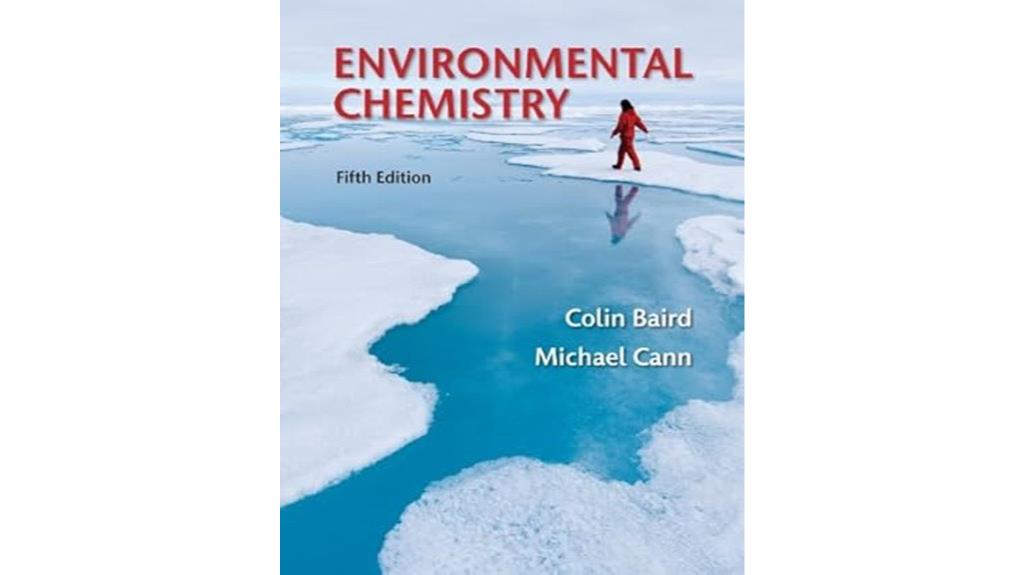
If you’re looking for a thorough yet accessible introduction to environmental chemistry, this textbook is an excellent choice. The book is well-organized, clean, and as good as new, making it a worthwhile investment. It covers key topics like water pollution, atmospheric geochemistry, and pollution pathways with clarity. The content is detailed yet approachable, offering step-by-step sample problems, exercises, and mini exams to reinforce learning. The layout and examples facilitate easy understanding, and a solutions manual adds extra clarity. Overall, users find it helpful, affordable through rental options, and perfect for introductory courses like CHEM 297 at UMUC.
Best For: students and educators seeking a comprehensive, clear, and affordable introduction to environmental chemistry, especially for courses like CHEM 297 at UMUC.
Pros:
- Well-organized, clean, and as good as new, ensuring ease of use and durability
- Covers key topics with detailed explanations, step-by-step problems, and mini exams for effective learning
- Affordable rental option offers significant savings compared to purchasing new textbooks
Cons:
- As a survey textbook, it may lack in-depth coverage for advanced topics
- Some users may find the scope too broad for specialized environmental chemistry courses
- Limited availability of supplementary online resources beyond the solutions manual

The Chemistry of Gold Extraction, Second Edition
Used Book in Good Condition
As an affiliate, we earn on qualifying purchases.
The Chemistry of Gold Extraction, Second Edition

Are you looking for a complete resource that bridges theory with practical engineering in gold extraction? The Chemistry of Gold Extraction, Second Edition, is exactly that. It offers detailed insights into mineralogy, hydrometallurgy, and industrial practices, making complex topics accessible. The book combines scientific principles with real-world processing circuits and case studies, ideal for both students and industry professionals. Its balanced approach helps you understand the chemistry behind extraction processes while providing practical guidance. Well-organized and thorough, it’s praised as an essential, authoritative reference—truly a exhaustive guide for anyone involved in gold metallurgy and environmental considerations.
Best For: industry professionals, students, and engineers seeking a comprehensive and practical resource on gold extraction and metallurgy.
Pros:
- Combines detailed scientific principles with practical engineering guidance, making complex topics accessible.
- Includes real case studies, processing circuits, and industrial practices for practical understanding.
- Well-organized, highly praised for thoroughness, clarity, and its usefulness as an industry reference.
Cons:
- The technical content may be dense for complete beginners without prior background in chemistry or geology.
- Some readers might find the extensive detail overwhelming if they need only a basic overview.
- The book’s focus on gold extraction processes may limit its applicability to other mineral recovery fields.

Chemistry Made Easy: An Illustrated Study Guide For Students To Easily Learn Chemistry
As an affiliate, we earn on qualifying purchases.
Chemistry Made Easy: Study Guide for Students
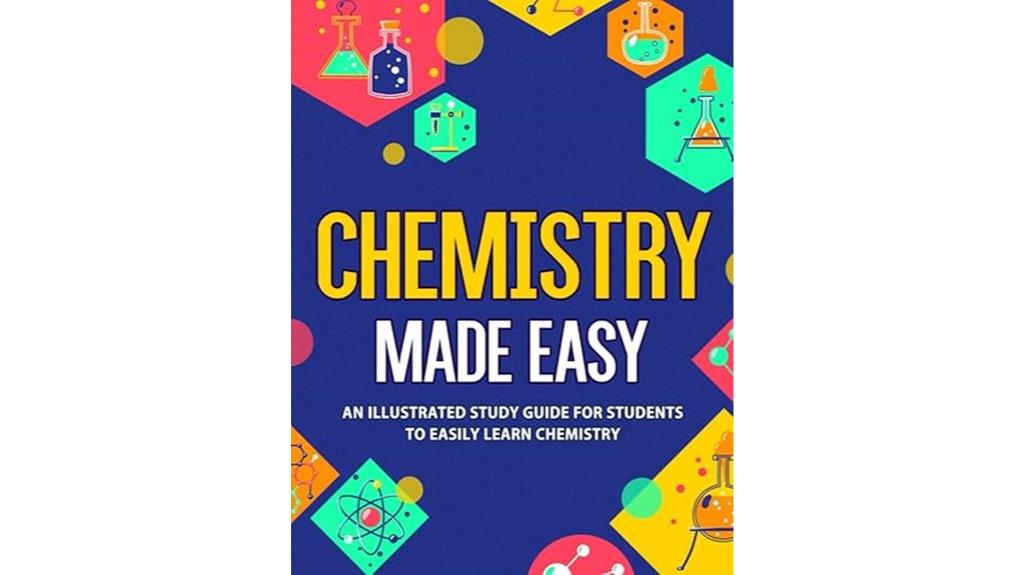
Chemistry Made Easy: Study Guide for Students is ideal for beginners and adult learners who need a straightforward, accessible introduction to chemistry. I appreciate its simple language and clear layout, which make complex concepts easier to grasp. The frequent illustrations and visuals help reinforce understanding, especially for visual learners. Many users report quick progress by studying 30 minutes daily, boosting confidence in chemistry. While some minor errors and outdated references exist, overall, it’s a practical resource for those re-engaging with chemistry or starting fresh. I recommend it as a helpful starting point, but supplement with updated sources for accuracy.
Best For: Beginners and adult learners seeking a clear, accessible introduction to chemistry with visual aids and simple language.
Pros:
- Simplifies complex chemistry concepts for easy understanding
- Uses frequent illustrations and visuals to support learning
- Suitable for a wide age range, including young students and adults
Cons:
- Contains some minor errors and outdated references
- Occasional lack of detailed diagrams for deeper comprehension
- Not a comprehensive resource; may require supplementary updated sources
Chemical Thermodynamics: Essential Chemistry Self-Teaching Guide
As an affiliate, we earn on qualifying purchases.
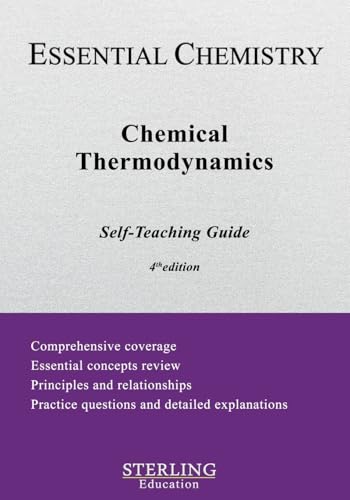
Chemical Thermodynamics: Essential Chemistry Self-Teaching Guide
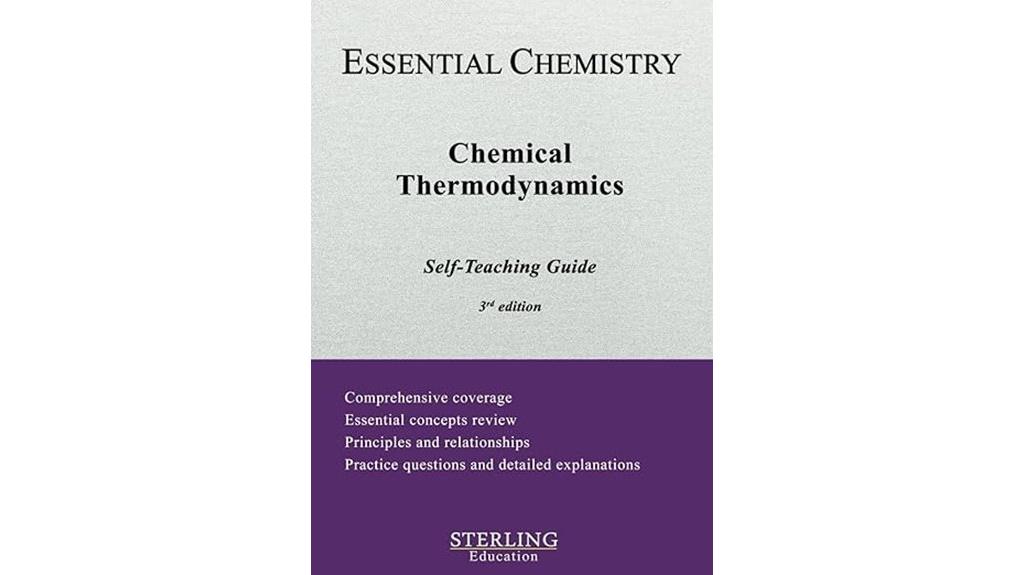
The “Chemical Thermodynamics: Essential Chemistry Self-Teaching Guide” stands out as an ideal resource for anyone seeking a clear and accessible introduction to thermodynamics concepts. I found it incredibly helpful in breaking down complex ideas into manageable parts, making challenging topics easier to grasp. The book’s real-world examples and straightforward explanations truly enhance understanding. Whether you’re a beginner or an experienced chemist, it simplifies the subject without sacrificing detail. I recommend it for self-study and deepening your knowledge, as it’s proven to be a valuable learning companion that makes mastering thermodynamics more approachable and enjoyable.
Best For: beginners and experienced chemists seeking a clear, accessible introduction to thermodynamics concepts for self-study.
Pros:
- Simplifies complex thermodynamics topics into manageable parts
- Uses real-world examples to enhance understanding
- Suitable for both novices and seasoned chemists looking to deepen their knowledge
Cons:
- May lack advanced technical details for highly specialized study
- Focuses primarily on thermodynamics, less on related chemistry areas
- Some readers might prefer more visual aids or interactive content
Chemistry Self-Teaching Guide

If you’re looking to build or refresh your understanding of chemistry at your own pace, the “Chemistry Self-Teaching Guide” by Sterling Education offers an accessible and structured approach. It simplifies complex concepts with clear explanations, diagrams, summaries, and practice questions, making it perfect for beginners or those revisiting the subject. The guide covers fundamental topics like atoms, molecules, and reactions, providing a step-by-step learning process. Its self-paced format and practical features, including historical context and real-world examples, help reinforce understanding. Many readers find it a valuable resource for gaining confidence in chemistry and continuing their education independently.
Best For: beginners and self-learners seeking a clear, structured introduction to chemistry, including those revisiting the subject after a break.
Pros:
- Simplifies complex chemical concepts with easy-to-understand explanations and visuals
- Offers a step-by-step, self-paced learning approach suitable for flexible study schedules
- Includes practical features like practice questions, summaries, historical context, and real-world examples
Cons:
- Formatting issues in the Kindle version may hinder readability on certain devices
- Assumes some prior familiarity with basic scientific concepts, which might be challenging for absolute beginners
- Limited depth for advanced learners seeking more detailed or specialized chemical topics
Electrochemistry Self-Teaching Guide (4th Ed.)
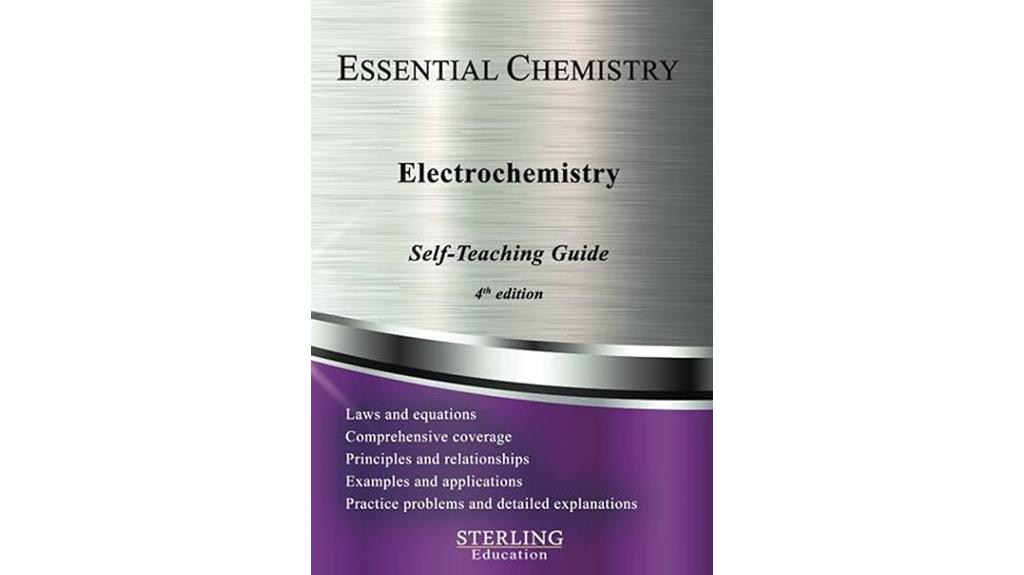
For learners seeking a clear and thorough resource on electrochemistry, the “Electrochemistry: Essential Chemistry Self-Teaching Guide, 4th Edition” stands out as an excellent choice. This book offers detailed explanations, well-structured topics, and practical practice questions with step-by-step solutions, making complex concepts accessible. It’s highly recommended for its clarity, all-encompassing coverage, and suitability for learners at all levels. While some Japanese resources exist, this guide’s concise and educational approach in English helps deepen understanding. Self-study with this guide effectively reinforces knowledge through detailed content and exercises, making it a valuable tool for mastering electrochemistry.
Best For: learners seeking a comprehensive, clear, and practical resource to master electrochemistry across all levels.
Pros:
- Provides detailed explanations and step-by-step solutions that make complex concepts accessible
- Well-structured topics with practice questions to reinforce understanding
- Highly recommended for its clarity, thoroughness, and suitability for self-study
Cons:
- May require supplementing with additional resources for advanced or highly specialized topics
- Being in English, it may be less accessible for non-native speakers without language support
- Some users might find it less concise compared to shorter reference materials
Factors to Consider When Choosing Environmental Chemistry Text Updated

When selecting an environmental chemistry textbook, I focus on factors like content depth, educational features, and practical applications to guarantee it meets my learning needs. I also consider the book’s quality, condition, and whether it offers helpful supplementary materials. These points help me choose a resource that’s both effective and reliable for my studies.
Content Depth and Scope
How do you determine if an environmental chemistry textbook offers the right level of detail for your needs? First, consider if it covers key topics like water pollution, atmospheric geochemistry, and pollution pathways thoroughly enough to meet your learning goals. Is the content depth suitable for your expertise level—whether you’re a beginner, intermediate, or advanced—so you’re not overwhelmed or under-informed? Check if the scope includes recent environmental issues and relevant case studies, providing up-to-date and practical insights. Additionally, see if the book balances theory with real-world applications through examples, exercises, and mini assessments. Finally, decide if the material is exhaustive enough to serve as a primary resource or better suited as a supplement to more specialized texts.
Educational Features Included
Have you considered the educational features included in an environmental chemistry textbook? These elements markedly enhance learning and comprehension. Look for detailed explanations of environmental processes and pollution pathways, which help build a solid foundation. Step-by-step sample problems, exercises, and mini exams are invaluable for practicing concepts and reinforcing understanding. Visual aids like diagrams, charts, and illustrations clarify complex topics, making them more accessible. Supplementary materials such as solutions manuals or online resources support self-assessment and deepen grasp of the content. Additionally, ensure the textbook covers recent environmental issues, legislation, and scientific developments—keeping information current and relevant. These features collectively create an engaging, practical, and comprehensive learning experience tailored to diverse student needs.
Practical Application Value
Choosing an environmental chemistry textbook with strong practical application value means looking for resources that directly prepare students to tackle real-world environmental challenges. I focus on books that include case studies, industry examples, and problem-solving exercises that mirror actual scenarios. These features help bridge the gap between theory and practice, especially in areas like water treatment, air quality management, and waste remediation. A highly applicable textbook also incorporates current environmental regulations and standards, ensuring the material stays relevant for real-world applications. Additionally, it emphasizes applied techniques and methodologies that students can transfer directly into careers in monitoring, policy, or remediation projects. Such resources empower learners to develop practical skills and confidently address pressing environmental issues in their professional lives.
Book Quality and Condition
When selecting an environmental chemistry textbook, evaluating its condition is just as important as evaluating its content. A well-maintained book with clean pages, no marks, and an intact binding guarantees durability and ease of use. Always check the description from the seller or source to confirm the book’s condition, avoiding surprises. Prefer books that are free of highlighting or annotations, as these can distract from learning and obscure diagrams or tables. The condition also reflects how well the book has been cared for, which can impact the clarity of visuals and text. A high-quality, well-preserved book provides a smoother learning experience and remains a reliable resource for future reference. Prioritizing condition helps ensure long-term usability and maximum value.
Supplementary Materials Offered
Are the supplementary materials included with an environmental chemistry textbook truly worth considering? Absolutely. I look for resources like solutions manuals, practice exercises, and online portals that deepen understanding. It’s important these materials are accessible in multiple formats—digital downloads, online platforms, or printed add-ons—so I can study anytime, anywhere. The quality and relevance matter too; they should align with the textbook’s content and help reinforce key concepts effectively. Interactive features, such as quizzes or simulations, are invaluable for active learning and retention. Ultimately, clear guidance on how to best utilize these resources enhances their value, especially for self-study or classroom use. Well-designed supplementary materials can greatly elevate the learning experience and mastery of environmental chemistry.
Cost-Effectiveness and Accessibility
Considering cost-effectiveness and accessibility is essential when selecting an environmental chemistry textbook. Affordable options, like digital or rental copies, can appreciably lower expenses and make learning more accessible, especially for students on tight budgets. Books available in multiple formats—print, e-book, or audio—cater to diverse learning styles and needs, ensuring everyone can engage with the material effectively. Open-access resources or low-cost supplementary materials further support learning without adding financial strain. Additionally, choosing textbooks that are widely available through libraries or online platforms guarantees easier access for a broader range of students. Prioritizing these factors helps make environmental chemistry education more inclusive, affordable, and adaptable to individual circumstances.
Authoritative Sources and References
What makes an environmental chemistry textbook truly authoritative is its use of current, peer-reviewed research and credible sources. I look for textbooks that cite the latest scientific journals and studies, ensuring the information reflects the current state of knowledge. Reliable references, such as reports from agencies like the EPA or WHO, add trustworthiness and support key points. A well-rounded resource balances foundational classics with recent publications, showing depth and breadth. Properly referencing chemical processes, pollution data, and case studies allows for verification and deeper exploration. Updated references reveal the latest scientific consensus and technological advances, making the material relevant and accurate. Ultimately, authoritative sources demonstrate rigorous scholarship, giving me confidence that the content is both credible and exhaustive.
Frequently Asked Questions
How Do These Textbooks Incorporate the Latest Environmental Policies?
You’re wondering how these textbooks include the latest environmental policies. I find that they incorporate recent updates by featuring current legislation, international agreements, and policy debates. They often include case studies illustrating policy impacts and provide online resources for ongoing updates. This keeps my understanding fresh and relevant, making complex policy changes understandable and applicable to real-world environmental challenges.
Are There Online Resources or Supplementary Materials Included?
You’re curious about online resources and supplementary materials? I find that many top environmental chemistry textbooks now include access codes for online platforms, interactive quizzes, and video lectures. These extras really enhance learning and make complex concepts more approachable. I always look for textbooks that offer these digital tools, as they provide additional support and help reinforce the material beyond traditional chapters.
Which Textbooks Are Most Suitable for Beginners Versus Advanced Learners?
You’re wondering which textbooks suit beginners versus advanced learners. I recommend starting with introductory books that cover fundamental concepts in clear, accessible language for beginners. For advanced learners, I suggest more detailed texts with complex topics and research-focused content. I’ve found that choosing the right level depends on your background and goals, and I’m happy to help you find the perfect match for your learning journey.
Do the Books Cover Recent Innovations in Green Chemistry?
Ever wonder if the latest textbooks explore green chemistry innovations? I’ve looked into this, and I can tell you, many top titles now include chapters on recent breakthroughs like sustainable catalysis and biodegradable materials. They’re designed to keep pace with rapid advances, making them perfect for curious learners keen to stay ahead. So, yes — these books do cover fresh green chemistry innovations, keeping the content current and relevant.
How Frequently Are These Textbooks Updated to Reflect New Research?
I understand you’re curious about how often these textbooks get updated. Typically, publishers aim to revise environmental chemistry books every few years, around 3 to 5, to include new research and innovations. I’ve noticed that the latest editions often incorporate recent breakthroughs in green chemistry and sustainability efforts, which helps keep students and professionals current. Regular updates guarantee the material stays relevant and reflects the latest scientific advancements.
Conclusion
Whether you’re diving into environmental chemistry or mastering its core concepts, choosing the right textbook is like finding the perfect compass for your journey. These top picks are updated and expert-reviewed, guiding you through complex topics with clarity. Remember, the right resource can turn a formidable maze into an open field. Trust me, with these books in your toolkit, you’ll navigate the world of environmental chemistry with confidence and curiosity as your steady compass.