
If you’re looking to streamline your inorganic chemistry studies, I recommend keeping four key quick references handy. These include laminated guides like “Chemistry: A QuickStudy,” concise textbooks such as the second edition of “Inorganic Chemistry,” specialized charts on transition metals and catalysis, and periodic table quick sheets. These tools offer fast access to essential concepts, structures, and data, boosting your confidence and efficiency. Stay tuned, as there’s more to help you master inorganic chemistry effortlessly.
Key Takeaways
- Look for laminated, durable quick reference sheets with organized sections on elements, transition metals, and key concepts.
- Choose resources featuring clear diagrams, tables, and color-coding for rapid topic comprehension.
- Prioritize concise, well-structured materials suitable for quick review and memorization of inorganic chemistry fundamentals.
- Select references that cover both basic principles and advanced topics like catalysis, magnetism, and coordination chemistry.
- Consider digital versions or compact booklets for portability and instant access during study or research sessions.

Chemistry: a QuickStudy Laminated Reference Guide (QuickStudy Academic)
As an affiliate, we earn on qualifying purchases.
Chemistry: A QuickStudy Laminated Reference Guide
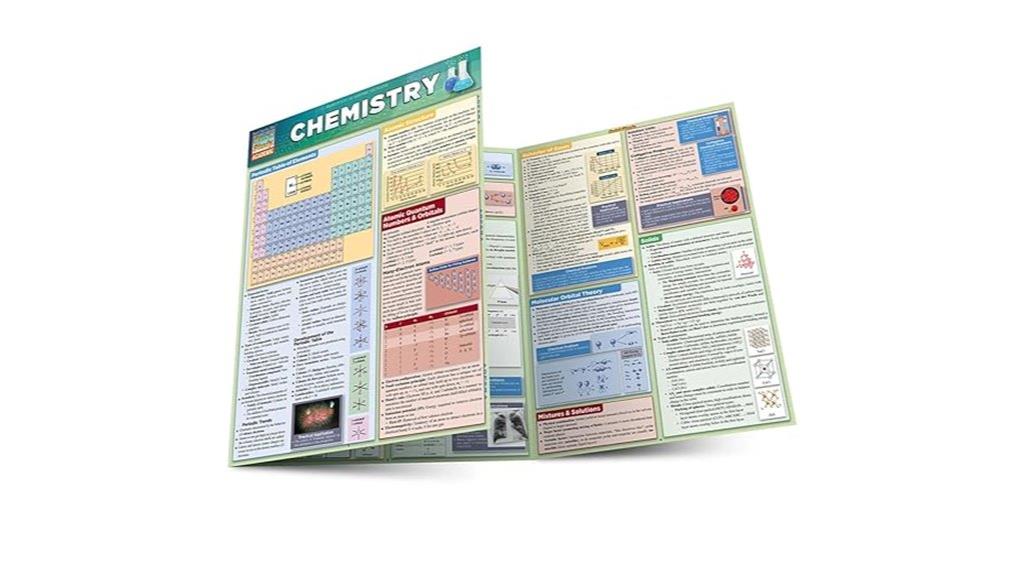
If you’re looking for a quick and reliable way to review essential chemistry concepts, the “Chemistry: A QuickStudy Laminated Reference Guide” is perfect for students and professionals alike. I use it to stay organized and quickly find key facts during study sessions or in the field. Its laminated design prevents damage from spills or squishing, making it durable for everyday use. The clear layout, graphics, and concise content allow me to find information fast, saving me time and reducing stress. Whether studying for exams or invigorating my knowledge, I find this guide to be an invaluable tool that boosts confidence and improves my understanding.
Best For: students and professionals seeking a durable, quick-reference guide to key chemistry concepts for studying or field use.
Pros:
- Laminated and durable, resistant to spills and damage
- Clear layout with graphics and concise information for fast reference
- Portable and compact, ideal for on-the-go studying and quick reviews
Cons:
- May be too simplified for advanced or in-depth chemistry topics
- Limited space can restrict the amount of detailed information included
- Some users might prefer digital resources for more comprehensive content

Chemistry (2) (Quick Study Academic)
As an affiliate, we earn on qualifying purchases.
Chemistry (2) (Quick Study Academic)
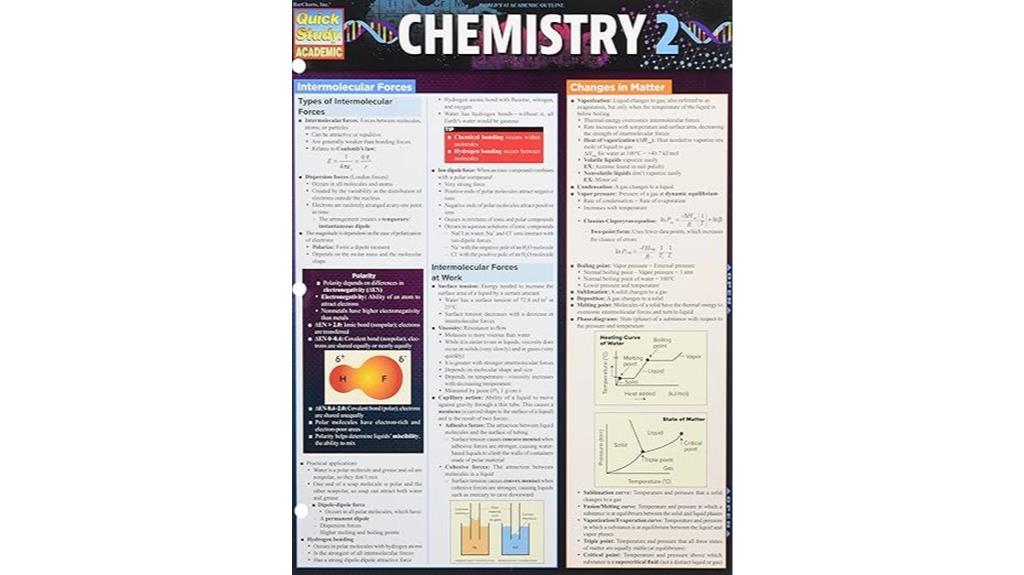
The “Inorganic Chemistry Quick References” is an excellent choice for college students, especially those new to chemistry who need a clear, accessible overview of fundamental concepts. I found “Chemistry (2) (Quick Study Academic)” incredibly helpful for studying, reviewing, and preparing for exams like Chem 101. It offers a broad overview of essential topics, including protons, neutrons, bond types, and more, all in a compact, sturdy format. This quick reference is perfect for students and non-native English speakers, enriching chemistry vocabulary while providing quick access to key facts. It’s a practical, affordable tool that complements textbooks and classroom learning effectively.
Best For: students, especially college beginners and non-native English speakers, seeking a quick, accessible overview of chemistry concepts to aid study and exam preparation.
Pros:
- Provides comprehensive coverage of fundamental chemistry topics in a compact format
- Durable, inexpensive, and easy to carry for on-the-go reference
- Enhances chemistry vocabulary and understanding for learners at various levels
Cons:
- May lack in-depth explanations for advanced or specialized chemistry topics
- Limited to basic concepts, not suitable for detailed coursework or lab work
- Could be too concise for users seeking extensive in-depth study material
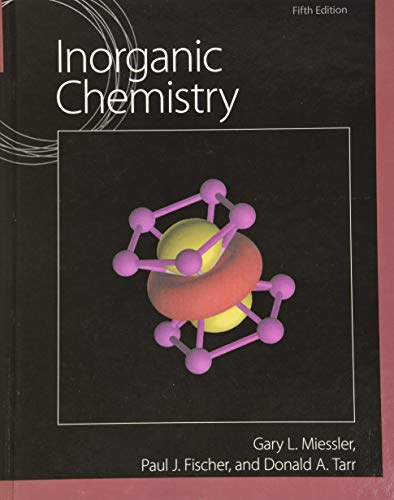
Inorganic Chemistry
Used Book in Good Condition
As an affiliate, we earn on qualifying purchases.
Inorganic Chemistry
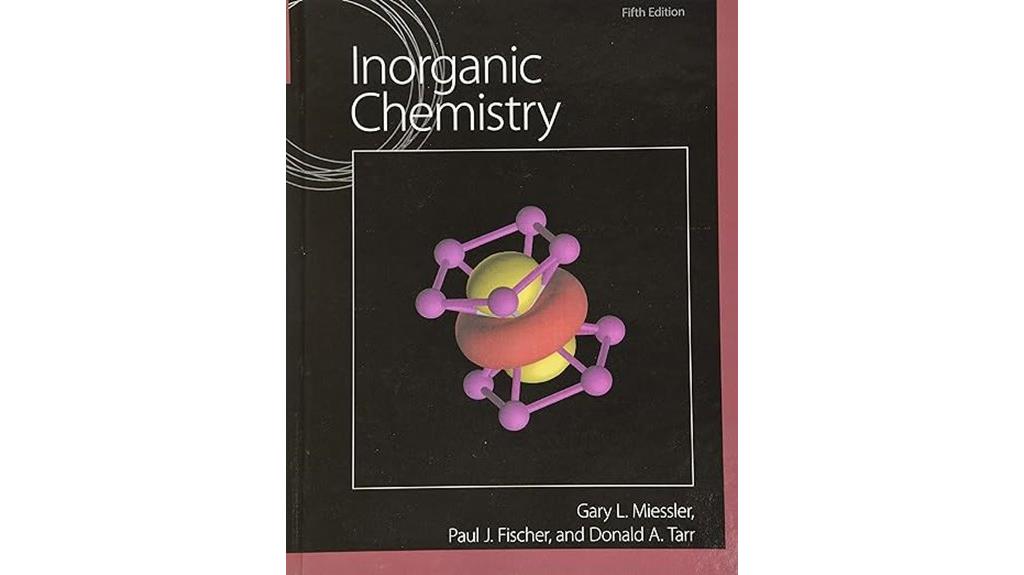
Inorganic Chemistry Quick References stands out as an ideal resource for graduate students and researchers seeking an extensive, thorough understanding of inorganic chemistry. I find this textbook remarkably clear and well-organized, offering detailed explanations that go beyond lecture material. It’s perfect for those already familiar with basic concepts but needing comprehensive research insights, including mathematical and experimental details. While some images lack color, reading captions helps clarify content. Though quite advanced, it’s an invaluable reference for mastering complex topics. I recommend supplementing with online resources for beginners, but for serious study, this book’s depth makes it an essential tool.
Best For: graduate students and researchers seeking an extensive and detailed understanding of inorganic chemistry beyond basic concepts.
Pros:
- Clear, well-organized presentation with in-depth explanations that extend beyond lecture material
- Offers comprehensive research insights, including mathematical and experimental details
- Serves as an invaluable reference for mastering complex inorganic chemistry topics
Cons:
- Some images lack color, which can cause minor confusion without careful reading of captions
- Content may be too advanced for undergraduate students, lacking basic or introductory explanations
- Not ideal as a primary textbook for beginners; may require supplementing with online resources

Inorganic Chemistry
As an affiliate, we earn on qualifying purchases.
Inorganic Chemistry
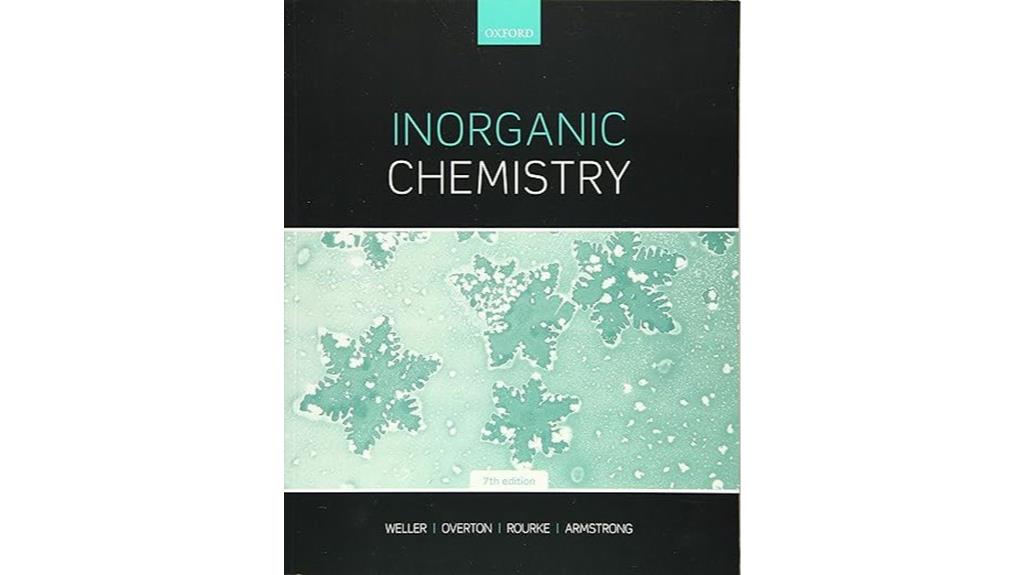
Are you a student or professional seeking a quick, reliable overview of inorganic chemistry concepts? Inorganic chemistry resources, especially textbooks, are invaluable for review and reference. Look for survey books covering elements, transition metals, electronics, and magnetism—ideal for undergraduate and graduate levels. Keep in mind that some editions, especially international versions, may lack content, so verify details before buying. These books focus on element groups, electronic properties, and applications like catalysis and coordination chemistry, often providing surface-level explanations. They’re perfect as quick references but not substitutes for in-depth study. Prior chemistry knowledge helps maximize their usefulness.
Best For: students and professionals seeking a quick, reliable overview of inorganic chemistry concepts for review and reference.
Pros:
- Provides broad coverage of elements, transition metals, and electronic properties suitable for undergraduate and graduate levels
- Serves as a convenient quick reference for surface-level explanations of key inorganic chemistry topics
- Generally affordable with good condition upon arrival, making it accessible for students and educators
Cons:
- May lack in-depth detail, limiting its usefulness for comprehensive understanding or advanced study
- International editions sometimes omit content, necessitating additional resources for complete coverage
- Focuses mainly on surface-level explanations, which might not suffice for specialized or research-level needs
Factors to Consider When Choosing Inorganic Chemistry Quick Reference
When selecting a quick reference for inorganic chemistry, I consider how well it covers the necessary topics and whether it’s easy to navigate. I also look at its layout for visual clarity, durability for regular use, and affordability. These factors help guarantee I choose a resource that’s both practical and effective for my needs.
Content Depth and Scope
Choosing the right inorganic chemistry quick reference depends on matching its content depth and scope to your specific needs. If you’re a beginner, look for guides that cover fundamental concepts like bonding, electron configurations, and symmetry. Advanced students or researchers may require references with detailed explanations of specific elements, reactions, or research-level data. Consider whether the reference emphasizes broad overviews of the periodic table or focuses on niche topics like transition metals, coordination chemistry, or solid-state materials. Also, think about your purpose—whether for quick review, in-depth study, or research support—and select a guide that offers the appropriate level of detail. Matching the scope to your goals guarantees you get the most relevant, efficient, and useful information.
Ease of Use
A well-designed inorganic chemistry quick reference should be easy to navigate, with a clear and organized layout that helps you find key concepts and formulas quickly. It should feature concise explanations and visual aids like diagrams or tables to facilitate quick understanding without extensive reading. Durability is essential, so look for laminated or sturdy materials that can withstand frequent handling and spills during study or lab work. A user-friendly guide minimizes unnecessary complexity, focusing on essential topics and practical information for efficient review. Additionally, it should be compact and lightweight, making it easy to carry between classrooms, labs, or exams. Ultimately, an accessible quick reference streamlines your study process and enhances your ability to grasp and recall critical inorganic chemistry concepts effortlessly.
Visual Clarity and Layout
A clear visual hierarchy is essential for an effective inorganic chemistry quick reference, as it helps you locate information effortlessly. Well-organized headings, subheadings, and color-coding make navigation straightforward, so you spend less time searching. Diagrams, charts, and tables should be easy to interpret, helping you grasp complex concepts quickly. Consistent font styles and sizes improve readability and reduce eye strain during frequent checks. High-contrast colors and minimal clutter ensure key points stand out, enabling rapid identification of important details. Visual cues like icons or arrows can guide you efficiently to relevant sections or specific data. Overall, a clean, logical layout not only enhances clarity but also boosts your confidence in finding the right information when you need it most.
Durability and Material
When selecting an inorganic chemistry quick reference, durability and material quality are essential factors that guarantee the guide remains reliable over time. Laminated references are crafted from tough, water-resistant materials that resist spills, tears, and everyday wear. The lamination process keeps the material intact even after frequent handling and exposure to environmental factors, ensuring longevity. High-quality laminates prevent warping or bubbling, so the guide stays flat and easy to read during use. The sturdy material can withstand bending, crushing, and rough handling common in lab or field settings, making it suitable for demanding environments. This durability means you won’t need to replace your quick reference frequently, providing a dependable resource that remains functional and intact for the long haul.
Cost and Accessibility
Ever wondered how to choose an inorganic chemistry quick reference that fits your budget and needs? Price is a key factor—guides range from inexpensive laminated sheets to costly textbooks. Digital or online versions are worth considering because they offer instant access and are easier to carry around. Comparing costs across sources, including secondhand options and international editions, can help you find a more affordable choice. Also, think about language and format accessibility, especially if you prefer materials in your native language or have specific learning needs. Lastly, confirm the resource is available through reliable sellers to avoid delays that could disrupt your study schedule. Balancing cost and accessibility ensures you get a practical, useful reference without breaking the bank.
Supplementary Resources
Choosing the right supplementary resources can substantially boost your understanding of inorganic chemistry beyond what classroom lectures offer. I recommend selecting quick reference guides and textbooks that provide clear overviews of key concepts, such as element groups, transition metals, and electronic properties. High-quality resources organize information logically, making it easier to review and reinforce your knowledge quickly. Look for materials that include summaries, formulas, and key reactions to aid memorization during study sessions or exams. Visual aids like charts and diagrams also enhance retention of complex topics. By choosing well-structured, all-encompassing resources, you can fill gaps in your foundational understanding and learn efficiently, whether you’re an undergraduate or graduate student. These tools become invaluable for mastering inorganic chemistry effectively.
Frequently Asked Questions
How Often Should I Update My Inorganic Chemistry Quick Reference?
You might wonder how often to update your inorganic chemistry quick reference. I’d say, review it whenever you encounter new concepts, tools, or discoveries that alter how you understand the subject. Also, consider updating it at the start of each semester or before exams to keep it fresh. Regular updates ensure your reference stays relevant and useful, helping you stay confident and well-prepared in your studies.
Are Digital Versions More Reliable Than Laminated Guides?
Ever wondered if digital guides are truly more reliable than laminated ones? I think so, because digital versions often get updates faster, ensuring you always have the latest info. Plus, they’re more portable and eco-friendly. But, I still keep my laminated guides handy for quick, distraction-free reference. Ultimately, I’d say a combo of both offers the best reliability—digital for updates, laminated for instant access.
Which Topics Are Essential for Quick Review During Exams?
When it comes to quick review during exams, I focus on key topics like periodic trends, coordination chemistry, oxidation states, and common inorganic reactions. I find memorizing important formulas, common ions, and their properties really helps me save time. I also review the basics of crystal field theory and ligand types. Having these topics at my fingertips makes it easier to answer questions confidently and efficiently in exam conditions.
How Can I Integrate Quick References Into Daily Study Routines?
Imagine acing your inorganic chemistry exams with just a flash! That’s how I integrate quick references into my daily routine. I spend 10 minutes each morning reviewing key charts and formulas, then keep mini cheat sheets on my desk for quick glances. During study breaks, I revisit flashcards. This constant exposure turns complex concepts into instant recall, making my study sessions more efficient and less stressful.
Do Quick References Cover Recent Discoveries in Inorganic Chemistry?
You’re wondering if quick references include recent discoveries in inorganic chemistry. I find that most quick references focus on foundational concepts, key elements, and common reactions rather than the latest breakthroughs. However, some specialized or updated resources do incorporate recent findings. It’s best to supplement quick references with current journal articles or research papers to stay up-to-date on the newest advances in inorganic chemistry.
Conclusion
These quick references are my trusted allies in mastering inorganic chemistry. They’re like a compass guiding me through complex concepts, turning confusion into clarity. I hope you find them as invaluable as I do, because in this journey of discovery, having the right tools makes all the difference. Don’t let the intricacies of inorganic chemistry overwhelm you—embrace these guides and open your full potential. Together, we can conquer even the most challenging reactions.