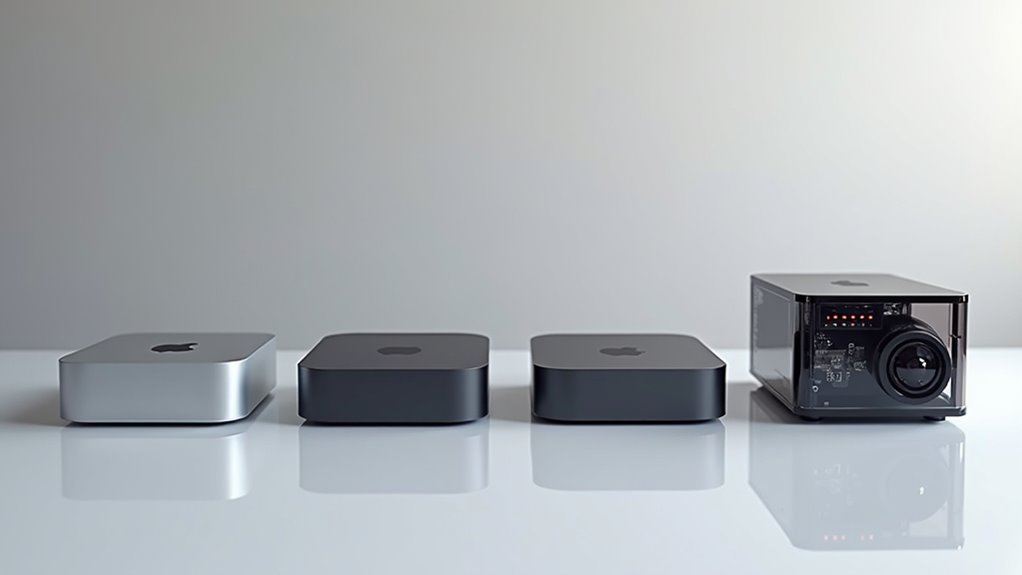

Based on current options, I recommend the Apple Mac mini with the M4 Pro chip, as it offers excellent performance for high-res streaming and multitasking, along with up to 24GB of RAM and fast SSD options. The compact size and multiple ports make it perfect for a media server, and it’s built for future updates. If you want to find out which models balance cost and power most, keep exploring to see all your best choices.
Key Takeaways
- Prioritize models with the latest M4 chip for optimal media processing and multitasking capabilities.
- Choose configurations with at least 1TB SSD storage and upgradable RAM up to 32GB for media library growth.
- Ensure support for dual 6K/5K or 8K displays via HDMI 2.1, Thunderbolt 4, and DisplayPort 1.4 for high-res media output.
- Opt for models with robust connectivity options like Wi-Fi 6E, Bluetooth 5.3, and multiple ports for seamless device integration.
- Consider energy-efficient, premium-priced models with future-proof features and expandability through external storage options.
Apple Mac mini Desktop Computer with M4 Chip (2024)
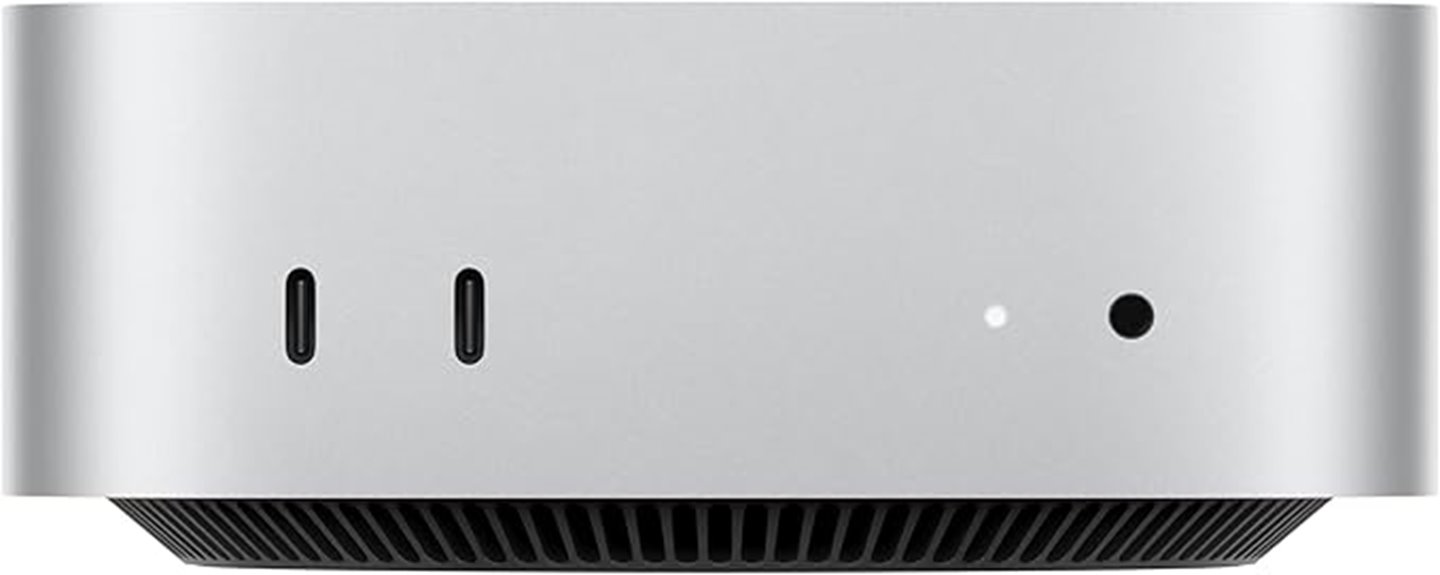
If you’re looking for a compact yet powerful media server in 2025, the Apple Mac mini with M4 chip (2024) is an excellent choice. It measures just 5 by 5 inches and weighs only 1.5 pounds, fitting easily next to your monitor. Powered by the M4 chip with a 10-core CPU, 10-core GPU, and 16-core Neural Engine, it delivers impressive performance. With up to 32GB of unified memory and fast SSD storage options, it handles multitasking and media encoding effortlessly. Its versatile connectivity, including Thunderbolt 4, HDMI, and Wi-Fi 6E, supports multiple displays and fast data transfer, making it ideal for a media server.
Best For: those seeking a compact, high-performance media server or desktop that seamlessly integrates with the Apple ecosystem in 2025.
Pros:
- Tiny, space-efficient design fits easily next to any monitor or workspace.
- Powerful M4 chip with a 10-core CPU, 10-core GPU, and Neural Engine ensures fast multitasking and media processing.
- Supports multiple high-resolution displays and fast data transfer with Thunderbolt 4, HDMI, and Wi-Fi 6E.
Cons:
- Limited upgradability due to integrated hardware design.
- Higher storage options can be costly compared to traditional desktops.
- No dedicated GPU options beyond the integrated M4 GPU.
Apple 2024 Mac mini Desktop Computer with M4 Chip
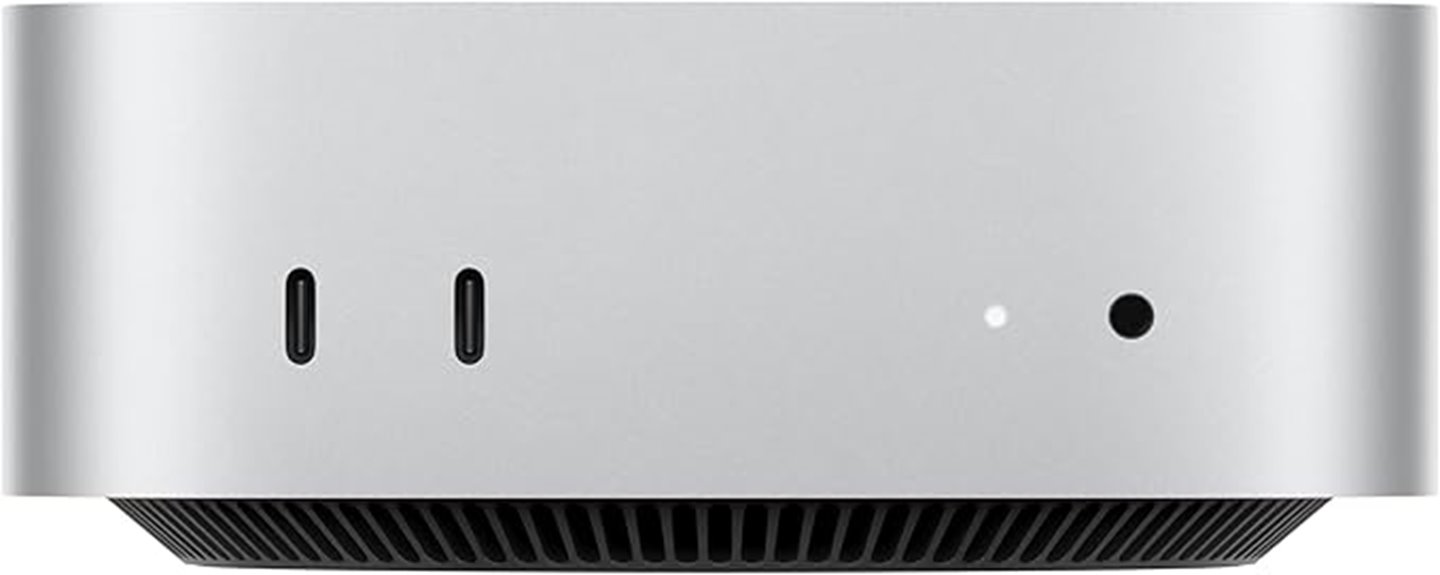
The Apple 2024 Mac mini Desktop Computer with M4 Chip stands out as an excellent choice for anyone seeking a compact yet powerful media server. Its small five-by-five-inch design allows it to fit easily anywhere, next to monitors or in tight spaces. Powered by the latest M4 chip with a 10-core CPU and GPU, it offers fast, smooth performance for streaming, transcoding, and multitasking. With 24GB of unified memory and 512GB SSD storage, it handles multiple media tasks effortlessly. Plus, with extensive connectivity options like Thunderbolt, HDMI, and Ethernet, it’s built to integrate seamlessly into your media setup.
Best For: individuals seeking a compact, high-performance media server capable of streaming, transcoding, and multitasking with seamless Apple ecosystem integration.
Pros:
- Compact size fits easily into any workspace or media setup
- Powerful M4 chip with 10-core CPU and GPU ensures fast, smooth performance
- Extensive connectivity options support versatile media and device integration
Cons:
- Limited upgradeability due to integrated hardware design
- Storage capacity might be insufficient for very large media libraries without external drives
- Premium price point may be a consideration for budget-conscious users
Apple 2024 Mac mini Desktop Computer with M4 Chip
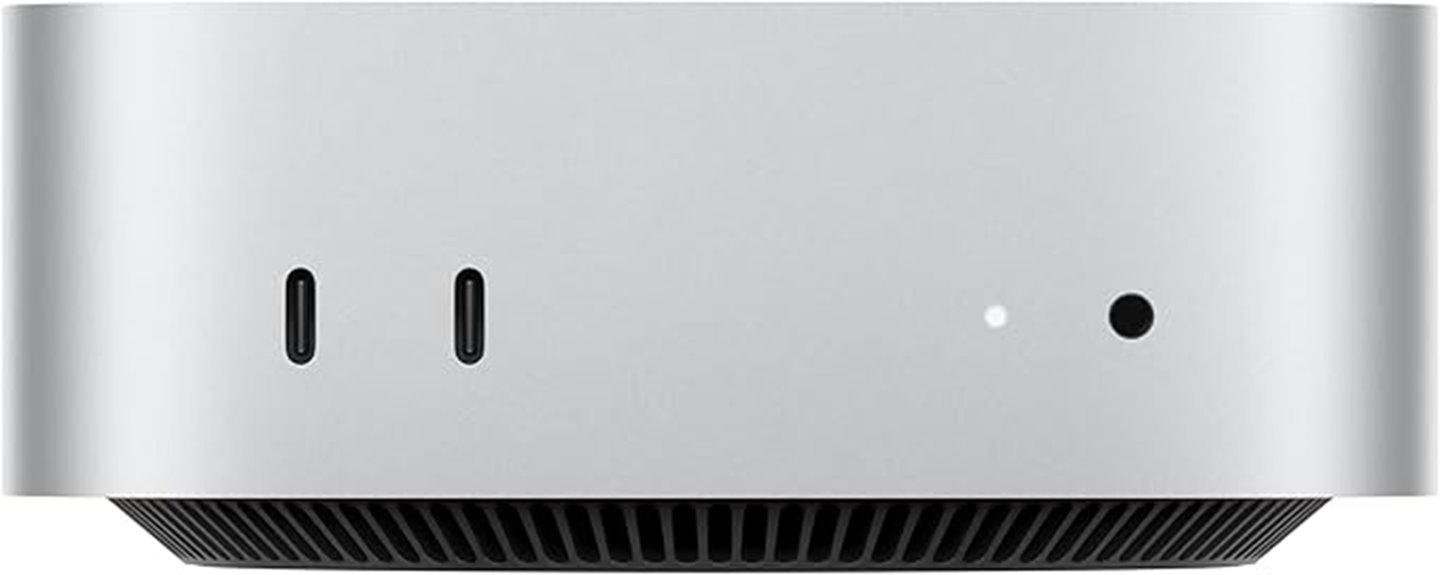
The Apple 2024 Mac mini with the M4 chip stands out as an ideal choice for media server enthusiasts who need compact yet powerful hardware. Its small 5 x 5-inch footprint easily fits next to a monitor, making it perfect for tight spaces. Powered by a 10-core M4 processor, it delivers impressive speed and efficiency, handling multiple streams and heavy workloads effortlessly. With up to 32GB of unified memory and configurable storage up to 2TB, it offers ample room for media files. Support for three displays, fast connectivity options, and hardware-accelerated video codecs make this Mac mini a versatile, energy-efficient, and future-proof media server option.
Best For: media server enthusiasts seeking a compact, powerful, and energy-efficient device to handle multiple streams and heavy workloads effortlessly.
Pros:
- Compact 5 x 5-inch size fits easily next to a monitor, ideal for tight spaces
- Powered by a 10-core M4 chip with high-speed performance and efficiency
- Supports up to three displays and hardware-accelerated video codecs for versatile multimedia use
Cons:
- Limited to a maximum of 32GB of unified memory, which may be insufficient for very demanding tasks
- Storage configurable up to 2TB, which might be inadequate for very large media libraries without external drives
- May require additional accessories or adapters for certain connectivity needs or display configurations
Apple Mac mini Desktop Computer with M4 Pro chip (512GB SSD, 24GB RAM)
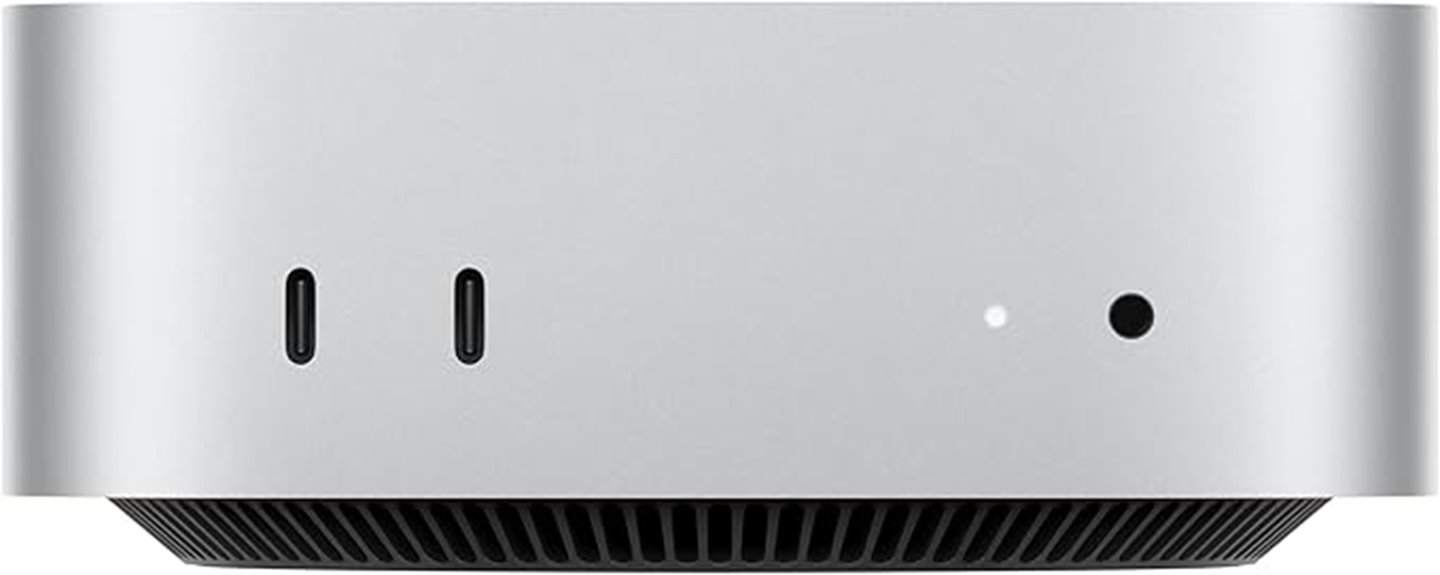
Powered by the advanced M4 Pro chip, the Apple Mac mini with 512GB SSD and 24GB of RAM delivers exceptional performance essential for a reliable media server in 2025. Its compact five-by-five-inch aluminum chassis fits easily anywhere, yet it packs a 12-core CPU, 16-core GPU, and hardware-accelerated media engines for smooth video decoding and encoding. With ample memory and expandable storage up to 8TB, it supports multiple high-resolution displays and demanding media tasks. Its wide range of ports, including Thunderbolt 5 and HDMI, guarantees seamless connectivity. Plus, its sleek, eco-friendly design makes it an efficient, powerful choice for media serving needs.
Best For: professionals and media enthusiasts seeking a compact, powerful, and eco-friendly desktop computer for media serving, creative work, or demanding multitasking.
Pros:
- Compact design fits seamlessly into any workspace or media setup
- Powerful M4 Pro chip with 12-core CPU and 16-core GPU ensures high performance
- Supports multiple high-resolution displays and demanding media tasks with advanced connectivity options
Cons:
- Limited upgradeability due to integrated hardware design
- May be overkill for basic computing needs or casual users
- Premium price point could be a barrier for budget-conscious buyers
Factors to Consider When Choosing Mac Mini as a Media Server
When choosing a Mac Mini as a media server, I consider several key factors to guarantee it meets my needs. I look at processing power, storage capacity, and connectivity options to ensure smooth performance and easy access. Additionally, compatibility with my display and software ecosystem plays a vital role in making the right choice.
Processing Power Needs
Choosing the right Mac Mini for a media server depends heavily on processing power, since it must handle multiple streams and transcoding tasks simultaneously without lag. A CPU with 8 or more cores markedly boosts the server’s ability to manage demanding media workflows efficiently. Fast processors with hardware-accelerated decoding and encoding reduce the load on other components, ensuring smoother playback and streaming. The performance cores should excel at multitasking and high-throughput data processing to maintain seamless media delivery, even during intensive tasks. As media formats evolve and 4K or higher resolutions become standard, a more powerful CPU guarantees your server stays future-proof. Prioritizing robust processing power ensures your Mac Mini can handle current and upcoming media demands effortlessly.
Storage Requirements
Selecting the right storage capacity for your Mac Mini media server depends on how much media you plan to store. If you’re dealing with large files like 4K videos, you’ll need ample space—consider models with 1TB or 2TB SSDs to accommodate your library comfortably. It’s wise to evaluate whether the built-in SSD meets your needs or if external storage solutions are necessary. Faster SSDs improve data transfer speeds and playback, enhancing your media experience. Balance your storage needs with your budget, as higher-capacity models tend to cost more but offer better long-term flexibility. Remember, planning for future growth is key, so choose a configuration that provides enough headroom for expanding your media collection without constantly upgrading.
Connectivity Options
To guarantee your Mac Mini functions effectively as a media server, it’s essential to pay attention to its connectivity options. Multiple Thunderbolt 4 ports are critical for high-speed data transfer and supporting multiple displays, ensuring smooth media playback and management. HDMI support is also important for direct connections to TVs or monitors, making streaming simple. A Gigabit Ethernet port or higher is indispensable for stable, fast wired network connections, especially when transferring large media files. Built-in Wi-Fi 6E and Bluetooth 5.3 provide flexible wireless connectivity, allowing seamless device pairing and internet access. Additionally, USB-C ports help connect external storage devices or audio equipment, expanding your media management capabilities. Prioritizing these connectivity features ensures your Mac Mini can handle all your media server needs efficiently.
Display Compatibility
When using a Mac Mini as a media server, ensuring it supports the right display configurations is crucial for an ideal viewing experience. You’ll want to verify that the model can handle multiple high-resolution displays, such as dual 6K or 5K monitors, or even an 8K display, depending on your needs. Check that it supports HDMI 2.1 or DisplayPort 1.4, which are essential for high-resolution, high-refresh-rate media content. The Thunderbolt 4 ports should support daisy-chaining multiple displays and handle high-bandwidth data transfer for smooth playback. Also, confirm compatibility with native HDMI and DisplayPort standards to avoid extra adapters. Finally, consider the maximum supported resolution and refresh rate, ensuring it aligns with your media’s quality, whether 4K, 8K, or HDR content.
Software Ecosystem
The macOS operating system makes it easy to manage and share media across your Apple devices, which is a key advantage when using a Mac Mini as a media server. Its seamless integration with Apple’s ecosystem allows effortless media management and distribution. Compatibility with popular media server apps like Plex and Emby ensures broad functionality, so you can customize your setup to fit your needs. Regular software updates improve security, stability,, and introduce new features, keeping your system current. Native support for Apple apps and third-party plugins lets you expand your media library and tailor your experience. Built-in privacy protections and security features help safeguard your media content and user data, giving you peace of mind while streaming or managing files.
Energy Efficiency
Choosing a Mac Mini as a media server means paying attention to its energy efficiency, which can substantially impact your electricity bills and environmental footprint. Models with the latest Apple Silicon chips, like the M4, are designed to optimize performance while using less power during idle and low-demand tasks. Features such as hardware-accelerated video decoding and encoding help conserve energy during media processing, making your setup more efficient. Additionally, energy-efficient power supplies and thermal management systems reduce overall consumption. Selecting models with advanced energy certifications ensures they meet high standards for sustainability and efficiency. Overall, prioritizing energy efficiency not only saves you money but also aligns with eco-friendly practices, making your media server both powerful and responsible.
Future Scalability
Planning for future scalability guarantees your Mac Mini remains a reliable media server as your needs grow. First, check if the RAM can be upgraded later to handle larger libraries and multitasking without slowdown. Next, consider the maximum storage capacity supported; you’ll want enough room for media files and updates down the line. External drives and network storage options are essential—these allow you to expand storage without replacing the device. Also, review the available ports and connection options to add peripherals or upgrade existing ones, enhancing media processing. Finally, verify the Mac Mini’s compatibility with upcoming macOS updates, which may introduce new features or improvements for media management. A scalable setup ensures longevity and continued performance as your media collection and server demands expand.
Port Accessibility
When setting up a Mac Mini as a media server, ensuring easy access to ports makes a big difference in how smoothly it operates. I look for models with enough front and back USB-C or Thunderbolt ports to connect external storage and peripherals effortlessly. It’s important that these ports support the latest standards like USB 3.2 or Thunderbolt 4, ensuring fast data transfer and broad compatibility. I also check if the Mac Mini has HDMI and Ethernet ports, so I can connect directly to displays and wired networks without extra adapters. Placement matters too; ports should be conveniently accessible regardless of the setup location or rack. Additionally, supporting multiple simultaneous connections helps manage media streaming, backups, and device management efficiently, making port accessibility a vital factor in my choice.
Frequently Asked Questions
How Does External Storage Impact Media Server Performance on Mac Mini?
External storage can boost my media server’s performance by providing additional space and faster access speeds, especially if I use high-quality SSDs or Thunderbolt drives. It helps reduce the load on the Mac Mini’s internal storage, allowing smoother streaming and quicker data transfers. However, if the external drive isn’t fast enough or properly connected, it might cause lag. So, investing in reliable, speedy external storage is essential for peak performance.
Can Mac Mini Handle 4K or 8K Media Streaming Simultaneously?
Imagine a busy highway smoothly handling multiple streams of traffic—that’s how a Mac Mini manages 4K or 8K media streaming simultaneously. I’ve found that a recent Mac Mini with a solid-state drive and ample RAM can handle several high-resolution streams without breaking a sweat. While external storage helps, the key is a powerful internal setup, ensuring smooth playback across multiple devices without lag or buffering.
What Are the Recommended Network Requirements for Optimal Media Server Use?
For ideal media server use, I recommend a stable, high-speed network with at least gigabit Ethernet or Wi-Fi 6. You want low latency and enough bandwidth to handle multiple 4K or 8K streams seamlessly. Make certain your router supports these standards and consider a wired connection for reliability. Also, prioritize network security to protect your media library and streaming devices from potential threats.
Is the Thermal Design Sufficient for Prolonged Media Server Operation?
Yes, the thermal design is adequate for prolonged media server operation. While it’s impressive how the Mac Mini handles intensive tasks, I do keep an eye on temperatures during heavy use. The compact build might seem limiting, but Apple’s efficient cooling system ensures it stays cool even under load. It’s reassuring to know I can run my media server continuously without worrying about overheating or performance drops.
How Future-Proof Are Mac Mini Models for Upcoming Media Formats?
I believe Mac Mini models are fairly future-proof for upcoming media formats, thanks to their powerful processors and versatile ports. Apple tends to support their devices with software updates for years, which helps keep them compatible with new formats. While technology evolves quickly, investing in the latest Mac Mini gives me confidence that it’ll handle emerging media demands effectively for several years.
Conclusion
If you’re eyeing a Mac mini for your media server in 2025, remember that the M4 Pro model with 24GB RAM and a 512GB SSD offers top-tier performance and storage. Did you know that Apple’s latest chips have up to 40% better performance than previous generations? Investing in the right model can streamline your media experience, making it smoother and more reliable. Choose wisely, and your media setup will serve you well for years to come.