When selecting an ultrasonicator for nano dispersions, the key is balancing power, precision, and ease of use. The Vevor 2-in-1 Ultrasonic Homogenizer stands out for its high power and versatile modes, making it ideal for demanding applications. The BAOSHISHAN Ultrasonic Homogenizer offers a compact design suitable for smaller labs or DIY projects. However, buyers face tradeoffs between cost, capacity, and ease of maintenance. Continue reading to explore our top picks and find the best fit for your nano dispersion needs.

Prime made for students and young adults
- Fast, free delivery for dorm and study essentials
- Prime Video and Amazon Music included
- Member-only deals
Key Takeaways
- Power output and probe design are critical for achieving consistent nano-sized dispersions.
- Versatility in modes (continuous, pulse) can improve process control and efficiency.
- Larger capacity units tend to be more expensive but support higher throughput.
- Portability and ease of cleaning are often overlooked but impact daily usability.
- Higher-priced models typically offer better build quality and longer lifespan.
| TUF-2000B+TM-1 Digital Ultrasonic Flow Meter DN50-700mm with Medium Clamp-on Sensor |  | Best for Accurate, Large-Scale Dispersions in Industrial Settings | Measurement Range: DN50-700mm (1.97-27.56 inches) | Pipe Size: DN15mm to DN6000mm | Accuracy: 1% | VIEW ON AMAZON | See Our Full Breakdown |
| VEVOR Portable Ultrasonic Homogenizer, 30KHz, 0.3 in Titanium Alloy Probe, 50-300ml Capacity, Handheld/Desktop Dual Use |  | Best for Versatile Lab and Small-Scale Industrial Dispersions | Probe Diameter: 0.3 in | Ultrasonic Frequency: 30KHz | Power: 300W | VIEW ON AMAZON | See Our Full Breakdown |
| Ultrasonic Homogenizer 900W Lab Ultrasonic Vibrator Extractor Disperser for Biodiesel Production |  | Best for High-Power, Large-Volume Dispersions in Industrial and Laboratory Settings | Power: 900W | Total Length: 520mm | Horn Length: 340mm | VIEW ON AMAZON | See Our Full Breakdown |
| Homogenizer Sonicator, Lab Sonicator Homogenizer YP-S1800T | 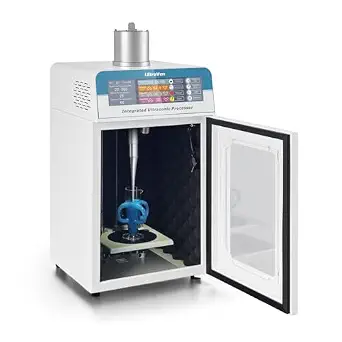 | Best for Precise, Controlled Laboratory Dispersions with Real-Time Monitoring | Display: 8-inch touch screen | Power Control: 1-99% | Temperature Monitoring: Yes | VIEW ON AMAZON | See Our Full Breakdown |
| VEVOR 2-in-1 Ultrasonic Homogenizer, 2000W, 20KHz, Titanium Alloy Probe, Continuous/Timer/Pulse Modes | 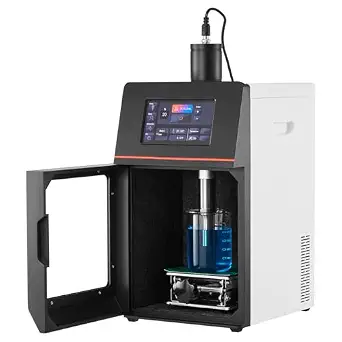 | Best for High-Power, Versatile Dispersions in Heavy-Duty Laboratory Applications | Power: 2000W | Frequency: 20KHz | Probe Diameter: 0.79 inch | VIEW ON AMAZON | See Our Full Breakdown |
| BAOSHISHAN Ultrasonic Homogenizer Sonicator with Enclosure, 500W, 0.1-500ml Capacity |  | Best for Precise Control and Versatile Applications | Power: 500W | Capacity: 0.1-500ml | Frequency: 19-26 KHz | VIEW ON AMAZON | See Our Full Breakdown |
| Bonvoisin Handheld Ultrasonic Homogenizer Emulsifier Sonicator Processor Cell Disruptor Mixer with Bracket Carrying Case 110V (8mm 50-300ml) |  | Best for Portability and Small to Medium Sample Processing | Frequency: 30KHz | Max Power: 300W | Probe Diameter: 8mm | VIEW ON AMAZON | See Our Full Breakdown |
| ultrasonicator for nano dispersion | Probe Diameter | Power |
|---|---|---|
| TUF-2000B+TM-1 Digital Ultraso | — | — |
| VEVOR Portable Ultrasonic Homo | 0.3 in | 300W |
| Ultrasonic Homogenizer 900W La | 30mm | 900W |
| Homogenizer Sonicator | — | — |
| VEVOR 2-in-1 Ultrasonic Homoge | 0.79 inch | 2000W |
| BAOSHISHAN Ultrasonic Homogeni | — | 500W |
| Bonvoisin Handheld Ultrasonic | 8mm | — |
More Details on Our Top Picks
TUF-2000B+TM-1 Digital Ultrasonic Flow Meter DN50-700mm with Medium Clamp-on Sensor
This ultrasonic flow meter stands out for its exceptional accuracy of 1% and broad pipe compatibility, making it ideal for large-scale dispersion processes where precision is critical. Unlike smaller, laboratory-focused ultrasonic devices, this model excels in industrial environments with extensive pipe networks, thanks to its wide DN15mm to DN6000mm range. The advanced anti-interference tech ensures reliable measurements even amidst noisy conditions, which is vital for consistent nano dispersion quality. However, its setup complexity and bulkier size might deter those with limited space or less technical expertise. Compared to compact lab sonicators, its primary strength is in monitoring flow for process control rather than direct dispersion of samples. This makes it better suited for industrial plants needing precise flow measurement to optimize dispersion parameters.
Pros:- Exceptional 1% measurement accuracy ensures reliable process control
- Wide pipe size compatibility from DN15mm to DN6000mm supports large systems
- Anti-interference technology guarantees stable readings in noisy environments
- Extensive data recording and storage capabilities
Cons:- Complex installation requiring technical expertise
- Bulky design may be unsuitable for tight spaces
- Limited user reviews make practical insights scarce
Best for: Large-scale manufacturing facilities requiring precise flow measurement for nano dispersions.
Not ideal for: Small research labs or users needing a compact, handheld ultrasonic device for small sample processing.
- Measurement Range:DN50-700mm (1.97-27.56 inches)
- Pipe Size:DN15mm to DN6000mm
- Accuracy:1%
- Power Supply:Low voltage, multi-pulse technology
- Data Recording:Last 512 days/128 months/10 years
- Included Transducer:TM-1
Our verdict“This model is ideal for industrial settings where precise flow monitoring informs nano dispersion processes, but less suited for small-scale or quick-turnaround applications.”
VEVOR Portable Ultrasonic Homogenizer, 30KHz, 0.3 in Titanium Alloy Probe, 50-300ml Capacity, Handheld/Desktop Dual Use
This handheld and desktop ultrasonic homogenizer offers remarkable flexibility with dual operation modes, making it perfect for small to medium laboratory dispersions. Its 30KHz frequency and 300W power ensure efficient homogenization, comparable to the more powerful VEVOR 2000W model but in a compact form. The durable titanium alloy probe enhances longevity, especially in high-viscosity samples, and its 50-300ml capacity suits typical lab workflows. While it’s portable and versatile, extended handheld use might cause fatigue due to weight, and the absence of detailed pricing information could be a barrier. Compared with larger, more powerful units like the 2000W VEVOR, this device prioritizes convenience and flexibility over sheer power, making it better suited for moderate dispersion needs rather than heavy-duty industrial processing.
Pros:- Dual handheld and desktop operation maximizes flexibility
- Robust titanium alloy probe for durability in demanding samples
- Effective for a variety of industries including food, pharma, and biotech
- Adequate for small to medium batch dispersions
Cons:- Potentially heavy for prolonged handheld use
- Requires familiarity with ultrasonic equipment operation
- Price not specified, limiting immediate purchase decision
Best for: Research labs and small production setups needing adaptable ultrasonic dispersion tools.
Not ideal for: Large-scale industrial operations or high-viscosity, large-volume dispersions where higher power is necessary.
- Probe Diameter:0.3 in
- Ultrasonic Frequency:30KHz
- Power:300W
- Capacity Range:50-300ml
- Application Industries:Food, pharmaceuticals, cosmetics, chemicals, biotech, environmental science
Our verdict“This device suits small to medium-scale labs needing versatile, reliable ultrasonic dispersions without the bulk of industrial models.”
Ultrasonic Homogenizer 900W Lab Ultrasonic Vibrator Extractor Disperser for Biodiesel Production
The 900W ultrasonic homogenizer excels in demanding applications like biodiesel production, offering high power and a robust titanium alloy horn for large-volume dispersion. Its 3D exponential probe design enhances uniformity, making it superior to lower-powered units for processing 20-30L batches. Automated frequency tracking helps maintain consistent results, crucial for sensitive chemical and bio-processing workflows. However, its high power and complexity require advanced operation skills and may be excessive for small-scale or casual users. Compared to the VEVOR 2000W model, this unit emphasizes precision and stability in large batches over portability or ease of use. It’s best suited for specialized industrial or research environments where volume and efficiency outweigh compactness and simplicity.
Pros:- High 900W power enables rapid, efficient processing
- Automated frequency tracking ensures stable operation
- Corrosion-resistant titanium alloy horn withstands demanding conditions
- Suitable for processing large volumes (20-30L)
Cons:- Requires technical expertise to operate effectively
- High cost may be prohibitive for small or casual users
- Large size and weight reduce portability
Best for: Industrial or research facilities focusing on biodiesel, extraction, or emulsification of large batches.
Not ideal for: Small laboratories or users needing portable, low-power ultrasonic devices for limited samples.
- Power:900W
- Total Length:520mm
- Horn Length:340mm
- Probe Diameter:30mm
- Processing Capacity:20-30L
- Frequency Range:19-26KHz
Our verdict“This ultrasonic homogenizer is ideal for high-volume, high-power applications where efficiency and stability are priorities, not portability or ease of use.”
Homogenizer Sonicator, Lab Sonicator Homogenizer YP-S1800T
This lab sonicator features a sophisticated digital interface with an 8-inch touch screen and real-time temperature monitoring, making it ideal for precise dispersion work. The adjustable power (1-99%) and automatic frequency search provide fine control, especially useful in sensitive nano dispersion applications. While it lacks detailed specs on maximum sample volume, its long 99-hour working time supports prolonged experiments. Compared with the more powerful VEVOR 2000W unit, this model emphasizes control and monitoring over raw power, suitable for delicate, small-scale dispersions. Its user-friendly interface makes it accessible for less experienced operators, though the absence of detailed capacity data may limit immediate application scope. It’s perfect for laboratories needing consistent, finely-tuned dispersions in small batches.
Pros:- Real-time temperature monitoring maintains sample integrity
- Intuitive touch screen interface simplifies operation
- Variable power and automatic frequency adjustment enhance control
- Long working time supports extended experiments
Cons:- Limited info on maximum sample volume
- Potential complexity may challenge beginners
- No details on portability or mobility features
Best for: Research laboratories requiring precise, monitored nano dispersions in small samples.
Not ideal for: High-volume industrial dispersions or users needing the maximum power for viscous samples.
- Display:8-inch touch screen
- Power Control:1-99%
- Temperature Monitoring:Yes
- Working Time:99 hours
- Frequency Accuracy:±1Hz
Our verdict“This device is well-suited for precise, controlled nano dispersion experiments where monitoring and fine control are essential, not large-volume processing.”
VEVOR 2-in-1 Ultrasonic Homogenizer, 2000W, 20KHz, Titanium Alloy Probe, Continuous/Timer/Pulse Modes
The VEVOR 2000W ultrasonic homogenizer offers substantial power and versatility, with multiple modes and a durable titanium alloy probe. Its 20KHz frequency makes it effective for dispersing high-viscosity samples, and the inclusion of continuous, timer, and pulse modes allows for tailored processing. The built-in memory for 10 data sets helps ensure reproducibility, making it suitable for complex or repetitive workflows. However, its high noise level and potentially challenging setup might be problematic in quieter or less experienced environments. Compared to the 900W unit, this model provides more raw power and modes, but at the cost of increased complexity and noise. It’s best for advanced labs demanding high throughput, power, and mode flexibility in their nano dispersion work.
Pros:- Powerful 2000W output supports demanding dispersions
- Multiple modes (continuous, timer, pulse) for tailored processing
- Durable titanium alloy probe for long-term use
- Memory feature for consistent operation
Cons:- Potentially noisy operation without proper soundproofing
- Complex setup may challenge less experienced users
- Size and weight could impact mobility
Best for: Advanced research labs and industrial facilities handling viscous, high-volume nano dispersions requiring maximum power.
Not ideal for: Small-scale, casual, or noise-sensitive environments where simplicity and quiet operation are priorities.
- Power:2000W
- Frequency:20KHz
- Probe Diameter:0.79 inch
- Modes:Continuous, Timer, Pulse
- Memory:10 data set memory
- Design:Soundproof enclosure
Our verdict“This high-power ultrasonic homogenizer is ideal for intensive, high-viscosity nano dispersions in demanding lab or industrial environments, though it requires technical skill to operate smoothly.”
BAOSHISHAN Ultrasonic Homogenizer Sonicator with Enclosure, 500W, 0.1-500ml Capacity
The BAOSHISHAN Ultrasonic Homogenizer excels in scenarios requiring detailed parameter tuning, thanks to its programmable features like adjustable amplitude and multiple operation modes. Compared with the VEVOR Portable Ultrasonic Homogenizer, it offers more comprehensive real-time monitoring and temperature safety, making it ideal for sensitive biological or chemical samples. However, its complex interface and the fact that the probe is a consumable mean it demands some technical familiarity and ongoing expenses, unlike simpler handheld models. This unit’s robust control features and warranty make it suitable for labs and research settings where precision outweighs ease of use.
Pros:- Programmable with adjustable amplitude and multiple modes
- Real-time monitoring and temperature protection
- 3-year warranty and remote maintenance support
Cons:- Probe is considered a consumable and not covered under warranty
- Complex operation may require some technical knowledge
Best for: Laboratories or research facilities needing precise, programmable sonication for cell disruption or emulsification
Not ideal for: Small-scale or quick-use environments where simplicity and portability are prioritized over detailed control
- Power:500W
- Capacity:0.1-500ml
- Frequency:19-26 KHz
- Warranty:3 years
- Operation Modes:continuous, pulse, timed continuous
Our verdict“This ultrasonic homogenizer is best suited for users needing detailed control and durability over simplicity and portability.”
Bonvoisin Handheld Ultrasonic Homogenizer Emulsifier Sonicator Processor Cell Disruptor Mixer with Bracket Carrying Case 110V (8mm 50-300ml)
The Bonvoisin Handheld Ultrasonic Homogenizer makes a compelling choice for on-the-go applications or small labs, thanks to its lightweight design, included carrying case, and adjustable power and frequency. While it doesn’t match the high precision of the BAOSHISHAN model, its flexibility with sample sizes up to 300mL makes it suitable for quick emulsification, particle dispersion, or chemical reactions. Its titanium alloy probe offers durability, yet handling ultrasonic vibrations requires care to avoid sample contamination or damage. Compared to the larger, more feature-rich BAOSHISHAN, it sacrifices some control for ease of use and mobility, which benefits users needing quick, versatile operations outside a fixed lab environment.
Pros:- Adjustable power and frequency for versatile use
- Durable titanium alloy probe resistant to corrosion
- Includes a bracket and carrying case for portability
Cons:- Requires careful handling due to ultrasonic vibrations
- Limited to processing up to 300mL samples
- Power supply may need external adapter for different regions
Best for: Small laboratories, field researchers, or educational settings requiring portable and adaptable sonication
Not ideal for: High-precision applications or large-volume processing where detailed control and consistent results are critical
- Frequency:30KHz
- Max Power:300W
- Probe Diameter:8mm
- Processing Capacity:50-300mL
- Input Voltage:100-240V/AC
- Output Voltage:12-24V/DC
Our verdict“This handheld ultrasonic homogenizer is ideal for mobile or small-scale use where convenience and quick results are more important than detailed control.”

How We Picked
Products were evaluated based on their ability to generate stable, uniform nano dispersions, focusing on power, probe design, and frequency stability. Usability factors such as ease of operation, cleaning, and safety features were also considered. Value was assessed by balancing performance with cost, ensuring each product offers reliable results within its price range. We prioritized equipment suitable for laboratory and industrial use, ranking those that deliver consistent, high-quality dispersions for demanding nano applications.Factors to Consider When Choosing Ultrasonicator For Nano Dispersions
Choosing the right ultrasonicator for nano dispersions involves evaluating several key factors. Power output determines how effectively the device can break down particles to nano sizes, but more power isn’t always better if the probe design isn’t suitable. Compatibility with your sample volume and ease of operation can dramatically influence daily workflow. Additionally, features like adjustable modes and safety measures can help refine your process and protect your investment. Understanding these aspects ensures you select a unit that aligns with your specific research or production needs.Power and Frequency
Power levels in ultrasonicators influence their ability to produce nano-sized particles. Higher wattage generally means faster and more effective dispersion, especially for viscous or complex samples. Frequency stability also matters; most units operate around 20-40 kHz, optimized for nano particle size. Devices with adjustable power and frequency settings give you better control, reducing the risk of overheating or damaging sensitive samples. Be mindful that excessive power can generate heat, so cooling features are a valuable addition.
Probe Design and Material
The probe, or horn, is the core contact point for energy transfer. Titanium alloy probes are durable and resistant to corrosion, making them suitable for repeated use. The shape and size of the probe affect dispersion uniformity—longer or wider probes typically support larger sample volumes but may require more power. Choosing a probe compatible with your sample volume and viscosity is essential. Poor probe design can lead to uneven dispersions or equipment wear, so investing in high-quality materials pays off over time.
Sample Capacity and Compatibility
Understanding your typical batch size is critical when selecting an ultrasonicator. Smaller units with capacities around 50-300 ml are perfect for lab-scale work or small batches, but they may not suit industrial-scale needs. Larger capacity devices support higher throughput but tend to be bulkier and more expensive. Ensure the device’s maximum capacity aligns with your workflow to avoid overloading or underutilizing the equipment. Also, check the compatibility of the device with your sample’s viscosity and composition.
Ease of Use and Safety Features
Simplicity in operation can save time and reduce errors, especially for users new to ultrasonication. Features like digital controls, preset modes, and clear displays help optimize your process. Safety features such as enclosures, automatic shutoffs, and cooling systems prevent overheating and protect both the user and the device. Considering ease of cleaning and maintenance also extends the lifespan of your equipment, making it a smarter investment over time.
Cost and Overall Value
Price points vary widely, often reflecting the power, capacity, and brand reputation. High-end units tend to offer superior durability and precision but come with a higher price tag. For most users, balancing cost with performance is key; investing in a slightly more expensive model can save money long-term through better results and less downtime. Conversely, for occasional or small-scale use, more affordable options may suffice, provided they meet your core dispersion needs.
Frequently Asked Questions
What is the ideal power level for nano dispersions?
For nano dispersions, a power range of around 500W to 1500W often strikes the right balance between efficiency and control. Higher power facilitates breaking down particles quickly but can generate excessive heat, risking sample degradation. Selecting a unit with adjustable power allows you to optimize settings based on sample viscosity and batch size, ensuring consistent nano-sized particles without damaging your material.
Can I use a handheld ultrasonicator for large-scale nano dispersions?
While handheld ultrasonicators offer portability and ease of use, they are generally better suited for small batches or laboratory experiments. For larger volumes, a benchtop or industrial model with higher capacity and more robust construction is preferable. Relying solely on handheld devices for large-scale production can lead to inconsistent results and increased wear on the equipment.
How important is probe material for nano dispersions?
The probe material impacts both durability and the quality of dispersions. Titanium alloy probes are resistant to corrosion and can withstand high power levels, making them suitable for demanding nano dispersion tasks. Cheaper materials may degrade quickly or introduce contaminants, compromising sample integrity. Investing in high-quality probes ensures consistent performance and prolongs device lifespan.
What safety features should I prioritize?
Look for ultrasonicators with enclosures, automatic shutoff, and cooling systems to prevent overheating. Safety features protect both users and equipment, especially during extended operation or high-power settings. Clear controls and emergency stop buttons add an extra layer of security, reducing the risk of accidents or equipment damage. Prioritizing these features helps maintain a safe working environment.
Is higher wattage always better for nano dispersions?
Not necessarily. While higher wattage can speed up the dispersion process, it also increases the risk of overheating and sample degradation if not properly managed. The key is selecting a device with sufficient power for your sample volume and viscosity, combined with adjustable settings and cooling features. This approach ensures effective dispersion without compromising sample quality or device longevity.
Conclusion
For those seeking the best overall performance, the Vevor 2-in-1 Ultrasonic Homogenizer offers a powerful, versatile solution that handles demanding nano dispersion tasks with ease. Budget-conscious buyers or small labs will find the BAOSHISHAN Ultrasonic Homogenizer an excellent value for its compact size and reliable performance. Beginners or occasional users should consider user-friendly models like the Homogenizer Sonicator YP-S1800T, which combine simplicity with decent power. For high-volume industrial applications, the Vevor Portable Ultrasonic Homogenizer stands out for its capacity and durability, while those needing premium build quality and advanced features might opt for higher-priced units with extensive safety and control options. Tailor your choice based on your specific needs and budget to ensure optimal results in nano dispersions.
As an affiliate, we earn on qualifying purchases.Halloween Picks
halloween