
If you’re looking to upgrade your home heating with smart control baseboard heater thermostats, I recommend exploring options like Mysa, meross, Honeywell, and MOES, which support high-voltage systems, offer reliable Wi-Fi or Z-Wave connectivity, and feature user-friendly interfaces with scheduling and energy monitoring. Compatibility with your existing wiring and heater type is essential for a smooth install. Keep these features in mind, and you’ll find a system that enhances comfort and efficiency—there’s plenty more to contemplate as you continue down the list.
Key Takeaways
- Compatibility with high-voltage electric baseboard heaters and existing wiring configurations is essential for seamless installation and operation.
- Advanced smart features like app control, scheduling, energy monitoring, and voice integration maximize convenience and efficiency.
- Thermostats offer precise temperature sensing and reliable performance suitable for maintaining consistent home comfort.
- Easy DIY installation with user-friendly interfaces, clear instructions, and sleek design options enhance user experience.
- Consider system protocols and platform compatibility (e.g., Z-Wave, Zigbee, Apple HomeKit) to ensure seamless smart home integration.
Mysa Smart Thermostat LITE for Baseboard Heaters
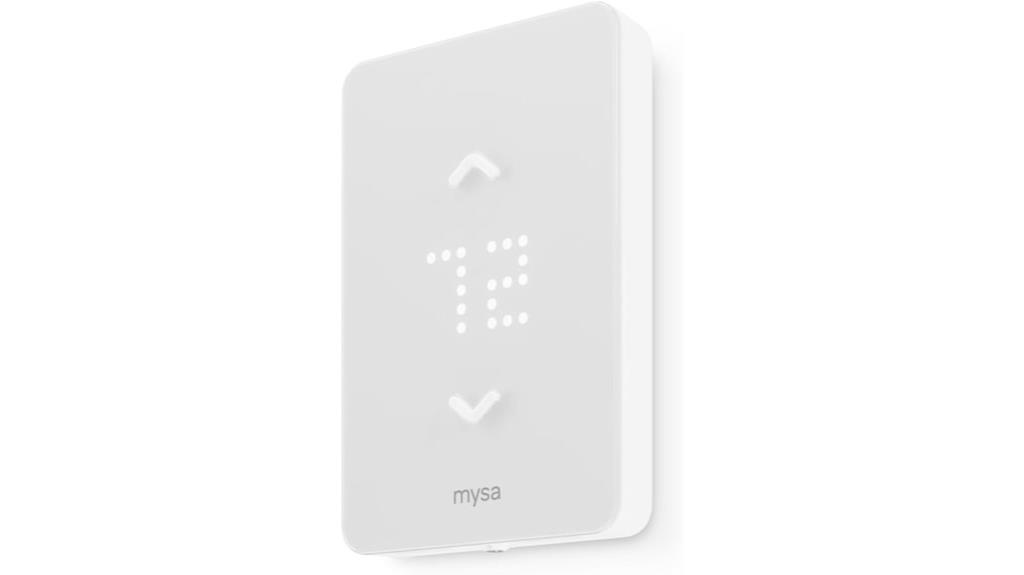
If you’re looking for an easy-to-install, energy-efficient thermostat for your electric baseboard heaters, the Mysa Smart Thermostat LITE is a great choice. It controls line voltage heaters at 120V or 240V, including baseboards, wall, and convector units. Designed for spaces like garages or sunrooms, it features a sleek look and meets UL safety standards. Installation takes about 15 minutes with the included video guide, no electrician needed. You can create custom schedules, monitor energy use, and control your heater remotely via the free app. Plus, it’s compatible with voice assistants like Alexa, Google, and Siri, making heating smarter and more convenient.
Best For: homeowners or DIY enthusiasts seeking an easy-to-install, energy-efficient thermostat for line voltage electric heaters in spaces like garages, sunrooms, or workshops.
Pros:
- Simple 15-minute DIY installation with included video guide, no electrician needed
- Compatible with multiple voltage systems (120V, 208V, 240V) and various heater types
- Offers customizable schedules and energy monitoring via free app for enhanced energy savings
Cons:
- Only operates as a single pole thermostat, limiting use with double pole setups
- Lacks advanced features found in more expensive smart thermostats, such as learning algorithms
- Does not include subscription fees, but some advanced integrations may require app updates or support
meross Smart Thermostat for Electric Baseboard and In-Wall Heaters
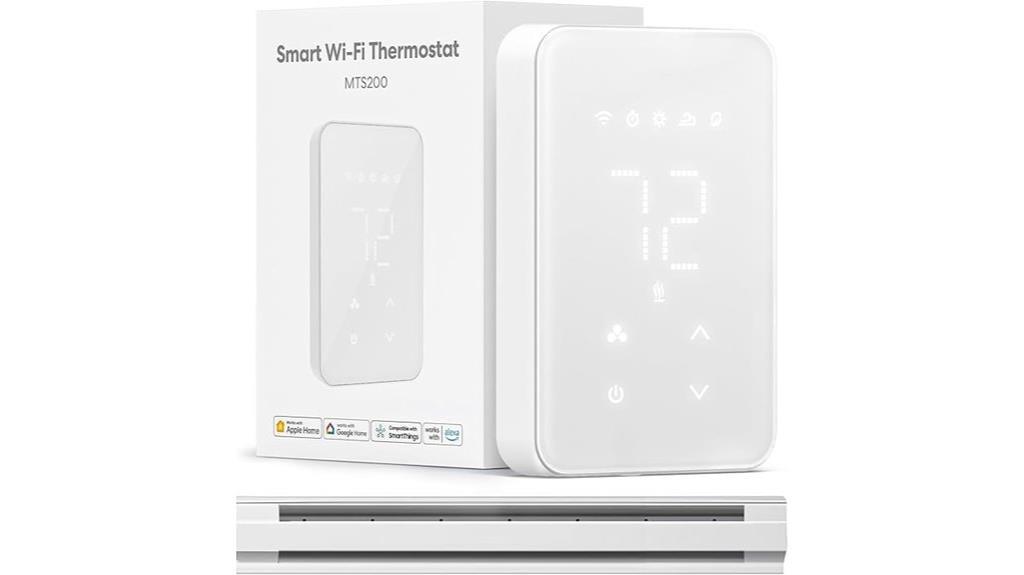
The meross Smart Thermostat stands out as an ideal choice for homeowners seeking precise control over high-voltage electric baseboard and in-wall heaters. It’s compatible with 120V-240V systems and supports various electric heaters, with easy installation in less than 30 minutes using four or more wires. It handles high output loads up to 16A and 1920W at 120V or 3840W at 240V. The thermostat integrates seamlessly with Apple HomeKit, Alexa, Google Home, and SmartThings, enabling voice commands and automation. Its 1°F accuracy, scheduling, energy monitoring, and features like summer mode make it a versatile, energy-efficient solution for smarter home heating.
Best For: homeowners seeking precise, energy-efficient control of high-voltage electric baseboard and in-wall heaters with smart home integration.
Pros:
- Compatible with 120V-240V systems supporting various electric heaters
- Supports seamless integration with Apple HomeKit, Alexa, Google Home, and SmartThings for voice control and automation
- Features a sleek LCD display, scheduling, energy monitoring, and open window detection for energy savings
Cons:
- Requires at least 4 wires for installation, which may be complex for some DIYers
- MAX load of 16A may limit use with higher-capacity heating systems
- Not suitable for low-voltage or non-electric heating systems
Mysa Smart Thermostat for Electric Baseboard Heaters
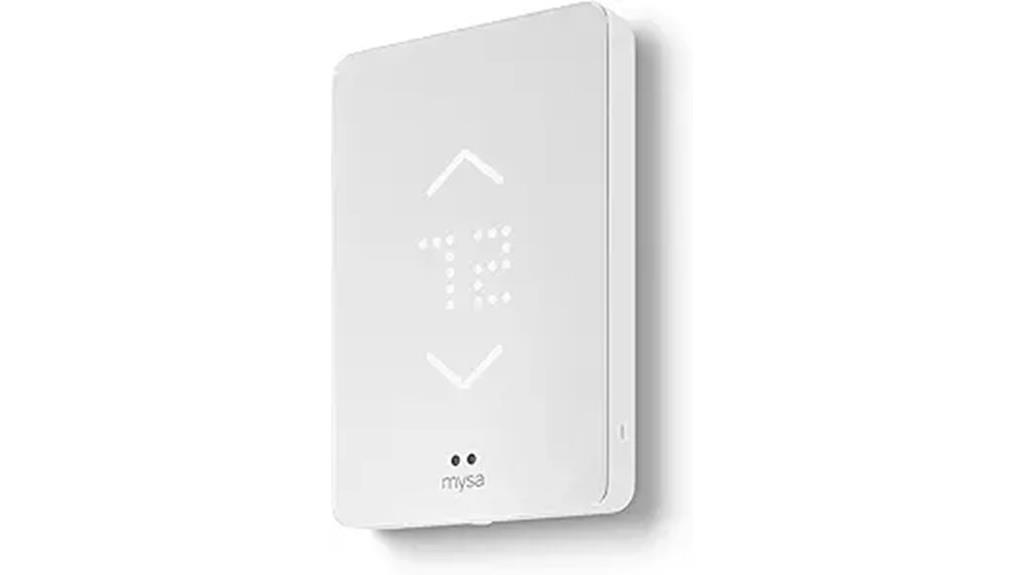
Designed specifically for high-voltage electric baseboard heaters, the Mysa Smart Thermostat stands out as an ideal choice for those seeking precise, remote control over their home heating. It’s compatible with 120–240V systems, supporting loads up to 1900W at 120V and 3800W at 240V, but requires a neutral or second live wire, so verify compatibility first. Its sleek, compact design includes adaptive brightness and touchless features, making it user-friendly. With Wi-Fi connectivity, you can control it remotely via the app, set schedules, and receive alerts. Plus, it integrates seamlessly with Apple HomeKit, Alexa, and Google Assistant for added convenience and automation.
Best For: homeowners with high-voltage electric baseboard heating systems seeking a sleek, smart, and remote-controlled thermostat for enhanced comfort and energy management.
Pros:
- Supports Wi-Fi connectivity for easy remote control and scheduling via the app.
- Seamless integration with popular smart home platforms like Apple HomeKit, Alexa, and Google Assistant.
- Compact, modern design with adaptive display brightness and touchless features for user convenience.
Cons:
- Only compatible with high-voltage (120–240V) systems that have at least four wires, including a neutral or second live wire.
- Does not support low-voltage or two-wire systems, limiting compatibility with some existing setups.
- Requires verification of system compatibility before purchase to ensure proper installation and operation.
MOES Programmable Smart Thermostat for Electric Baseboard Heaters
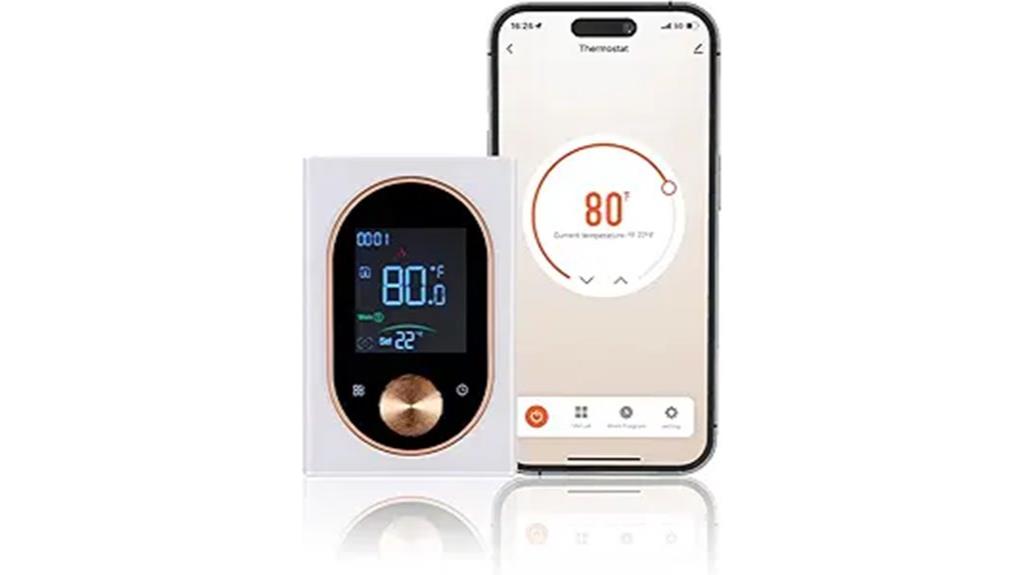
For homeowners seeking precise control over electric baseboard heating, the MOES Programmable Smart Thermostat stands out with its support for remote management via the Smart Life and TUYA apps. It’s compatible with 120V and 240V systems and supports 2.4G WiFi, making installation flexible. The frosted display reduces glare, while the easy-grip knob lets you manually adjust settings. You can program schedules to optimize energy use and control your heater remotely. Plus, it’s compatible with voice commands through Alexa and Google Home. Overall, it offers reliable, efficient performance, making it a smart choice for modern home heating.
Best For: homeowners seeking precise, remote-controlled heating management for electric baseboard heaters with easy installation and voice control compatibility.
Pros:
- Supports remote operation via Smart Life/TUYA app for convenient control from anywhere
- Compatible with 120V/240V systems, suitable for various home setups
- Features a frosted display and tactile knob for easy manual adjustments
Cons:
- Requires at least four wires in the electrical box, including neutral or a second live wire, which may complicate installation for some users
- First available date listed as June 16, 2025, indicating potential availability delays
- Limited to electric baseboard heaters, so not suitable for other heating types
Wi-Fi Smart Thermostat for Electric Baseboard Heaters
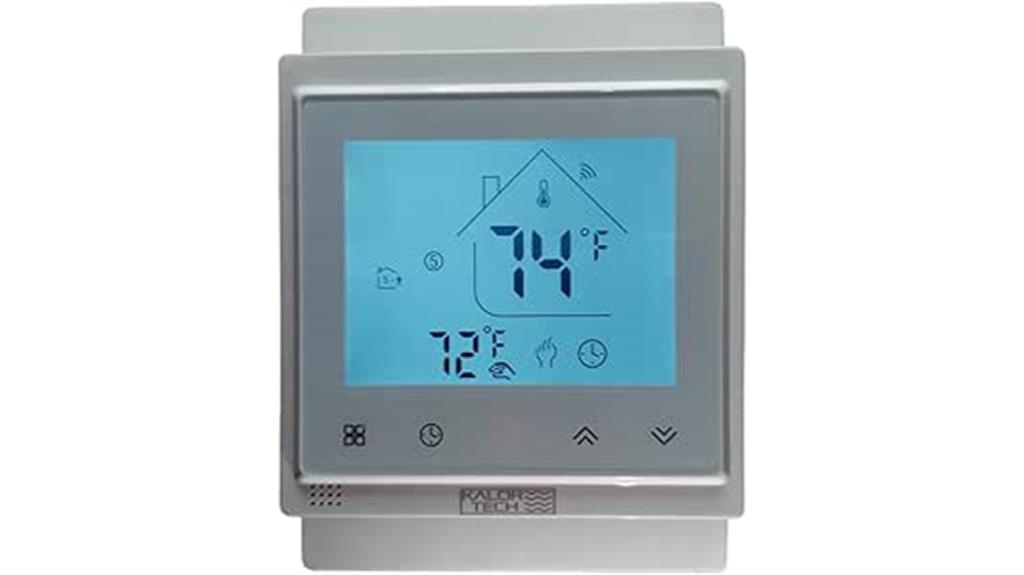
Looking to control your electric baseboard heaters remotely and easily? The Wi-Fi Smart Thermostat is a great choice. It supports 120-240V systems, with a sleek LCD display showing temperature, time, and Wi-Fi status. You can control it via touch, voice commands, or through apps like Smart Life, Tuya, Alexa, and Google Home. Installation is quick and straightforward, requiring minimal electrical experience, and it connects wirelessly to your Wi-Fi network. Designed for American and Canadian electrical boxes, it keeps your room warm and prevents freezing, all while helping you save energy with programmable scheduling. It’s a reliable, modern upgrade for your home heating system.
Best For: homeowners with electric baseboard heaters seeking a Wi-Fi-enabled, programmable thermostat for easy remote control and energy savings.
Pros:
- Supports 120-240V systems, compatible with American and Canadian electrical standards.
- Easy to install with clear instructions and minimal electrical experience required.
- Compatible with voice control and smart home apps like Alexa, Google Home, Smart Life, and Tuya for convenient operation.
Cons:
- Not compatible with 24V central heating systems or single-pole wiring.
- Rated 3.8 out of 5 stars, indicating some users may experience issues or limitations.
- Limited to electric baseboard heater control, not suitable for other heating types or central HVAC systems.
Electric Baseboard Heaters Thermostat, Programmable Thermostat with LCD Display
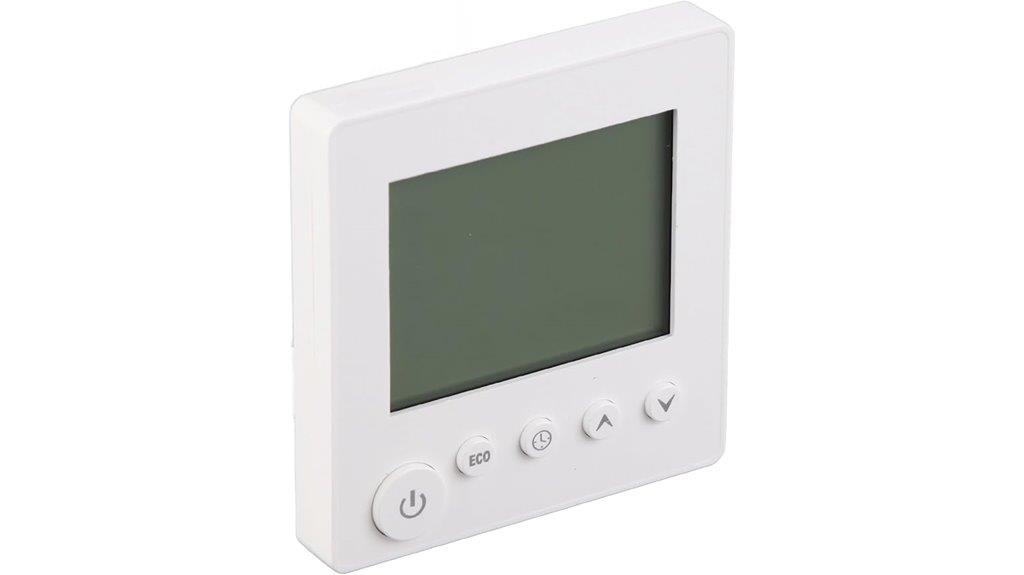
If you want precise control over your electric baseboard heating, a programmable thermostat with an LCD display like the Fdit K1H16A is an excellent choice. It offers high accuracy within ±1℃ and a temperature range of 5–60℃, ensuring consistent comfort. The microcomputer control minimizes interference, while the high-precision sensor detects temperature accurately. Its clear LCD display makes adjustments straightforward, and surface mounting with a modern design adds style to any space. Despite mixed reviews, this thermostat provides reliable programmable features, making it a practical option for those seeking enhanced usability and precise temperature management in their home heating system.
Best For: those seeking precise, programmable temperature control for electric baseboard heating systems with easy-to-read displays and modern mounting options.
Pros:
- High measurement accuracy of ±1℃ within a 0–50℃ range for consistent comfort
- LCD display for easy adjustments and clear visibility of settings
- Surface mounting with a sleek modern design that blends well with contemporary interiors
Cons:
- Customer ratings are mixed, indicating variable user satisfaction
- Limited technical support and warranty details available online
- Slightly higher price point may be a consideration for budget-conscious buyers
Stelpro Z-Wave Plus KI STZW402WB+ Thermostat (White)
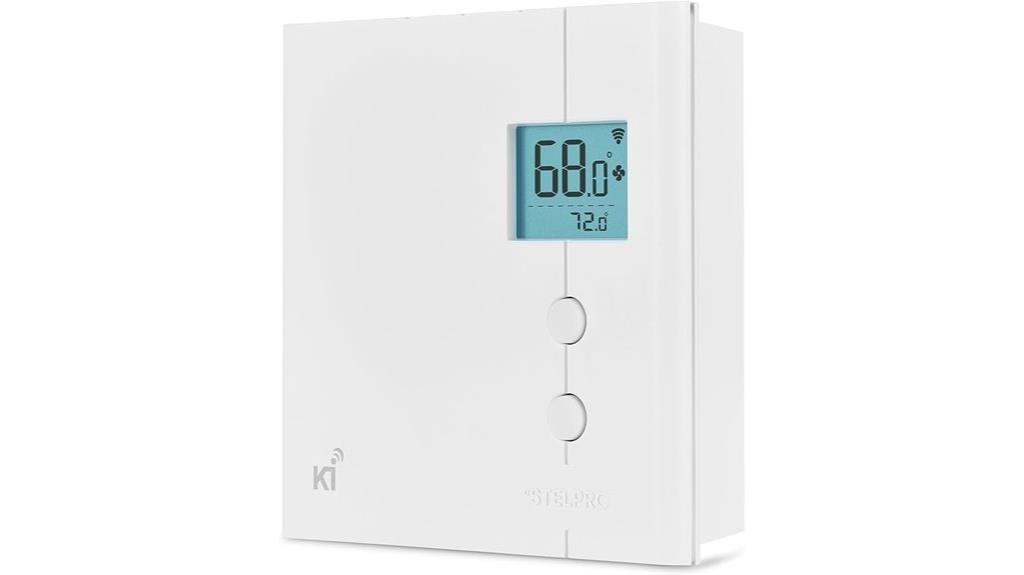
The Stelpro Z-Wave Plus KI STZW402WB+ Thermostat stands out as an ideal choice for homeowners seeking seamless remote control of their electric baseboard heaters, thanks to its compatibility with popular Z-Wave platforms. It’s the first Z-Wave thermostat in North America designed for line voltage, connecting via a simple 2-wire setup. You can control your heating remotely through your smartphone or computer when paired with a Z-Wave gateway. It supports platforms like SmartThings, Vera, and Wink, and offers customizable schedules, ECO mode for energy savings, and automation capabilities. Made in Canada, it combines quality, safety, and smart home integration effortlessly.
Best For: homeowners seeking a reliable, energy-efficient Z-Wave compatible thermostat to remotely control electric baseboard heaters with easy scheduling and automation features.
Pros:
- Compatible with popular Z-Wave platforms like SmartThings, Vera, and Wink for seamless integration.
- Supports custom scheduling and ECO mode to optimize energy savings and reduce utility bills.
- Certified Z-Wave Plus and UL, ensuring high safety and quality standards, made in Canada.
Cons:
- Requires a Z-Wave gateway controller (sold separately) for remote control functionality.
- Designed specifically for line voltage electric baseboards and convectors, limiting compatibility with other heating types.
- Setup may be complex for users unfamiliar with Z-Wave network configurations.
Honeywell Programmable Thermostat for Electric Baseboard Heaters
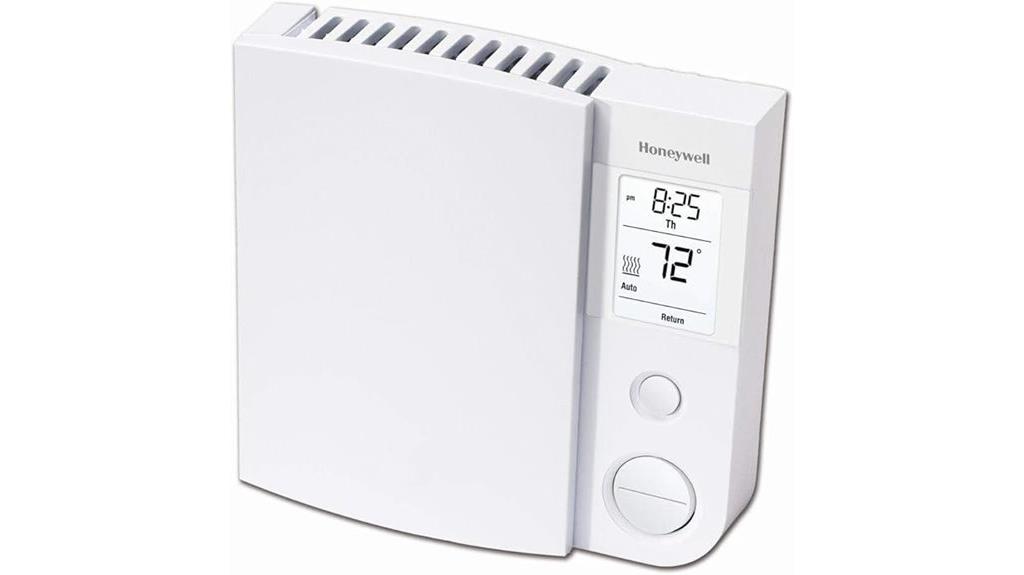
The Honeywell Programmable Thermostat for Electric Baseboard Heaters stands out as an excellent choice for homeowners seeking precise, silent temperature control with easy programming. I appreciate its digital 5-2 day schedule, allowing separate settings for weekdays and weekends. The ±0.27°F accuracy guarantees consistent comfort, while TRIAC switching provides 100% silent operation. Its backlit display makes setup and adjustments straightforward, and the quick-install 2-wire connection simplifies installation. Designed specifically for line-voltage systems up to 3,500W, it’s perfect for electric baseboards, convectors, and radiant ceilings. Overall, it’s a reliable, user-friendly thermostat that enhances home heating efficiency without noise or fuss.
Best For: homeowners seeking precise, silent, and easy-to-program electric heating control for baseboards, convectors, or radiant ceilings.
Pros:
- Accurate temperature control with ±0.27°F precision for consistent comfort
- Silent TRIAC switching reduces temperature swings and noise
- User-friendly with backlit display and straightforward installation process
Cons:
- Not suitable for resistive loads under 0.83A or over 14.6A, limiting some applications
- Cannot be used with systems requiring contactors or relays (inductive loads)
- Limited to line-voltage electric heating systems up to 3,500W, not compatible with other heating types
meross Smart Thermostat for Home, WiFi Thermostat

Designed for homeowners seeking reliable and customizable Wi-Fi control, the meross Smart Thermostat seamlessly integrates with most HVAC systems—excluding electric baseboard heaters—making it a versatile choice. It works with 95% of systems, including conventional heating and cooling, heat pumps, and heating-only setups, but requires a C-wire or the Meross adapter. Setup is simple and quick, taking about 30 minutes via the Meross app. It offers 7×24-hour scheduling, allowing you to automate temperature control. Plus, it supports Matter technology for compatibility with platforms like Apple Home, Alexa, and Google Assistant, plus remote control via the app for ultimate convenience.
Best For: homeowners seeking a reliable, customizable Wi-Fi thermostat compatible with most HVAC systems and easy DIY installation.
Pros:
- Compatible with 95% of HVAC systems, including heat pumps and heating-only setups
- Supports customizable 7×24-hour scheduling with automatic mode even offline
- Integrates seamlessly with popular smart home platforms via Matter technology
Cons:
- Not compatible with electric baseboard heaters
- Requires a C-wire or Meross adapter for proper installation
- Limited to 2.4GHz Wi-Fi networks, which may affect connectivity in some environments
Sensi Lite Smart Thermostat
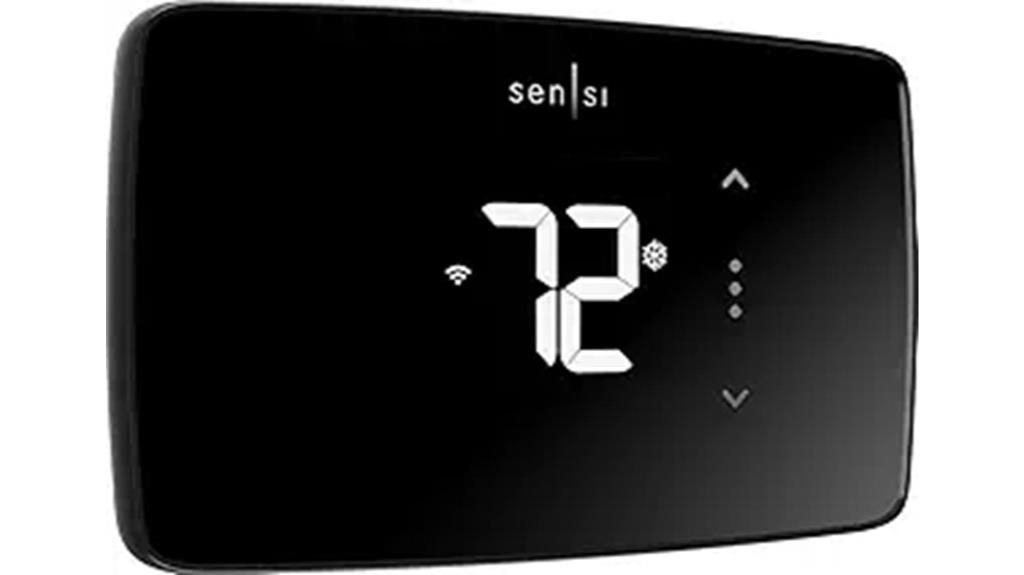
If you’re looking for a smart thermostat that offers easy DIY installation and seamless control, the Sensi Lite Smart Thermostat is an excellent choice. Its built-in level and step-by-step instructions make setup straightforward, and it’s compatible with most HVAC systems—only needing a C-wire for heat pump or heat/cool setups. This Wi-Fi-enabled device works with Alexa and other smart home platforms, giving you remote control via a mobile app anytime, anywhere. Plus, it’s Energy Star Certified, helping you save around 23% on energy costs through scheduling, geofencing, and usage reports. Privacy is a priority, as Sensi doesn’t sell user data or use it for targeted ads.
Best For: homeowners seeking an easy-to-install, Wi-Fi-enabled smart thermostat that offers energy savings and seamless remote control.
Pros:
- Easy DIY installation with built-in level and step-by-step instructions
- Compatible with most HVAC systems, requiring C-wire only for heat pump and heat/cool setups
- Helps save approximately 23% on HVAC energy costs through scheduling and geofencing
Cons:
- C-wire needed only for heat pump and heat/cool systems; not required for most setups
- Limited advanced customization options compared to more premium thermostats
- Compatibility with some third-party smart home devices may vary
Cadet F Series Double Pole Built-In Thermostat (Model BTF2W)
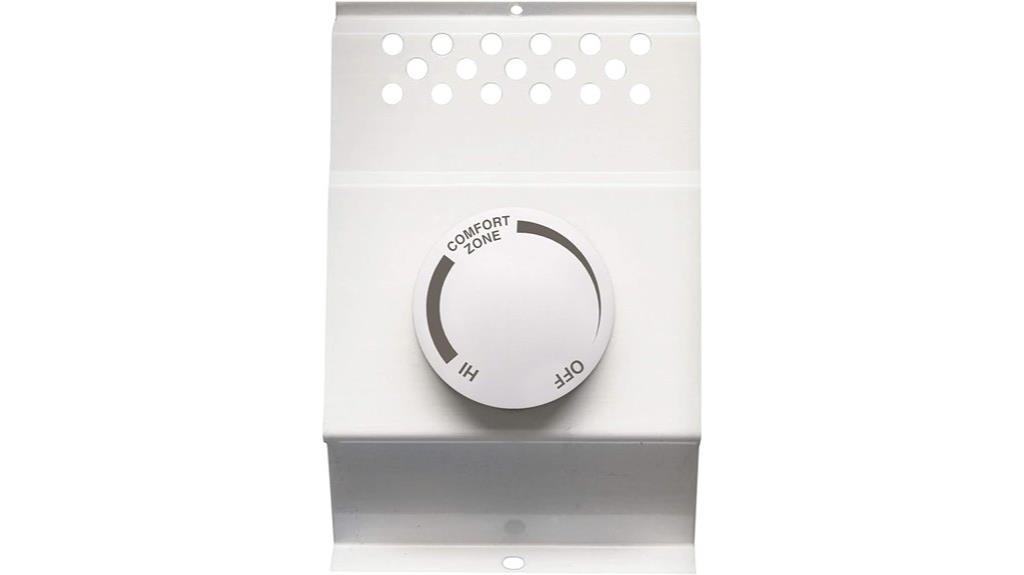
For homeowners seeking a reliable and easy-to-install thermostat for their Cadet F series electric baseboard heaters, the Cadet F Series Double Pole Built-In Thermostat (Model BTF2W) stands out. It offers a 22 Amp capacity and is compatible with 120/208/240 Volt power supplies, making it versatile for different setups. Its compact, white design seamlessly blends with your heater, and mounting is simple—attach to either end without extra wiring. The large twist dial provides precise temperature control from 45ºF to 80ºF, ensuring comfort. Operating with a single pole, it switches to a low setting when turned fully counterclockwise, giving straightforward, reliable control over your heating.
Best For: homeowners seeking a reliable, easy-to-install thermostat for their Cadet F series electric baseboard heaters that offers precise temperature control and seamless integration.
Pros:
- Compatible with 120/208/240 Volt power supplies for versatile installation options
- Compact, white design that blends discreetly with existing heaters
- Easy installation by mounting to either end without additional wiring
Cons:
- Limited to Cadet F series heaters only, restricting compatibility with other brands
- Operates with a single pole, which may not suit multi-wire setups requiring double-pole control
- Temperature adjustment range is limited to 45ºF to 80ºF, which may not suit all climate preferences
meross Smart Wi-Fi Temperature Controller (15A, 1800W)
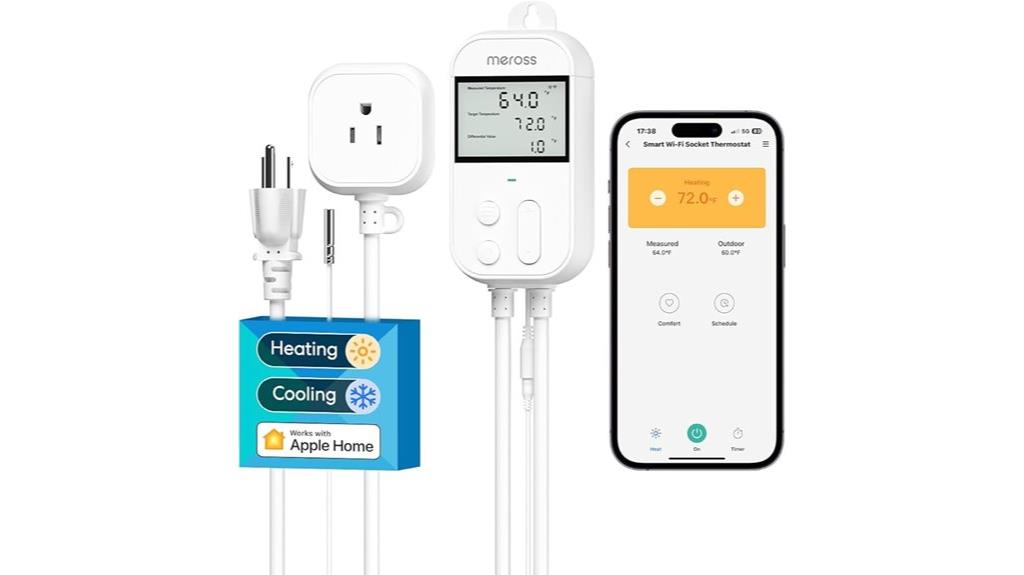
The meross Smart Wi-Fi Temperature Controller (15A, 1800W) stands out as an ideal choice for homeowners seeking reliable, app-controlled heating and cooling management. It’s compatible with Apple Home, Alexa, Google Home, and SmartThings, making integration seamless. Setup is straightforward through buttons, the Meross app, or voice commands. The LCD backlit display supports Celsius and Fahrenheit, and the device offers scheduling, timers, and energy monitoring. Its robust hardware supports up to 15A, 1800W, with safety features like child lock and sensor failure alerts. Perfect for controlling heaters, fans, or even refrigerators, it’s a versatile, reliable smart thermostat.
Best For: homeowners seeking a versatile, app-controlled smart thermostat compatible with major voice assistants for heating, cooling, or appliance management.
Pros:
- Easy setup via app, buttons, or voice commands with support for multiple smart home platforms.
- Robust hardware capable of handling up to 15A and 1800W, suitable for various appliances and water systems.
- Features like scheduling, timers, energy monitoring, and safety alerts (child lock, sensor failure) enhance usability and security.
Cons:
- Limited control temperature range defaulted to 95℉, which may require adjustments for specific needs.
- No built-in batteries; reliant on Wi-Fi and external power, which could be problematic during outages.
- The device’s size and design may not fit all installation environments or aesthetic preferences.
Honeywell Home CT410B Manual Thermostat
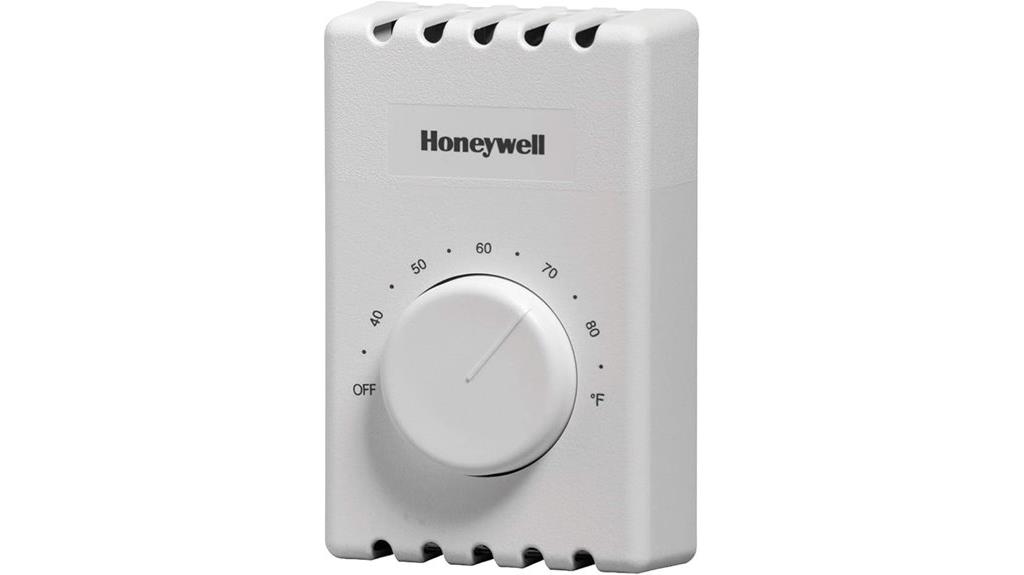
The Honeywell Home CT410B Manual Thermostat stands out as an ideal choice for those who prefer simple, dependable control over their electric baseboard heating without the need for advanced programming or Wi-Fi connectivity. Its mechanical dial offers straightforward operation, and the built-in backlight makes adjustments easy, even in the dark. Compatible with 120-240V systems, it can handle up to 5280W, making it suitable for controlling single or multiple heaters. The positive OFF switch simplifies installation and safety, while UL and CSA ratings ensure reliable performance. If you’re seeking a no-fuss, durable thermostat, the CT410B is a solid option for maintaining comfortable, consistent heat.
Best For: those seeking a simple, reliable, and easy-to-use manual thermostat for electric baseboard or line voltage heating systems without the need for programming or Wi-Fi features.
Pros:
- Mechanical dial control allows for straightforward, worry-free operation.
- Built-in backlight makes temperature adjustments easy even in low light.
- Supports 4-wire (double pole) connections with a positive OFF switch for safe, easy installation.
Cons:
- Lacks programmable or Wi-Fi connectivity features for automated scheduling.
- Limited temperature range of 40°F to 80°F may not suit all climates or preferences.
- Not compatible with low-voltage systems or non-electric heating sources.
Honeywell Wi-Fi Smart Color Thermostat
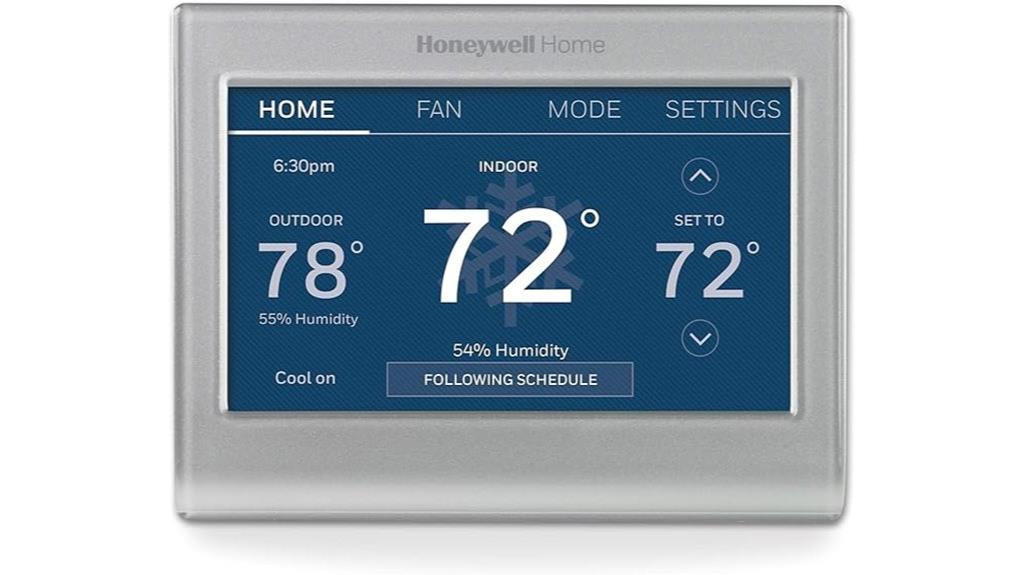
If you’re looking for a versatile and customizable thermostat that integrates seamlessly with smart home systems, the Honeywell Wi-Fi Smart Color Thermostat is an excellent choice. It features a bright, intuitive touchscreen with customizable background colors to match your decor. Supporting 7-day programmable schedules, auto heat-to-cool switching, and remote control via app or voice assistants like Alexa and Google Home, it offers easy setup and flexible management. Certified Energy Star, it helps reduce energy costs through personalized tips, alerts, and demand response programs. Compatible with various heating systems (excluding electric baseboards), it provides reliable, smart control to optimize comfort and efficiency in your home.
Best For: homeowners seeking a customizable, energy-efficient smart thermostat that easily integrates with Alexa, Google Home, and supports various heating systems.
Pros:
- Bright, easy-to-use color touchscreen with customizable backgrounds for personalized decor.
- Supports 7-day programmable schedules, auto changeover, and remote control via app or voice commands.
- Energy Star certified, helping reduce energy costs with personalized tips and demand response features.
Cons:
- Requires a C-wire for installation, which may not be available in all homes.
- Not compatible with electric baseboard heating systems (120-240V).
- May have a learning curve for users unfamiliar with smart thermostats or DIY installation.
Programmable Smart Thermostat with WiFi and App Control
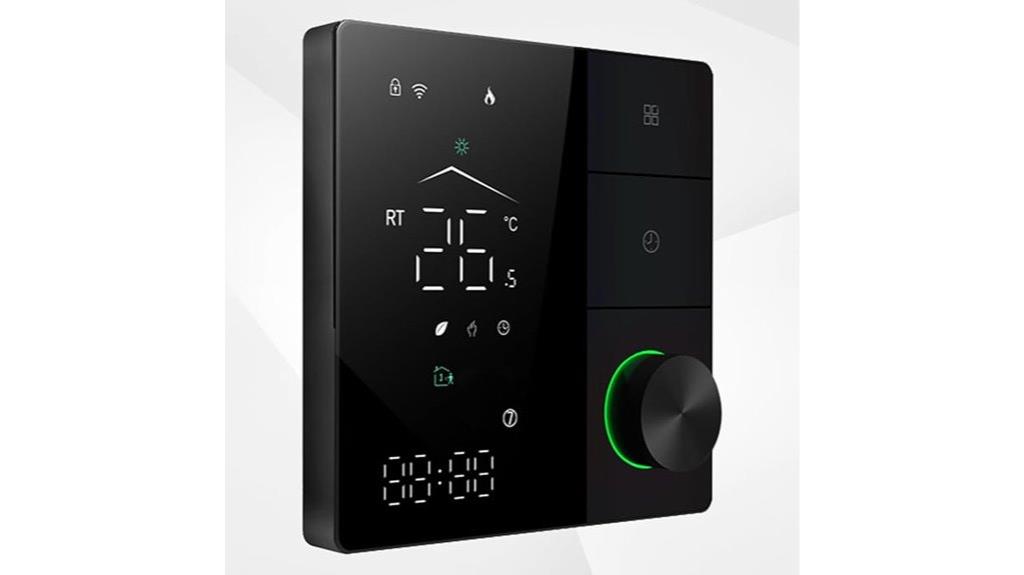
Looking for a smart thermostat that offers flexible control and seamless integration? This programmable smart thermostat supports the Matter protocol, making it compatible with HomeKit, Alexa, Google Assistant, and Tuya. It works with various heating systems like electric floors, baseboards, radiators, and oil heaters, with a voltage range of 95-240V and 16A load capacity. Its 7-day schedule allows for automatic or manual settings, saving up to 35% energy compared to traditional models. You can control it remotely via an app or voice commands, and enjoy features like weather forecast, child lock, and easy DIY installation. It’s a smart, efficient upgrade for your home.
Best For: homeowners seeking a versatile, energy-efficient smart thermostat compatible with multiple voice assistants and heating systems for seamless home climate control.
Pros:
- Supports Matter protocol for broad compatibility with HomeKit, Alexa, Google Assistant, and Tuya.
- 7-day programmable schedule with energy-saving features, reducing energy use by up to 35%.
- Easy DIY installation with clear instructions and options for converter use if needed.
Cons:
- May require a converter for junction box compatibility in some installations.
- Limited to electric heating systems, so not suitable for gas or other non-electric systems.
- The app and voice control features depend on stable WiFi connection, which may affect remote access.
Factors to Consider When Choosing a Baseboard Heater Thermostat Smart Control
When choosing a smart control thermostat for your baseboard heater, I consider several key factors. Compatibility with my heating system, app features, and ease of installation are top priorities, along with energy management and voice assistant options. Understanding these points helps me find a device that’s reliable, user-friendly, and suits my needs.
Compatibility With Heating Systems
Choosing the right smart control thermostat for your baseboard heater starts with guaranteeing compatibility with your heating system. First, check your heater’s voltage—most are either 120V or 240V—and confirm the thermostat matches this to avoid electrical problems. Next, verify that the thermostat supports your specific heater type, whether baseboard, convector, or fan-forced, for smooth operation. It’s also essential to see if your system requires a neutral wire or additional wiring, especially with high-voltage setups. Additionally, consider whether the thermostat is designed for single-pole or double-pole configurations to match your wiring. Finally, if you want remote control or automation, guarantee the thermostat is compatible with your smart home platforms or voice assistants. Proper compatibility ensures safe and efficient operation.
Connectivity and App Features
Connectivity and app features are crucial factors to contemplate because they determine how easily you can control and optimize your heating system. A thermostat with Wi-Fi support allows for remote adjustments and scheduling through a dedicated app, giving you flexibility. Look for apps that offer real-time energy monitoring and detailed usage reports so you can optimize efficiency and save on costs. Compatibility with popular smart home platforms like Apple HomeKit, Alexa, and Google Assistant ensures seamless integration and automation. The app should also enable customizable daily and weekly schedules tailored to your routines. Additionally, push notifications or alerts for system status, maintenance reminders, or unusual activity keep you informed and help maintain system efficiency. These features make managing your heating both smarter and more convenient.
Ease of Installation
Installing a smart control thermostat for your baseboard heater doesn’t have to be complicated. Look for models with clear, step-by-step instructions or helpful video guides to make setup easier. Choose a thermostat that supports standard wiring configurations, usually requiring four or more wires, to ensure compatibility with your existing system. Check that the mounting method fits your electrical box and heater design—this can save a lot of time and frustration. Opt for devices with minimal wiring connections, such as single or double pole options, which are simpler to install. Additionally, user-friendly interfaces, tactile controls, or preset configurations can speed up the installation process. Overall, selecting a thermostat designed for straightforward setup makes upgrading your home heating hassle-free.
Energy Management Capabilities
When selecting a smart control thermostat for your baseboard heater, it’s essential to evaluate its energy management features. Look for models with customizable schedules to optimize heating times and cut energy waste. Real-time energy monitoring helps you identify usage patterns and adjust for efficiency. Automatic temperature adjustments and adaptive learning ensure comfort while reducing unnecessary energy consumption. Integration options with smart home platforms allow you to automate heating based on occupancy or external conditions, enhancing efficiency. Additionally, thermostats with open window detection or ventilation sensors can automatically pause heating when windows are open, saving energy. Prioritizing these features helps you manage your home’s energy use effectively, lowering costs and minimizing environmental impact without sacrificing comfort.
Voice Assistant Integration
Integrating voice assistants into your smart baseboard heater thermostat can greatly enhance convenience and control. I recommend checking if the thermostat works seamlessly with popular voice platforms like Amazon Alexa, Google Assistant, or Apple Siri. This ensures you can adjust the temperature, turn the heater on or off, and set schedules using simple voice commands. It’s also important to verify if the device responds naturally to prompts, making control effortless. Consider whether it integrates smoothly with your existing smart home ecosystem, allowing automation and routines triggered by voice. Additionally, look into the voice recognition accuracy and whether it can distinguish multiple users’ voices for personalized settings. These features make managing your home’s heating intuitive and hands-free, adding real convenience to your daily routine.
Frequently Asked Questions
How Do Smart Thermostats Integrate With Existing Home Automation Systems?
Smart thermostats easily integrate with existing home automation systems through Wi-Fi or Zigbee/Z-Wave protocols. I connect mine via a compatible hub or app, allowing me to control my heating remotely or set schedules. Most systems support voice commands with Alexa, Google Assistant, or Apple HomeKit. This seamless integration makes managing my home’s temperature simple, efficient, and customizable, enhancing comfort and energy savings effortlessly.
Are Voice Control Features Compatible With All Smart Baseboard Thermostats?
Are voice control features compatible with all smart baseboard thermostats? Nope, not all. Some fancy models boast seamless voice integration, while others are more stubborn than a mule. If talking to your heater is your thing, check the specs before buying. Otherwise, you might end up shouting commands at a thermostat that’s deaf to your voice—definitely not the upgrade you envisioned!
What Is the Typical Installation Process for These Smart Thermostats?
The typical installation process for smart thermostats involves turning off power to your heater, removing the old thermostat, and connecting the new one’s wires according to the manufacturer’s instructions. I recommend double-checking the wiring diagram and using a voltage tester. Once connected, I usually turn the power back on, connect the thermostat to your Wi-Fi, and follow the app setup steps. It’s straightforward but safety first!
How Do Smart Thermostats Handle Power Outages or Connectivity Issues?
Smart thermostats typically have backup power options like batteries to handle outages, ensuring they keep functioning temporarily. If there’s a connectivity issue, they often revert to local controls or preset schedules, so your heating isn’t disrupted completely. I find that many models also store settings locally, so even if Wi-Fi drops, your home stays comfortable. It’s reassuring knowing these devices are designed to maintain operation during power or connection hiccups.
Can These Thermostats Be Customized for Different Room Schedules?
Yes, these thermostats can be customized for different room schedules. I love that I can set specific temperatures and timings for each room, ensuring comfort and energy efficiency. With user-friendly apps, I easily program different schedules for bedrooms, living rooms, or offices. This flexibility helps me save on energy costs while maintaining a cozy home environment tailored to my daily routines.
Conclusion
Ultimately, choosing the right smart thermostat depends on your needs and nuances. Whether it’s the budget-friendly basics or the feature-filled favorites, I recommend weighing your options carefully. By balancing budget, brightness, and bonus features, you’ll find the perfect fit for your home’s heating. Remember, a well-wired thermostat makes warmth more wonderful, efficient, and effortless—bringing cozy comfort to your space with confidence and control.