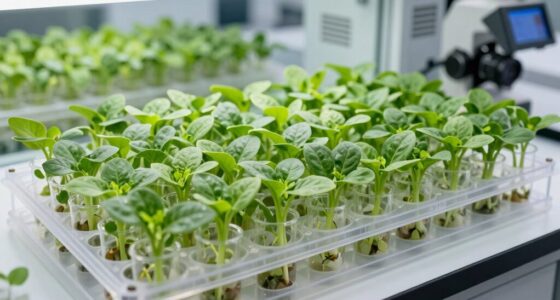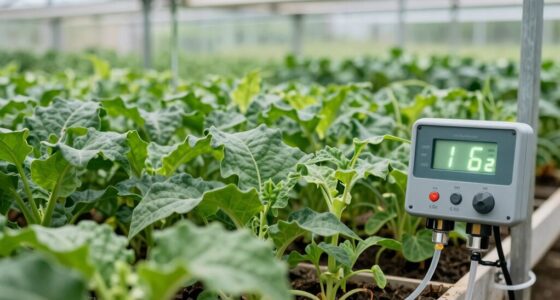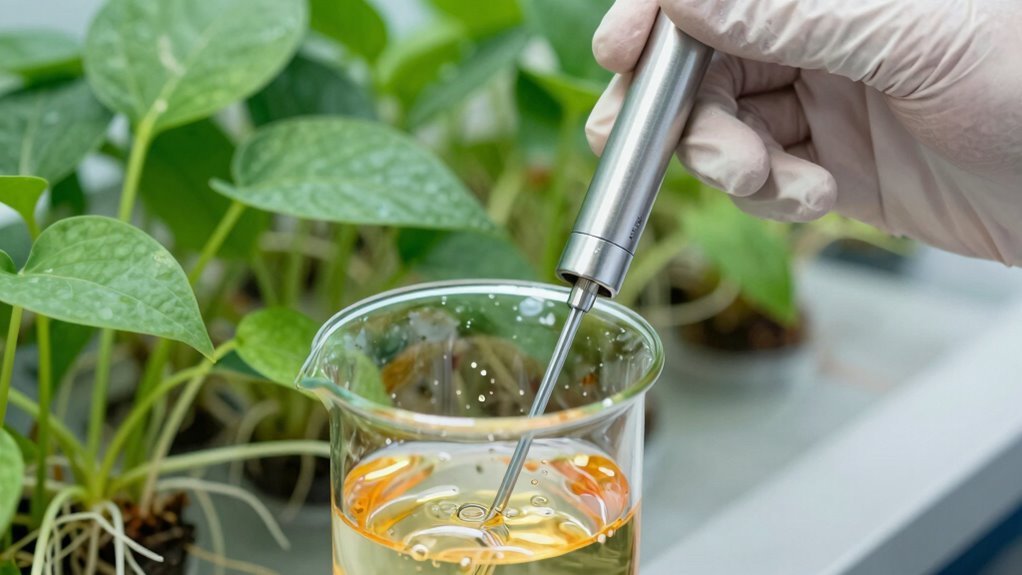

Precision measurement matters in plant nutrition because it helps you know the exact soil conditions and nutrient levels for healthy growth. When you measure soil pH and nutrient solubility accurately, you can make better decisions on fertilization and amendments. This guarantees nutrients are available in the right form and amount, preventing deficiencies or excess. Consistent, precise data helps you optimize crop yields and protect the environment. Keep exploring to discover how advanced tools can boost your results further.

Get school and study supplies delivered free — and shop member deals
- Fast, free delivery on millions of items
- Access to Prime Big Deal Days deals on October 6–7
- Prime Video, Amazon Music and more included
Key Takeaways
- Accurate soil pH measurement ensures optimal nutrient availability and prevents deficiencies.
- Precise data guides targeted fertilization, reducing waste and environmental impact.
- Monitoring soil conditions over time helps detect issues early, supporting healthy plant growth.
- Advanced sensors and technology enable real-time, reliable data for better management decisions.
- Measurement accuracy maximizes crop yield, growth, and sustainability through informed nutrient management.
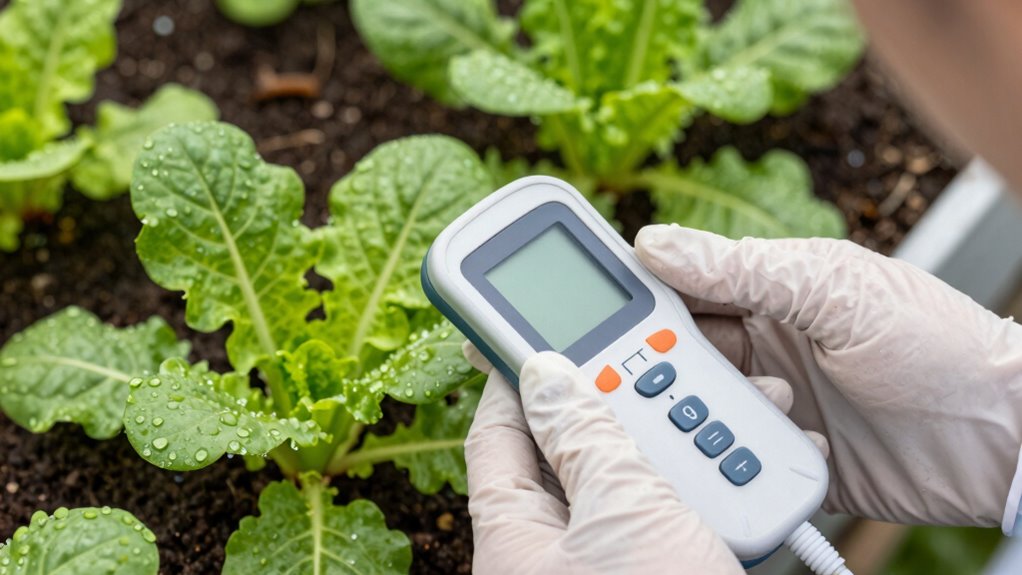
Understanding plant nutrition is essential for optimizing growth and crop yields, and precision measurement plays a critical role in this process. When you measure soil pH accurately, you gain vital insights into the soil’s acidity or alkalinity, which directly influences nutrient availability. Soil pH affects nutrient solubility, determining whether essential elements like nitrogen, phosphorus, and potassium are accessible to plants. If the pH is off, nutrients can become insoluble and unavailable, leading to deficiencies even if you’ve applied the right fertilizers. By precisely monitoring soil pH, you can adjust lime or sulfur applications to bring the pH into the ideal range for your crops, guaranteeing nutrients stay soluble and accessible.
Precise soil pH measurement ensures optimal nutrient availability and healthier crop growth.
Nutrient solubility is a key factor that impacts how effectively plants absorb essential elements. When you understand how soluble nutrients are in your soil, you can fine-tune your fertilization strategies. For instance, in soils with low pH, certain nutrients tend to become less soluble, causing deficiencies that stunt plant growth. Conversely, in soils with high pH, nutrients like iron and manganese may become insoluble, leading to deficiencies despite adequate fertilizer application. By employing precise measurement techniques, you avoid guesswork, reducing waste and preventing over-application of fertilizers that can harm the environment. Accurate soil testing allows you to identify exactly which nutrients are available and in what quantities, making your fertilization more targeted and efficient.
Precision measurement also helps you detect subtle changes in soil conditions over time. Soil pH can fluctuate due to rainfall, crop removal, and amendments, so regular measurements ensure you stay ahead of potential issues. This ongoing monitoring helps you maintain the delicate balance necessary for ideal nutrient solubility and plant health. Additionally, understanding the role of contrast ratio in soil and plant health can help you optimize the conditions for root development and nutrient uptake. When you rely on accurate data, you can make informed decisions about lime or fertilizer applications, avoiding the pitfalls of guesswork or broad recommendations. This proactive approach leads to healthier plants, higher yields, and more sustainable practices. Furthermore, investing in precision measurement tools improves overall efficiency and reduces resource waste, supporting eco-friendly farming practices.
Moreover, incorporating advanced sensing technologies can provide real-time data, enabling even more precise management of soil conditions. In essence, understanding and measuring soil pH and nutrient solubility with precision empowers you to optimize plant nutrition. It guarantees your crops receive the right nutrients at the right time and in the right form, maximizing growth and productivity. By investing in accurate measurement tools and techniques, you’re taking a crucial step toward smarter, more effective crop management that benefits both your harvests and the environment. Additionally, advancements in soil sensors and IoT technology can automate data collection, making ongoing monitoring more accessible and reliable.
A thorough understanding of measurement accuracy is fundamental for ensuring reliable data, which is essential for making informed management decisions.
As an affiliate, we earn on qualifying purchases.
Frequently Asked Questions
How Do Soil Conditions Affect Measurement Accuracy?
Soil conditions directly impact measurement accuracy because soil pH variability can skew nutrient readings, making it seem like nutrients are more or less available than they really are. Organic matter effects also influence results, as high organic content can bind nutrients differently, complicating analysis. To get precise measurements, you need to account for these factors, ensuring your tests reflect the true nutrient status for ideal plant health.
What Tools Are Most Reliable for Precise Nutrient Analysis?
They say a chain is only as strong as its weakest link, so you should trust a reliable spectrometer for precise nutrient analysis. Make sure to regularly calibrate it for accuracy, and always homogenize samples to guarantee consistency. These tools are your best bet for accurate measurements, helping you make informed decisions on plant nutrition. Proper calibration and sample prep are key to revealing the full potential of your analysis tools.
Can Precision Measurement Improve Crop Yield Consistency?
Yes, precision measurement can improve crop yield consistency by accounting for genetic variation and climate impact. When you accurately analyze nutrient levels, you adapt fertilization to genetic differences and changing weather patterns. This targeted approach guarantees plants receive ideal nutrients, boosting resilience and productivity. By controlling these variables, you reduce yield variability, leading to more reliable crop outputs despite environmental fluctuations.
How Often Should Nutrient Levels Be Tested in the Field?
You should test nutrient levels in your field every 3 to 4 weeks during active growth, like checking a car’s oil regularly to prevent breakdowns. Nutrient sampling combined with lab analysis helps you catch deficiencies early. Regular testing guarantees your crops get the right nutrients at the right time, avoiding over- or under-fertilizing, and ultimately leads to healthier plants and better yields.
What Are Common Mistakes in Nutrient Measurement?
You should avoid common mistakes like nutrient contamination and sampling errors. Nutrient contamination can occur if tools aren’t properly cleaned, skewing results. Sampling errors happen when samples aren’t representative or are mishandled, leading to inaccurate measurements. To guarantee accuracy, always clean sampling tools, follow proper procedures, and collect multiple samples from different areas. This careful approach helps you get precise nutrient readings essential for ideal plant nutrition management.
As an affiliate, we earn on qualifying purchases.
Conclusion
By mastering precision measurement, you’re fundamentally tuning your plant’s nutritional orchestra to perfection, ensuring every note hits just right. When you measure accurately, you’re not just feeding plants—you’re nurturing a thriving ecosystem where roots dance and leaves sing. Think of it as wielding a compass in a vast garden—guiding each element precisely where it’s needed. So, embrace precision, and watch your plants flourish like a well-choreographed symphony.
As an affiliate, we earn on qualifying purchases.
real-time soil moisture and pH sensor
As an affiliate, we earn on qualifying purchases.
As an affiliate, we earn on qualifying purchases.
Halloween Picks
halloween
As an affiliate, we earn on qualifying purchases.