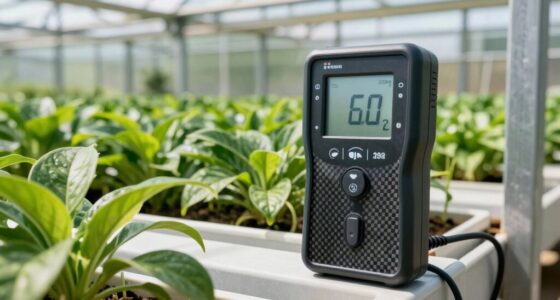

Plant hormones don’t act alone; instead, they form a complex network that coordinates your plant’s growth, development, and defense. They communicate through cross-talk pathways, where signals like auxin, cytokinins, and jasmonic acid work together to regulate processes such as cell division, elongation, or stress responses. This interconnected system helps plants adapt efficiently to their environment. If you keep exploring, you’ll discover how these interactions create a smart, responsive plant communication web.
Key Takeaways
- Plant hormones interact through cross talk to coordinate growth, development, and stress responses efficiently.
- Hormones like auxin and cytokinins regulate each other’s production and effects for balanced cell activity.
- Signaling pathways are interconnected, enabling rapid adjustments to environmental stimuli.
- Defense hormones such as jasmonic acid and salicylic acid work together to activate complementary responses.
- The hormone network ensures holistic sensing and adaptive responses to environmental changes.

Have you ever wondered how plants coordinate their growth and responses to the environment? It’s fascinating to realize that plants don’t rely on a single hormone to manage all their needs. Instead, they depend on a complex network of hormone signaling and cross communication pathways, enabling them to adapt quickly and efficiently. When a plant encounters drought, for example, it doesn’t just produce one hormone to survive; it activates multiple signals that work together, ensuring a balanced response. This interconnected communication allows the plant to grow, develop, and defend itself in a coordinated manner.
Hormone signaling is the foundation of this process. Each hormone acts like a messenger carrying specific instructions—whether to promote cell elongation, inhibit growth, or trigger flowering. But these signals don’t operate in isolation. Instead, they intersect at various points through cross communication pathways, creating a dynamic and adaptable system. For instance, auxin, a key growth hormone, interacts with cytokinins to regulate cell division and differentiation. When auxin levels rise, it can influence how cytokinins are produced or how they respond, ensuring that growth occurs where it’s most needed. This cross talk allows the plant to prioritize certain responses, like elongating stems or developing roots, based on environmental cues. Additionally, the hormone balance within the plant plays a crucial role in determining the overall response to various stimuli. It’s also important to recognize how hormone interactions can modulate each other’s effects, creating nuanced responses to complex environmental conditions. This intricate coordination is essential for plants to effectively respond to environmental changes, which can involve shifts in multiple signaling pathways.
Hormone cross talk enables plants to prioritize growth and adapt to environmental cues efficiently.
You might think of plant hormones as members of a team, each with a specific role, but capable of collaborating to achieve a common goal. This collaboration is essential because environmental conditions are constantly changing, and a single hormone cannot handle all the nuances. Instead, multiple signals integrate to produce a coherent response. For example, when a plant needs to defend against pests, jasmonic acid and salicylic acid activate defense mechanisms. These signals don’t compete but complement each other, fine-tuning the plant’s response to be both effective and energy-efficient. The signaling pathways involved are highly interconnected, allowing for rapid adjustments based on new information. Recognizing the interconnected nature of these pathways highlights the importance of hormone cross communication, which fosters a flexible and responsive system.
Understanding how hormone signaling and cross communication pathways work together gives you insight into the plant’s resilience. They act like a sophisticated communication network, allowing plants to sense, process, and respond to their surroundings holistically. This synergy makes plants incredibly adaptable, enabling them to grow toward light, conserve resources during drought, or heal wounds. Far from acting alone, plant hormones form an intricate web of interactions that orchestrate growth and survival, demonstrating how unity and collaboration are vital even in the plant kingdom.

Proov Empower Hormone Tracker for Women – FSH, LH, Estrogen & Progesterone
- Hormone Tracking for Perimenopause: Monitor FSH, LH, PdG, and E1G levels at home
- Estrogen Level Monitoring: Track E1G to understand estrogen fluctuations
- Progesterone Measurement: Measure PdG to assess progesterone levels
As an affiliate, we earn on qualifying purchases.
As an affiliate, we earn on qualifying purchases.
Frequently Asked Questions
How Do Plant Hormones Influence Root Development?
You influence root development through hormone interactions that regulate root signaling. For example, auxins promote root initiation and elongation, while cytokinins can inhibit or balance this process. When these hormones work together, they coordinate growth, ensuring roots form efficiently and adapt to environmental conditions. Your understanding of hormone interactions helps explain how plants control root growth dynamically, responding to signals to optimize nutrient uptake and stability.
Can Plant Hormones Be Used to Increase Crop Yield?
Yes, you can use plant hormones to increase crop yield. By optimizing hormone synthesis, you influence growth processes like flowering and fruiting. In crop management, applying hormones such as gibberellins or cytokinins can boost productivity, improve fruit size, and enhance stress resistance. Carefully timed treatments ensure hormones work synergistically, helping your crops develop better, faster, and more efficiently, ultimately leading to higher yields and better quality produce.
Are Plant Hormones Affected by Environmental Stress?
Yes, plant hormones are affected by environmental stress, which triggers hormone signaling pathways. When faced with stress, your plants activate a stress response, altering hormone levels like abscisic acid, auxins, and ethylene. This adjustment helps them survive adverse conditions. You’ll notice changes in growth or development, as hormones coordinate the plant’s response, ensuring it adapts effectively to factors like drought, salinity, or temperature fluctuations.
How Quickly Do Plant Hormones Respond to Changes?
Plant hormones respond in the blink of an eye, like lightning striking the sky. Their hormone signaling is remarkably swift, allowing plants to adapt quickly to environmental changes. Response speed varies depending on the hormone and stimulus, with some reacting within minutes and others taking hours. You might notice this rapid response as a plant bends toward light or closes its stomata, showcasing how efficiently hormone signaling orchestrates plant survival.
Do All Plants Use the Same Hormone Combinations?
Not all plants use the same hormone combinations. You’ll find variations in hormone signaling and plant growth regulation across species, depending on their environment and developmental stage. Some plants rely more on auxins for root growth, while others emphasize gibberellins for stem elongation. These differences help plants adapt and thrive, demonstrating that hormone signaling and plant growth regulation are tailored to each plant’s unique needs and conditions.
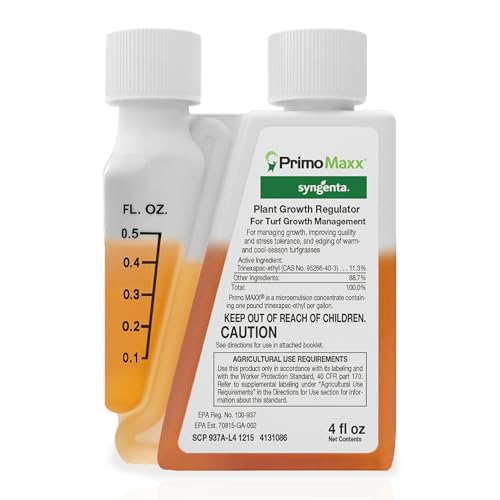
Primo Maxx Plant Growth Regulator
- Eases maintenance of tough turf areas: Reduces need for edging and mowing
- Enhances drought resistance: Multiple applications lower water usage
As an affiliate, we earn on qualifying purchases.
As an affiliate, we earn on qualifying purchases.
Conclusion
Just as a symphony relies on many instruments working in harmony, plants depend on multiple hormones collaborating for their growth and survival. While each hormone has its unique role, it’s their combined effort that creates the vibrant, adaptable life you see. Without this teamwork, plants would struggle to respond to their environment or develop properly. So, next time you admire a thriving plant, remember—it’s the beautiful cooperation of hormones that makes it all possible.

Physical Stresses in Plants: Genes and Their Products for Tolerance
As an affiliate, we earn on qualifying purchases.
As an affiliate, we earn on qualifying purchases.

Garden Safe Take Root Rooting Hormone 2 Oz, Promotes Rooting, 2 Pack
- Promotes Root Growth: Encourages new plant development from cuttings
- Contains Natural Active Ingredient: Indole-3-butyric acid mimics natural plant hormones
- Easy Application: Moisten cut, dip in powder, tap off excess, then plant
As an affiliate, we earn on qualifying purchases.
As an affiliate, we earn on qualifying purchases.