
When choosing between RO, DI, and ultrapure water systems, you need to take into account your water purity needs. RO uses a membrane to remove salts, bacteria, and organics, making it good for general purification. DI uses resin beds to remove ionized impurities for ultrapure water, often after RO. Ultrapure systems combine both methods for the highest purity and are used in sensitive applications. Understanding how each system works will help you make an informed decision as you explore further details.
Key Takeaways
- RO systems use membranes to remove salts, bacteria, and organics, serving as the initial purification step.
- DI systems use resin beds to remove ionized impurities, producing ultrapure water mainly for labs and medical use.
- Ultrapure water systems combine RO and DI processes for the highest purity, suitable for sensitive industries like pharmaceuticals.
- Maintenance complexity increases from RO to DI to ultrapure systems, requiring regular filters, resin regeneration, and strict monitoring.
- Water quality testing and system oversight are essential for ensuring consistent performance across all three types.
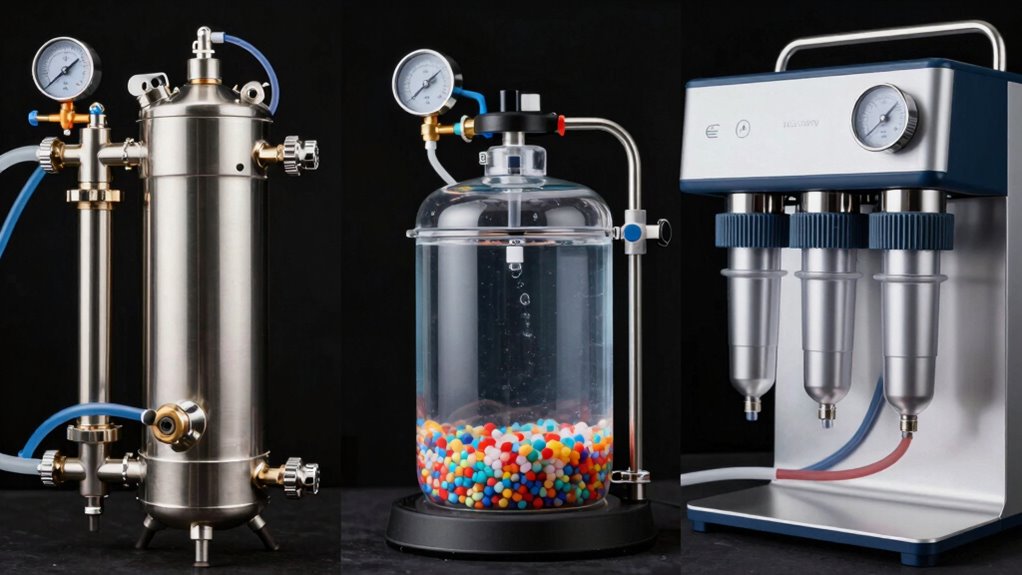
When choosing a water purification system, understanding the differences between RO, DI, and ultrapure water systems is crucial to meet your specific needs. Each system plays a unique role in producing high-quality water, and knowing how they work helps you make an informed decision. RO, or reverse osmosis, is a widely used method that forces water through a semi-permeable membrane, removing most contaminants, including salts, bacteria, and organic molecules. It’s effective for general water purification and is often the first step in producing clean water for many applications. However, because RO membranes can become clogged or less effective over time, regular system maintenance is necessary to guarantee ideal performance. You’ll need to replace filters, clean membranes, and monitor system pressures to keep your RO system functioning properly. Proper maintenance is essential to sustain optimal filtration efficiency and prolong system lifespan. Regular testing of water quality helps ensure your system continues to meet desired purity levels. Additionally, understanding the filter replacement schedule helps prevent system downtime and ensures consistent water quality.
Deionization, or DI, takes water purification a step further by removing ionized impurities through the use of resin beds. This process is especially crucial when you require ultrapure water, such as in laboratory or medical settings. The DI process involves passing water through resin columns that exchange ions, effectively stripping away dissolved salts and minerals. Unlike RO, DI alone isn’t sufficient to remove organic contaminants or bacteria. Instead, it’s usually used after an RO system to polish the water and achieve extremely low conductivity levels. For system maintenance, resin beds need periodic regeneration or replacement, and you should keep an eye on the water’s resistivity to ensure the DI system continues to produce ultrapure water. Proper monitoring of resistivity levels is vital to maintain the system’s effectiveness. Additionally, understanding water resistivity helps in assessing the purity level achieved by the DI process. Routine testing of resistivity ensures the system stays within the desired purity range for critical applications.
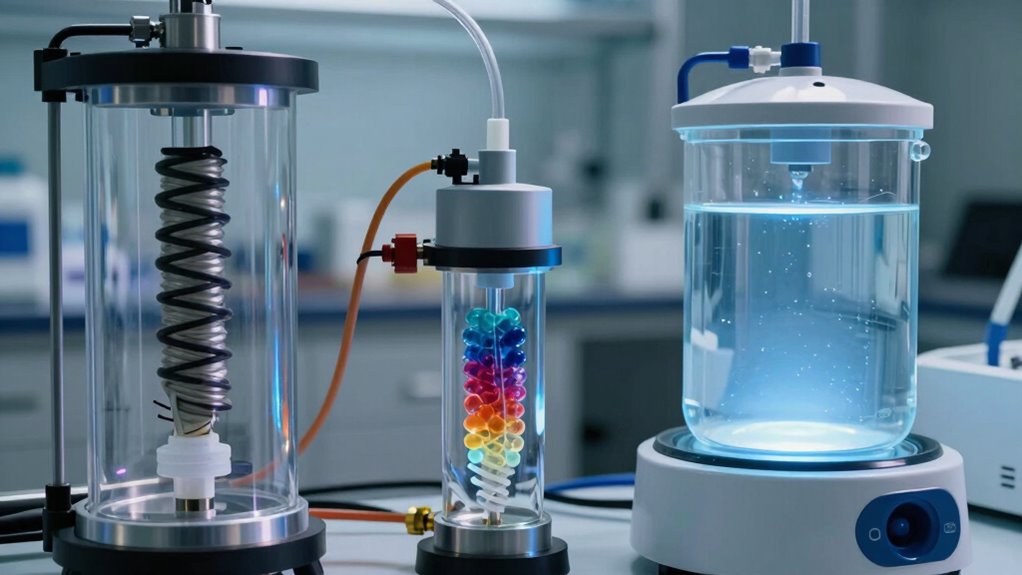
Ultrapure water systems combine both RO and DI processes to deliver water of the highest purity. These systems are ideal when your applications demand the removal of nearly all impurities, including organic compounds, bacteria, and dissolved salts. They’re common in laboratories, pharmaceutical manufacturing, and electronics industries. Because ultrapure systems involve multiple stages, system maintenance becomes more complex. You’ll need to monitor each stage, replace filters, regenerate resins, and ensure everything operates smoothly. Regular checks prevent contamination and ensure your ultrapure water remains consistent and reliable. Implementing a maintenance schedule helps keep the system functioning at peak performance. Proper documentation of maintenance activities also helps troubleshoot issues promptly and maintain regulatory compliance. Additionally, understanding the system complexity involved in ultrapure water production is key to managing its operational needs effectively.

iSpring RCC7AK-BN NSF Certified, 75 GPD, Alkaline 6-Stage Reverse Osmosis System, pH+ Remineralization RO Water Filter System Under Sink Patented Top-Mounted Faucet Design for Easy Installation
PATENTED DESIGN – The top-mounted fastener allows for easy countertop installation entirely from above, eliminating the hassle of…
As an affiliate, we earn on qualifying purchases.
As an affiliate, we earn on qualifying purchases.
Frequently Asked Questions
Which Water System Is Best for Pharmaceutical Manufacturing?
For pharmaceutical manufacturing, an ultrapure water system is your best choice due to its superior water quality, guaranteeing product safety and compliance. It offers consistent purity levels necessary for sensitive processes. Additionally, these systems are scalable, allowing you to adapt as your production needs grow. By choosing ultrapure water systems, you guarantee high-quality, reliable water that meets strict industry standards, supporting both current and future manufacturing demands.
How Does Water System Maintenance DIffer Among RO, DI, and Ultrapure Systems?
You’ll find that maintenance varies across RO, DI, and ultrapure systems, impacting system longevity and contamination control. RO systems need regular filter replacements and membrane cleaning to prevent fouling. DI systems require frequent resin changes to maintain purity. Ultrapure systems demand meticulous, scheduled sanitization and monitoring to guarantee contamination control. Proper upkeep ensures each system’s longevity and consistent water quality, critical for pharmaceutical applications.
What Are the Environmental Impacts of Each Water Purification Method?
Like stepping into a time machine, you’ll find RO systems have a notable environmental footprint due to high energy use and brine waste, challenging waste management. DI systems produce minimal waste but rely on resin regeneration, which can generate chemical waste. Ultrapure systems, though efficient, require energy-intensive purification, impacting the environment. Overall, each method’s environmental impact varies, so you must weigh their waste management practices and energy consumption carefully.
Can These Systems Be Combined for Better Water Quality?
Yes, combining these systems can enhance water quality through purification synergy. You need to account for system compatibility to guarantee they work together effectively. For example, using RO as a pre-treatment step before DI or ultrapure systems can remove larger contaminants, improving overall purity. This integrated approach ensures better purification, reduces maintenance, and achieves ultrapure water levels more efficiently. Just make sure each system is compatible and properly maintained for ideal results.
What Is the Cost Comparison for Installation and Operation?
Cost comparisons can be complex, but generally, RO systems boast lower installation and operational expenses, making them more affordable initially. DI and ultrapure systems tend to be pricier due to specialized components and ongoing maintenance. A detailed expense analysis reveals that while RO offers economical entry, DI and ultrapure setups escalate in cost over time. You should balance upfront investment against long-term needs to determine the most cost-effective solution.

AquaticLife Mixed Bed Color Changing Bulk Deionization DI Resin Refill for Reverse Osmosis Water Filter for RO/DI System for Aquarium, 5 Liter
COLOR-CHANGING DEIONIZATION RESIN: Our color changing deionization resin physically changes color from Dark Brown/Blue to Tan as it…
As an affiliate, we earn on qualifying purchases.
As an affiliate, we earn on qualifying purchases.
Conclusion
Choosing between RO, DI, and ultrapure water systems is like selecting the right lens to capture a perfect photo—you need clarity, precision, and purity. Imagine a scientist, tirelessly refining samples, each system acting as a different tool to achieve flawless results. Just as a photographer’s lens defines the sharpness of an image, your choice determines the quality of your water and the success of your work. Make the right choice, and watch your results shine.

Sartorius H2O-MA-UV-Set-US, arium Mini Plus Ultrapure Water System, UV Bundle
Power supply 100 – 240 VAC; 50 and 60 Hz, 2 A (max.)
As an affiliate, we earn on qualifying purchases.
As an affiliate, we earn on qualifying purchases.

Varify 17in1 Complete Drinking Water Test Kit – 100 Strips + 2 Bacteria Tester Kits – Well, Tap, Home, City Water Testing Strip for Lead, Alkaline, Chlorine, Hardness, Iron, Fluoride, Copper & More
17 IMPORTANT PARAMETERS: The Varify Premium Drinking Water Test Kit offers an unrivaled, complete analysis of your drinking…
As an affiliate, we earn on qualifying purchases.
As an affiliate, we earn on qualifying purchases.