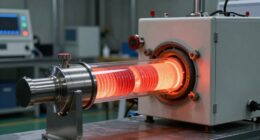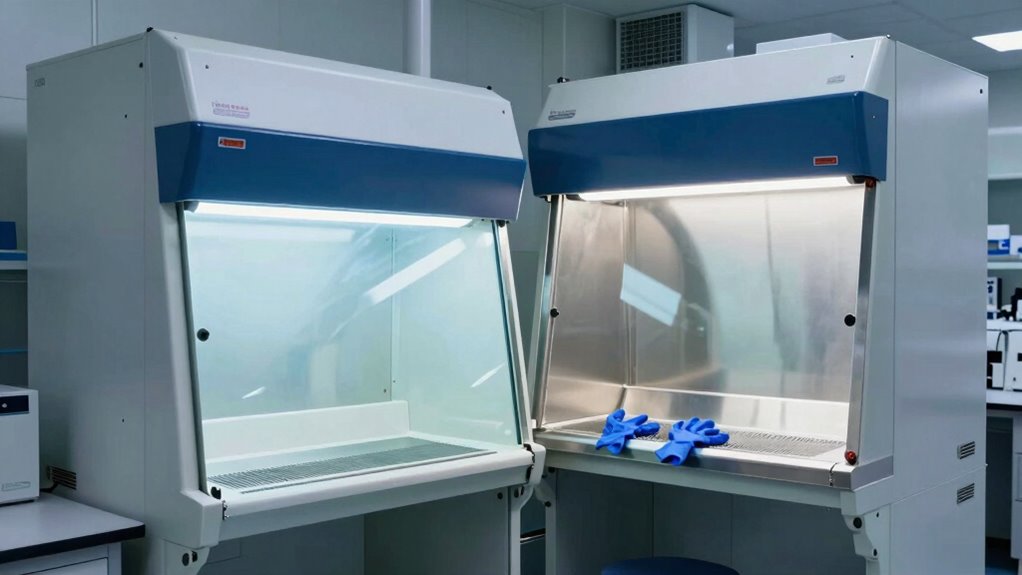
A laminar flow hood provides a sterile work environment using unidirectional airflow and HEPA filters, ideal for tasks like tissue culture and media prep, but it doesn’t offer biological containment. A biosafety cabinet not only filters air but also includes physical barriers like sash windows, making it suitable for handling biological hazards safely. Understanding these differences helps you choose the right equipment for your needs—keep exploring to get a clearer picture of each.
Key Takeaways
- Laminar flow hoods provide a sterile environment with unidirectional airflow, but do not offer biological containment.
- Biosafety cabinets combine HEPA filtration with physical barriers for both sterility and containment of hazards.
- Laminar flow hoods are ideal for non-hazardous tissue culture and media prep; biosafety cabinets are used for handling biological hazards.
- Safety features like sash windows and containment barriers distinguish biosafety cabinets from laminar flow hoods.
- Both use HEPA filters for air cleanliness but serve different safety and contamination control purposes.
Ever wondered what sets a laminar flow hood apart from a biosafety cabinet? Both are essential tools in laboratories, but they serve different purposes, especially when it comes to air filtration and workspace ergonomics. Understanding these differences helps you select the right equipment for your needs, whether you’re working with sensitive samples or hazardous materials.
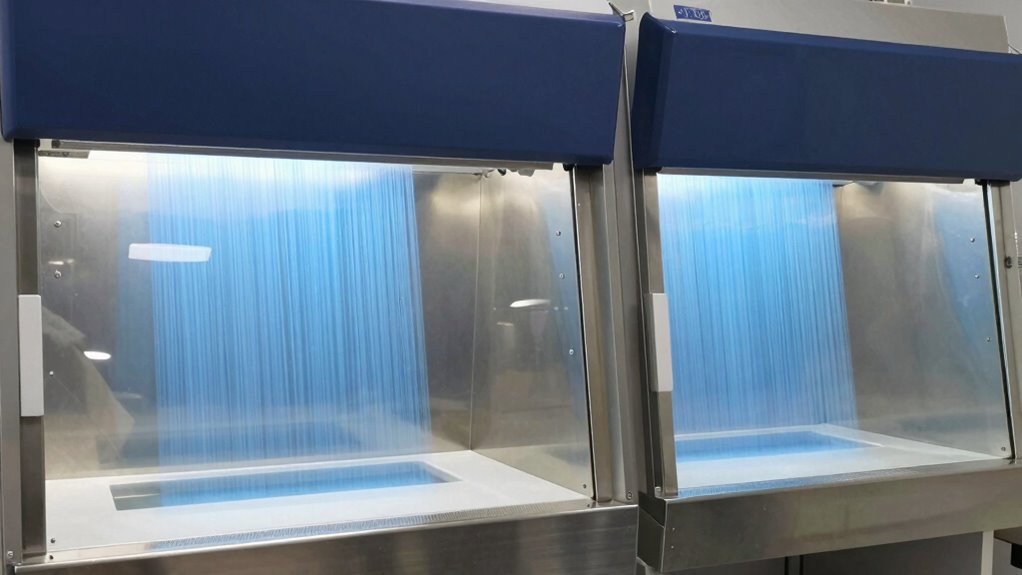
A laminar flow hood primarily focuses on providing a sterile environment by directing filtered air in a smooth, unidirectional stream across the workspace. This is achieved through high-efficiency HEPA filters that trap airborne contaminants, ensuring your work surface remains free of particles. Because of this design, a laminar flow hood is excellent for tasks like tissue culture, media preparation, or anything requiring a sterile environment without the need for biological containment. The airflow pattern not only maintains cleanliness but also influences workspace ergonomics; the uniform, steady stream minimizes turbulence, allowing you to work comfortably and efficiently. The design often features a spacious, unobstructed work area that enables easy movement and reduces strain during prolonged tasks. Additionally, the air filtration system plays a crucial role in maintaining a contaminant-free environment, especially in sensitive procedures.
A laminar flow hood delivers a sterile, unidirectional airflow for contamination-free work and enhanced workspace comfort.
In contrast, a biosafety cabinet is engineered to protect not just your samples but also you and the environment from potentially dangerous biological agents. It combines air filtration with physical barriers like glass sash windows, which you can adjust for comfort and access. The air filtration system in biosafety cabinets is more robust, often including both HEPA filters for removing airborne microbes and physical barriers to contain aerosols. This setup ensures that hazardous particles do not escape into the lab environment, offering a higher level of biological safety. Workspace ergonomics are carefully considered here too; the design allows you to work comfortably while maintaining safety protocols. The sash position can be adjusted to suit your height, and the interior layout is optimized to reduce fatigue during long procedures.
While both units rely heavily on air filtration to maintain cleanliness and safety, their differences lie in their intended use and safety features. The laminar flow hood is ideal for non-hazardous, sterile work, prioritizing workspace ergonomics and contaminant-free environments. The biosafety cabinet, however, emphasizes containment, protecting you from biological hazards while still maintaining a sterile environment. When choosing between the two, consider whether your priority is maintaining sample sterility or ensuring personal and environmental safety from biological risks. Both devices enhance your work environment through advanced air filtration, but understanding their specific functions ensures you make the right choice for your tasks.

Laminar Flow Hood with H13 HEPA Filter (20"x15"), FFU Class 100 / ISO 5 Clean Bench with Light for Mycology, Mushroom Cultivation, Lab & Cleanroom, 24V DC with 100–240V Adapter
Spacious Work Area & Efficient Airflow: Overall size: 20 × 16.8 × 7.9 inches, working area: 20 ×…
As an affiliate, we earn on qualifying purchases.
As an affiliate, we earn on qualifying purchases.
Frequently Asked Questions
Can a Laminar Flow Hood Be Used for Sterile Work?
Yes, you can use a laminar flow hood for sterile work, but it’s essential to take into account filtration efficiency and airflow patterns. A laminar flow hood provides a unidirectional airflow that minimizes contamination, making it suitable for sterile procedures. Ensure the filters are high-quality and properly maintained. Keep airflow consistent and avoid sudden movements. When used correctly, it maintains a clean environment, ideal for sensitive tasks requiring sterility.
How Often Should Biosafety Cabinets Be Tested?
Think of your biosafety cabinet as a vigilant guardian, needing regular check-ups to stay sharp. You should test it at least every six months, or more frequently if used heavily. During testing, focus on airflow patterns and verify filters are working properly. Follow strict maintenance procedures to keep it in top shape, preventing contamination and ensuring safety. Regular testing keeps your cabinet’s protective shield reliable and your work environment secure.
Are Laminar Flow Hoods Suitable for Microbiological Work?
Yes, laminar flow hoods are suitable for microbiological work, especially when proper air filtration and contamination control are maintained. They create a unidirectional airflow that helps prevent cross-contamination and airborne microbes from reaching your samples. However, for handling hazardous microorganisms or requiring containment, biosafety cabinets are recommended. Make certain regular maintenance and testing to keep airflow efficiency high, safeguarding your work environment and samples effectively.
What Are the Safety Risks Associated With Biosafety Cabinets?
You should be aware that biosafety cabinets pose safety risks related to compromised air filtration and contamination control. If the filters are damaged or improperly maintained, hazardous agents might escape, exposing you and others. Additionally, faulty airflow can lead to contamination spread or accidental exposure. Regular maintenance and proper certification are essential to guarantee the cabinet functions correctly, minimizing these risks and safeguarding your work environment.
Can These Enclosures Be Used Interchangeably?
You can’t use these enclosures interchangeably because their versatility and equipment compatibility differ. Laminar flow hoods are designed mainly for sterile work in clean environments, providing unidirectional airflow. Biosafety cabinets, however, are built for safety in handling hazardous materials, with features like containment and HEPA filtration. Using one in place of the other compromises safety and performance, so always choose the right enclosure based on your specific needs.
biosafety cabinet for biological hazards
As an affiliate, we earn on qualifying purchases.
As an affiliate, we earn on qualifying purchases.
Conclusion
While it might seem like choosing between a laminar flow hood and biosafety cabinet is just about specifications, remember that your work’s safety and integrity depend on making the right choice. Don’t let confusion hold you back—your research and health deserve the best protection. Trust your judgment, and invest in the equipment that *secures* your environment and future. After all, your dedication to safety ensures breakthroughs, not setbacks.
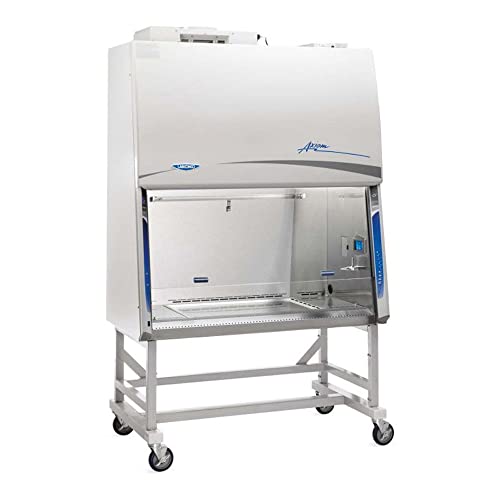
Labconco 304410050 Purifier 4' Axiom Class II Type C1 BioSafety Cabinet with 10" Sash, No Ops 230V-UK, 64.2" Height, 54.2" Width, 32.7" Length
Two operation modes: Type A mode for standard microbiological use and Type B mode for connection to exhaust…
As an affiliate, we earn on qualifying purchases.
As an affiliate, we earn on qualifying purchases.
Laminar Flow Hood with H13 HEPA Filter (20"x15"), FFU Class 100 / ISO 5 Clean Bench with Light for Mycology, Mushroom Cultivation, Lab & Cleanroom, 24V DC with 100–240V Adapter
Spacious Work Area & Efficient Airflow: Overall size: 20 × 16.8 × 7.9 inches, working area: 20 ×…
As an affiliate, we earn on qualifying purchases.
As an affiliate, we earn on qualifying purchases.