
If you’re looking to boost legume yields, I recommend considering molybdenum fertilizers like NutraTender 5-5-10 Foliar Fertilizer, Miracle-Gro Water Soluble Plant Food, Humboldts Secret Monopotassium Phosphate Bloom Booster, and Monopotassium Phosphate (MKP). Organic options like Jobe’s Organic Granular Fertilizer also work well, especially for eco-friendly growers. Always pay attention to soil pH and application timing for best results. Keep exploring further, and you’ll find the ideal options for your crops.
Key Takeaways
- Organic and synthetic molybdenum fertilizers support nitrogen fixation, improving legume yields and plant health.
- Many options include water-soluble formulations for quick correction and steady-release types for sustained nutrition.
- Proper application timing during early growth stages enhances nutrient uptake and nodulation efficiency.
- Soil pH management and testing ensure optimal molybdenum availability and prevent deficiencies.
- Compatibility with other nutrients and environmentally friendly options help maximize crop performance sustainably.
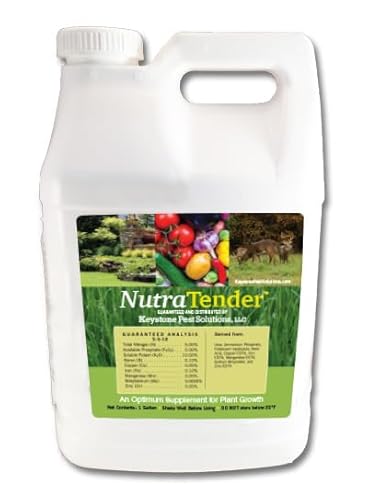
NutraTender 5-5-10 Foliar Fertilizer, (1 Gallon), with Micronutrients: Boron, Copper, Iron, Manganese, Molybdenum, Zinc
BALANCED FORMULA: Features a 5-5-10 NPK ratio, providing essential nutrients for optimal plant growth and development
As an affiliate, we earn on qualifying purchases.
NutraTender 5-5-10 Foliar Fertilizer (1 Gallon)
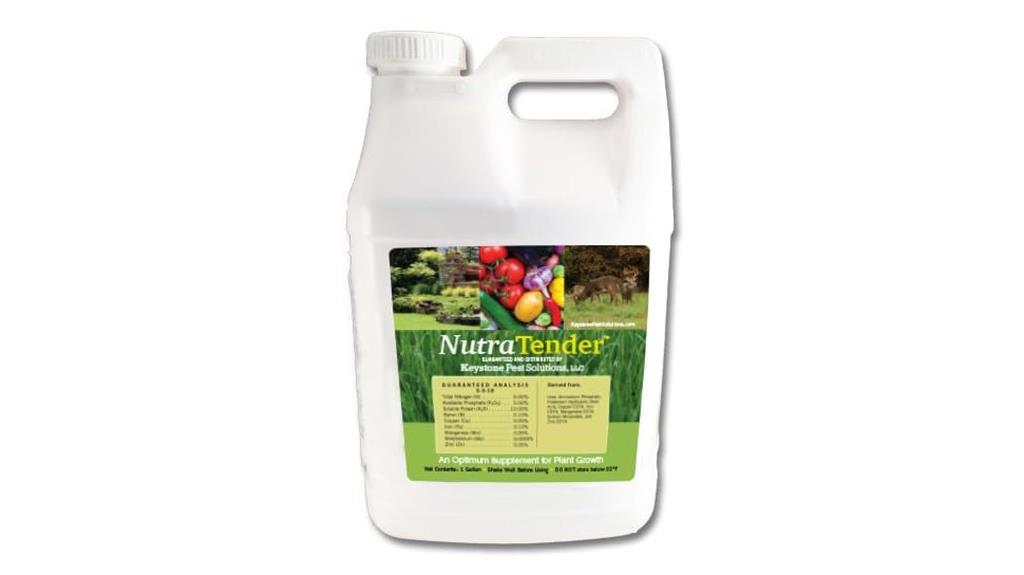
If you’re looking for a versatile fertilizer that delivers quick results, NutraTender 5-5-10 Foliar Fertilizer is an excellent choice. I’ve used it to boost plant growth, and the balanced 5-5-10 NPK ratio guarantees my plants get essential nutrients fast. It also contains micronutrients like boron, copper, and zinc, which support healthy development and flowering. I appreciate its foliar application, allowing for rapid absorption through the leaves. Covering up to 2 acres per gallon, it’s convenient for both home gardeners and professionals. Regular use during active growth keeps my plants vigorous, vibrant, and ready to produce a healthy yield.
Best For: Home gardeners and professional growers seeking a quick-acting, balanced foliar fertilizer to promote healthy plant growth, vibrant foliage, and flowering across various plant types.
Pros:
- Provides rapid nutrient absorption through foliar application for quick results
- Contains a balanced 5-5-10 NPK ratio with essential micronutrients for comprehensive plant support
- Covers up to 2 acres per gallon, making it cost-effective and suitable for large-scale use
Cons:
- May require frequent reapplication during active growth periods for optimal results
- As a liquid fertilizer, it needs to be diluted properly to avoid overfeeding plants
- Not designed for soil application, limiting its use to foliar feeding only

Miracle-Gro Water Soluble All Purpose Plant Food - Fertilizer For All Indoor or Outdoor Plants including Roses, Flowers, Vegetables, Houseplants, Trees, and Shrubs, 3 lbs.
FEEDS ALL PLANTS: Miracle-Gro Water Soluble All Purpose Plant Food is a plant fertilizer that feeds all outdoor,...
As an affiliate, we earn on qualifying purchases.
Miracle-Gro Water Soluble Plant Food (3 lbs.)
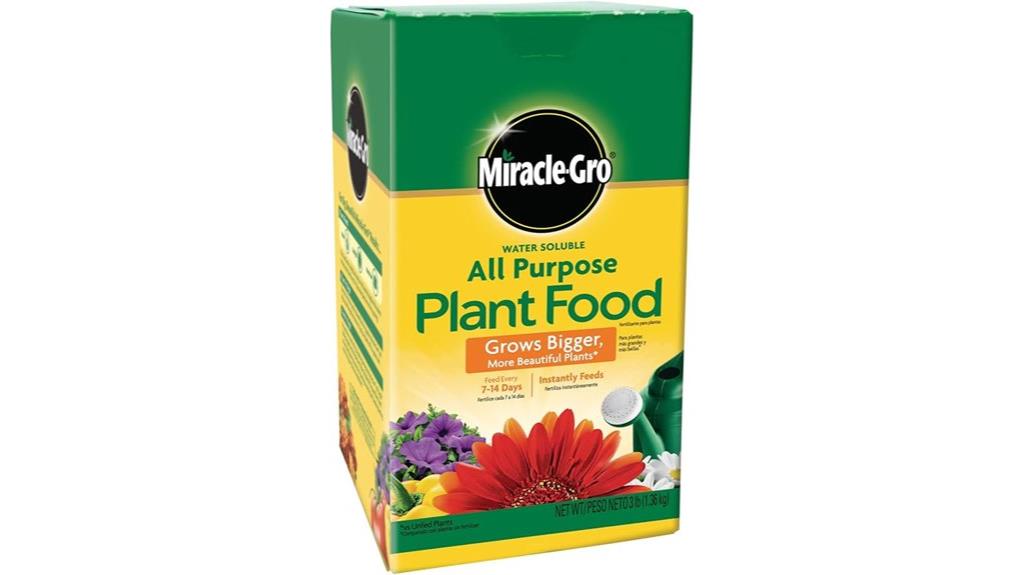
Miracle-Gro Water Soluble Plant Food (3 lbs.) stands out as an excellent choice for casual gardeners seeking an easy and reliable way to boost plant growth. I’ve found it’s versatile enough for indoor and outdoor use on flowers, vegetables, and houseplants. The powder formula dissolves quickly in water, making application simple—just mix and feed every 1-2 weeks. It promotes faster, healthier growth with greener leaves and more vibrant blooms. Plus, it’s safe when used as directed and covers a large area—about 600 sq. ft.—making it a budget-friendly, no-fuss option for improving overall plant health.
Best For: casual gardeners seeking an easy, reliable, and versatile fertilizer to promote healthy growth for indoor and outdoor plants including flowers, vegetables, and houseplants.
Pros:
- Easy to mix and apply every 1-2 weeks, suitable for beginners and experienced gardeners alike
- Promotes faster, healthier, and more vibrant plant growth with greener leaves and more blooms
- Covers approximately 600 sq. ft., offering excellent value and budget-friendly affordability
Cons:
- Overuse or improper dilution may cause leaf burn or damage to plants
- Some users have reported dissatisfaction with packaging size or shipping issues
- Effectiveness can vary depending on plant species and application consistency

Humboldts Secret Monopotassium Phosphate 0-52-34 | MKP Fertilizer Bloom Booster for Flowers, Fruits & Vegetables | High Purity Water Soluble Phosphorus and Potassium Plant Food | 2 lb
Bloom & Yield Booster: Formulated with monopotassium phosphate 0-52-34, this fertilizer delivers 52% phosphorus and 34% potassium to...
As an affiliate, we earn on qualifying purchases.
Humboldts Secret Monopotassium Phosphate Bloom Booster (2lb)
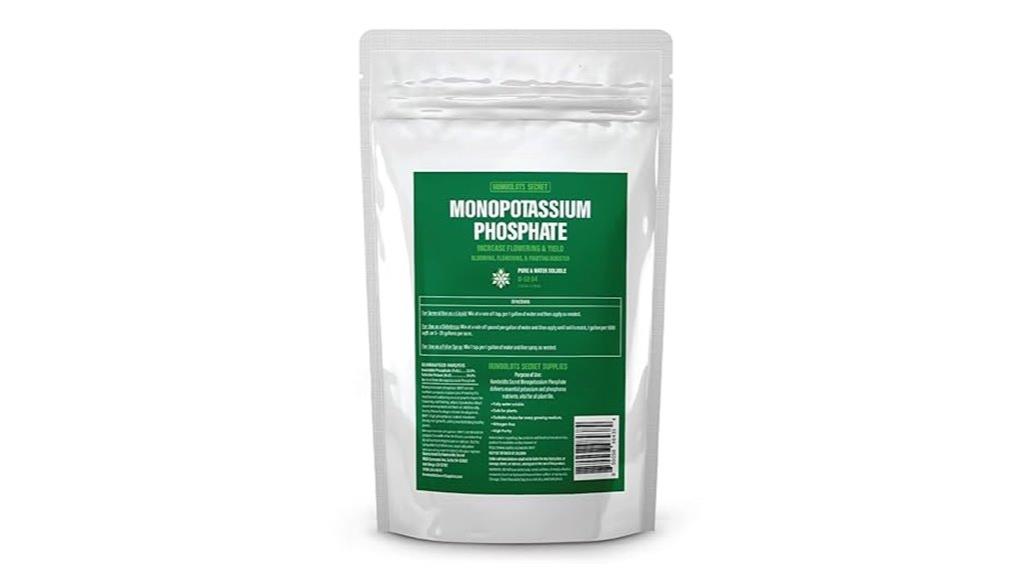
Humboldts Secret Monopotassium Phosphate Bloom Booster (2lb) stands out as an ideal choice for gardeners seeking a high-quality, fast-acting fertilizer to enhance flowering and root development. Its high-purity, water-soluble formula delivers 34% phosphorus and 52% potassium, essential nutrients that promote vibrant blossoms, strong stems, and robust root systems. This fertilizer improves nutrient uptake, supporting overall plant health and resilience. It dissolves quickly, making it easy to apply via watering cans, drip systems, or foliar sprays. Suitable for soil, coco coir, or hydroponic setups, it’s a versatile and efficient tool to boost your crop yield and flowering performance.
Best For: gardeners and horticulturists seeking a high-quality, fast-acting bloom booster to enhance flowering, root development, and overall plant health in soil, coco coir, or hydroponic systems.
Pros:
- High-purity, water-soluble fertilizer with 34% phosphorus and 52% potassium for optimal nutrient delivery
- Promotes vibrant blooms, strong stems, and healthy root systems
- Easy to dissolve and apply via watering cans, drip systems, or foliar sprays
Cons:
- May require precise measurement to avoid over-fertilization
- Not suitable for plants requiring lower phosphorus or potassium levels
- Packaging size (2lb) may be limited for large-scale gardening needs

Monopotassium Phoshpate (MKP) Fertilizer | Highly Water Soluble | 0-52-34 (1 Pound)
Water Soluble phosphorus and potassium
As an affiliate, we earn on qualifying purchases.
Monopotassium Phosphate (MKP) Fertilizer 1 Pound
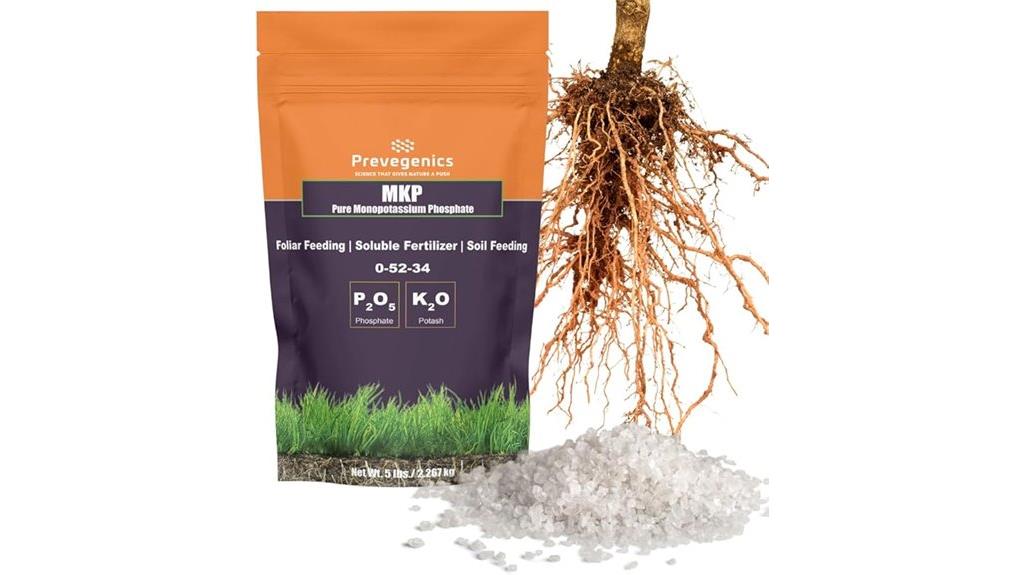
Monopotassium Phosphate (MKP) Fertilizer 1 Pound stands out as an excellent choice for growers seeking a highly water-soluble nutrient source to support their crops. It provides essential phosphorus and potassium, which are crucial during key growth stages. You can apply it dry or dissolved in water, making it versatile for different needs. Use MKP before blooming to strengthen roots and during stressful periods to boost resilience. It also helps facilitate water and nutrient transport within plants, improving drought resistance. Plus, it encourages sugar and starch production, promoting healthy growth and vigor. This small but powerful package is perfect for ensuring your legumes get the nutrients they need to thrive.
Best For: growers seeking a versatile, water-soluble fertilizer to promote healthy root development, stress resilience, and optimal growth during key reproductive stages.
Pros:
- Highly water-soluble and easy to apply dry or dissolved in water
- Provides essential phosphorus and potassium, supporting root strength and flowering
- Enhances drought resistance and promotes sugar and starch production
Cons:
- Requires careful application timing to avoid over-fertilization
- May not contain other micronutrients needed for some crops
- Should be stored properly to prevent moisture absorption and caking
Jobe’s Organics Granular Garden Fertilizer (4 lbs Bag)
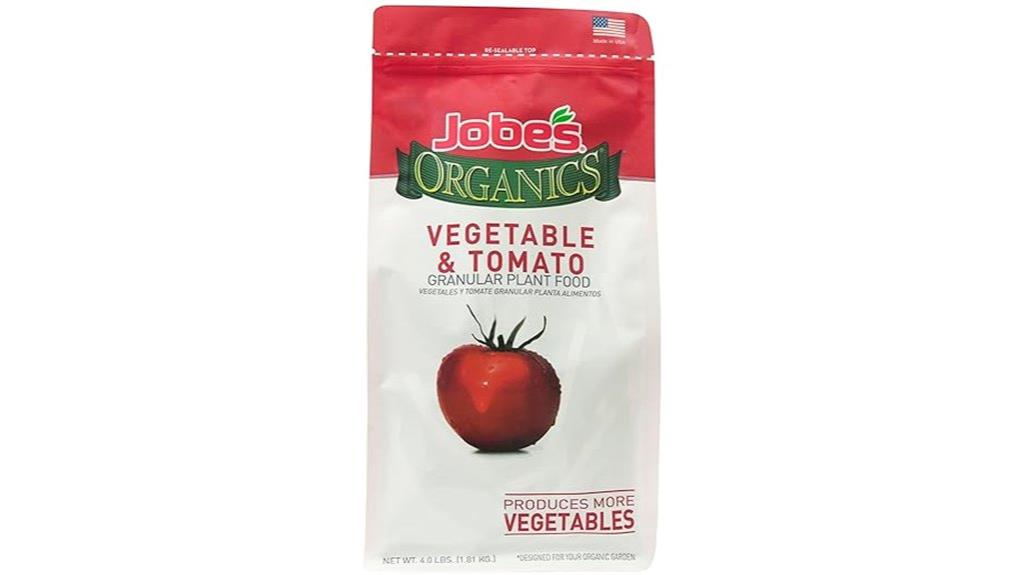
If you’re looking for an organic fertilizer that simplifies plant care while supporting healthy growth, Jobe’s Organics Granular Garden Fertilizer is an excellent choice. This 4-pound bag is perfect for vegetable gardens and tomato plants, helping boost yields and vibrant foliage. Made with OMRI-listed, USDA-approved ingredients, it provides essential nutrients through a balanced 2-5-3 NPK ratio, all without synthetic chemicals. The granular form makes application easy—simply sprinkle every 4-6 weeks or as needed. Plus, its environmentally friendly packaging minimizes waste, runoff, and odors, making it a reliable, eco-conscious option to keep your garden thriving naturally.
Best For: gardeners seeking an organic, easy-to-apply fertilizer to promote healthy vegetable and tomato plant growth while maintaining eco-friendly practices.
Pros:
- Made with OMRI-listed, USDA-approved organic ingredients
- Balanced 2-5-3 NPK ratio for optimal plant nutrition
- Easy to apply every 4-6 weeks, reducing over-fertilization risk
Cons:
- May require more frequent application in high-demand growing conditions
- Granular form may need watering to prevent dust during application
- Not suitable for non-organic gardening preferences
Organic Sea Kelp Fertilizer for Plants
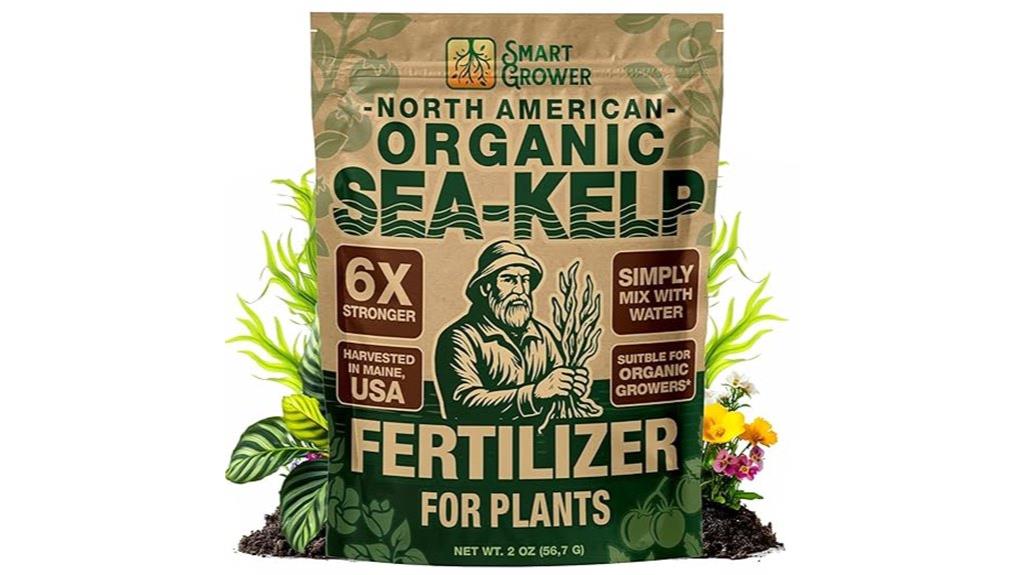
Organic Sea Kelp Fertilizer stands out as an excellent choice for gardeners seeking a natural, sustainable way to boost plant health and yields. Made from cold-water harvested Ascophyllum Nodosum seaweed from Maine, it’s enriched with organic polymers like fucoidan, alginate, and tannins, delivering essential nutrients. Its NPK ratio of 0-0-18 provides soluble potash that improves nutrient uptake. Highly concentrated, just 2 ounces can create up to 50 gallons of liquid fertilizer, suitable for indoor gardens, hydroponics, and outdoor beds. It promotes larger, healthier plants by strengthening roots and supporting natural stress resistance, making it a versatile, eco-friendly addition to any garden routine.
Best For: Gardeners, farmers, and indoor plant enthusiasts seeking a natural, eco-friendly fertilizer to promote healthy, robust plants and higher yields.
Pros:
- Made from sustainably harvested, organic seaweed providing rich nutrients and natural growth stimulants
- Highly concentrated, allowing extensive coverage with just a small amount of powder
- Promotes faster growth, stronger roots, and improved stress resistance across various plant types
Cons:
- May require proper mixing to fully dissolve in water for optimal use
- Slightly limited NPK ratio (0-0-18), primarily providing potassium, so additional nutrients may be needed for some plants
- As a natural product, nutrient levels can vary slightly batch to batch
MicroGenics Liquid Fertilizer (32 fl. oz., 0.75% Each Micronutrient)
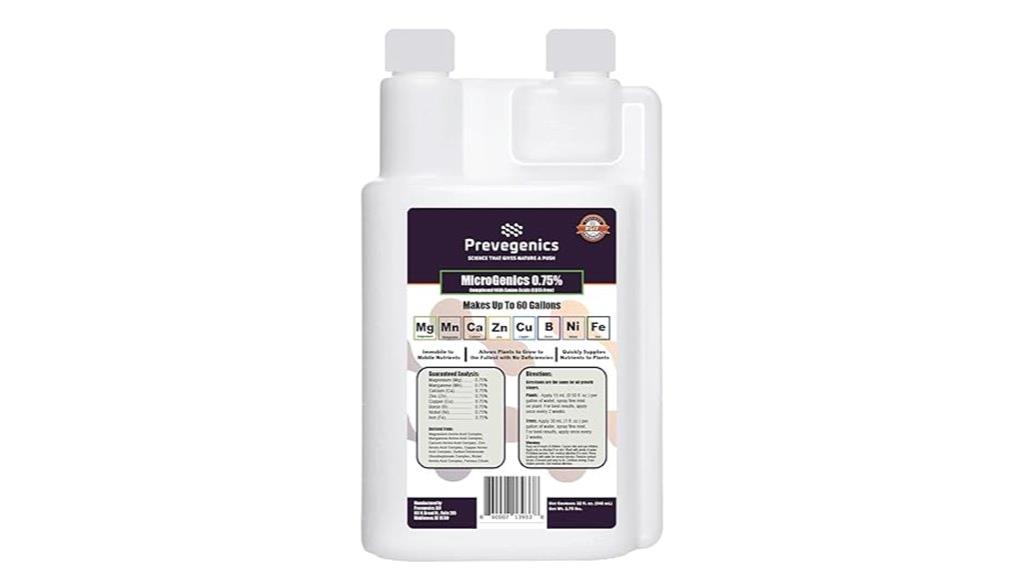
MicroGenics Liquid Fertilizer (32 fl. oz., 0.75% Each Micronutrient) stands out as an ideal choice for growers seeking a versatile, easy-to-apply foliar solution packed with essential nutrients. It makes up to 60 gallons and contains a balanced blend of magnesium, manganese, zinc, copper, boron, nickel, and iron, each at 0.75%. The fertilizer is complexed with amino acids, ensuring quick nutrient absorption and plant health. Its EDTA-free formulation promotes efficient uptake without relying heavily on chelating agents. Simply squeeze the bottle to spray directly on leaves, supporting rapid growth and overall crop vigor.
Best For: growers seeking an easy-to-apply, nutrient-rich foliar fertilizer to promote rapid plant growth and health across various crops.
Pros:
- Contains a balanced mix of essential macro and micronutrients at effective concentrations
- Complexed with amino acids for enhanced and quick nutrient absorption
- EDTA-free formulation reduces dependency on chelating agents, promoting healthier uptake
Cons:
- May require frequent applications depending on plant needs and environmental conditions
- Limited to foliar application; may not replace soil fertilization for long-term nutrition
- The 0.75% concentration might be insufficient for heavily stressed or nutrient-deficient plants
PAPAWS Garden Inoculant for Peas and Beans (1.5 OZ)
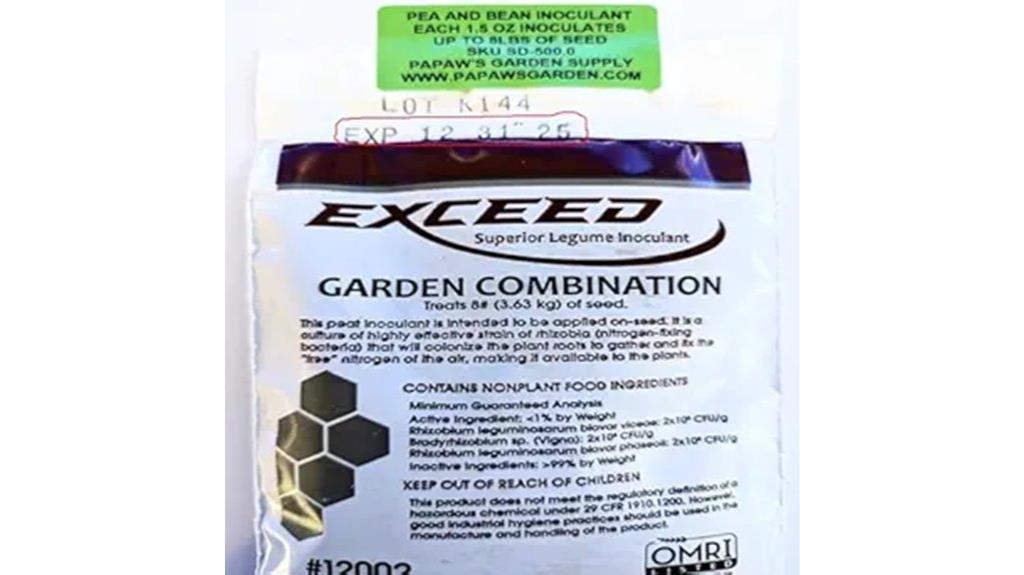
PAPAWS Garden Inoculant for Peas and Beans (1.5 OZ) stands out as an excellent choice for serious gardeners seeking to boost their legume yields naturally. This inoculant promotes nitrogen fixation in roots, leading to healthier plants and larger harvests. It’s easy to apply—suitable for up to 8 pounds of seed—and many users report better sprouting and stronger growth compared to previous years. Made in the USA, it’s trusted for its effectiveness and reliability. Despite some shipping costs, its quality and positive customer feedback make it a worthwhile investment for anyone aiming to improve their pea and bean crops.
Best For: serious gardeners and small-scale farmers seeking an effective, natural way to enhance pea and bean crop yields through improved nitrogen fixation.
Pros:
- Promotes healthy root development and larger harvests
- Easy to apply with clear instructions, suitable for up to 8 lbs of seed
- Made in the USA, ensuring quality and reliability
Cons:
- Shipping costs may be high, increasing the overall price
- Limited to 1.5 oz packaging, which may require multiple purchases for larger planting areas
- Not available locally in all areas, requiring online ordering
5-10-10 Tomato & Vegetable Fertilizer
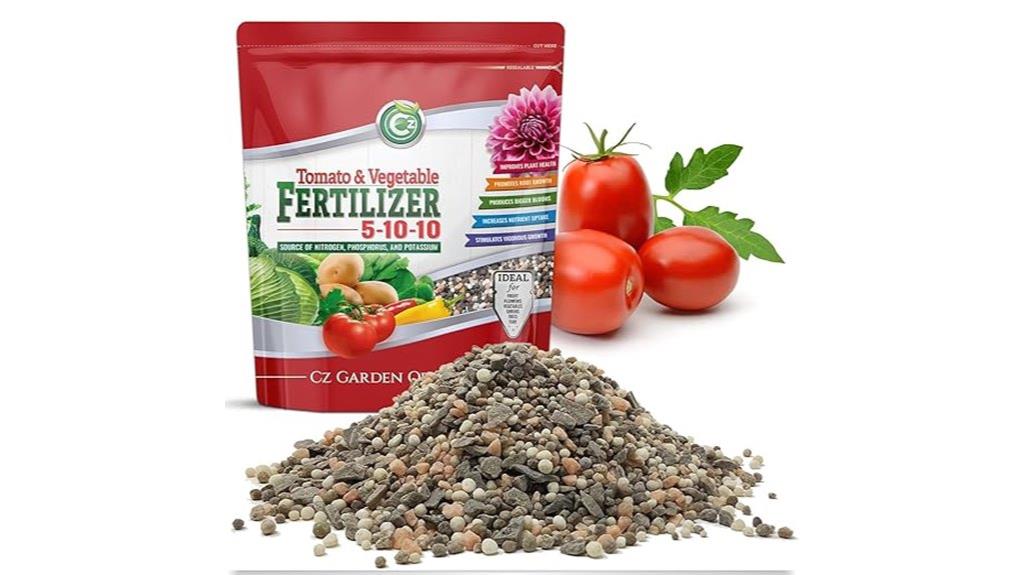
If you’re looking to boost your tomato and vegetable yields, the Cz Garden 5-10-10 Fertilizer is an excellent choice, especially for gardeners who want a balanced, slow-release formula. Its NPK ratio of 5-10-10 supplies essential nutrients steadily, promoting vigorous growth and larger blooms. Made from high-purity ingredients, it guarantees ideal nutrient delivery and reduces the risk of fertilizer burn. The fertilizer comes in a convenient resealable pouch, making application easy and storage simple. Produced in the USA, Cz Garden guarantees quality and safety, supporting healthy plants and vibrant garden vitality over time. It’s perfect for both indoor and outdoor vegetable gardening.
Best For: home gardeners and organic growers seeking a balanced, slow-release fertilizer to enhance tomato, vegetable, flower, and garden plant growth both indoors and outdoors.
Pros:
- Provides a steady release of essential nutrients with an NPK ratio of 5-10-10, promoting vigorous growth and larger blooms
- Made from high-purity ingredients, reducing the risk of fertilizer burn and ensuring optimal nutrient delivery
- Convenient resealable pouch allows for easy application, storage, and freshness preservation
Cons:
- May require additional micronutrient supplementation for specific plant needs
- Slow-release formulation means immediate nutrient boost is limited; results appear over time
- Not specifically formulated for acid-loving plants like blueberries or azaleas
8-4-8 Acidic Fertilizer for Azaleas and Rhododendrons (12 OZ)
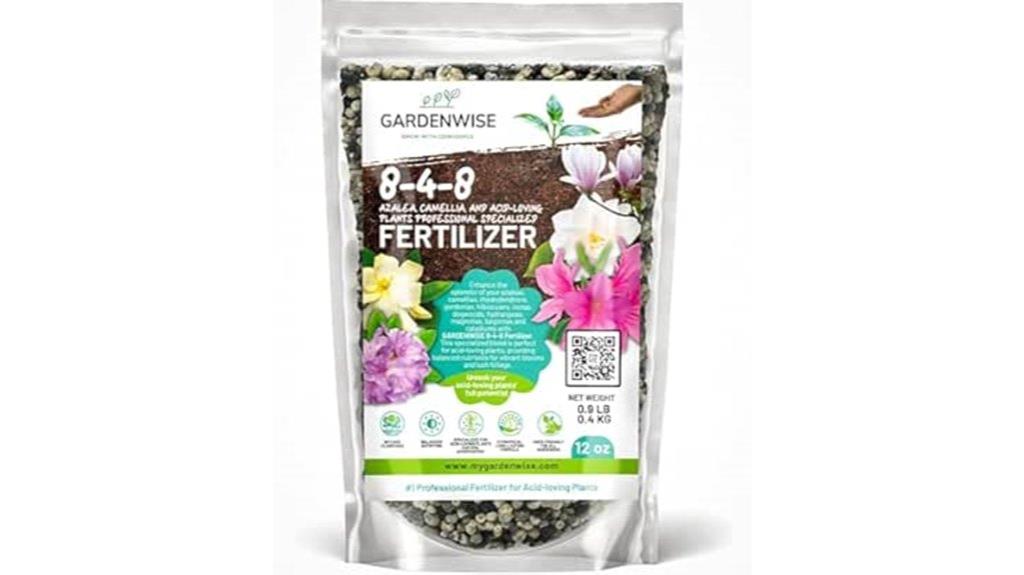
This 8-4-8 Acidic Fertilizer for azaleas and rhododendrons is specially formulated for gardeners seeking an effective, eco-friendly way to maintain vibrant, healthy acid-loving plants. Its slow-release granules provide long-lasting nutrition, requiring only three feedings per year. Enriched with magnesium, iron, manganese, and beneficial microbes, it promotes lush blooms, strong growth, and healthy foliage while preventing chlorosis. The fertilizer also acts as a natural soil acidifier, enhancing microbial activity and soil health through eco-friendly bio-solid production. Easy to apply—simply sprinkle around the plant base, mix into soil, and water—it’s suitable for gardeners of all experience levels.
Best For: gardeners seeking an eco-friendly, long-lasting fertilizer to promote vibrant blooms, healthy foliage, and soil acidity for azaleas, rhododendrons, and other acid-loving plants.
Pros:
- Provides slow-release, sustained nutrition with only three feedings per year
- Enriched with essential micronutrients like magnesium, iron, and manganese to prevent deficiencies
- Acts as a natural soil acidifier, enhancing soil health and microbial activity
Cons:
- May require careful application around delicate root zones to prevent over-fertilization
- Not suitable for non-acid-loving plants or those requiring different nutrient ratios
- Might take several weeks to see visible results in plant growth and bloom intensity
Urea Fertilizer 46-0-0 (2 lb)
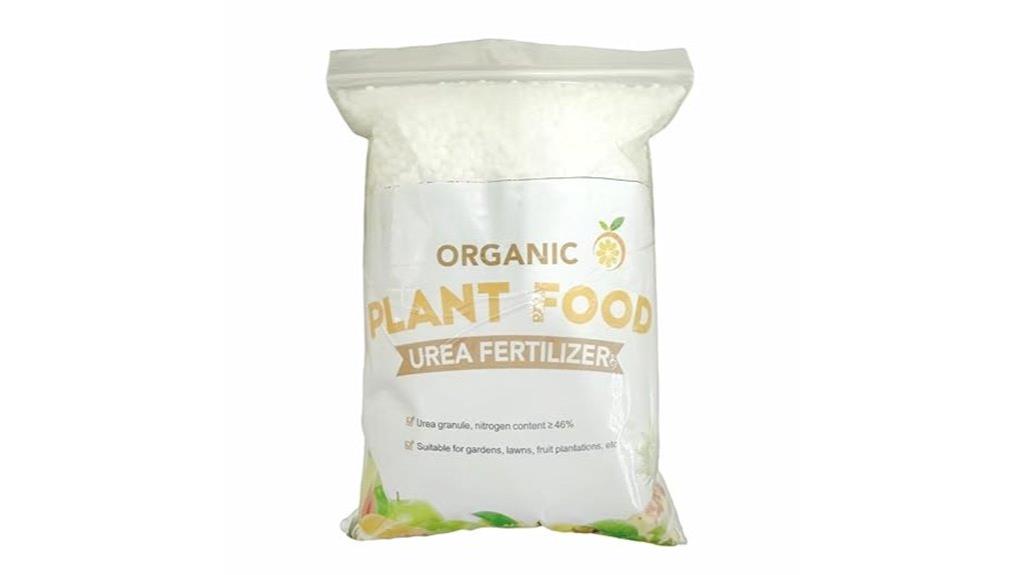
Urea Fertilizer 46-0-0 (2 lb) stands out as an affordable, high-nitrogen option suitable for home gardeners and small-scale growers seeking quick, targeted leaf growth. Its 46% nitrogen content in pellet form makes it ideal for boosting greenness and plant vigor across lawns, vegetable beds, and fruit trees. The pellets are easy to spread, allowing precise application with minimal waste. Although it often ships without detailed instructions, it’s effective for composting and hydroponics when used carefully. Overall, this fertilizer offers excellent value, promoting vigorous plant growth without harming existing plants when applied properly.
Best For: home gardeners and small-scale growers seeking an affordable, high-nitrogen fertilizer to promote lush, green foliage and vigorous plant growth in lawns, vegetable beds, and fruit trees.
Pros:
- High nitrogen content (46%) promotes rapid leaf growth and greenness
- Easy to spread pellets for precise application and minimal waste
- Cost-effective solution suitable for various gardening needs
Cons:
- Often shipped without detailed instructions or labeling, requiring external research
- Packaging is typically plain ziplock bags, which may cause confusion
- Not ideal for hydroponics without careful application and additional guidance
Miracle-Gro Organic Edible Plant Food (1 lb)
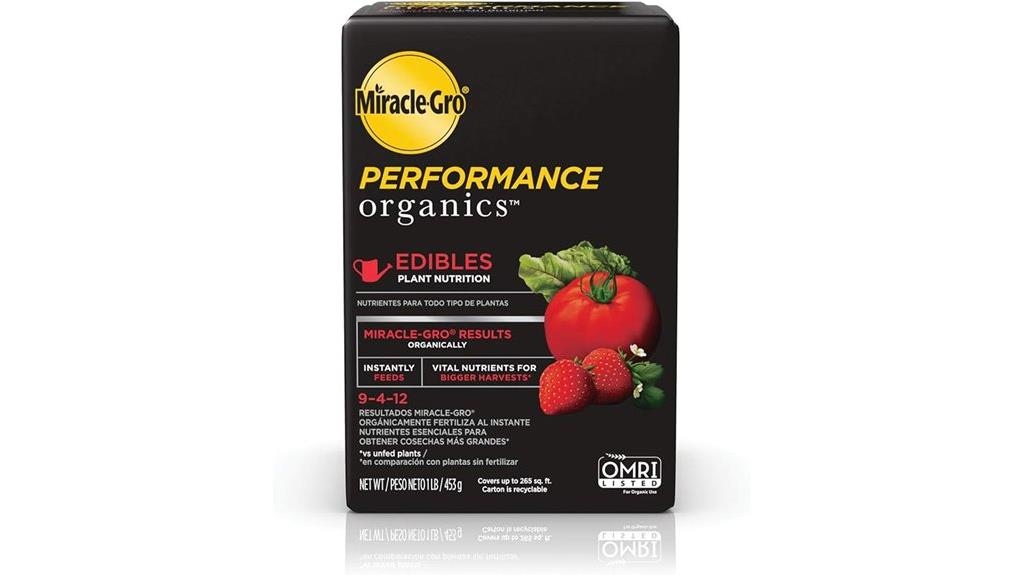
Miracle-Gro Organic Edible Plant Food (1 lb) stands out as an ideal choice for home gardeners seeking a quick, organic boost for their edible plants. I love how easy it is to apply using the garden feeder or watering can, covering up to 265 square feet. This OMRI-listed fertilizer provides instant nourishment for tomatoes, vegetables, herbs, and fruits, promoting healthy growth and bountiful harvests. Its organic certification reassures me that I’m feeding my plants safely and naturally. With weekly application, I see noticeable improvements in plant vigor and yield, making it a reliable, convenient option for organic vegetable gardening.
Best For: home gardeners seeking an easy-to-use, organic fertilizer to promote healthy growth and bountiful harvests of edible plants.
Pros:
- OMRI-listed organic certification ensures safe and natural feeding
- Quick and easy application with garden feeder or watering can
- Covers up to 265 sq. ft., ideal for small to medium gardens
Cons:
- Requires weekly application for optimal results
- Only 1 lb package may need frequent reordering for larger gardens
- Not suitable for non-edible or ornamental plants
TPS NUTRIENTS Liquid 10-10-10 Fertilizer for Trees and Shrubs
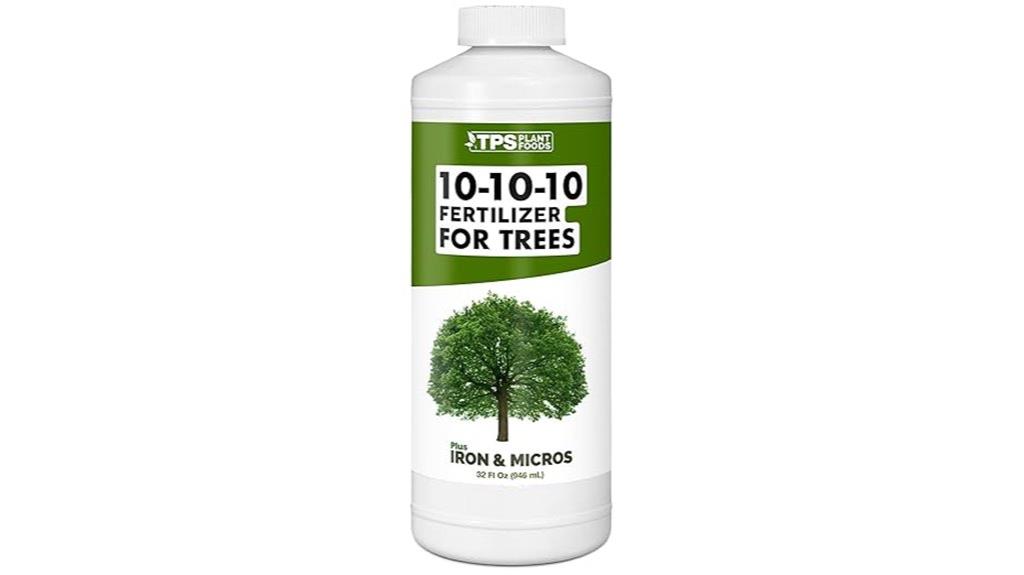
If you’re looking to promote healthy growth and vibrant foliage in your trees and shrubs, TPS NUTRIENTS Liquid 10-10-10 Fertilizer is an excellent choice. Its balanced 10-10-10 NPK ratio provides essential nutrients—nitrogen, phosphorous, and potassium—that support overall development. Enriched with iron and micronutrients, it guarantees plants receive everything they need for vigorous growth. The liquid form allows for quick absorption, making it ideal for boosting plant vitality and resilience. Whether you’re caring for young trees or mature shrubs, this fertilizer helps maintain lush foliage and strong structure, promoting healthier, more productive plants.
Best For: gardeners and landscapers looking to promote healthy, vigorous growth in trees and shrubs through efficient, balanced fertilization.
Pros:
- Provides a balanced 10-10-10 NPK ratio for comprehensive nutrient support
- Enriched with iron and micronutrients to enhance foliage and overall plant health
- Liquid form ensures quick absorption and easy application
Cons:
- May require frequent applications for sustained results in certain climates
- Over-application could lead to nutrient runoff or imbalance
- Not suitable for plants that prefer organic or slow-release fertilizers
Factors to Consider When Choosing Molybdenum Fertilizer for Legumes

When selecting a molybdenum fertilizer for your legumes, I consider several key factors to guarantee the best results. These include the right concentration levels, how well the fertilizer matches your soil and crop needs, and the timing of application. Additionally, I check for compatibility with other nutrients to avoid any negative interactions.
Molybdenum Concentration Levels
Choosing the right molybdenum concentration in fertilizer is vital because it directly influences how effectively legumes can fix nitrogen. Molybdenum fertilizers usually contain concentrations from 0.0005% to 0.005%, tailored to specific application needs. Legumes generally need soil molybdenum levels of about 0.1 to 0.5 ppm for ideal nitrogen fixation. In soils with high pH or low molybdenum availability, higher concentrations may be necessary to prevent deficiency. However, the effectiveness depends on the solubility and bioavailability of the formulation used. It’s important to avoid excessive levels, as too much molybdenum can cause toxicity. Always base application rates on soil test recommendations to guarantee plants get what they need without risking toxicity.
Legume Specific Needs
Legume crops have unique requirements for molybdenum because their ability to fix nitrogen depends heavily on this micronutrient. Molybdenum is essential for the enzyme nitrogenase, which allows legumes to convert atmospheric nitrogen into usable forms. Without sufficient molybdenum, nodules form poorly, nitrogen fixation drops, and plant growth suffers. Interestingly, legumes generally need lower molybdenum levels than other crops, so precise application is critical to prevent toxicity. Soil pH also plays a role; acidic soils often limit molybdenum availability, meaning you might need to adjust fertilization strategies accordingly. Understanding these specific needs helps make sure your legumes receive the right amount of molybdenum, promoting healthy nodulation and maximizing nitrogen fixation, which directly boosts your crop yield.
Soil Ph Compatibility
Soil pH plays a crucial role in determining how effectively molybdenum fertilizers work for legumes. When pH is between 5.5 and 7.0, molybdenum is most available to plants. Below 5.5, molybdenum tends to bind with iron and aluminum oxides, making it less accessible. Conversely, in soils with pH above 7.0, molybdenum can precipitate out of solution, reducing its uptake. To optimize availability, I recommend testing soil pH regularly and adjusting it if necessary. Adding sulfur can lower pH in overly alkaline soils, while lime can raise acidity if the soil is too acidic. Proper pH management ensures that your legumes can absorb the molybdenum they need, maximizing fertilizer efficiency and crop yield.
Application Timing
Timing is critical when applying molybdenum fertilizer to guarantee your legumes optimize nitrogen fixation. I recommend applying it during early vegetative stages when plants are actively growing, as this is when nitrogen fixation is most effective. Molybdenum works best when applied before flowering, supporting enzyme activity required for nitrogen assimilation. Using soil testing helps pinpoint existing molybdenum levels, ensuring applications align with peak nutrient uptake without excess. Foliar sprays can be useful during rapid growth or stress periods to quickly correct deficiencies. Always consider environmental conditions; applying during moist, conducive weather improves absorption and reduces runoff. Proper timing maximizes molybdenum’s benefits, leading to healthier plants and higher yields.
Compatibility With Other
Choosing the right molybdenum fertilizer involves guaranteeing it works well with other nutrients present in your soil. Molybdenum can interact with nutrients like phosphorus, copper, and iron, so compatibility is key. Excess phosphorus from high-phosphorus fertilizers can reduce molybdenum’s availability, so adjustments might be necessary. Additionally, combining molybdenum with certain micronutrients can cause insoluble compound formation, decreasing effectiveness. Soil pH also plays a role; molybdenum is more available in neutral to slightly acidic soils, but interactions with fertilizers can alter pH, affecting uptake. Using incompatible blends risks chemical reactions or precipitation, which diminishes molybdenum’s bioavailability. Carefully selecting fertilizers that complement each other ensures your legumes can absorb molybdenum efficiently, maximizing crop yield.
Organic Vs Synthetic Options
When selecting a molybdenum fertilizer for your legumes, you’ll need to weigh the benefits of organic versus synthetic options. Organic fertilizers come from natural sources like compost or mineral deposits, avoiding synthetic chemicals. They usually release molybdenum slowly, supporting sustainable soil health and microbial activity. This gradual release can improve long-term soil quality, especially if you prefer natural methods. Synthetic molybdenum fertilizers are manufactured through chemical processes, offering precise and highly concentrated nutrient levels. They provide immediate availability, making them ideal for quick nutrient needs. Additionally, organic options typically meet organic certification standards, while synthetic ones might not. Your choice depends on your farming goals, whether you prioritize natural practices or need rapid nutrient delivery for ideal legume growth.
Cost and Availability
Molybdenum fertilizers are typically sold in small quantities because plants only need trace amounts, which can influence their overall cost per application. Since the required amounts are minimal, the price per unit can be relatively high, especially for premium formulations. Prices vary depending on formulation, purity, and supplier, so some options are more affordable than others. Availability can also be an issue in certain regions due to supply chain disruptions or low demand, making it harder to find specific products. For large-scale growers, bulk purchasing or combining molybdenum with other nutrients in multi-nutrient blends can markedly reduce costs. Ultimately, balancing cost and availability depends on your farm’s location, scale, and the specific molybdenum product you choose.
Frequently Asked Questions
How Does Soil Ph Affect Molybdenum Availability?
Soil pH plays a vital role in molybdenum availability, which directly affects legume growth. When soil is too acidic (pH below 5.5), molybdenum becomes less available because it binds with other elements like iron and aluminum. In contrast, slightly alkaline soils (pH around 6.5 to 7.5) enhance molybdenum solubility, making it easier for plants to uptake. I always recommend testing soil pH to optimize nutrient availability.
Can Molybdenum Fertilizers Be Used With Other Micronutrients?
You’re wondering if molybdenum fertilizers can be used with other micronutrients, right? Absolutely, they can be combined to optimize plant health. I recommend mixing molybdenum with elements like zinc or boron, but always check compatibility first. It’s best to follow specific crop requirements and avoid over-fertilizing, which can cause nutrient imbalances. Properly integrated, these micronutrients work together to boost your legume yield effectively.
What Are Signs of Molybdenum Deficiency in Legumes?
Think of molybdenum as the tiny spark that keeps your legume plants energized. When they’re deficient, I notice pale, yellowish leaves, especially on new growth, like a faded tapestry. Legumes also struggle to fix nitrogen, leading to stunted growth and poor yields. If your plants look dull or aren’t thriving despite proper watering, it’s time to check for molybdenum deficiency and consider supplementing to revive their significance.
How Often Should Molybdenum Fertilizers Be Applied?
You’re wondering how often to apply molybdenum fertilizers? I recommend applying it when planting, especially if soil tests show deficiencies, then monitoring your plants regularly. Generally, a light application every season or two suffices, but avoid overdoing it, as molybdenum can be toxic in excess. I suggest consulting local guidelines or a soil test to determine the precise frequency for your specific crop and soil conditions.
Are There Organic Alternatives for Molybdenum Supplementation?
You’re asking about organic options for molybdenum supplementation. I’ve found that supplementing with organic matter like compost, manure, or cover crops can naturally boost molybdenum levels in your soil. These organic sources release nutrients gradually, helping your legumes absorb molybdenum more effectively. I recommend testing your soil first to determine deficiencies, then choosing the right organic amendments to improve nutrient availability and support healthy crop growth.
Conclusion
In wrapping up, I want to emphasize that selecting the right molybdenum fertilizer is crucial for cultivating healthy, hearty legumes. By balancing beneficial blends and considering key factors, you can boost your crop’s growth and guarantee great gains. Don’t forget, diligent dedication and a discerning approach make all the difference. Explore these options, and let your legumes thrive through thoughtful fertilization for fabulous, fruitful harvests!