
Investing in a professional weather station gives you precise climate data, helping you make smarter farm decisions. You’ll get real-time info on temperature, humidity, wind, and rainfall, which is essential for protecting crops, livestock, and optimizing resources like water and fertilizer. Reliable sensors ensure accurate measurements, reducing costly mistakes. Combining this data with farm management systems boosts efficiency and sustainability. Keep exploring to discover how choosing the right equipment can transform your farm practices.

Prime made for students and young adults
- Fast, free delivery for dorm and study essentials
- Prime Video and Amazon Music included
- Member-only deals
Key Takeaways
- Accurate sensors and calibration ensure reliable environmental data for informed farming decisions.
- Real-time climate monitoring helps optimize irrigation, fertilization, and pest control strategies.
- Integration with farm management systems enables automated responses and streamlined operations.
- Reliable weather stations minimize costly errors by providing precise weather insights.
- Investing in quality equipment enhances sustainability, productivity, and farm profitability.
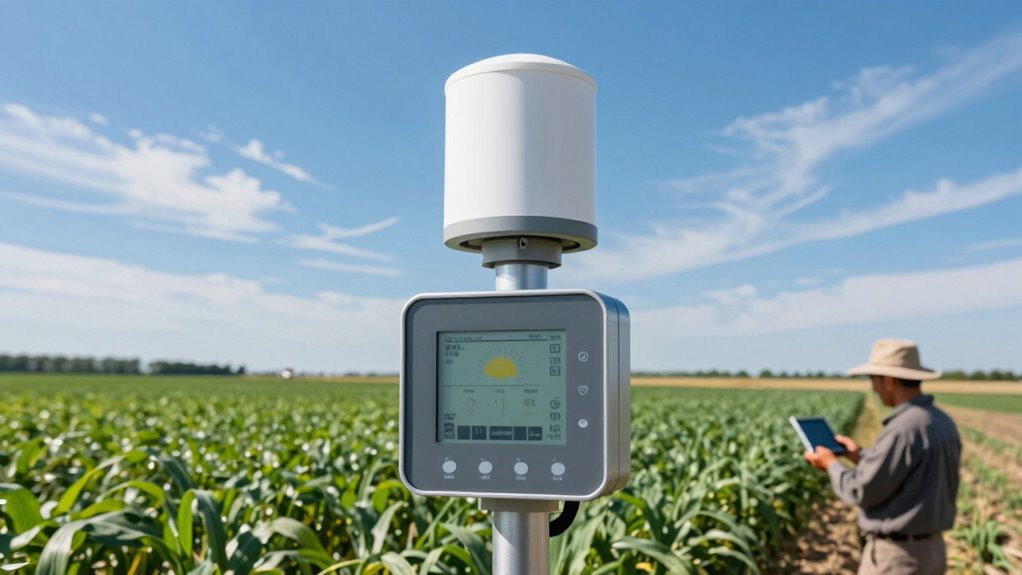
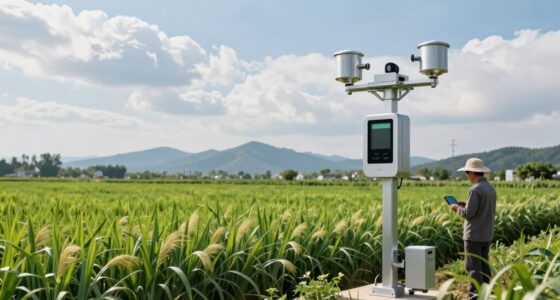
Weather stations have become essential tools for modern farms, helping you monitor environmental conditions in real time. With these devices, you can gather critical data on temperature, humidity, wind speed, and rainfall, giving you an all-encompassing picture of your farm’s climate. Accurate climate monitoring is indispensable because it allows you to make informed decisions that enhance productivity and protect your crops and livestock. When selecting a professional weather station, data accuracy should be your top priority. Reliable sensors and robust calibration ensure that the information you receive reflects real-world conditions, preventing costly mistakes based on faulty data.
Having precise climate monitoring means you can respond quickly to changing weather patterns. If a cold front is approaching, you’ll know in advance and can take measures to protect sensitive plants. Conversely, if a heatwave is forecasted, you can adjust irrigation schedules or provide shade to prevent crop stress. Accurate data also helps you optimize watering, fertilizing, and pest control, aligning your actions with actual environmental needs rather than guesswork. This level of climate monitoring minimizes waste, saves money, and boosts your farm’s overall efficiency. Additionally, understanding biodiversity and its relationship with climate data can help you develop more sustainable farming practices that support local ecosystems.
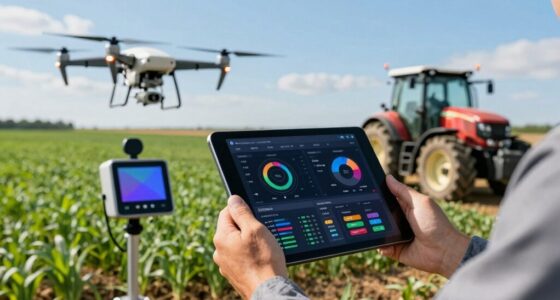
Investing in a top-tier weather station also means you can integrate it with other farm management systems. By doing so, you create a seamless network of information that supports your decision-making process across various aspects of your operation. For example, integrating climate data with irrigation controllers can automate watering schedules based on real-time conditions, saving water and preventing over-irrigation. The accuracy and reliability of your weather station directly impact the quality of these integrations, making it a critical component of your farm’s technological infrastructure. Incorporating sensor technology into your setup ensures that measurements remain consistent and precise over time, regardless of external factors. Furthermore, understanding the importance of data accuracy can help you select the most reliable equipment to prevent costly mistakes.
Ultimately, a professional weather station empowers you with the precise climate monitoring needed to make better, more confident decisions. It’s an investment that pays off by enhancing your ability to adapt to weather variability, safeguard your crops, and increase your farm’s profitability. When you prioritize data accuracy and choose the right device, you’re setting your farm up for smarter, more sustainable growth.
professional weather station for farm
As an affiliate, we earn on qualifying purchases.
As an affiliate, we earn on qualifying purchases.
Frequently Asked Questions
How Often Should I Calibrate My Farm Weather Station?
You should calibrate your farm weather station at least once a year to guarantee sensor accuracy, but more often if you notice discrepancies or extreme weather conditions. Regular calibration maintains precise data, helping you make better farm decisions. Check your manufacturer’s guidelines for recommended calibration frequency, and consider more frequent calibrations if your sensors experience harsh environments or drift over time. This keeps your weather data reliable and actionable.
Can Weather Stations Monitor Soil Health?
Sure, your weather station can’t magically monitor soil health, but it’s surprisingly helpful in that domain. By tracking soil moisture levels and nutrient fluctuations, you get real-time insights that influence irrigation and fertilization. Ironically, a weather station’s primary job isn’t soil health monitoring, yet it becomes an invaluable tool for understanding and managing your soil’s condition. So, it’s not just about rain and temperature—it’s about smarter farming.
Are Weather Stations Compatible With Existing Farm Management Systems?
Yes, weather stations are compatible with existing farm management systems. They facilitate data integration seamlessly, allowing you to combine weather data with other farm information. Modern stations often feature open APIs and compatible software, making it easy to connect and automate updates. This compatibility guarantees you get real-time insights, helping you make better decisions quickly. By integrating weather data effectively, you optimize farm productivity and resource management.
What Is the Typical Lifespan of a Farm Weather Station?
A farm weather station typically lasts around 10 to 15 years, but it can feel like forever when you’re relying on it for vital decisions. With proper maintenance, sensor durability extends, ensuring data accuracy over time. Harsh weather and frequent use can shorten its lifespan, so regular calibration and care are essential. Investing in quality equipment means your station will serve your farm well for many productive seasons.
How Do Weather Stations Perform in Extreme Weather Conditions?
Weather stations designed for farms usually handle extreme weather quite well, thanks to their extreme weather resilience. However, during severe conditions, you might face data accuracy challenges, as sensors can sometimes be affected by intense rain, wind, or snow. To guarantee reliable data, choose stations built with durable materials and regularly maintain them. This way, you’ll get consistent, accurate weather information even in tough weather scenarios.
As an affiliate, we earn on qualifying purchases.
Conclusion
Investing in a professional weather station can transform your farming decisions, giving you real-time insights and helping you stay ahead of weather changes. With accurate data at your fingertips, you can optimize watering, planting, and harvesting schedules, reducing risks and increasing yield. Remember, “A stitch in time saves nine”—staying proactive with weather info keeps you one step ahead, ensuring a healthier, more profitable farm. Don’t wait for the storm; prepare with the right tools today.
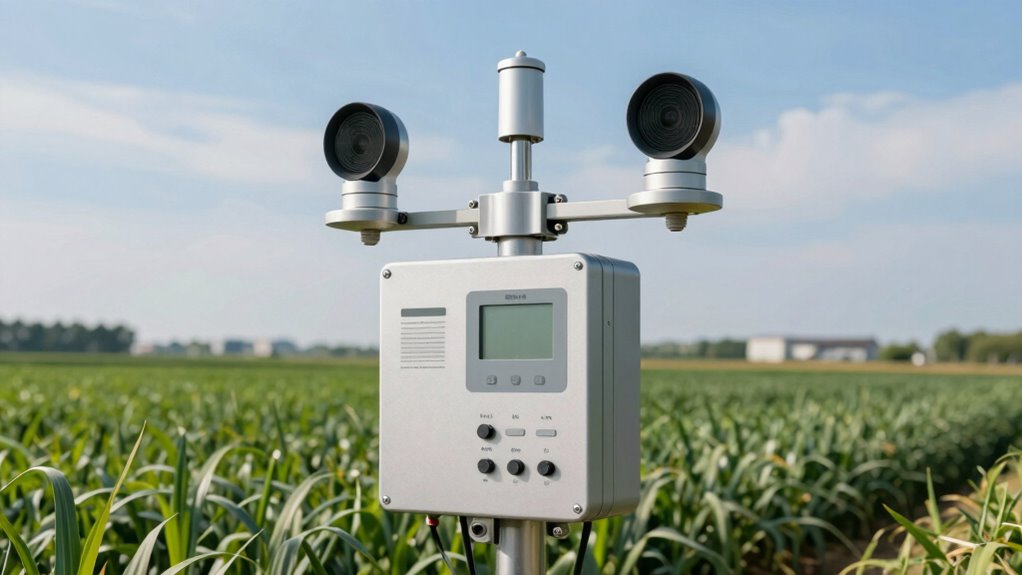
agricultural weather station with sensors
As an affiliate, we earn on qualifying purchases.
As an affiliate, we earn on qualifying purchases.
As an affiliate, we earn on qualifying purchases.
Fall Picks
fall essentials
As an affiliate, we earn on qualifying purchases.