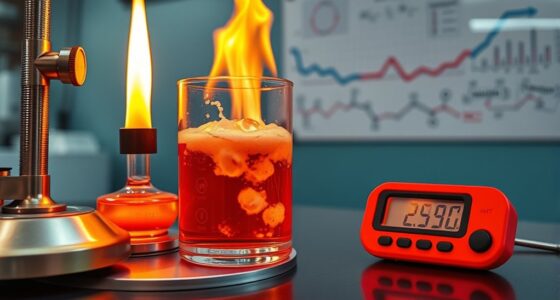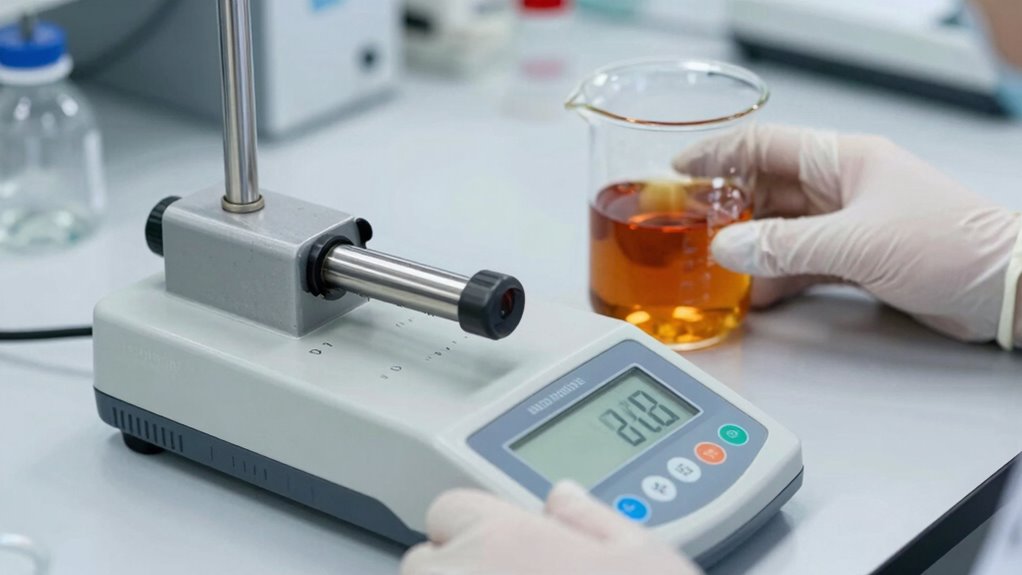

To understand viscometer basics for formulation work, you need to know how proper calibration is key to accurate measurements. Select the right type based on your liquid’s viscosity—capillary for low viscosity or rotational for thicker samples. Keep testing conditions consistent and control temperature, shear rate, and environment to guarantee reliable data. Regular maintenance and understanding your instrument’s limits help prevent errors. If you want to master these essentials, there’s more you can discover.

Prime made for students and young adults
- Fast, free delivery for dorm and study essentials
- Prime Video and Amazon Music included
- Member-only deals
Key Takeaways
- Choose the appropriate viscometer type based on the formulation’s viscosity and flow characteristics.
- Regularly calibrate the viscometer with standard liquids to ensure measurement accuracy.
- Maintain consistent testing conditions, especially temperature, to obtain reliable rheology data.
- Understand the instrument’s limits to prevent measurement errors and ensure proper data interpretation.
- Use rheology measurements to optimize formulation consistency and predict product performance.
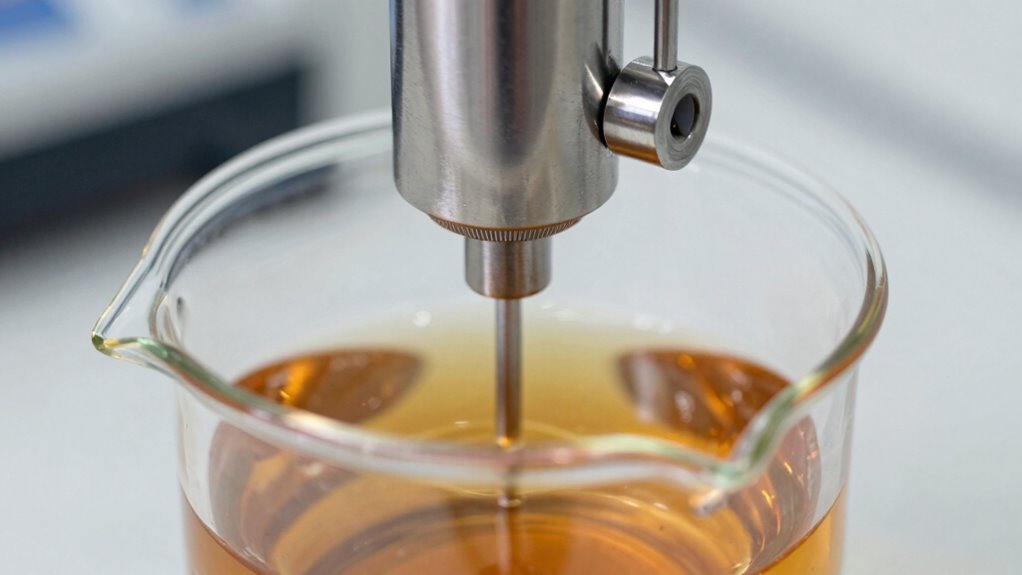
Have you ever wondered how scientists measure the thickness or viscosity of liquids? It’s a fundamental step in many formulation processes, whether you’re working with paints, cosmetics, or food products. To get accurate and reliable data, you need a solid understanding of viscometers and how to use them properly. Viscometer calibration is vital here; it ensures your instrument provides precise measurements by adjusting it against standard liquids with known viscosities. Without proper calibration, your rheology measurement could be skewed, leading to flawed formulations or quality control issues. Regular calibration checks are necessary, especially when switching between different products or after moving the instrument to a new environment. When you calibrate your viscometer, you establish a baseline, so subsequent readings reflect true liquid properties rather than instrument inaccuracies.
Understanding rheology measurement is key to controlling how your liquids behave during processing and end-use. Rheology isn’t just about viscosity—it includes how a liquid responds to stress, shear, and deformation. With a properly calibrated viscometer, you can accurately capture these properties, which directly influence your product’s performance and stability. For instance, a thickener might seem uniform, but rheology measurement reveals its flow behavior, helping you tweak formulations for the desired consistency. When you measure viscosity, you’re essentially quantifying how resistant a liquid is to flow. This data guides your decisions, from mixing procedures to packaging.
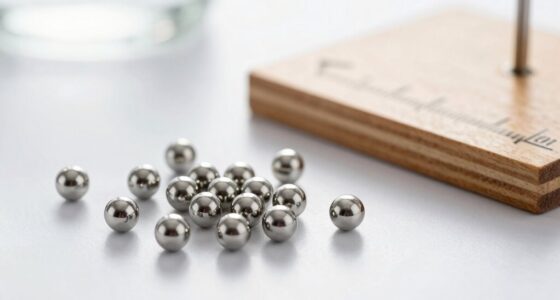
Choosing the right viscometer type matters too. For low-viscosity fluids, a capillary or falling sphere viscometer might be suitable, whereas rotational viscometers excel with thicker substances. Whichever you use, maintaining calibration and understanding the instrument’s limits guarantees trustworthy data. When conducting rheology measurement, it’s also important to control temperature and shear rate, as these factors influence viscosity readings. Many modern viscometers come with automated features to help you maintain consistent testing conditions, improving reproducibility.
As an affiliate, we earn on qualifying purchases.
Frequently Asked Questions
How Do I Choose the Right Viscometer for My Formulation?
To choose the right viscometer, consider your formulation’s viscosity range and sample type. Make certain it allows for accurate sample viscosity testing and is compatible with your sample’s properties. Look for a device that’s easy to calibrate regularly to maintain precision. If you work with highly viscous samples, a rotational viscometer might be best. Ultimately, select a model that matches your testing needs and offers reliable viscometer calibration.
What Are Common Errors in Viscometer Measurements?
You might make errors in viscometer measurements if you don’t prioritize calibration accuracy or accidentally introduce sample contamination. Always calibrate your device properly before testing, as inaccuracies can skew results. Handle samples carefully to prevent contamination, which can alter viscosity readings. Avoid inconsistent sample volumes and improper temperature control, as these factors also lead to errors. Regularly check your equipment to guarantee reliable, precise measurements.
How Does Temperature Affect Viscometer Readings?
Ever wonder if your viscometer’s just teasing you? Temperature drastically influences your readings, so overlook it at your peril. By neglecting temperature calibration, you risk measuring viscosity instability rather than true flow behavior. As temperature rises, viscosity usually drops—unless you’re testing honey in a sauna. Keep your thermometer close, calibrate diligently, and you’ll guarantee consistent, reliable measurements, avoiding the illusion of viscosity magic.
Can Viscometers Measure Non-Newtonian Fluids Accurately?
Yes, you can measure non-Newtonian fluids accurately with a viscometer if you understand rheology principles and fluid dynamics. Non-Newtonian fluids change viscosity under different shear rates, so selecting the right viscometer type and testing conditions is vital. By applying appropriate shear rates and interpreting results through rheology principles, you guarantee accurate measurements, capturing how these fluids behave under various flow conditions.
What Maintenance Is Required for Long-Term Viscometer Accuracy?
You need to perform regular calibration and meticulous sample preparation to keep your viscometer accurate for the long haul. Skipping calibration could lead to wildly inaccurate readings, like trying to read a map with a broken compass. Clean and prepare samples properly every time, as even tiny impurities or inconsistencies can throw off results. By maintaining strict calibration schedules and attention to sample prep, you guarantee your viscometer stays precise over years of use.
rotational viscometer calibration kit
As an affiliate, we earn on qualifying purchases.
As an affiliate, we earn on qualifying purchases.
Conclusion
So, after all this talk about viscometers, you might think it’s just a simple tool. But don’t be fooled—understanding viscosity is like trying to tame a wild beast. The irony? The more you learn, the more you realize how little you really understand. Embrace the challenge, because mastering viscometer basics isn’t just about numbers; it’s about controlling the unpredictable flow of your formulations. Happy measuring—if you dare!
capillary viscometer for low viscosity fluids
As an affiliate, we earn on qualifying purchases.
As an affiliate, we earn on qualifying purchases.
As an affiliate, we earn on qualifying purchases.
Halloween Picks
halloween
As an affiliate, we earn on qualifying purchases.