

At a Glance
| Criteria | National Geographic Science Kits | Thames & Kosmos Science Kits | Winner |
|---|---|---|---|
| Content Depth | Moderate depth, focused on visuals and real-world applications | Deep, detailed experiments covering physics, chemistry, biology | A |
| Price | Lower, around $20-$40 per kit | Higher, $50-$100+ per kit | B |
| Age Range | Ages 8-14 | Ages 10 and up | Tie |
| Experiment Variety | Limited experiments, 3-5 per kit | Wide variety, 10+ experiments per kit | B |
| Educational Value | Good introductory science, engaging stories | Strong science foundation, comprehensive instructions | B |
| Build Quality | Decent plastic components, lightweight | Sturdy build, reusable parts | B |
| Ease of Use | Very easy, suitable for younger users | Moderate difficulty, suitable for older children | A |
| Reusability | Limited; mostly single use | High; many experiments can be repeated and expanded | B |
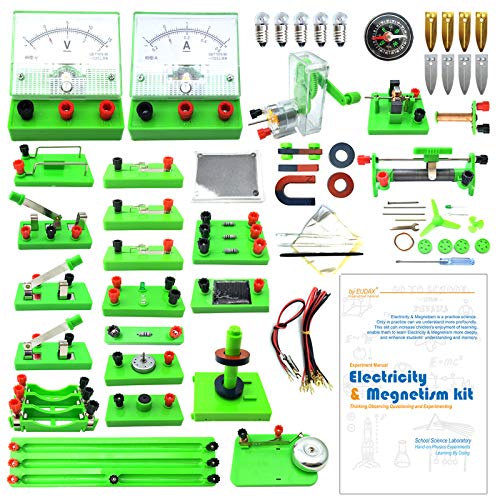
EUDAX School Physics Labs Basic Electricity Discovery Circuit and Magnetism Experiment Kits for High School Students Electromagnetism Elementary Electronics
Learn basic Electricity and Magnetism experiments through full-color manuals, understand the basic principles, and help Students learn, think...
As an affiliate, we earn on qualifying purchases.
EUDAX School Physics Labs Basic Electricity Discovery Circuit and Magnetism Experiment Kits for High School Students

This kit stands out for its comprehensive approach to fundamental physics concepts, offering a wide range of experiments in electricity and magnetism. Compared to the other options, it provides more in-depth activities suitable for high school students who are ready to explore complex circuits and magnetic models. However, the setup can be intricate, and batteries are not included, which might add to the initial cost. It’s ideal for STEM classrooms or motivated students but may be overwhelming for younger or less experienced learners.
EUDAX School Physics Labs Basic Electricity Discovery Circuit and Magnetism Experiment Kits for High School Students
- ✔ Items for Electricity: 56
- ✔ Items for Magnetism: 21
- ✔ Repair Tools: 2 pcs
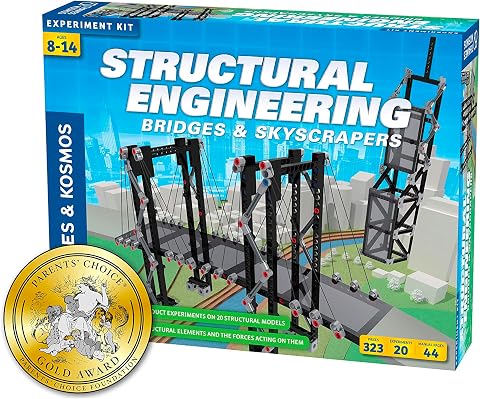
Thames & Kosmos Structural Engineering: Bridges & Skyscrapers Science & Engineering Kit
- ✔ Number of Models: 20
- ✔ Building Pieces: 285+
- ✔ Manual Pages: 36
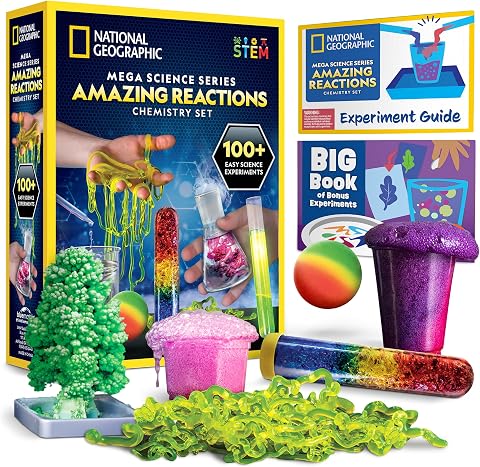
National Geographic Amazing Chemistry Set – 100+ Science Experiments for Kids
- ✔ Number of Experiments: 100+
- ✔ Bonus Experiments: 85
- ✔ Included Materials: Test tubes, beakers, pipettes
Pros:
- Extensive set with 56 electricity items and 21 magnetism components
- Includes a detailed color manual for step-by-step guidance
- Suitable for high school STEM curricula and independent projects
Cons:
- Batteries not included, requiring an additional purchase
- Setup can be complex for those unfamiliar with electrical circuits
Best for: High school students ready to dive into advanced physics experiments
Not ideal for: Young children or beginners seeking simple, introductory science activities
Bottom line: A comprehensive and challenging kit for high school students serious about physics, but not ideal for beginners.
“A comprehensive and challenging kit for high school students serious about physics, but not ideal for beginners.”

Thames & Kosmos | Structural Engineering: Bridges & Skyscrapers | Science & Engineering Kit | Build 20 Models | Learn about Force, Load, Compression, Tension | Parents' Choice Gold Award Winner, Blue
Build 20 different models that each teach about force, load, compression, tension and more
As an affiliate, we earn on qualifying purchases.
Thames & Kosmos Structural Engineering: Bridges & Skyscrapers Science & Engineering Kit
This engineering kit excels at teaching students about force, load, and structural stability through hands-on building. The 20 models and 285+ interchangeable parts provide a rich, interactive experience that encourages problem-solving and critical thinking. Compared with the other kits, it demands more time and patience, making it better suited for students with some engineering interest or prior experience. Its detailed 36-page manual ensures guidance, but the complexity might challenge complete beginners or younger kids. If your student enjoys constructing and engineering, this kit offers deep engagement, though it might be too advanced for casual learners.
Pros:
- Builds 20 different models to explore engineering principles
- Over 285 building pieces for variety and creativity
- Includes a detailed illustrated manual and a Parents’ Choice Gold Award
Cons:
- Assembly can be time-consuming and demanding
- May be too advanced for complete beginners
Best for: Intermediate students or those with a budding interest in engineering
Not ideal for: Complete beginners or very young children
Bottom line: An excellent choice for students eager to delve into engineering concepts, requiring patience and some prior skills.
“An excellent choice for students eager to delve into engineering concepts, requiring patience and some prior skills.”

National Geographic Amazing Chemistry Set - Chemistry Kit with 100+ Science Experiments Including Crystal Growing and Reactions, Science Kit for Kids, STEM Gift for Boys and Girls (Amazon Exclusive)
OVER 100 EXCITING EXPERIMENTS - The science experiments in this kit let kids explore the wonders of hands-on...
As an affiliate, we earn on qualifying purchases.
National Geographic Amazing Chemistry Set – 100+ Science Experiments for Kids
This chemistry set offers a broad array of over 100 experiments, making it ideal for sparking curiosity and experimentation in younger learners. Compared with the more specialized physics and engineering kits, it emphasizes creativity, with experiments like crystal growing, color-changing solutions, and glowing test tubes. It includes all necessary materials and 85 bonus experiments, providing excellent value. However, its broad focus means less depth in any single area, and some experiments may require adult supervision or household items not included. It’s perfect for introducing kids to science in a fun, engaging way while fostering imagination, but less suitable for those seeking in-depth technical learning.
Pros:
- Over 100 experiments for extensive hands-on learning
- Includes all necessary materials and many bonus experiments
- Encourages creativity and STEM curiosity in kids
Cons:
- Some experiments require adult supervision for safety
- Limited information on specific age range and technical depth
Best for: Young children and beginners interested in chemistry
Not ideal for: Older students or those seeking advanced or specialized science kits
Bottom line: A fantastic introductory chemistry set that balances fun with foundational learning, ideal for younger children.
“A fantastic introductory chemistry set that balances fun with foundational learning, ideal for younger children.”
As an Amazon Associate we earn from qualifying purchases.
Key Differences
The primary distinction lies in the depth and scope of content. National Geographic kits excel at engaging younger or casual learners with visually appealing materials and easy-to-understand explanations, making them ideal for beginners or those with casual interest. Thames & Kosmos kits, however, cater to students seeking a thorough scientific experience, featuring more complex experiments, detailed instructions, and reusable components that support sustained exploration. These differences translate into practical choices: the former is a quick, engaging introduction to science, while the latter fosters deeper understanding and skill development.Detailed Comparison
Content Depth (Thames & Kosmos Science Kits wins — major)
While National Geographic kits focus on accessible, visually driven content suitable for beginners, Thames & Kosmos kits provide in-depth experiments that cover complex scientific concepts, making them more suitable for serious learners. The gap is major, resulting in significantly different educational value depending on user goals.Price (National Geographic Science Kits wins — moderate)
National Geographic kits are more affordable, typically costing between $20-$40, suitable for casual use or limited budgets. Thames & Kosmos kits are more expensive, generally $50-$100 or more, reflecting their advanced content and durability. The price difference is moderate but meaningful for budget-conscious buyers.Age Range (National Geographic Science Kits wins — minor)
National Geographic kits target a slightly younger demographic, starting from age 8, with simpler instructions. Thames & Kosmos kits are aimed at ages 10 and up, with more challenging experiments, slightly narrowing their usability for younger children. The gap is minor but practical when selecting for specific age groups.Experiment Variety (Thames & Kosmos Science Kits wins — moderate)
Thames & Kosmos kits include dozens of experiments, offering extensive exploration opportunities, whereas National Geographic kits typically feature fewer experiments, around 3-5, emphasizing quality over quantity. The gap is moderate and impacts long-term engagement.Educational Value (Thames & Kosmos Science Kits wins — major)
Thames & Kosmos kits deliver comprehensive scientific explanations and foundational concepts, making them more educational for serious learners. National Geographic kits focus on storytelling and visual engagement, providing good introductory knowledge but less depth. The gap is major, favoring Thames & Kosmos for core science learning.Build Quality (Thames & Kosmos Science Kits wins — moderate)
Thames & Kosmos components tend to be more durable and reusable, supporting repeated experiments. National Geographic kits often use lightweight plastic parts designed for single use or limited handling. The gap is moderate, affecting long-term value.Ease of Use (National Geographic Science Kits wins — minor)
National Geographic kits are designed for quick setup and simple instructions, making them accessible for younger children or casual use. Thames & Kosmos kits require more skill and patience, suitable for older children or those with basic scientific familiarity. The gap is minor but practical.Reusability (Thames & Kosmos Science Kits wins — moderate)
Thames & Kosmos kits emphasize reusability with durable parts that allow multiple experiments or expansion. National Geographic kits are more limited, often single-use or with parts not designed for repeated experiments. The gap is moderate, influencing long-term value.National Geographic Science Kits: Pros and Cons
Pros:
- Affordable and accessible for beginners
- Very easy to use, suitable for young children
- Visually engaging with real-world relevance
Cons:
- Limited experiment variety and depth
- Less durable components, mostly single-use
- Lower educational rigor compared to advanced kits
Thames & Kosmos Science Kits: Pros and Cons
Pros:
- In-depth experiments and comprehensive science content
- Durable, reusable components for extended exploration
- Suitable for older children and serious learners
Cons:
- Higher price point may be a barrier
- More complex setup and instructions
- Less immediately engaging for casual or younger users
Who Should Choose What
Choose National Geographic Science Kits if:
- You want an affordable, simple intro to science for children aged 8-12
- The goal is quick engagement and visual appeal without requiring advanced skills
- Budget constraints are significant
Choose Thames & Kosmos Science Kits if:
- You are looking for a comprehensive, durable science kit for serious exploration
- The child is older (10+) and can handle complex instructions
- Long-term value and repeated experiments are priorities
Skip both if: You need a highly specialized or curriculum-aligned kit, or budget is extremely limited.