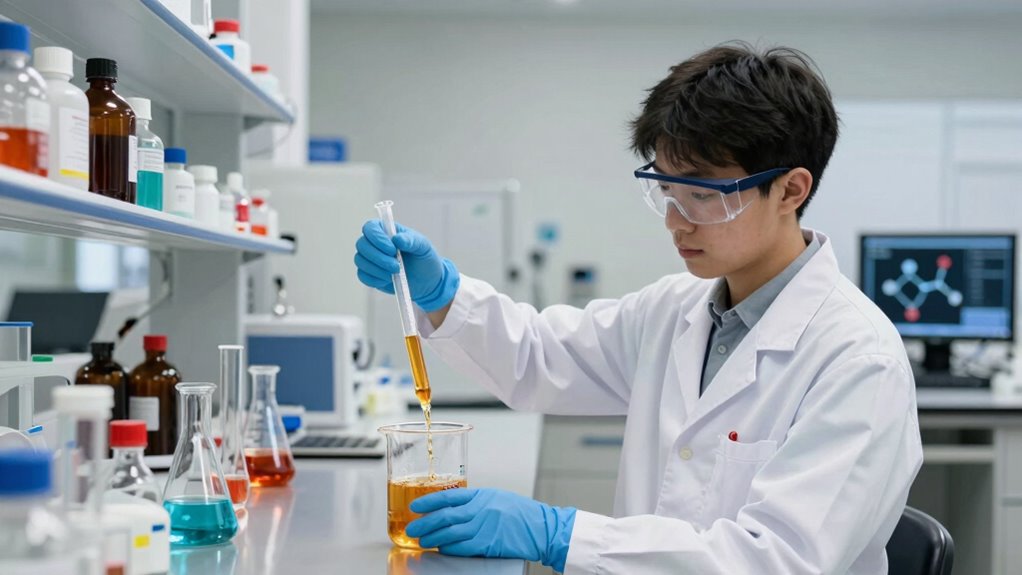
Starting your chemistry career with entry-level roles like lab technician or research assistant helps you gain hands-on experience with laboratory equipment, safety protocols, and chemical processes. You’ll develop practical skills in instrument handling, troubleshooting, and data analysis, building a strong foundation for advanced positions. These jobs also give you exposure to diverse chemical procedures, boosting confidence and understanding. Continue exploring to discover how these roles can shape your professional growth and open new opportunities.
Key Takeaways
- Laboratory technician roles that involve hands-on use of lab equipment and troubleshooting skills.
- Chemical assistant positions focusing on safe handling, labeling, and disposal of hazardous materials.
- Research support jobs offering exposure to experimental design, data analysis, and diverse chemical processes.
- Quality control or testing technician roles that develop practical skills in instrument operation and safety protocols.
- Internships or apprenticeships providing real-world experience in lab procedures, safety procedures, and professional development.

Are you curious about starting a career in chemistry but unsure where to begin? Diving into entry-level chemistry jobs can be exciting, especially when you’re eager to gain real-world experience. These roles often serve as the foundation for your future in the field, giving you the chance to work hands-on with laboratory equipment and develop a solid understanding of chemical safety. As you step into these positions, you’ll quickly learn that handling laboratory equipment responsibly is crucial. From pipettes and beakers to spectrometers, mastering the proper use of lab tools not only sharpens your technical skills but also ensures your safety and the safety of those around you.
In many entry-level roles, you’ll be tasked with assisting senior chemists or lab technicians, which means following strict protocols related to chemical safety. You’ll learn how to properly label chemicals, dispose of waste, and handle hazardous materials—skills that are essential in any chemistry setting. These responsibilities help you build confidence and a disciplined approach to conducting experiments. Over time, you’ll become more familiar with safety data sheets and safety procedures, making you more prepared for independent projects in the future.
Assisting senior staff teaches essential safety protocols and builds confidence for independent laboratory work.
Getting hands-on experience with laboratory equipment also teaches you to troubleshoot issues that arise during experiments. You’ll observe how different instruments operate, understand their limitations, and learn maintenance techniques. This practical knowledge is invaluable because it allows you to troubleshoot problems efficiently and avoid costly mistakes. Plus, working with laboratory equipment enhances your understanding of experimental design, data collection, and analysis, all of which are critical skills for any aspiring chemist.
Furthermore, entry-level positions often expose you to diverse chemical processes, from synthesis to analysis. This broad exposure helps you identify your interests within the field and guides your career path. As you gain experience, you’ll become more confident in managing experiments, interpreting results, and adhering to safety protocols. This foundation not only prepares you for more advanced roles but also makes you a valuable team member in any research or industrial lab.
In essence, starting in an entry-level chemistry job allows you to develop practical skills with laboratory equipment while emphasizing the importance of chemical safety. It’s a stepping stone that transforms theoretical knowledge into real-world expertise, setting you up for success as you continue to grow in the chemistry world.
laboratory safety equipment for beginners
As an affiliate, we earn on qualifying purchases.
As an affiliate, we earn on qualifying purchases.
Frequently Asked Questions
What Certifications Are Beneficial for Entry-Level Chemistry Roles?
You’ll find that laboratory certifications like OSHA safety training and hazardous materials handling are highly beneficial for entry-level chemistry roles. These certifications demonstrate your commitment to safety and your understanding of essential protocols, which employers value. Additionally, obtaining certifications such as CPR or first aid can set you apart. They show you’re prepared for emergencies, making you a more attractive candidate and helping you build practical experience early in your career.
How Can I Network Effectively in the Chemistry Field?
Think of networking as cultivating a delicate chemical reaction—you need the right elements to spark growth. Attend industry events, join professional groups, and connect with researchers on platforms like LinkedIn. Be genuine and curious, sharing your passion for lab safety and scientific publishing. These conversations can lead to mentorships or collaborations, helping you build your reputation and gain invaluable experience in the chemistry field.
What Soft Skills Are Essential for Chemistry Jobs?
In chemistry jobs, soft skills like effective laboratory communication and teamwork collaboration are essential. You need to clearly share your findings and ideas during experiments and team discussions. Building strong collaboration helps you solve complex problems faster and learn from colleagues. Being open to feedback and adaptable also boosts your success. These skills guarantee you work efficiently, contribute positively, and advance in your chemistry career.
Are Remote Chemistry Positions Available at Entry-Level?
Yes, remote opportunities are available for entry-level chemistry positions. Many companies now offer remote or hybrid roles, especially in research, data analysis, or technical support. You can find these positions on job boards or company websites, often labeled as entry-level or junior roles. While some lab work requires in-person presence, remote options are growing, allowing you to gain experience and develop skills from home.
How Do I Transition From Academic Research to Industry?
To shift from academic research to industry, you should highlight your laboratory safety skills and understanding of research methodologies on your resume. Network with industry professionals, attend career fairs, and seek internships to gain relevant experience. Tailor your CV to emphasize practical skills like safety protocols and applying research methods in real-world settings, which demonstrate your readiness for industry roles and help you stand out to potential employers.
entry-level chemistry lab tools
As an affiliate, we earn on qualifying purchases.
As an affiliate, we earn on qualifying purchases.
Conclusion
Beginning your chemistry career might seem intimidating, but these entry-level jobs are your stepping stones to mastery. Like the first brushstroke on a masterpiece, each role builds your skills and confidence. Remember, every experiment and analysis isn’t just a task—it’s your foundation. So, seize these opportunities with curiosity and passion. After all, the path to expertise is paved with small, deliberate steps—each one bringing you closer to your scientific dreams.
spectrometer for student labs
As an affiliate, we earn on qualifying purchases.
As an affiliate, we earn on qualifying purchases.
chemical safety data sheets book
As an affiliate, we earn on qualifying purchases.
As an affiliate, we earn on qualifying purchases.