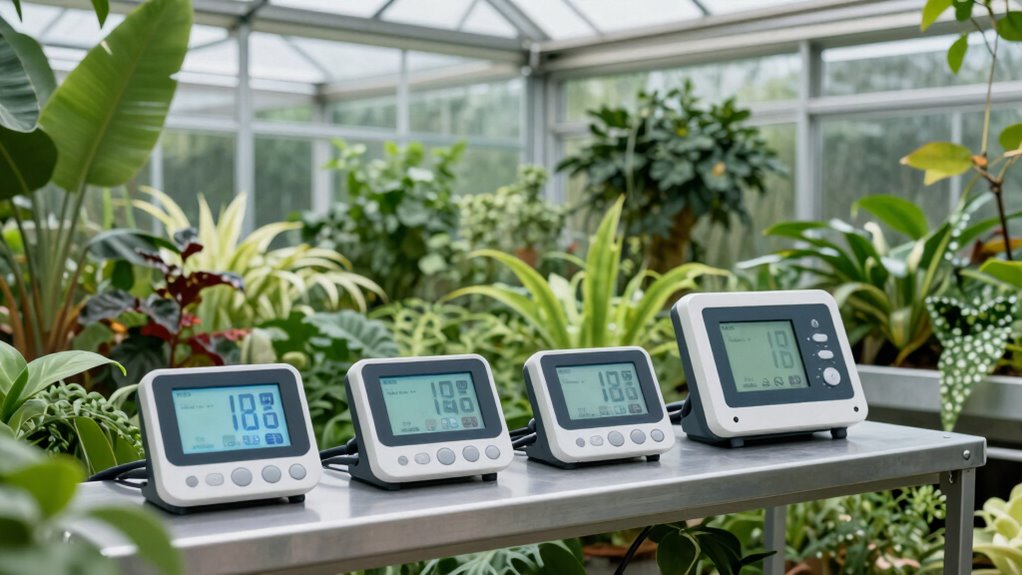
Greenhouse climate controllers help you maintain stable conditions by constantly monitoring temperature, humidity, and light levels. They rely on accurately calibrated sensors to ensure data is precise, preventing environmental fluctuations that can stress plants. Regular sensor calibration and data logging are essential, as they allow you to spot trends and make proactive adjustments. This ongoing process creates a reliable system that promotes healthy growth and efficiency. Keep exploring to discover how proper calibration and data management keep your greenhouse ideal.

Prime made for students and young adults
- Fast, free delivery for dorm and study essentials
- Prime Video and Amazon Music included
- Member-only deals
Key Takeaways
- Greenhouse climate controllers maintain stable environmental conditions by continuously monitoring and adjusting temperature, humidity, and light levels.
- Regular sensor calibration ensures accurate data, preventing environmental fluctuations caused by sensor drift.
- Data logging records environmental conditions over time, aiding in trend analysis and system fine-tuning.
- Integrating calibration and data logging creates a feedback loop that enhances control reliability and consistency.
- Scheduled calibration and monitoring reduce fluctuations, ensuring healthy plant growth and system efficiency.
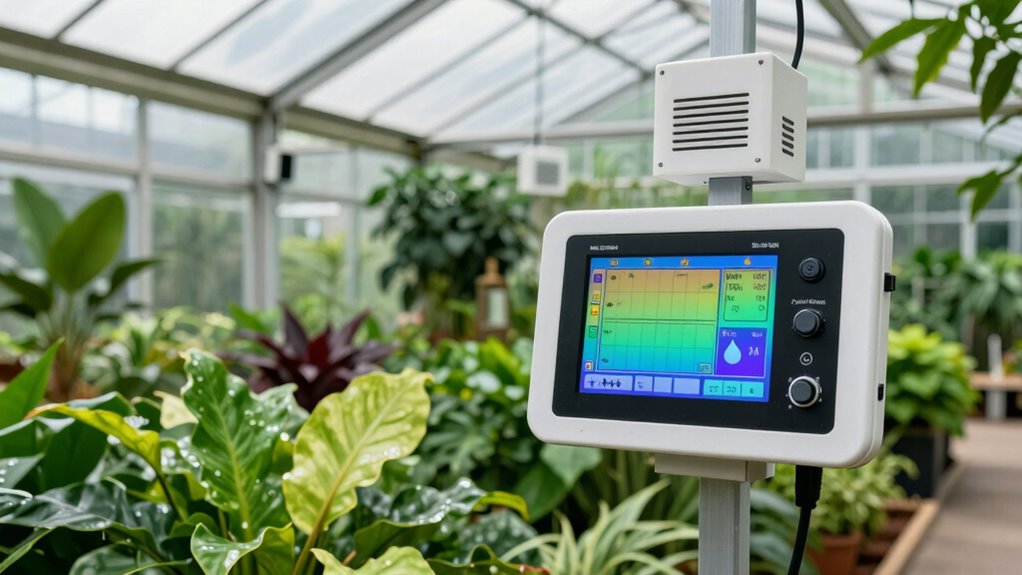
Maintaining consistency in your greenhouse environment is essential for healthy plant growth, and climate controllers play a vital role in achieving that accuracy. These controllers constantly monitor conditions like temperature, humidity, and light levels, adjusting systems as needed to keep everything within ideal ranges. To do this effectively, you need to understand how sensor calibration impacts your system’s accuracy. Proper sensor calibration ensures that the data your controllers receive reflects real-world conditions accurately. If sensors drift over time or aren’t calibrated correctly, your climate control decisions may be based on faulty readings, leading to fluctuations that stress your plants. Regular calibration checks help maintain measurement precision, which is fundamental for stable environment management. Additionally, understanding the role of cloud server solutions can help you access and analyze your data remotely, enhancing your ability to maintain consistent conditions.
Data logging is another important aspect of maintaining consistency in your greenhouse. By recording environmental data over time, you gain valuable insights into patterns and trends that influence plant health. Data logging allows you to identify subtle shifts in temperature or humidity that might not be immediately apparent through daily observations. This historical data helps you fine-tune your climate settings, guaranteeing that your environment remains within the ideal parameters for your specific crops. Plus, when issues arise, having detailed logs makes troubleshooting faster and more effective, as you can trace back to the precise conditions that may have caused a problem. Incorporating sensor calibration into your routine also helps prevent errors caused by sensor drift, ensuring ongoing accuracy in your measurements. Regular periodic maintenance of your sensors can further improve overall system reliability. Conducting calibration checks as part of your routine ensures sensors stay accurate and reduce the risk of environmental fluctuations.
To enhance your system’s dependability, establishing a calibration schedule ensures sensors are checked and adjusted regularly, preventing inaccuracies before they affect your environment. Integrating sensor calibration with data logging creates a feedback loop that enhances your control system’s dependability. When sensors are properly calibrated, the logged data is more trustworthy, enabling you to make informed adjustments. Conversely, analyzing logged data can reveal when sensors need recalibration, preventing drift from affecting your environment. This proactive approach minimizes environmental fluctuations, giving your plants a stable setting to thrive. It also reduces the risk of overcompensation, where you might otherwise adjust climate settings based on inaccurate readings, leading to unnecessary energy consumption or stress on your plants.
In essence, maintaining consistency requires a combination of accurate sensor calibration and thorough data logging. Together, they empower you to keep your greenhouse environment steady, which is fundamental for healthy plant development. By regularly calibrating sensors and reviewing logged data, you ensure your climate control system functions at its best, adapting to changing conditions with precision. This approach not only enhances plant growth but also boosts operational efficiency, helping you create a resilient, productive greenhouse environment that supports your long-term cultivation goals.
greenhouse climate controller with sensor calibration
As an affiliate, we earn on qualifying purchases.
As an affiliate, we earn on qualifying purchases.
Frequently Asked Questions
How Do Climate Controllers Adapt to Sudden Weather Changes?
When sudden weather changes occur, your climate controller relies on sensor accuracy to detect these shifts quickly. It adapts through real-time weather adaptation, adjusting heating, cooling, and ventilation accordingly. The system processes data instantly, ensuring your greenhouse maintains ideal conditions despite unpredictable weather. By continuously monitoring sensors and responding promptly, it keeps your plants safe and thriving, even during abrupt climate fluctuations.
What Are the Energy Costs of Advanced Greenhouse Controllers?
Advanced greenhouse controllers can increase energy costs initially due to their sophisticated systems, but they often lead to significant long-term cost savings. By optimizing climate conditions, they improve energy efficiency, reducing waste and unnecessary usage. This means you’ll spend less on heating, cooling, and ventilation over time, making your greenhouse more sustainable and economical. Overall, investing in these controllers balances higher upfront costs with ongoing energy savings, benefiting your operation financially.
Can Controllers Be Integrated With Existing Greenhouse Systems?
Yes, controllers can be integrated with existing greenhouse systems. In fact, about 80% of modern greenhouses are adopting automation integration to streamline operations. You’ll need to take into account system compatibility to ensure smooth communication between new controllers and your current setup. By doing so, you can enhance efficiency, reduce manual work, and optimize environmental conditions, ultimately boosting plant health and productivity without the hassle of replacing your entire infrastructure.
How Do Controllers Handle Pest and Disease Prevention?
Controllers help with pest and disease prevention by automating environmental conditions that discourage them. You can set up pest monitoring alerts to detect early signs of infestations, allowing you to act swiftly. They also regulate humidity, temperature, and airflow, creating an environment less favorable for pests and diseases. This proactive approach guarantees healthier plants, reduces chemical use, and maintains ideal growing conditions efficiently.
What Is the Lifespan of a Typical Greenhouse Climate Controller?
A typical greenhouse climate controller lasts around 5 to 10 years, depending on usage and maintenance. You should regularly check sensor calibration to guarantee accuracy and keep the user interface updated for peak performance. Proper maintenance can extend its lifespan, and replacing sensors when needed helps prevent malfunctions. Staying attentive to these factors guarantees your controller works efficiently and lasts as long as possible.
digital greenhouse temperature humidity light monitor
As an affiliate, we earn on qualifying purchases.
As an affiliate, we earn on qualifying purchases.
Conclusion
In the world of greenhouse management, trust in your climate controllers is essential for success. They help you keep conditions just right, avoiding the pitfalls of inconsistency that can harm your plants. Remember, a stitch in time saves nine — investing in reliable controllers now prevents bigger problems later. Stay proactive, stay vigilant, and you’ll see your greenhouse thrive, proving that precision and consistency really do make all the difference.
greenhouse data logger and sensor calibration kit
As an affiliate, we earn on qualifying purchases.
As an affiliate, we earn on qualifying purchases.
remote greenhouse climate control system
As an affiliate, we earn on qualifying purchases.
As an affiliate, we earn on qualifying purchases.
Fall Picks
fall essentials
As an affiliate, we earn on qualifying purchases.