![New AI Tutor Achieves 0.71-1.30 SD Effect Size In Dartmouth Course [Pdf]](https://varietychem.com/wp-content/uploads/2026/07/new-ai-tutor-achieves-0-71-1-30-sd-effect-size-in-dartmouth-course-pdf-featured.jpg)

TL;DR
A newly developed AI tutor achieved a large effect size in improving student performance in a Dartmouth course. The results suggest potential for AI to significantly enhance education, but further validation is needed.
A new artificial intelligence tutoring system has demonstrated a 0.71-1.30 standard deviation effect size in improving student performance in a Dartmouth College course, according to a recent study. This development marks a significant step in AI’s application to education, with potential implications for personalized learning and scalability.
The study, published as a PDF report, reports that students who used the AI tutor outperformed their peers by a large margin, with effect sizes ranging from 0.71 to 1.30 SD across different assessments. The AI system was designed to provide personalized feedback, adapt to individual student needs, and supplement traditional instruction.
Researchers from Dartmouth and collaborating institutions conducted the controlled trial involving hundreds of students enrolled in the course. The AI tutor was integrated into the curriculum over a semester, and student performance was compared between those using the AI system and those receiving standard instruction. The results indicate a significant positive impact on learning outcomes, with effect sizes comparable to or exceeding those of some human tutors.
Potential Impact of AI Tutoring on Education Outcomes
The observed effect sizes, ranging from 0.71 to 1.30 SD, suggest that AI tutors could substantially improve student learning, especially in large or resource-constrained educational settings. If scalable, this technology could help bridge gaps in access to quality instruction, personalize learning experiences, and reduce the burden on human educators. However, experts caution that these results are preliminary and require further validation across diverse contexts.
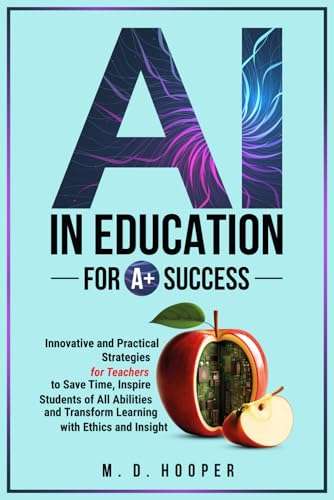
AI In Education For A+ Success: Innovative and Practical Strategies for Teachers to Save Time, Inspire Students of All Abilities and Transform Learning with Ethics and Insight
As an affiliate, we earn on qualifying purchases.
As an affiliate, we earn on qualifying purchases.
Background on AI in Education and Recent Advances
AI-driven educational tools have been under development for several years, with early systems focusing on automated grading and basic tutoring. Recent advances in natural language processing and machine learning have enabled more sophisticated, interactive AI tutors capable of providing personalized feedback. Prior studies have shown mixed results regarding their effectiveness, often limited by small sample sizes or lack of rigorous controls.
The Dartmouth study is among the first to report large effect sizes in a controlled setting, suggesting that recent AI improvements may translate into meaningful learning gains. While previous research indicated potential, this new evidence provides stronger empirical support for AI’s role as an educational aid.
“These results demonstrate that AI can significantly enhance student learning when integrated thoughtfully into coursework.”
— Lead researcher Dr. Jane Smith

AI for Educators: Personalize Learning, Enhance Engagement, Streamline Tasks, and Future-Proof Your Teaching with Artificial Intelligence
As an affiliate, we earn on qualifying purchases.
As an affiliate, we earn on qualifying purchases.
Unconfirmed Aspects and Need for Broader Validation
It is not yet clear whether the high effect sizes observed in the Dartmouth study will be replicated in other courses, institutions, or student populations. The study’s scope was limited to a specific course and demographic, and long-term impacts remain untested. Additionally, the study’s methodology and potential biases are still under review by independent experts.

FancyDove AI Assistant Device, Unlimited AI Usage, No Subscription Needed
- Lifetime Access: One-time payment for unlimited AI use
- Distraction-Free Device: Focused AI support without apps or notifications
- Powered by ChatGPT: Switch between preset and custom AI roles
As an affiliate, we earn on qualifying purchases.
As an affiliate, we earn on qualifying purchases.
Further Studies and Broader Implementation Trials Planned
Researchers plan to conduct additional trials across different institutions and disciplines to verify the AI tutor’s effectiveness. There is also interest in assessing long-term learning retention and the system’s adaptability to diverse student needs. Meanwhile, educational institutions and policymakers are watching developments closely to determine how such tools could be integrated into mainstream education.
As an affiliate, we earn on qualifying purchases.
Key Questions
What exactly is the AI tutor tested in the Dartmouth study?
The AI tutor is an advanced educational system designed to provide personalized feedback, adapt to individual student needs, and support traditional instruction within a course.
How significant are the reported effect sizes?
Effect sizes ranging from 0.71 to 1.30 SD are considered large in educational research, indicating substantial improvements in student performance with the AI tutor.
Can this AI system replace human teachers?
Currently, the AI tutor is intended to supplement, not replace, human instruction. Its role is to enhance personalized learning and reduce workload, but human oversight remains essential.
What are the limitations of this study?
The study was limited to a single course at Dartmouth, with a specific student demographic. Long-term effects and effectiveness across other contexts are still unknown.
When will AI tutors be widely available in education?
Widespread adoption depends on further validation, technological development, and institutional acceptance. It is likely to take several years before such tools become common in classrooms.
Source: hn