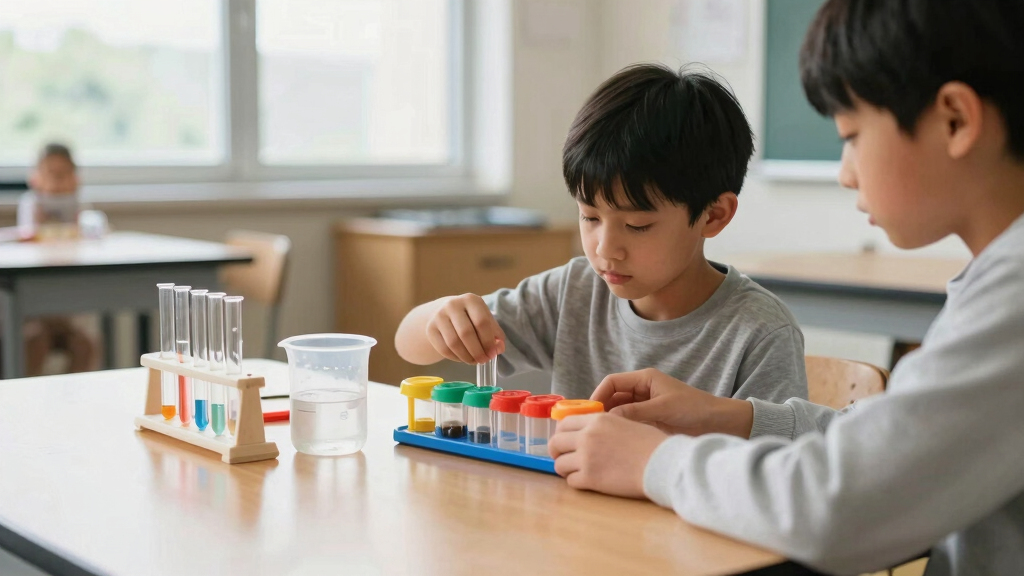

This guide helps educators and parents select appropriate science kits for students, prepare them properly, and conduct effective experiments. It covers choosing the right kit, setting it up, and ensuring safe, educational use. Suitable for beginners and those new to science kits, this guide provides clear steps to maximize learning outcomes while avoiding common issues. Expect to spend about 30 to 60 minutes per activity, depending on complexity.
National Geographic Amazing Chemistry Set – 100+ Science Experiments for Kids, STEM Gift
- ✔ Brand: Blue Marble
- ✔ Age Range: 8 years and up
- ✔ Educational Objective: STEM
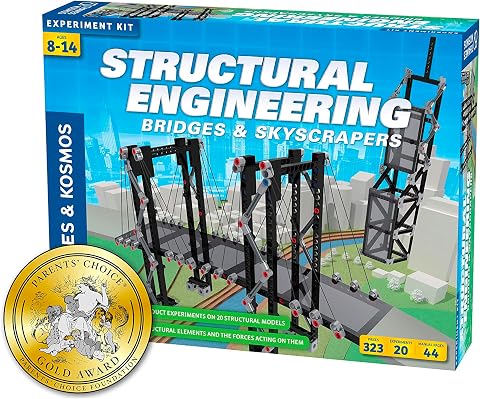
Thames & Kosmos Structural Engineering: Bridges & Skyscrapers Science & Engineering Kit
- ✔ Number of models: 20
- ✔ Pieces: 285+
- ✔ Manual pages: 36

EUDAX School Physics Labs Basic Electricity Discovery Circuit and Magnetism Experiment Kits for High School Students
- ✔ Items for Electricity: 56
- ✔ Items for Magnetism: 21
- ✔ Repair Tools: 2 pcs
Difficulty: Beginner | Time: 30-60 minutes per kit setup and activity
What You’ll Need
Tools & Materials:
- Basic safety gear (goggles, gloves)
- Scissors or cutting tools
- Measuring cups and spoons
- Notebook and pen for notes
Knowledge:
- Basic understanding of scientific safety procedures
- Ability to follow instructions carefully
National Geographic Amazing Chemistry Set – 100+ Science Experiments for Kids, STEM Gift
<p>This set stands out for its extensive collection of over 100 experiments, making it ideal for children who are excited by hands-on chemistry. It includes real scientific tools such as test tubes, beakers, and pipettes, providing an authentic lab experience. Compared with other kits, it offers a broader range of activities, from crystal growing to color-changing solutions, complemented by a bonus guide for extra experiments using household items. However, its complexity and the need for adult supervision mean it’s best suited for children 8 and up who can responsibly handle chemicals and delicate equipment. The included materials may not be particularly durable over long-term use, which is a minor drawback for an educational product focused on experimentation.</p>
Pros:
- Includes over 100 experiments to keep kids engaged for hours
- Provides real lab tools like test tubes and beakers for authentic learning
- Bonus guide with additional experiments encourages independent exploration
Cons:
- Suitable only for children 8 and older due to chemical handling
- Some experiments require adult supervision for safety
- Materials may not be highly durable
Best for: Older children (8+) with an interest in chemistry and STEM exploration
Not ideal for: Younger children or families seeking a simple, low-maintenance kit
Bottom line: A comprehensive and award-winning chemistry kit that offers extensive experiments for motivated older children interested in STEM.
“A comprehensive and award-winning chemistry kit that offers extensive experiments for motivated older children interested in STEM.”

Thames & Kosmos | Structural Engineering: Bridges & Skyscrapers | Science & Engineering Kit | Build 20 Models | Learn about Force, Load, Compression, Tension | Parents' Choice Gold Award Winner, Blue
- Number of models: Build 20 models to learn engineering concepts
- Building pieces: Over 285 interchangeable parts
- Instruction manual: Includes 36-page illustrated guide
As an affiliate, we earn on qualifying purchases.
Thames & Kosmos Structural Engineering: Bridges & Skyscrapers Science & Engineering Kit
<p>This kit excels at teaching fundamental engineering principles through building 20 different models with over 285 interchangeable pieces. Its detailed 36-page manual offers a comprehensive guide to concepts like force, load, and tension, making it suitable for learners with some prior experience or advanced curiosity. Compared to more general science kits, this one emphasizes structural understanding and hands-on design skills that are ideal for middle school students or those with an engineering focus. However, its intermediate skill level means beginners might find it challenging without additional guidance, and it doesn’t specify an exact age range, so adult supervision and judgment are advised.</p>
Pros:
- Includes 20 different buildable models for varied learning
- Over 285 interchangeable parts for creative experimentation
- Award-winning quality with a detailed instruction manual
Cons:
- May be too complex for absolute beginners
- No specific age range provided, requiring adult judgment
- Focuses primarily on engineering, less on other sciences
Best for: Intermediate students with an interest in engineering and building complex structures
Not ideal for: Young children or complete beginners without prior experience
Bottom line: A versatile engineering kit ideal for motivated middle school students ready for more complex projects and concepts.
“A versatile engineering kit ideal for motivated middle school students ready for more complex projects and concepts.”
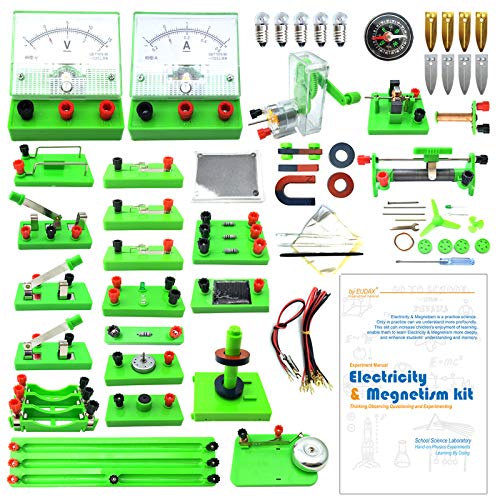
EUDAX School Physics Labs Basic Electricity Discovery Circuit and Magnetism Experiment Kits for High School Students Electromagnetism Elementary Electronics
- Comprehensive Learning Manuals: Full-color guides for experiments
- All-in-One Experiment Kit: Includes necessary components for projects
- Complete Equipment Set: 56 items for Electricity, 21 for Magnetism
As an affiliate, we earn on qualifying purchases.
EUDAX School Physics Labs Basic Electricity Discovery Circuit and Magnetism Experiment Kits for High School Students
<p>This physics kit offers an in-depth exploration of electricity and magnetism, making it a strong choice for high school students in grades 9-11. It includes 79 items, covering circuits, electromagnetism, and related concepts, with detailed manuals that guide learners through building and understanding simple electrical and magnetic models. Compared to chemistry and engineering kits, it places a heavier emphasis on fundamental physics principles and experimental setup. The need for additional batteries (not included) and some assembly requirements may pose initial hurdles, but these are offset by the comprehensive learning experience. It’s perfect for students who want to deepen their understanding of physics but may be less suitable for younger children or complete beginners without prior knowledge.</p>
Pros:
- Includes a wide range of components for electrical and magnetic experiments
- Detailed manuals facilitate independent learning
- Encourages exploration of core physics concepts
Cons:
- Batteries are not included, requiring extra purchase
- Some setup and assembly required for experiments
- Designed for older students, less suitable for younger children
Best for: High school students interested in electricity and magnetism
Not ideal for: Younger students or those seeking a less technical introduction
Bottom line: A comprehensive physics kit ideal for high schoolers seeking to explore electricity, magnetism, and fundamental physics concepts in depth.
“A comprehensive physics kit ideal for high schoolers seeking to explore electricity, magnetism, and fundamental physics concepts in depth.”
As an Amazon Associate we earn from qualifying purchases.
Before You Start
Verify that the science kit is appropriate for the age group and educational level of the students. Check all parts and components are included and undamaged. Prepare the workspace and safety equipment in advance. Review safety guidelines and experiment instructions to prevent accidents or misuse.
Step-by-Step Instructions
Step 1: Select the appropriate science kit
Review available science kits and choose one that matches the students’ age, interests, and learning objectives. Consider kits that include clear instructions, necessary safety gear, and a variety of experiments.
Tip: Ensure the kit’s complexity matches the students’ skill level; too advanced can cause frustration, too simple may be unengaging.
Check: You have a kit that matches your educational goals and is suitable for the students’ age and skill level.
Step 2: Read and understand the instruction manual
Thoroughly read the kit’s instruction manual and safety guidelines before beginning. Highlight key safety precautions and required materials.
Tip: Familiarize yourself with each experiment step to identify potential safety concerns or special tools needed.
Check: You understand each experiment’s steps and safety instructions, prepared to guide students safely.
Step 3: Gather all necessary materials and safety equipment
Collect all components from the kit and additional tools listed in the instructions. Set up safety gear such as goggles and gloves for each participant.
Tip: Separate materials into labeled containers for easy access during experiments.
Check: All required materials and safety gear are ready and organized at the workspace.
Step 4: Prepare the workspace and safety measures
Choose a flat, stable surface with good ventilation. Cover surfaces with protective sheets if necessary. Ensure safety equipment is in place and visible.
Tip: Remove distractions and ensure supervision, especially for younger students.
Check: Your workspace is safe, organized, and ready for conducting experiments.
Step 5: Conduct the experiment step-by-step
Follow the instructions precisely, guiding students through each step. Use measuring tools accurately and record observations.
Tip: Pause after each step to check understanding and safety compliance. Demonstrate any complex procedures first.
Check: Students successfully complete the experiment with accurate results and proper safety practices.
Step 6: Record observations and results
Encourage students to document their observations, measurements, and conclusions clearly in their notebooks.
Tip: Use prompts or questions to guide observation recording and critical thinking.
Check: Observations are detailed, accurate, and reflect the experiment’s expected outcomes.
Step 7: Clean up and store materials properly
Dispose of waste safely, clean reusable tools, and store remaining materials in their designated places.
Tip: Check for any damages or missing items before storing the kit for future use.
Check: Workspace is clean, and all materials are stored correctly, ready for next use.
Common Mistakes to Avoid
- Using unsafe or damaged equipment — Inspect all materials before use and replace any damaged parts immediately.
- Skipping safety precautions — Always wear safety gear and supervise students closely during experiments.
- Not following instructions precisely — Read all instructions carefully and follow each step exactly as written.
Troubleshooting
Problem: Experiments do not yield expected results
Solution: Check that all steps were followed correctly and measurements were accurate. Review instructions for common errors.
Problem: Materials are missing or damaged
Solution: Verify the completeness of the kit before use. Contact the supplier if parts are missing or defective.
Problem: Safety concerns during activity
Solution: Stop the experiment immediately, review safety protocols with students, and address any hazards before proceeding.
What Success Looks Like
The experiment is completed with accurate observations recorded, safety procedures followed, and the outcome matches expected results. The workspace is clean, and students demonstrate understanding through discussion or written reports.
Next Steps
Review student work and discuss findings. Plan follow-up activities or experiments to reinforce concepts. Regularly check and maintain kits to ensure readiness for future use. Seek feedback to improve the process.
Frequently Asked Questions
How do I choose the right science kit for my students?
Select kits based on students’ age, interests, and curriculum goals. Look for clear instructions, safety features, and a variety of experiments suitable for their skill level.
What safety precautions are essential when using science kits?
Always wear safety goggles and gloves, supervise students closely, and read all safety instructions in the manual before starting experiments.
How can I troubleshoot if an experiment doesn’t work as expected?
Check all measurements and steps for accuracy, ensure materials are undamaged, and review instructions for any missed or misinterpreted procedures.
Can I reuse the science kit for multiple classes?
Yes, with proper cleaning and storage. Check for damages and missing parts before each use to maintain safety and effectiveness.