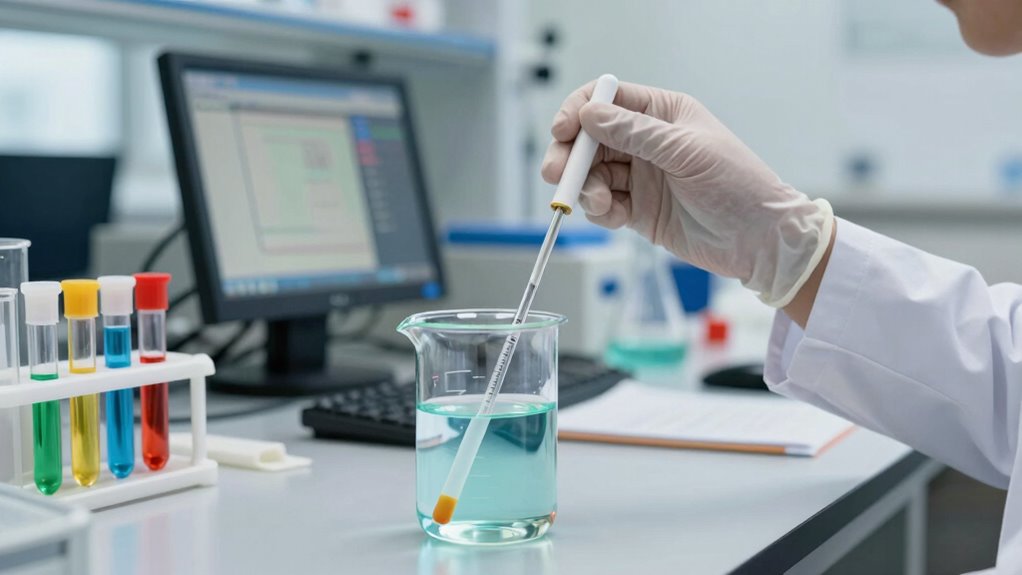

To guarantee accurate pH measurements in real conditions, you need to properly calibrate your electrode using standard buffers, clean it regularly, and account for temperature changes. Temperature affects the electrode’s response, so using automatic temperature compensation or manual adjustments is essential. Environmental factors like contamination or fouling can also impact accuracy if not managed. Mastering these practices helps you get reliable pH data, and there’s more to discover on how each step works.

Prime made for students and young adults
- Fast, free delivery for dorm and study essentials
- Prime Video and Amazon Music included
- Member-only deals
Key Takeaways
- Proper calibration with standard buffer solutions ensures accurate pH readings by aligning electrode response to known pH values.
- Temperature significantly affects pH measurements; automatic or manual temperature compensation corrects for these variations.
- Regular electrode maintenance, including cleaning and recalibration, prevents response drift and maintains measurement reliability.
- Environmental factors like turbidity or contamination can impair electrode performance, requiring diligent inspection and cleaning.
- Conducting calibration prior to measurements and noting sample temperature ensures data accuracy in diverse real-world conditions.
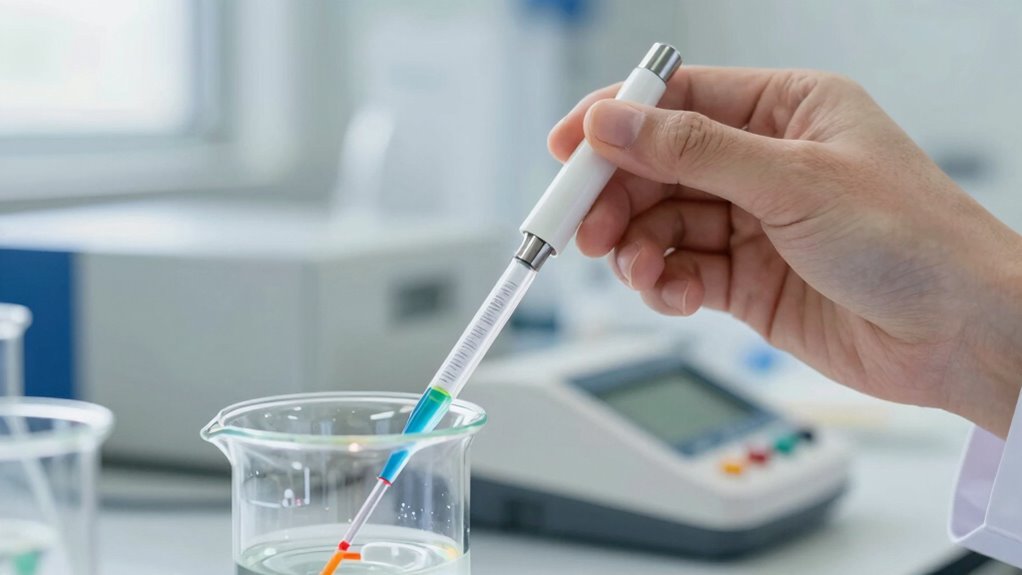
Accurate pH measurement is essential for many scientific, industrial, and environmental applications, yet achieving it requires more than just using a pH meter. To get reliable results, you need to understand how to properly perform electrode calibration and account for temperature variations through temperature compensation. Electrode calibration is the foundation of precise pH measurement. Over time, the electrode’s response can drift, leading to inaccurate readings. Regular calibration against standard buffer solutions ensures that your pH meter reflects the true pH of the sample. When calibrating, you should use at least two buffer solutions that bracket the expected pH range of your samples. Proper calibration involves rinsing the electrode thoroughly between solutions to prevent contamination and ensuring it’s immersed to the correct level. This process aligns the electrode’s response to known pH values, minimizing errors caused by electrode aging or fouling. Additionally, understanding the effects of electrode response drift can help in maintaining measurement accuracy over time. Maintaining a consistent electrode maintenance routine is vital for sustaining measurement reliability.
Temperature plays a critical role in pH measurement because the electrode’s response is temperature-dependent. That’s where temperature compensation comes into play. You can’t assume that pH readings are consistent across different temperatures, so your pH meter should either have an automatic temperature compensation feature or you must manually adjust for temperature variations. Many modern meters include a temperature probe, allowing the device to automatically correct pH readings based on the sample’s temperature. If your meter lacks this feature, you need to measure the temperature separately and apply the correction manually, referencing the pH meter’s calibration table or using mathematical formulas. Failing to compensate for temperature can lead to significant inaccuracies, especially when working with samples that are outside room temperature. Additionally, understanding how calibration procedures influence measurement accuracy can help in maintaining reliable results over time.
In real-world conditions, maintaining consistent calibration and temperature compensation is crucial. Environmental factors such as sample turbidity, contamination, or electrode fouling can compromise the electrode’s performance. Always inspect and clean your electrode regularly, and perform calibration procedures prior to critical measurements. When measuring in the field, take note of temperature and adjust your readings accordingly to ensure accuracy. By diligently calibrating your electrode and applying temperature compensation, you can trust that your pH measurements truly reflect the sample’s properties, no matter the conditions. This attention to detail ensures reliable data, whether you’re conducting laboratory research, monitoring environmental water quality, or controlling industrial processes.
digital pH meter with automatic temperature compensation
As an affiliate, we earn on qualifying purchases.
As an affiliate, we earn on qualifying purchases.
Frequently Asked Questions
How Does Temperature Fluctuation Affect pH Readings in Real-World Environments?
Temperature fluctuations can considerably impact your pH readings by causing variations in electrode response. To maintain accuracy, you need to apply temperature correction, adjusting measurements for each specific environment. Additionally, calibration stability becomes essential, as frequent temperature changes may affect calibration accuracy over time. Regularly calibrate your pH meter in different temperatures, and use temperature compensation features to guarantee your readings stay precise despite environmental shifts.
What Are Common Mistakes to Avoid When Calibrating pH Meters Outdoors?
When calibrating pH meters outdoors, avoid neglecting calibration frequency—calibrate regularly to guarantee accuracy. Don’t overlook electrode maintenance; keep the electrode clean and properly stored to prevent drift. Make sure you’re using fresh calibration solutions and follow the manufacturer’s instructions closely. Also, avoid calibrating in inconsistent conditions or with contaminated solutions, as these mistakes can lead to inaccurate readings and unreliable data.
Can pH Measurement Be Affected by Electromagnetic Interference?
Yes, pH measurement can be affected by electromagnetic interference, which causes signal disruption in your pH meter. Electromagnetic interference from nearby electronic devices, power lines, or radio signals can distort the readings, leading to inaccuracies. To guarantee precise results, keep your pH meter away from sources of electromagnetic interference, and always check for stable signals before recording measurements. This helps maintain the integrity of your pH data in real-world conditions.
How Do Sample Contamination and Handling Impact pH Accuracy?
Sample contamination and handling procedures critically impact pH accuracy. If you don’t follow proper handling steps, contaminants like dirt or chemicals can alter the sample’s pH, leading to inaccurate readings. Always use clean tools, avoid cross-contamination, and store samples correctly. Proper handling ensures the pH measurements truly reflect the sample’s condition, helping you obtain reliable, precise results in real-world testing scenarios.
Are There Specific pH Measurement Techniques for Highly Acidic or Alkaline Samples?
When measuring highly acidic or alkaline samples, you need specialized techniques. You should focus on electrode maintenance to prevent corrosion and guarantee accuracy, and sample preservation to avoid contamination that skews results. Using robust electrodes designed for extreme pH ranges makes a difference. While handling these samples, stay cautious—your careful approach ensures precise readings, even in the most challenging environments, turning complex measurements into reliable data.
pH calibration buffer solutions set
As an affiliate, we earn on qualifying purchases.
As an affiliate, we earn on qualifying purchases.
Conclusion
In the gentle dance of pH measurement, precision is your silent partner, guiding you through real-world conditions with grace. By understanding the science and respecting the subtleties involved, you can navigate the delicate balance of accuracy and reliability. Remember, it’s not just about numbers but the stories they tell about your environment. Embrace these insights, and you’ll find yourself better equipped to handle the nuances of every situation with confidence and finesse.
electrode cleaning and maintenance kit for pH meters
As an affiliate, we earn on qualifying purchases.
As an affiliate, we earn on qualifying purchases.
As an affiliate, we earn on qualifying purchases.
Halloween Picks
halloween
As an affiliate, we earn on qualifying purchases.