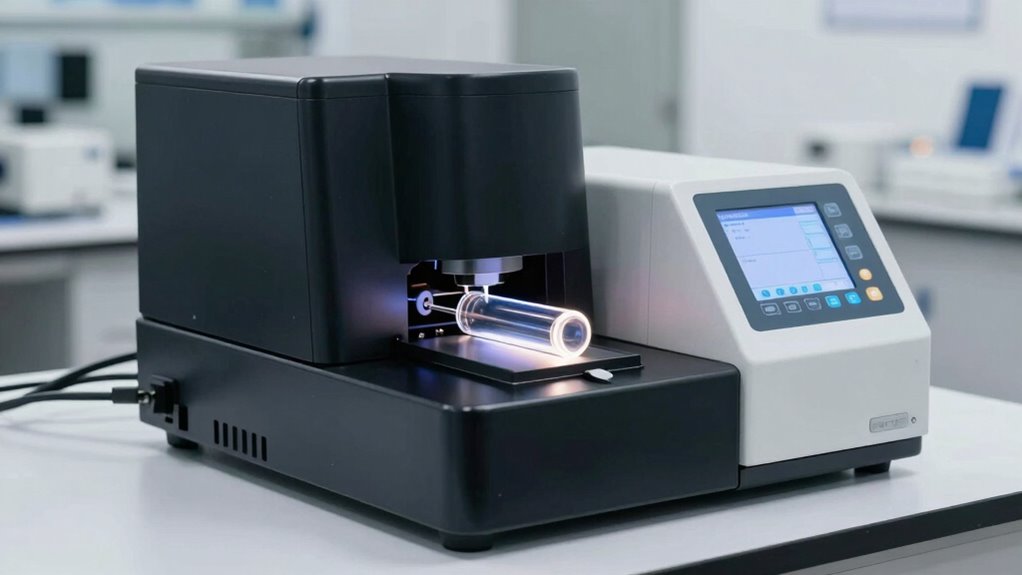

A spectrophotometer measures how much light a sample absorbs at specific wavelengths, helping you find its concentration. It works by shining light through your sample and recording the transmitted light. To get accurate results, you need to calibrate the instrument with known standards and follow the Beer-Lambert Law for proper sample prep. Regular maintenance and proper data analysis are key. Keep exploring to understand how to use it effectively and guarantee reliable measurements.
Key Takeaways
- A spectrophotometer measures how much light a sample absorbs at specific wavelengths to determine substance concentration.
- Calibration using standard solutions ensures accurate, reproducible measurements by setting a baseline.
- The Beer-Lambert Law explains the direct relationship between absorbance and analyte concentration.
- Regular maintenance and calibration are essential to prevent errors and maintain measurement accuracy over time.
- Proper data analysis, including regression and statistical checks, increases confidence in spectrophotometric results.
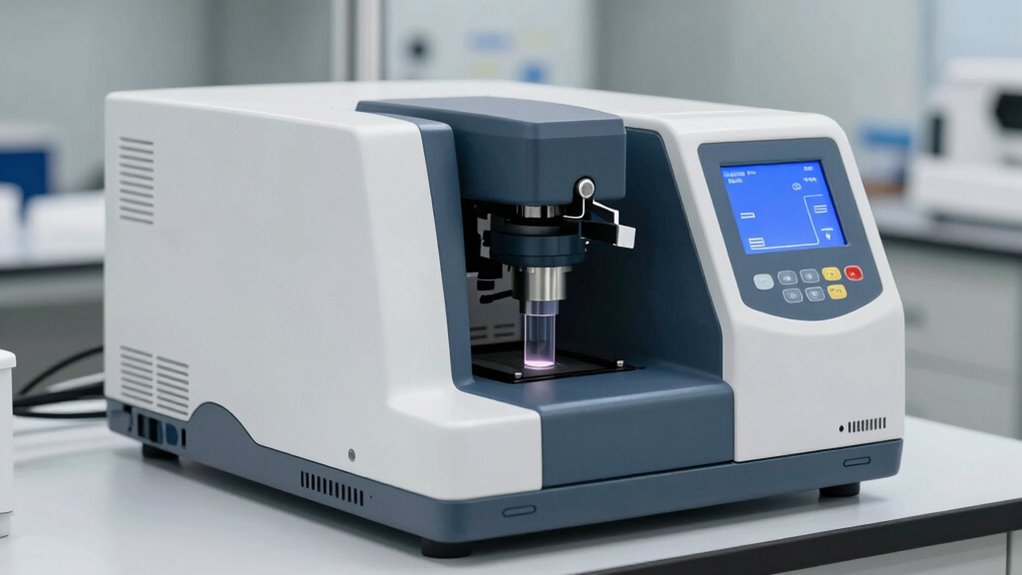
A spectrophotometer is an essential tool in laboratories for measuring how much light a substance absorbs at specific wavelengths. When you use it, you’re fundamentally shining light through a sample and recording how much of that light makes it to the other side. This process helps you determine the concentration of substances in your sample, making it vital in fields like chemistry, biology, and environmental science. To get accurate results, you need to understand calibration techniques. Calibration involves setting your instrument to a known standard, usually a blank sample containing no analyte, to establish a baseline. You’ll often perform a series of calibrations with standard solutions of known concentrations, which helps your spectrophotometer produce reliable and reproducible measurements. Proper calibration guarantees that the data you collect reflects true absorbance values, minimizing errors caused by instrument drift or environmental factors. Additionally, understanding the Beer-Lambert Law helps you grasp the relationship between absorbance and concentration, reinforcing the importance of proper sample preparation and consistent measurement conditions. When working with spectrophotometers, mastering calibration techniques and data analysis methods is key to obtaining valid results. You’ll want to make sure your device is properly calibrated before each set of measurements and that your data analysis is thorough, using appropriate regression models and statistical checks. This approach not only improves your confidence in the results but also enhances the overall reliability of your experiments. As you become more familiar with these fundamentals, you’ll find that your ability to interpret spectrophotometric data improves markedly, making your laboratory work more precise and efficient. Developing a clear understanding of instrument calibration techniques is crucial for ensuring consistent and accurate measurements over time. Regularly checking and maintaining your instrument can prevent errors caused by instrument drift, ensuring long-term accuracy and reliability. With practice, you’ll develop a solid understanding of how to calibrate effectively and analyze data correctly, guaranteeing your spectrophotometric measurements are both accurate and meaningful. Proper instrument maintenance also plays a significant role in sustaining measurement accuracy and prolonging the lifespan of your equipment.

Continuum Aquatics Refractometer and Hydrometer Calibration Standard 60ml
- Purpose: Calibration standard for measuring devices
- Salinity: 35 ppt salinity
- Specific Gravity: 1.0264 specific gravity
As an affiliate, we earn on qualifying purchases.
As an affiliate, we earn on qualifying purchases.
Frequently Asked Questions
How Do I Calibrate a Spectrophotometer Accurately?
To calibrate your spectrophotometer accurately, start by selecting proper calibration standards with known absorbance values. Confirm the instrument is properly aligned by checking the optical path and cleaning the cuvettes. Turn on the device, set it to zero with a blank solution, then measure the standards. Adjust the calibration settings until readings match the standards precisely. Regular calibration with reliable standards and proper instrument alignment guarantees accurate, consistent measurements.
What Types of Samples Can Be Analyzed With a Spectrophotometer?
You can analyze a wide range of samples with a spectrophotometer, including liquids, solids, and gases, provided you prepare them correctly. Focus on proper sample preparation to guarantee accurate readings, such as diluting solutions or creating homogenous mixtures. Also, check instrument compatibility, as some spectrophotometers are designed for specific sample types or wavelengths. By doing so, you’ll get reliable data across various applications.
How Do I Interpret Absorbance Versus Concentration Data?
You interpret absorbance versus concentration data by plotting absorbance on the y-axis against concentration on the x-axis within the spectral range of your spectrophotometer. Make certain your sample preparation is consistent to obtain accurate readings. The resulting graph should be linear if Beer’s Law applies, indicating a direct relationship. Use the slope of this line to determine unknown concentrations, considering the spectral range where your sample absorbs most effectively.
What Maintenance Is Required to Keep the Spectrophotometer Working?
To keep your spectrophotometer working well, regularly perform spectrophotometer cleaning, especially of the cuvettes and optical surfaces, to guarantee accurate readings. Check and calibrate the instrument periodically. Use proper sample preparation techniques, like properly diluting samples and avoiding contaminants, to prevent instrument damage and maintain precision. Also, keep the instrument in a clean, dust-free environment and follow the manufacturer’s maintenance guidelines for peak performance.
How Does Wavelength Selection Affect Measurement Accuracy?
Wavelength selection directly impacts your measurement accuracy by ensuring wavelength precision and ideal spectral resolution. When you choose the correct wavelength, you minimize errors caused by overlapping spectra or stray light. Precise wavelength settings allow the spectrophotometer to distinguish subtle differences in absorbance, leading to more reliable data. Poor wavelength selection reduces spectral resolution, making it harder to detect small variations and compromising the accuracy of your results.

GOYOJO Portable Spectrophotometer 721, LDC Digital Lab Visible Spectrophotometer 350-1020nm Lamp, 6nm Tungsten Lamp Laboratory Analytical Equipment Spectrometer 110V
- High Measurement Accuracy: ±1%T accuracy and 0.5%T repeatability
- Stable Performance: ±0.004A/h stability at 500nm
- User-Friendly Operation: Simple setup with digital display
As an affiliate, we earn on qualifying purchases.
As an affiliate, we earn on qualifying purchases.
Conclusion
Now that you understand the basics of a spectrophotometer, you’re better equipped to delve into your experiments with confidence. Remember, mastering this instrument is like learning to ride a bike—you might wobble at first, but with practice, you’ll find your balance. Keep experimenting, stay curious, and don’t be afraid to ask questions. With time, you’ll see the bigger picture clearly, and your skills will shine brighter than ever.

Fiwochic 100 PCS Polystyrene Cuvettes, 2.5-4.5 ml Disposable Spectrophotometer Plastic PS Cuvettes with 2 Clear Sides for Laboratory Spectrophotometers
- Package Includes: 100 polystyrene cuvettes with foam container
- Material: Transparent polystyrene for clear readings
- Capacity Range: 2.5 to 4.5 ml options
As an affiliate, we earn on qualifying purchases.
As an affiliate, we earn on qualifying purchases.
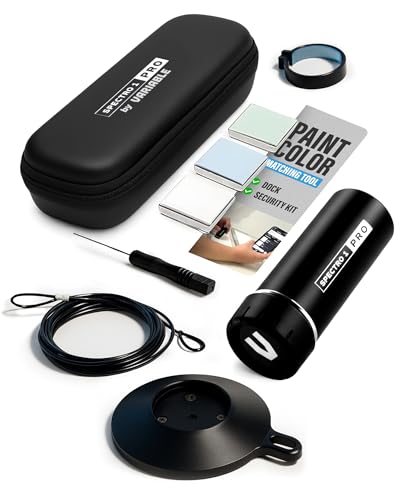
Spectro 1 Pro Mobile Spectrophotometer with Dock & Security Kit
- Precision Color Matching: Accurate readings for prints and coatings
- Complete Kit Included: Includes handheld reader, dock, and security kit
- Portable and Lightweight: Easy to carry for on-the-go use
As an affiliate, we earn on qualifying purchases.
As an affiliate, we earn on qualifying purchases.