
Ultrasonic cleaners save you time in the lab by quickly lifting dirt and residues with high-frequency sound waves, reducing manual scrubbing. They clean instruments thoroughly and efficiently, cutting down overall cleaning time. These devices operate quietly and require minimal supervision, so you can focus on other tasks. Their versatility means you don’t need different solutions or multiple tools, streamlining your workflow. Want to discover more about how they boost lab productivity? Keep going to learn more.
Key Takeaways
- Uses high-frequency sound waves to rapidly produce microscopic bubbles that quickly lift dirt, reducing cleaning time significantly.
- Performs thorough cleaning without extensive manual scrubbing or drying, streamlining the process.
- Compatible with various solvents, allowing multiple instruments to be cleaned with a single solution, saving setup time.
- Operates quietly and efficiently, enabling simultaneous setup and cleaning cycles without disrupting workflow.
- Ensures consistent, high-quality results, reducing the need for re-cleaning and minimizing downtime.
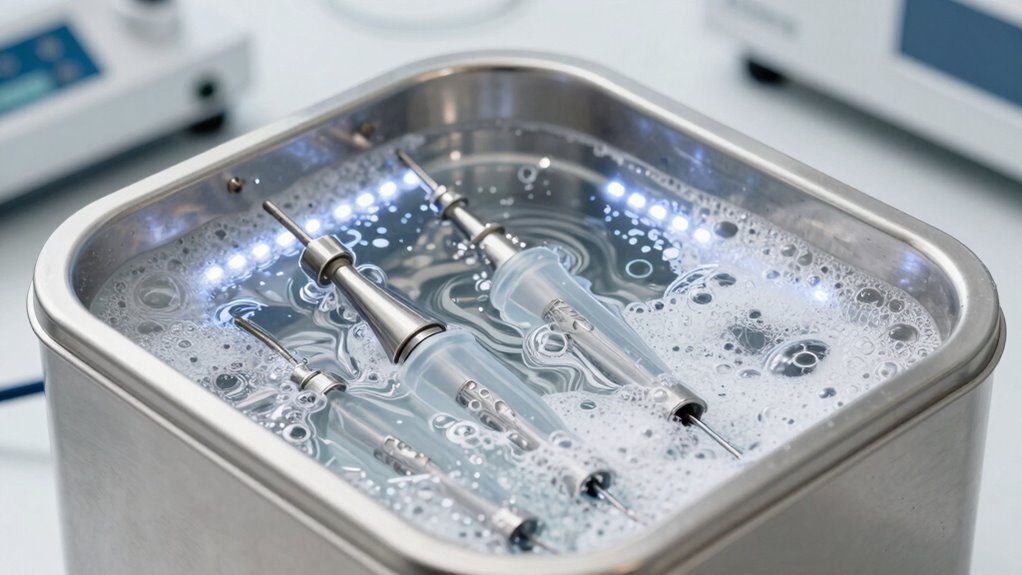
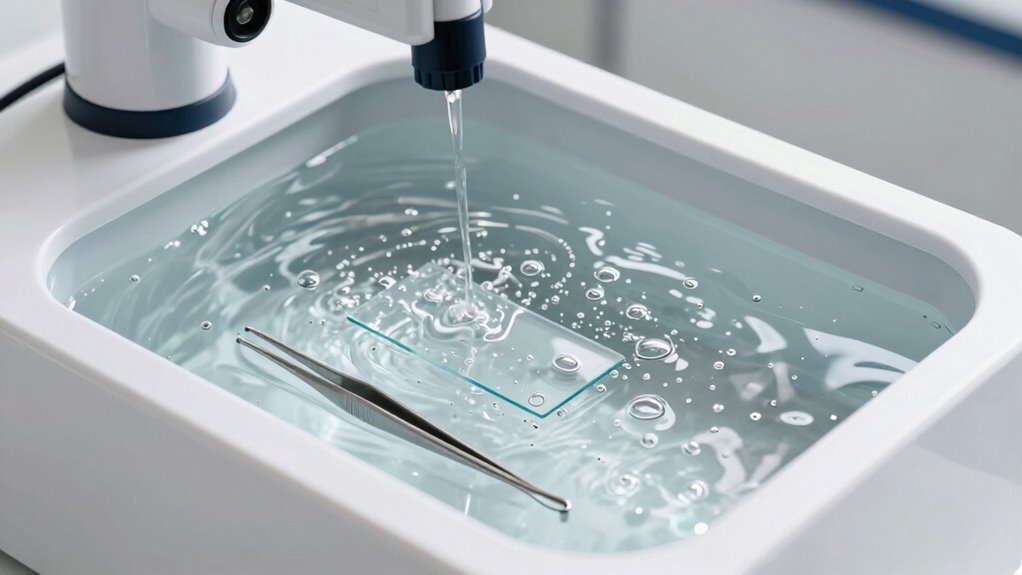
In busy laboratories, time is always of the essence, and ultrasonic cleaners are proving to be invaluable tools for saving it. These devices streamline the cleaning process, allowing you to quickly and thoroughly remove contaminants from a wide range of instruments and materials. Unlike manual scrubbing, ultrasonic cleaning uses high-frequency sound waves to produce microscopic bubbles that gently but effectively lift dirt, grease, and residues from surfaces. This rapid action not only cuts down cleaning time but also guarantees a higher level of cleanliness, which is critical in precise laboratory work.
Ultrasonic cleaners save time with rapid, effective, and thorough cleaning for precise laboratory work.
One reason ultrasonic cleaners save you time is their broad chemical compatibility. You don’t need to switch between different cleaning agents or methods for various materials. Ultrasonic cleaners are compatible with many cleaning solutions, including water-based, alcohol-based, and specialized solvents, depending on the application. This versatility means you can often use a single cleaning solution across multiple instruments, eliminating the need for multiple cleaning steps and reducing setup time. You also avoid the lengthy drying or rinsing processes that manual cleaning might require, since the ultrasonic process is quick and leaves minimal residues, especially when paired with appropriate cleaning solutions.
Noise levels are another factor that makes ultrasonic cleaners a time-efficient choice. Unlike traditional cleaning methods that might involve loud scrubbing or steam cleaners, ultrasonic devices operate quietly. This low noise level allows you to run cleaning cycles without disrupting other lab activities, so you can allocate your time more effectively. You can set up a cleaning cycle, attend to other tasks, and return to find your instruments ready. This seamless operation minimizes downtime and maximizes productivity. Additionally, advancements in ultrasonic cleaner designs have improved their efficiency and ease of use, making them even more valuable in busy settings. Proper ultrasonic cleaning techniques are essential to ensure optimal results and longevity of your equipment.
Furthermore, ultrasonic cleaning is less labor-intensive, freeing you from physical scrubbing and repetitive actions. You spend less time on manual labor and more on analytical or experimental work. The process is also more consistent, reducing the need for re-cleaning due to missed spots or uneven cleaning, which often happens with manual methods. Additionally, ultrasonic cleaning can be particularly effective for delicate instruments, reducing the risk of damage compared to other cleaning techniques. Incorporating ultrasonic technology into your routine can also help maintain the longevity of your equipment, which is essential for high-throughput labs. Moreover, advancements in ultrasonic cleaner designs have improved their efficiency and ease of use, making them even more valuable in busy settings. All of these factors combine to drastically cut cleaning times, helping you meet tight schedules and maintain high throughput in your laboratory.
In essence, ultrasonic cleaners are a smart investment for any lab that values efficiency. Their chemical compatibility ensures they can handle diverse materials without fuss, and their quiet operation means they won’t interfere with your workflow. When you choose ultrasonic cleaning, you’re not just saving time—you’re also enhancing the overall productivity and reliability of your lab operations.

VEVOR 6L Upgraded Ultrasonic Cleaner (400W Heater,180W Ultrasonic) Professional Digital Lab Ultrasonic Parts Cleaner with Heater Timer for Jewelry Glasses Instruments Cleaning
Amazing Cleaning: 2 built-in transducers, 40KHz ultrasonic power, works great to remove oil, wax, stain in holes, surface,…
As an affiliate, we earn on qualifying purchases.
As an affiliate, we earn on qualifying purchases.
Frequently Asked Questions
Are Ultrasonic Cleaners Suitable for All Laboratory Materials?
Ultrasonic cleaners aren’t suitable for all laboratory materials due to material compatibility issues. Some delicate items, like certain plastics or soft metals, might get damaged during cleaning. However, for compatible materials, ultrasonic cleaners offer excellent cleaning efficiency, removing contaminants thoroughly and quickly. Always check material compatibility beforehand to guarantee your lab items won’t be harmed, maximizing cleaning effectiveness without risking damage.
How Often Should Ultrasonic Cleaners Be Maintained?
Think of your ultrasonic cleaner as a garden that needs regular tending. You should follow a consistent maintenance schedule, typically cleaning and inspecting it weekly or after a set number of uses. Adhering to your device’s recommended cleaning frequency guarantees peak performance and longevity. Regular maintenance prevents buildup and malfunctions, keeping your lab running smoothly. Stay vigilant with your cleaning schedule, and your ultrasonic cleaner will serve you reliably for years to come.
Can Ultrasonic Cleaning Damage Delicate Lab Equipment?
Ultrasonic cleaning can damage delicate lab equipment if you’re not careful about equipment compatibility. You need to guarantee that the items you’re cleaning are suitable for ultrasonic processes, especially fragile materials like certain plastics or electronics. When used correctly, ultrasonic cleaners maintain cleaning effectiveness without harming equipment, but improper use or incompatible items can cause damage. Always check manufacturer guidelines to protect your lab tools.
What Are the Safety Precautions When Using Ultrasonic Cleaners?
When using ultrasonic cleaners, you should prioritize safety by following proper procedures. Always wear protective gear like gloves and goggles, guarantee chemical safety by handling cleaning solutions carefully, and verify equipment compatibility to prevent damage. Regularly inspect the cleaner for leaks or malfunctions, keep the area well-ventilated, and follow manufacturer instructions precisely. These precautions help protect you, preserve delicate lab equipment, and ensure effective, safe ultrasonic cleaning.
Do Ultrasonic Cleaners Require Special Cleaning Solutions?
Ultrasonic cleaners do require special cleaning solutions, but they depend on your cleaning frequency and the materials you’re cleaning. You should choose solutions compatible with your items to prevent damage, and avoid harsh chemicals that could harm the cleaner or your samples. Regularly changing the solution guarantees maximum performance, especially if you clean frequently. Always follow manufacturer recommendations to maintain safety, effectiveness, and prolong your ultrasonic cleaner’s lifespan.

VEVOR 3L Ultrasonic Cleaner with Heated Function, Digital Timer & Stainless Steel Tank, Ultrasonic Cleaning Machine for Jewelry, Glasses, Watches, Circuit Boards, Small Parts
Durable Stainless Steel Build: Made from 304 stainless steel with CE, FCC, and RoHS certification, this ultrasonic cleaner…
As an affiliate, we earn on qualifying purchases.
As an affiliate, we earn on qualifying purchases.
Conclusion
Imagine your lab tools emerging sparkling, every crevice illuminated by the gentle hum of ultrasonic waves. With these cleaners, you cut down on tedious scrubbing and waiting, letting the ultrasonic vibrations do the work. As you watch the dirt dissolve and debris vanish, you feel a sense of relief and efficiency flowing through you. Ultrasonic cleaners transform your cleaning routine into a seamless dance—saving time, effort, and leaving your lab ready for the next discovery.

Magnasonic Ultrasonic Cleaner – 20oz Stainless Steel Tank, Digital Timer, 5 Cleaning Modes, Ultrasonic Jewelry Cleaner for All Jewelry, Eyeglasses, Watches, Dentures, Retainers & More
PROFESSIONAL QUALITY CLEANING: Magnasonic has been the industry leader for over 15 years providing deep cleaning solutions to…
As an affiliate, we earn on qualifying purchases.
As an affiliate, we earn on qualifying purchases.

ByteRoll Ultrasonic Jewelry Cleaner, 24oz (700ml) Ultrasonic Cleaner with 48kHz High-Frequency, 5 Cleaning Modes, 304 Stainless Steel Tank, for Jewelry, Eyeglasses, Dentures, Coins, Watch Bands, Ring
Effective and Professional Ultrasonic Cleaner: Utilizes ultrasonic vibrations to remove dust and particles with plain water. For greasy…
As an affiliate, we earn on qualifying purchases.
As an affiliate, we earn on qualifying purchases.