
Sodium-based energy storage could revolutionize how we power our world by making batteries more affordable, sustainable, and widely available. Since sodium is abundant and easier to source than lithium, it can lower costs and reduce resource scarcity concerns. Advances in electrode materials promise longer-lasting, more efficient batteries suited for everything from grid storage to portable devices. If you want to discover how this technology might reshape our energy future, keep exploring the latest developments.
Key Takeaways
- Increased adoption of sodium batteries could make renewable energy storage more affordable and widespread.
- Advances in electrode materials may significantly improve battery lifespan and performance.
- Sodium-based storage systems could enhance energy access in resource-limited regions.
- Sustainable sourcing and recycling can reduce environmental impact of large-scale deployment.
- Lower-cost sodium batteries might accelerate the transition to a cleaner, more resilient energy infrastructure.
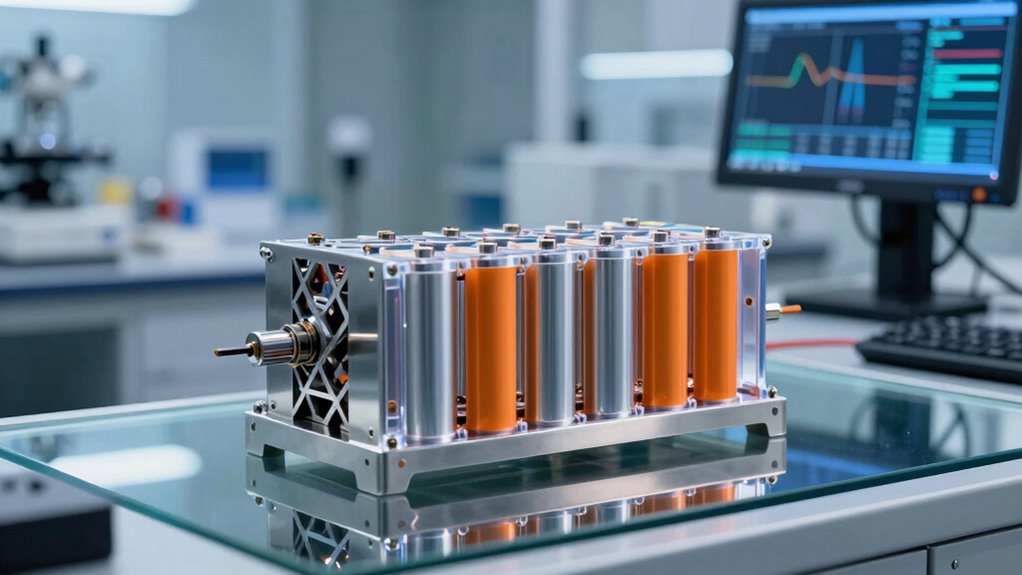
Have you ever wondered if there’s a more sustainable alternative to lithium-ion batteries? Sodium-based energy storage might just be that solution. Unlike lithium, sodium is abundant and widely available, which means it could reduce reliance on scarce resources and lower costs. Researchers are actively exploring innovative electrode materials that can optimize sodium’s potential, making these batteries more efficient and longer-lasting. These advanced materials are key to overcoming current limitations, such as capacity and cycle life, and could lead to more reliable energy storage systems. By focusing on developing new electrode compositions, scientists aim to unlock sodium’s full potential for various applications, from grid storage to portable electronics.
But it’s not just about performance; environmental impact assessment plays a crucial role in this transition. Sodium-based batteries are generally considered more environmentally friendly because sodium is abundant and easier to source sustainably. However, comprehensive environmental impact assessments are necessary to evaluate the full lifecycle of these batteries—from raw material extraction to end-of-life disposal. Such assessments help identify potential ecological risks, ensure responsible sourcing, and promote recycling strategies, ultimately minimizing the environmental footprint. This focus on sustainability is vital because it ensures that the shift to sodium-based energy storage benefits not only consumers but also the planet. Incorporating sustainable sourcing practices can further enhance the ecological benefits of sodium batteries.
The adoption of sodium batteries could revolutionize energy storage by making it more accessible and eco-friendly. As the technology matures, we could see widespread deployment in renewable energy systems, where reliable storage is essential for balancing supply and demand. This shift might also democratize energy access, especially in regions where resource scarcity or high costs limit the use of traditional lithium-ion batteries. Moreover, the use of innovative electrode materials will likely improve the performance and safety of sodium batteries, making them suitable for a broader range of applications. Additionally, market research indicates increasing investor interest and funding in this emerging technology, which could accelerate development and deployment.
The potential for lower costs and easier sourcing can accelerate adoption, leading to a more resilient and sustainable energy infrastructure. In the end, sodium-based energy storage holds promise to transform how we power our world. With ongoing research into innovative electrode materials and thorough environmental impact assessments, this technology could soon become a cornerstone of sustainable energy systems. By prioritizing eco-friendly practices and leveraging abundant resources, you might see a future where energy storage is not only more efficient but also kinder to the planet. The development of better electrode materials is crucial for unlocking sodium batteries’ full potential and ensuring their widespread success. This shift could redefine the landscape of renewable energy and pave the way toward a cleaner, more sustainable future for everyone.
sodium-ion batteries
As an affiliate, we earn on qualifying purchases.
As an affiliate, we earn on qualifying purchases.
Frequently Asked Questions
How Does Sodium Energy Storage Compare Cost-Wise to Lithium?
Sodium energy storage is generally more cost-effective than lithium, thanks to abundant sodium resources and lower extraction costs. This favorable cost comparison boosts market potential, making sodium-based systems appealing for large-scale applications. You’ll find that sodium batteries could considerably reduce energy storage expenses, encouraging wider adoption. As technology advances, sodium energy storage could become a strong competitor to lithium, transforming the energy landscape with more affordable, sustainable solutions.
What Are the Environmental Impacts of Sodium Battery Production?
Imagine a sodium battery factory that follows strict environmental regulations, minimizing ecological effects. Producing sodium batteries generally has a lower environmental impact than lithium, thanks to abundant sodium sources and less invasive extraction processes. However, manufacturing still involves energy use and chemical handling, which can affect local ecosystems. By adhering to eco-friendly practices, you reduce negative ecological effects, making sodium batteries a more sustainable choice for energy storage.
Can Sodium Batteries Be Recycled Efficiently?
You can recycle sodium batteries efficiently, especially with improvements in battery durability and material sourcing. Recycling processes are evolving to recover sodium, electrolytes, and other valuable materials, reducing waste and environmental impact. While current methods are promising, ongoing innovations aim to streamline recycling, making it more cost-effective and environmentally friendly. As sodium battery technology advances, efficient recycling will become a key factor in sustainable energy storage solutions.
What Safety Concerns Are Associated With Sodium-Based Storage?
You should be aware that sodium-based storage poses safety concerns like flammability risks and thermal stability issues. Sodium’s flammability can lead to fires if not properly managed, and its thermal instability may cause overheating or explosions under certain conditions. To guarantee safety, you need rigorous handling protocols, proper insulation, and advanced safety measures. Addressing these concerns helps prevent accidents, making sodium energy storage safer for widespread use.
How Scalable Are Sodium Energy Storage Solutions Globally?
You’ll find sodium energy storage solutions quite scalable globally due to abundant resources, reducing geopolitical concerns tied to limited material access. However, technological barriers like improving efficiency and lifespan still exist, which could slow widespread adoption. As you explore this, consider how these solutions could reshape energy markets, lessen reliance on geopolitically sensitive materials, and face challenges in manufacturing and deployment at large scales.
sodium battery electrode materials
As an affiliate, we earn on qualifying purchases.
As an affiliate, we earn on qualifying purchases.
Conclusion
You see the potential of sodium-based energy storage to transform our future. You witness its promise to be affordable, scalable, and sustainable. You recognize how it can power your life, support your community, and protect your planet. You understand that with innovation, collaboration, and dedication, sodium batteries can revolutionize energy as we perceive it. So, embrace the change, support the advancements, and be part of the movement shaping a cleaner, brighter tomorrow.
renewable energy storage batteries
As an affiliate, we earn on qualifying purchases.
As an affiliate, we earn on qualifying purchases.
sustainable energy storage systems
As an affiliate, we earn on qualifying purchases.
As an affiliate, we earn on qualifying purchases.