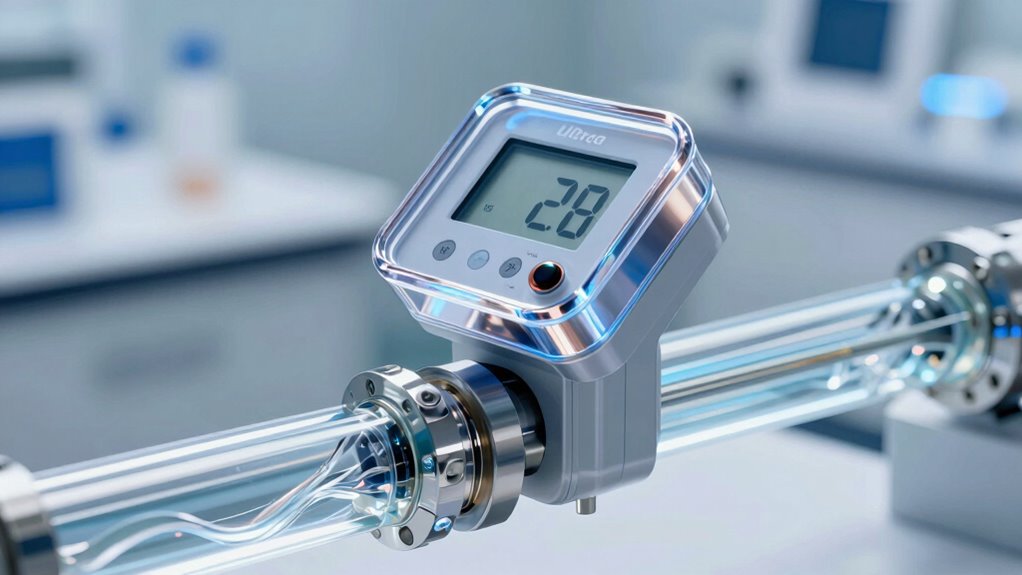

Ultrasonic flow meters measure fluid flow without disrupting the system, making them a noninvasive and highly accurate choice. They work by analyzing ultrasonic signals affected by flow velocity and use advanced signal processing to filter noise and improve reliability. This technology simplifies installation and maintenance while providing precise readings across various industries. If you want to understand how these innovative meters deliver dependable results in challenging conditions, you’ll discover more insights ahead.
Key Takeaways
- Ultrasonic flow meters measure fluid flow noninvasively using sound waves, avoiding system disruption or component damage.
- They utilize advanced signal processing to analyze ultrasonic signals and ensure accurate flow readings in noisy environments.
- These meters require minimal installation, making maintenance easier and preserving system integrity.
- Calibration ensures measurement precision, maintaining reliability over different conditions and time.
- Technological advancements expand their applications across various industries, improving accuracy and adaptability.
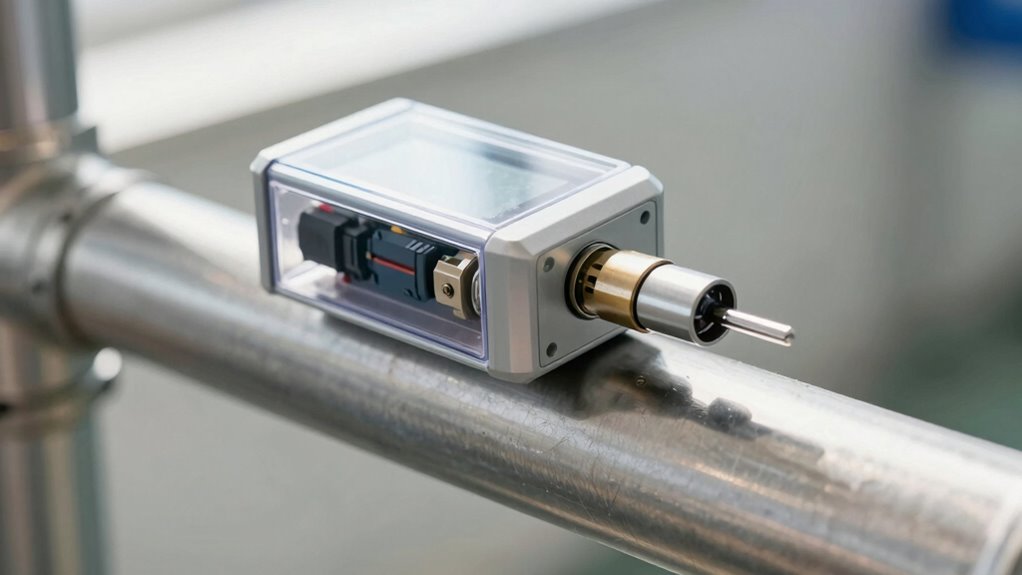
Ultrasonic flow meters have revolutionized how we measure fluid flow, offering a noninvasive and highly accurate alternative to traditional methods. Instead of inserting probes or disrupting the flow with intrusive devices, these meters use ultrasonic signals to determine the velocity of the fluid passing through a pipe. This approach not only preserves the integrity of the system but also simplifies installation and maintenance. When you set up an ultrasonic flow meter, proper flow calibration becomes essential to guarantee precise measurements. Calibration involves comparing the meter’s readings against known standards, allowing you to fine-tune the device for maximum accuracy. This step is vital because even minor discrepancies can lead to significant errors in flow measurement, which might impact process control, billing, or environmental monitoring. Proper flow calibration ensures your measurements remain reliable over time and across different operating conditions. Additionally, employing standard calibration procedures can help maintain consistency across multiple measurement points.
Signal processing plays a central role in the operation of ultrasonic flow meters. As ultrasonic signals travel through the fluid, they are affected by the flow velocity, causing shifts in frequency or time delay. The meter’s internal electronics analyze these signals, filtering out noise and extracting meaningful data. Advanced signal processing algorithms help distinguish between actual flow-related signals and background interference, ensuring the readings are dependable. You benefit from this sophisticated processing because it allows for real-time measurement even in challenging conditions, such as turbulent flows or noisy environments. The combination of effective signal processing and precise flow calibration guarantees that the measurements are both accurate and consistent over time. Additionally, signal processing algorithms are continually evolving to improve measurement reliability and adapt to new challenges. Furthermore, ongoing advancements in ultrasonic technology are expanding the capabilities and applications of these meters across diverse industries.

Ultrasonic Flow Meter with Small & Medium Transducers for Pipes from 0.76 to 27 inch (20 to 700 mm) Supports High Temperatures
The Ultrasonic Flow Meter is 99% accurate and can measure the flow rate in any Plastic or Metallic…
As an affiliate, we earn on qualifying purchases.
As an affiliate, we earn on qualifying purchases.
Frequently Asked Questions
How Accurate Are Ultrasonic Flow Meters Over Long-Term Use?
Ultrasonic flow meters are highly accurate over long-term use if you regularly check calibration reliability and guarantee signal stability. Maintaining proper calibration prevents drift that can affect readings, while stable signals minimize errors caused by noise or interference. By performing routine maintenance and calibration checks, you can ensure consistent accuracy, making ultrasonic flow meters reliable for extended periods, especially when used in stable conditions with minimal external influence.
Can Ultrasonic Flow Meters Measure Viscous or Slurry Fluids?
Yes, ultrasonic flow meters can measure viscous or slurry fluids, but with some limitations. They are effective in viscosity measurement and slurry detection when calibrated properly, as high viscosity or dense slurries can affect signal accuracy. To get reliable readings, you might need specialized transducers or signal processing techniques. Overall, ultrasonic flow meters are versatile, but understanding the fluid properties helps guarantee precise measurements in challenging applications.
Are Ultrasonic Flow Meters Suitable for High-Temperature Applications?
Think of ultrasonic flow meters as the brave explorers of measurement tools—yes, they are suitable for high-temperature applications. They boast impressive high temperature durability, allowing them to withstand extreme heat without faltering. Just guarantee material compatibility; selecting the right materials ensures the sensors endure the fiery conditions. With proper setup, these meters can navigate the heat, giving you accurate readings without breaking a sweat.
What Are Common Maintenance Needs for Ultrasonic Flow Meters?
You need to regularly calibrate your ultrasonic flow meters, typically every 6 to 12 months, to guarantee measurement accuracy. Keep the sensors clean by gently removing any buildup or debris, which can affect signal transmission. Check the cables and connections for wear or damage, and verify the flow profile periodically. Proper maintenance helps prevent errors, extends the device’s lifespan, and keeps your measurements reliable over time.
How Do Ultrasonic Flow Meters Perform in Turbulent Flow Conditions?
In turbulent flow conditions, ultrasonic flow meters can face challenges with flow signal stability, which may cause inaccuracies. However, you can improve performance by applying noise reduction techniques, such as signal filtering and averaging, to minimize the impact of flow disturbances. These methods help maintain measurement accuracy, ensuring reliable readings even in rough flow environments. Proper installation and calibration also contribute to peak performance under turbulent conditions.

SKESTORE TUF-2000H Handheld Ultrasonic Flow Meter, Portable Clamp-on Flow Measurement Device, Non-invasive Digital Ultrasonic Flowmeter with Display(Main Unit Medium)
High-precision display ensures accurate air/liquid flow measurement
As an affiliate, we earn on qualifying purchases.
As an affiliate, we earn on qualifying purchases.
Conclusion
Now that you understand how ultrasonic flow meters work and their noninvasive nature, you can appreciate their precision and convenience. With modern technology, you’re no longer stuck with outdated, intrusive methods—think of it as stepping into the future, leaving behind the days of cumbersome, old-fashioned tools. Embrace these advancements, and you’ll find measuring flow becomes effortless and reliable, just like the trusty steed of yore carrying you smoothly into a more efficient tomorrow.
Ultrasonic Flow Meter with Small & Medium Transducers for Pipes from 0.76 to 27 inch (20 to 700 mm) Supports High Temperatures
The Ultrasonic Flow Meter is 99% accurate and can measure the flow rate in any Plastic or Metallic…
As an affiliate, we earn on qualifying purchases.
As an affiliate, we earn on qualifying purchases.
Ultrasonic Flow Meter with Small & Medium Transducers for Pipes from 0.76 to 27 inch (20 to 700 mm) Supports High Temperatures
The Ultrasonic Flow Meter is 99% accurate and can measure the flow rate in any Plastic or Metallic…
As an affiliate, we earn on qualifying purchases.
As an affiliate, we earn on qualifying purchases.