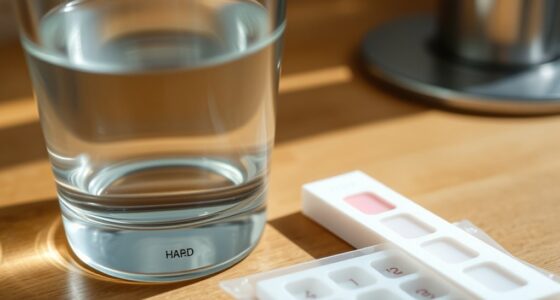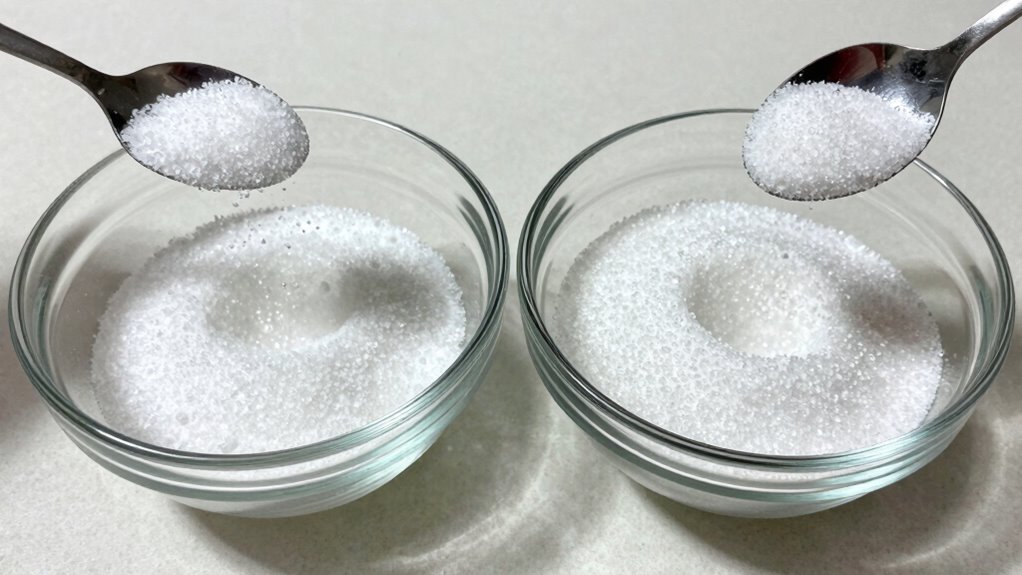

To compare solubility with household powders, start by measuring equal amounts of each powder in separate cups of water at different temperatures. Stir and observe how quickly they dissolve. Look for crystal formation, which shows saturation. Hot water usually dissolves powders more efficiently, but cooling can cause crystals to form if the saturation point is exceeded. By comparing these behaviors, you can better understand each powder’s solubility. Keep exploring to discover more about how conditions affect dissolving.

Prime made for students and young adults
- Fast, free delivery for dorm and study essentials
- Prime Video and Amazon Music included
- Member-only deals
Key Takeaways
- Observe the rate of dissolving and crystal formation in hot and cold water for each powder.
- Test the maximum amount of powder that dissolves before crystals appear to determine saturation points.
- Compare how quickly powders dissolve under identical conditions to assess relative solubility.
- Note temperature effects by dissolving powders at different temperatures and comparing results.
- Use visual cues of crystal formation to evaluate which powders have higher or lower solubility levels.
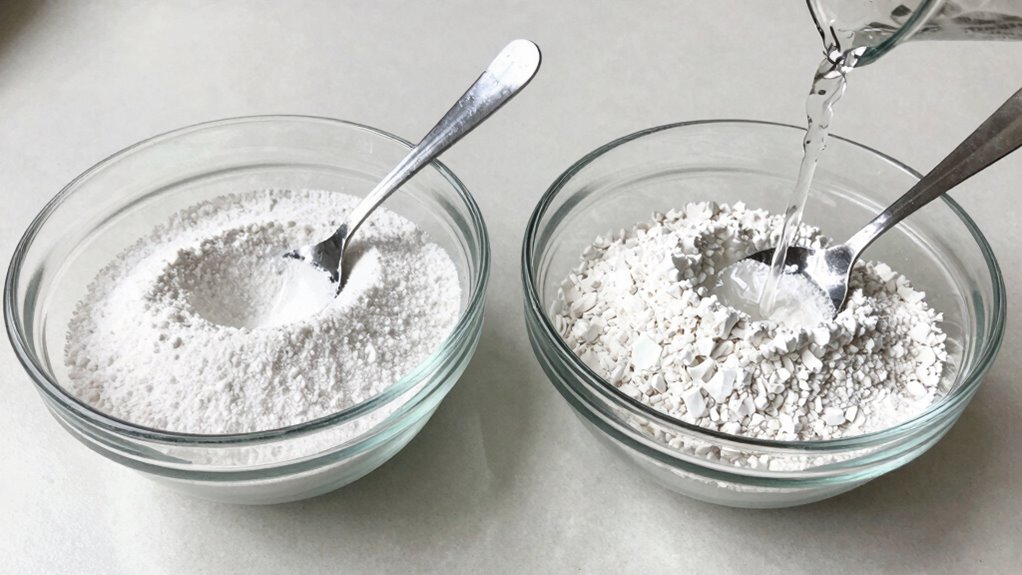
If you’re curious about how different household powders dissolve in water, understanding solubility can help you make better choices. When you add powders like sugar, salt, baking soda, or powdered drink mixes to water, their ability to dissolve depends on their solubility, which varies based on several factors. One key aspect to consider is crystal formation, which occurs when the water can’t hold any more dissolved particles. As the solution becomes saturated, tiny crystals start to form, indicating that the maximum solubility point has been reached. Watching for crystal formation can tell you a lot about how soluble a powder is, especially if you compare different substances. Additionally, observing how quickly powders dissolve can provide insights into their solubility levels under different conditions. Temperature effects play a significant role in solubility. Usually, when you increase the temperature of water, it can hold more dissolved particles, making powders more soluble. For example, sugar dissolves more readily in hot water than in cold, which means you’ll see less crystal formation at higher temperatures. Conversely, some powders, like certain salts, might not show much change in solubility with temperature shifts. To test this yourself, try dissolving the same amount of a powder in both hot and cold water. If crystals form as the solution cools, it indicates that the powder had dissolved more at the higher temperature. This process highlights how temperature can influence how much of a household powder dissolves and affects the likelihood of crystal formation.
Crystals form when water reaches maximum solubility, revealing how much powder can dissolve.
When comparing powders, pay attention to how quickly they dissolve and whether crystals appear during or after the process. Faster dissolving powders typically have higher solubility levels under specific conditions, but temperature can alter this. If you notice crystals forming rapidly in a cold solution, but not in a hot one, it shows the importance of temperature effects. Also, consider the saturation point — the moment when no more powder can dissolve. If you keep adding powder and see crystals forming immediately, it means you’ve reached or exceeded the solubility limit. Recognizing crystal formation is crucial because it visually indicates when the solution has become saturated.
In practical terms, understanding crystal formation and temperature effects helps you predict how powders will behave in everyday situations. Whether you’re making a sweet tea or cleaning with baking soda, knowing these principles allows you to optimize dissolving and avoid unwanted residue. By experimenting with different household powders at various temperatures, you gain a clearer understanding of their solubility characteristics. This knowledge helps you choose the right powders for the right tasks, ensuring better results and less waste. Recognizing the saturation point is essential for understanding when no more powder can dissolve, which is a key concept in solubility. Additionally, understanding the impact of temperature can help you control dissolving processes more accurately, leading to more efficient household routines.
household powder solubility test kit
As an affiliate, we earn on qualifying purchases.
As an affiliate, we earn on qualifying purchases.
Frequently Asked Questions
Can Solubility Vary With Temperature Changes?
Yes, solubility varies with temperature changes. When temperature effects increase, many substances dissolve more easily, leading to higher solubility. Conversely, some compounds may show decreased solubility as temperature rises. You’ll notice this variation when mixing household powders like sugar or salt in hot and cold water. Understanding solubility variation helps you predict how well a substance dissolves under different temperature conditions, making it easier to use or prepare solutions accurately.
Is Solubility the Same for All Types of Powders?
No, solubility isn’t the same for all powders because powder consistency affects how easily it dissolves, leading to solubility variability. Some powders, like salt, dissolve quickly, while others, like flour, take longer or don’t fully dissolve. Factors such as particle size and chemical composition influence solubility. So, understanding the specific properties of each powder helps you predict how well it will dissolve in a liquid.
How Do Impurities Affect Solubility Measurements?
Impurities act like unwanted shadows, clouding your clarity and skewing measurement accuracy. When present, they can either increase or decrease solubility, leading you astray in your results. Their effects depend on their nature and concentration, often making measurements unreliable. To guarantee accurate comparisons, you need to minimize impurity effects through proper purification or careful sample handling, so your solubility data truly reflects the powder’s properties.
What Equipment Is Best for Precise Solubility Testing?
For precise solubility testing, you should use accurate measurement tools like a digital balance for weighing powders and a burette or pipette for measuring liquids. A temperature-controlled water bath helps maintain consistent conditions, ensuring reliable results. Using a spectrophotometer can also improve accuracy by measuring dissolved substance concentration directly. Combining these laboratory tools allows you to achieve accurate measurements and reliable comparisons of solubility.
Are There Safety Concerns When Testing Household Powders?
Imagine handling delicate glassware like a fragile bird’s nest—you need caution. When testing household powders, chemical hazards and contamination risks are real dangers. You could encounter irritants or harmful fumes, so always wear gloves, goggles, and work in a well-ventilated area. Avoid cross-contamination by keeping your workspace clean. Staying vigilant protects you from accidental exposure, ensuring your experiment remains safe and your results trustworthy.
hot and cold water solubility experiment set
As an affiliate, we earn on qualifying purchases.
As an affiliate, we earn on qualifying purchases.
Conclusion
Remember, a little experimenting can go a long way—”Don’t put all your eggs in one basket.” By comparing how different household powders dissolve, you get a clearer picture of their solubility. Keep notes on how quickly each powder dissolves and under what conditions. With patience and curiosity, you’ll master the art of comparing solubility, making science fun and easy to understand. So, get started and see what surprises your powders have in store!
crystal formation observation kit
As an affiliate, we earn on qualifying purchases.
As an affiliate, we earn on qualifying purchases.
As an affiliate, we earn on qualifying purchases.
Halloween Picks
halloween
As an affiliate, we earn on qualifying purchases.