To make your own red cabbage pH indicator, chop some cabbage and boil it in water for about 20 minutes. Strain out the pieces and use the purple liquid as your indicator. When you test different liquids like vinegar or baking soda, you’ll see color changes that tell you whether they’re acids or bases. Curious to see how simple ingredients reveal chemistry? Keep exploring to discover more about natural pH indicators and their fun uses.
Key Takeaways
- Prepare a red cabbage indicator by boiling chopped cabbage in water, then strain to obtain the colored pH solution.
- Test acidic, neutral, and basic liquids by adding small amounts to the indicator and observing color changes.
- Acidic solutions turn red or pink; neutral solutions stay purple; basic solutions shift to green or blue.
- Use the color changes to determine the pH level of unknown liquids accurately.
- This natural indicator is useful in educational experiments, culinary applications, and natural dyeing projects.
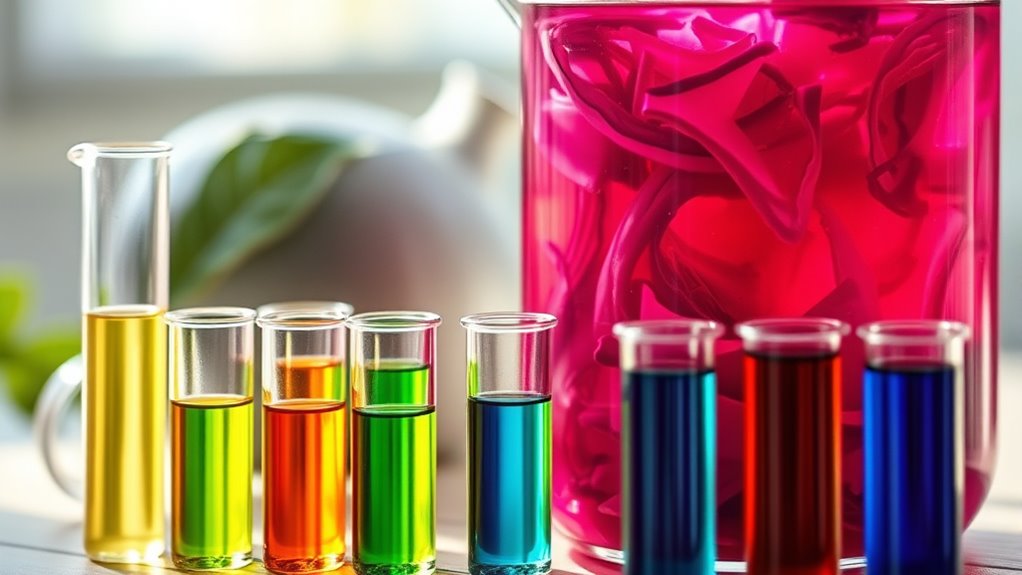
If you’re curious about testing the acidity or alkalinity of different liquids, making a DIY red cabbage pH indicator is a simple and fun project. Not only does it give you a colorful way to explore chemistry, but it also introduces you to fascinating applications like natural dyeing and culinary uses. Red cabbage contains a pigment called anthocyanin, which changes color depending on whether the liquid is acidic, neutral, or basic. This makes it an excellent natural indicator, enabling you to identify pH levels visually. Plus, the process is straightforward and requires just a few household ingredients, making it accessible for beginners and experienced experimenters alike.
To get started, you’ll need a fresh red cabbage, a sharp knife, a pot, water, a strainer, and some containers for testing. Chop the cabbage into small pieces, roughly a few inches, and place them in a pot. Cover the cabbage with water—enough to submerge the pieces completely. Bring the water to a boil and let it simmer for about 15-20 minutes. During this time, the water will turn a deep purple or bluish hue, infused with the anthocyanin pigment. Once done, strain out the cabbage pieces, pouring the colored liquid into separate containers. These will serve as your pH indicators.
Now, you can test various liquids by adding small amounts of each to your cabbage extract. For example, try vinegar, lemon juice, baking soda solution, or soap. Observe how the color changes—acidic solutions typically turn the indicator a red or pink shade, neutral liquids stay purple, and basic substances shift toward green or blue. This simple experiment offers a vivid, hands-on way to grasp the concept of pH. It’s also a gateway to exploring natural dyeing techniques, as the anthocyanins in red cabbage can be used to create colorful fabrics or paper dyes. When used for natural dyeing, the pH of the dye bath affects the resulting color, allowing you to craft a spectrum of shades by adjusting acidity or alkalinity. Additionally, understanding the role of acids and bases in chemistry enhances your ability to interpret the color changes accurately.
In culinary applications, red cabbage’s pH-sensitive pigment can be used in food presentation and decoration, adding a visual element to dishes that reflects their acidity. For instance, you might serve a salad with a dressing that shifts the cabbage’s hue or use it to make fun, colorful jellies and drinks. This project not only provides educational insight into acids and bases but also connects to real-world uses in natural dyeing and culinary arts. It’s a creative way to experiment with science and art, all while learning about the fascinating chemistry behind color changes.
Frequently Asked Questions
Can Red Cabbage Ph Indicator Be Used for Food Safety Testing?
Yes, you can use red cabbage pH indicator for food safety testing, but keep in mind it’s not entirely reliable for detecting food contamination. While it shows pH changes, it doesn’t provide precise pH accuracy needed for safety assessments. For accurate results, especially when testing for harmful bacteria or contamination, rely on professional testing methods. The cabbage indicator is useful for educational purposes and basic pH checks, not definitive food safety testing.
How Long Does the Red Cabbage Ph Indicator Last?
Your red cabbage pH indicator typically lasts about 1 to 2 weeks when stored properly in a sealed container in the refrigerator. To maximize its shelf life, keep it away from light and heat, and avoid contamination. After this period, the color may fade or become less reliable for accurate pH testing. For best results, prepare fresh indicator solutions regularly, especially if you’re performing precise experiments or food safety tests.
Is Red Cabbage Ph Indicator Safe for Children to Use?
Yes, red cabbage pH indicator is safe for children to use in homemade experiments when you supervise them closely. It’s made from natural ingredients, so it’s non-toxic and environmentally friendly. Just guarantee they handle the materials carefully and avoid ingestion. Using red cabbage for pH testing encourages safe, educational play, making it a great choice for teaching kids about acids and bases while prioritizing child safety.
Can Red Cabbage Be Used to Test Liquids Other Than Water?
Yes, red cabbage can be used for liquid testing beyond water. As a natural indicator, it changes color when exposed to acids or bases in various liquids like juice, soda, or cleaning solutions. You simply add chopped cabbage to the liquid, observe the color change, and compare it to a pH color chart. This makes red cabbage a safe and versatile tool for testing the acidity or alkalinity of many different liquids.
How Accurate Is Red Cabbage as a Ph Indicator Compared to Commercial Options?
You’ll find red cabbage works as a charming, natural pH indicator, but its comparison accuracy isn’t quite on par with commercial options. While it reliably shows a color change across different pH levels, its indicator reliability can vary with light and preparation. For precise measurements, commercial indicators are more consistent. However, red cabbage offers a fun, visual way to explore pH, making it a delightful tool for basic testing and learning.
Conclusion
Now that you’ve crafted your own red cabbage pH indicator, you hold a vibrant key to the world of acids and bases. Like a painter’s palette bursting with color, your experiment reveals nature’s hidden spectrum. With each test, you become a curious explorer, revealing the secrets of everyday substances. Embrace this colorful journey—your homemade indicator transforms simple liquids into a lively symphony of hues, turning science into an exciting adventure right in your hands.