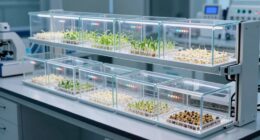
To choose the right fertilizer for each growth stage, start with a soil test to identify nutrient needs. During early growth, use a balanced fertilizer like 10-10-10 for root development. Switch to higher nitrogen formulas (e.g., 20-10-10) during the vegetative stage to promote foliage. For flowering and fruiting, focus on phosphorus and potassium (e.g., 10-30-20). Adjust application methods and timing to match your plants’ needs, and keep learning to optimize your plant health throughout each stage.
Key Takeaways
- Conduct soil testing to identify nutrient deficiencies and select appropriate organic or synthetic fertilizers.
- Use balanced fertilizers (e.g., 10-10-10) during early growth to promote healthy root development.
- Switch to higher nitrogen fertilizers (e.g., 20-10-10) during vegetative growth for lush foliage.
- Apply phosphorus and potassium-rich fertilizers (e.g., 10-30-20) during flowering and fruiting stages.
- Adjust application methods and frequency based on plant age, growth stage, and fertilizer type (liquid, slow-release, organic).
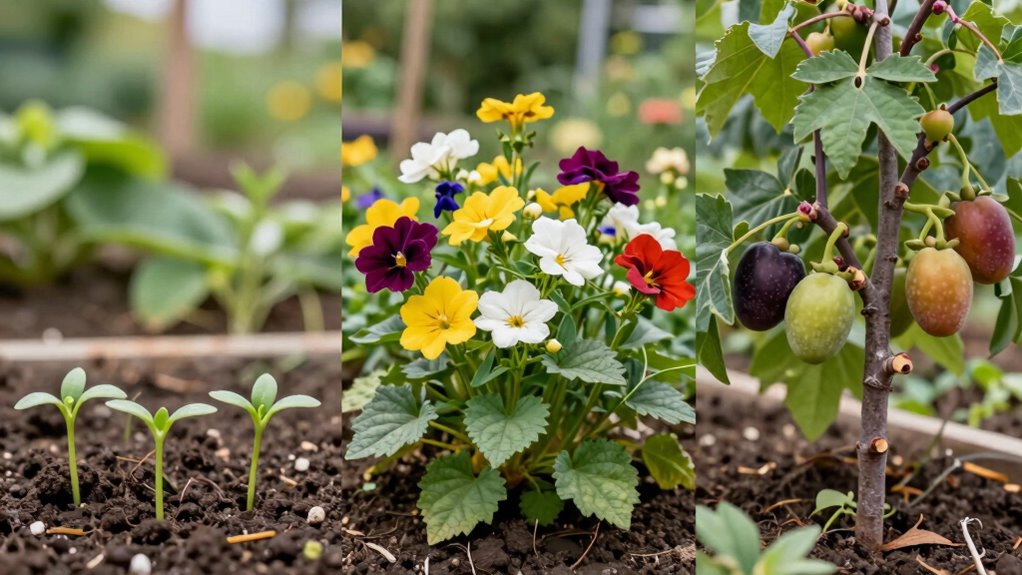
Have you ever wondered how to select the best fertilizer for your garden? It all starts with understanding your soil’s needs. Soil testing is the first step; it reveals what nutrients are lacking or excessive, helping you choose a fertilizer that complements your garden’s specific requirements. Many local extension services or garden centers offer soil testing kits or services. Once you know your soil’s nutrient profile, you can decide whether to use synthetic or organic options. Organic fertilizers, like compost, manure, or plant-based amendments, not only supply nutrients but also improve soil structure and microbial activity over time. They’re a sustainable choice, especially if you’re aiming for eco-friendly gardening.
As your plants grow, their nutritional needs change dramatically. During the early seedling stage, you want a fertilizer that promotes healthy root development. A balanced fertilizer with equal parts nitrogen, phosphorus, and potassium (like a 10-10-10 blend) works well here. When your plants enter the vegetative stage, they require more nitrogen to support lush leaf and stem growth. You might switch to a fertilizer with a higher nitrogen ratio, such as a 20-10-10, to encourage vigorous foliage. As you approach flowering or fruiting, the focus shifts to phosphorus and potassium, which promote blooms and fruit quality. A fertilizer with a higher phosphorus content, like 10-30-20, can boost flowering and fruiting, ensuring your plants produce their best.
Timing and application methods matter too. For seedlings and young plants, gentle, diluted feeds prevent root burn and encourage steady growth. Older plants benefit from regular, evenly spaced applications. Organic options often require a bit more time to break down and become available to plants, so patience is key. Liquid fertilizers provide quick nutrients, ideal for rapid growth stages or correcting deficiencies, while slow-release or organic fertilizers offer a steady nutrient supply over weeks or months. Adjust your approach based on plant response and environmental conditions.

Rapitest Soil Test Kit for Gardens, Vegetables, Flowers and Lawns. USA designed and assembled soil tester completely, quickly and accurately measures/analyzes soil pH acidity and garden nutrients.
- Quick at-home soil test: Measures pH, N, P, K accurately
- Complete testing kit: Includes components for 20 tests
- Versatile testing: Tests multiple garden spots
As an affiliate, we earn on qualifying purchases.
As an affiliate, we earn on qualifying purchases.
Frequently Asked Questions
How Often Should I Fertilize During Each Growth Stage?
You should fertilize more frequently during active growth stages, typically every 2-4 weeks, depending on your plant’s needs. During early stages, apply a balanced fertilizer to promote healthy development, then switch to a higher phosphorus or potassium formula during flowering and fruiting. Always observe your plants for signs of nutrient deficiency or excess, adjusting your fertilizer application schedule to match their specific growth stage and health.
Are Organic Fertilizers Suitable for All Plant Types?
You’re asking if organic fertilizers suit all plant types, and it’s a case of “don’t put all your eggs in one basket.” Organic fertilizers are generally suitable, but soil compatibility matters — some plants thrive better with specific nutrients. Compare organic vs synthetic options carefully, considering your plant’s needs. While organic options are eco-friendly, check if they provide the right balance for your plant’s growth stage and soil conditions.
Can Over-Fertilizing Harm My Plants?
Over-fertilizing can harm your plants by causing nutrient imbalances and root damage. It also affects soil amendments, leading to runoff and environmental issues. To avoid this, always check fertilizer ratios and follow recommended application rates. Using too much fertilizer disrupts natural growth and can weaken plants over time. Regularly monitor your plants’ health and adjust fertilization accordingly, ensuring they get the right nutrients without risking over-application.
How Do I Identify Nutrient Deficiencies?
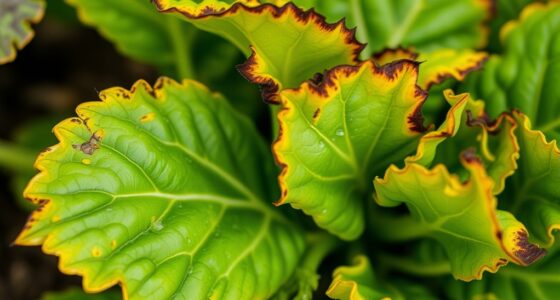
Think of your plants as delicate symphonies, where each note represents a nutrient. To identify deficiencies, you need to conduct soil testing, revealing the hidden gaps in nutrient balance. Look for telltale signs like yellowing leaves, stunted growth, or discoloration. By understanding your soil’s current state, you can fine-tune the nutrient mix, ensuring your plants hit all the right notes for vibrant health and lush growth.
What Are the Signs of Using the Wrong Fertilizer?
Using the wrong fertilizer can cause your plants to show signs like yellowing leaves, stunted growth, or leaf burn, indicating nutrient imbalances. If you’re applying fertilizer types that don’t match your plant’s nutrient needs, you may notice poor development or excess foliage without fruit or flowers. Always match fertilizer types to your plants’ specific nutrient needs to promote healthy growth and avoid these issues.

Dr. Earth Organic 5 Tomato, Vegetable & Herb Fertilizer Poly Bag
- Enhances vegetable nutrition and flavor: For more nutritious and tasty vegetables
- Balanced plant nutrients: Optimum levels of primary plant nutrients
- Non-GMO and natural ingredients: Contains no GMOs, chicken manure or sewage sludge
As an affiliate, we earn on qualifying purchases.
As an affiliate, we earn on qualifying purchases.
Conclusion
Just as a master chef selects ingredients for each course, choosing the right fertilizer at each growth stage guarantees your plants flourish. Remember, every plant has its own recipe for success, and your thoughtful application can turn a simple seed into a thriving masterpiece. Like a symphony needing the right notes, your garden thrives when you match nutrients with growth needs. Keep learning and adjusting—your garden’s success is the melody you compose.

Miracle-Gro Indoor Plant Food for All Plants, 8 fl. oz. (2-Pack)
- Nutrient-rich formula: Supports healthier, stronger plants
- Instant feeding: Provides quick nourishment for plants
- Universal use: Suitable for all indoor plants
As an affiliate, we earn on qualifying purchases.
As an affiliate, we earn on qualifying purchases.

Osmocote Smart-Release Plant Food Plus Outdoor & Indoor1, 2 lb.
- Long-lasting Nutrition: Feeds plants for up to 6 months
- Universal Plant Use: Suitable for all plant types
- Controlled Release Coating: Resin-coated granules regulate nutrient release
As an affiliate, we earn on qualifying purchases.
As an affiliate, we earn on qualifying purchases.