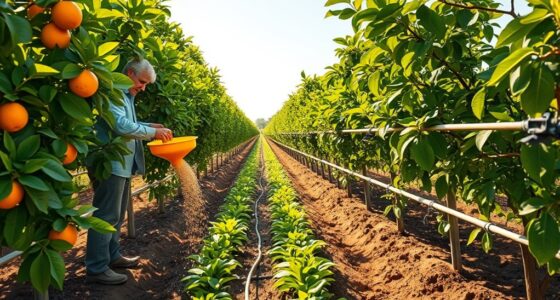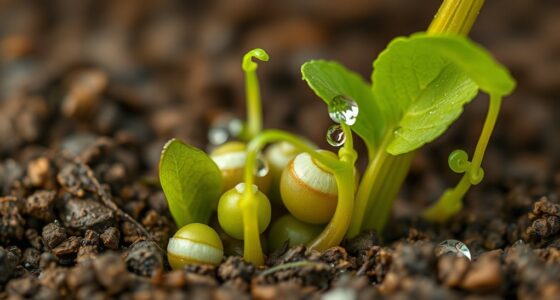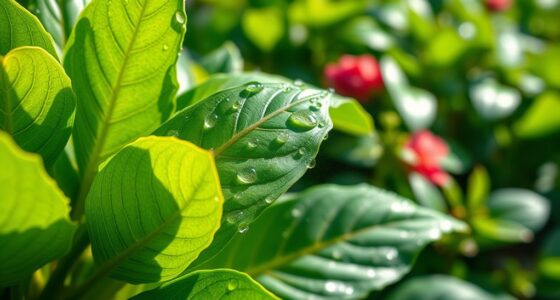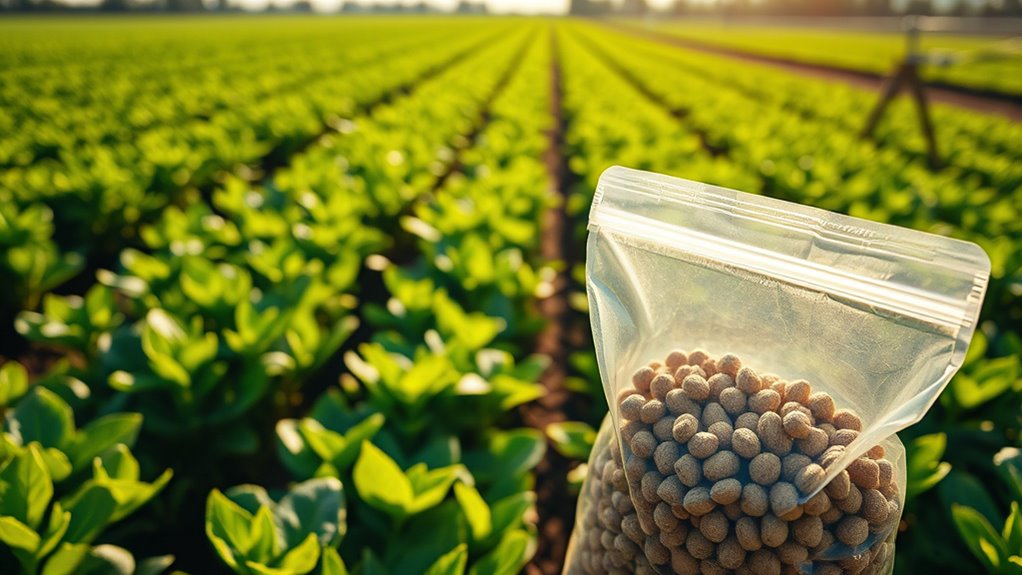

Controlled-release fertilizers deliver nutrients gradually over time, matching plant needs and improving efficiency. They rely on soil moisture to regulate nutrient release, which minimizes leaching, runoff, and environmental risks. These fertilizers reduce the need for repeated applications and promote healthy root growth, even in unpredictable weather conditions. By using advanced coatings or matrices, they guarantee consistent nutrient availability, helping plants thrive sustainably. Continuing will reveal more about the latest technologies and benefits of these innovative fertilizers.
Key Takeaways
- Controlled-release fertilizers provide nutrients gradually, aligning with plant uptake and reducing leaching.
- They depend on soil moisture to regulate nutrient release, promoting steady growth and efficiency.
- These fertilizers decrease environmental impact by minimizing nutrient runoff and reducing the need for frequent applications.
- They perform better than traditional fertilizers under variable soil moisture conditions, ensuring consistent nutrient availability.
- Utilizing specialized coatings or matrices, they enhance nutrient use efficiency and support sustainable agricultural practices.
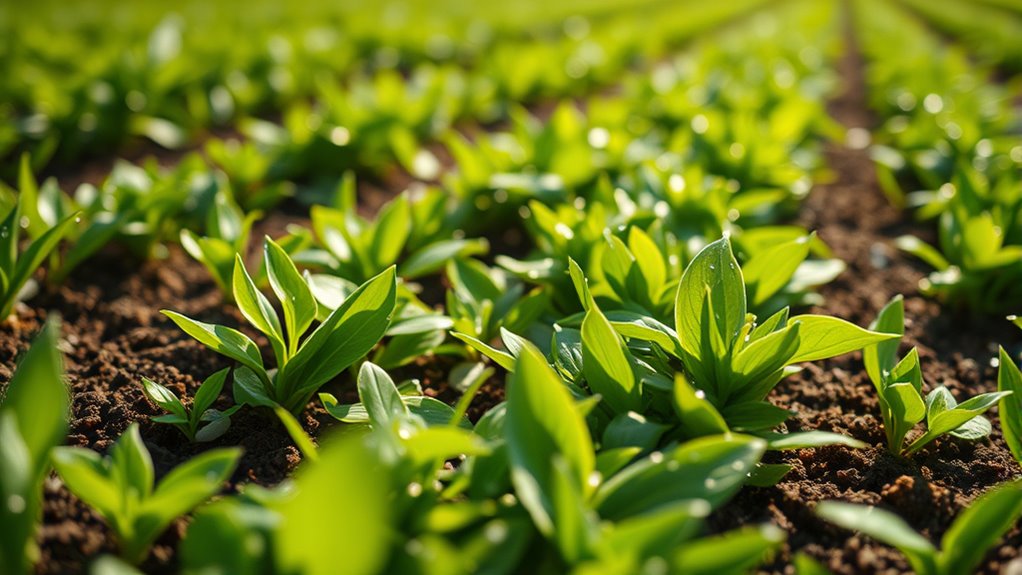
Controlled-release fertilizers are specially formulated products designed to gradually supply nutrients to plants over an extended period. This slow and steady release helps match the plant’s nutrient uptake, reducing waste and improving efficiency. One of the key advantages of these fertilizers is how they interact with soil moisture. When soil moisture levels are ideal, the fertilizer coating or matrix allows nutrients to dissolve gradually, ensuring a consistent supply to the roots. If the soil is too dry, nutrient release slows, which can limit plant growth, but when moisture is adequate, the release rate aligns well with the plant’s needs. This responsiveness helps you avoid over-fertilization and promotes healthier, more robust plants.
Controlled-release fertilizers adapt to soil moisture, providing nutrients steadily and efficiently for healthier plant growth.
Another essential benefit of controlled-release fertilizers is their ability to minimize nutrient leaching. In traditional fertilizers, nutrients often dissolve quickly, especially after heavy rains or irrigation, and can be washed away beyond the root zone. This not only wastes your investment but also poses environmental risks, such as water contamination. Controlled-release fertilizers, however, create a barrier or matrix that slows down nutrient dissolution, allowing plants to absorb what they need before excess nutrients escape. This controlled process reduces the chances of nutrient leaching, making your fertilization efforts more sustainable and environmentally friendly. You’ll notice fewer runoff issues and less need for repeated applications, saving you time and money.
Understanding the interaction between these fertilizers and soil moisture is vital for maximizing their benefits. When soil conditions are consistent, the release mechanism functions smoothly, providing a steady nutrient supply that encourages healthy root development and vigorous plant growth. Conversely, unpredictable soil moisture levels can disrupt this balance, but even then, controlled-release formulas tend to perform better than conventional ones because they buffer against rapid nutrient loss. This stability is especially valuable in areas with irregular rainfall or irrigation schedules, giving you more control over plant nutrition.
In essence, controlled-release fertilizers help you manage soil moisture influences and reduce nutrient leaching risks. They create a more efficient and environmentally responsible fertilization system, ensuring your plants get nutrients when they need them most. By choosing these fertilizers, you’re investing in a method that promotes sustainable growth, improves nutrient use efficiency, and minimizes environmental impact—all while making your gardening or farming endeavors more successful and manageable. Additionally, using specialized equipment for applying these fertilizers ensures even distribution and optimal performance.

Osmocote Smart-Release Plant Food Plus Outdoor & Indoor1 – Granular, Continuous Release Plant Fertilizer with 11 Essential Nutrients, 2 lbs.
CONTINUOUS RELEASE NUTRITION: Osmocote Smart-Release Plant Food Plus Outdoor & Indoor1 granular fertilizer contains 11 essential nutrients and…
As an affiliate, we earn on qualifying purchases.
As an affiliate, we earn on qualifying purchases.
Frequently Asked Questions
How Do Controlled-Release Fertilizers Impact Soil Microbiome Diversity?
Controlled-release fertilizers positively impact soil microbiome diversity by providing a steady nutrient supply, which supports a variety of microbial communities. This promotes microbial diversity, enhancing soil health and resilience. You’ll notice improved nutrient cycling and less disruption to beneficial microbes, leading to healthier soil over time. By maintaining a balanced microbial ecosystem, controlled-release fertilizers help sustain long-term productivity and foster a more stable, thriving soil environment.
Are There Environmental Risks Associated With Long-Term Use of Controlled-Release Fertilizers?
While controlled-release fertilizers reduce environmental runoff and soil contamination, long-term use can still pose risks. You might see nutrient buildup that disrupts soil balance or leach into water sources over time. Despite their precision, improper application or overuse can lead to environmental issues, so it’s vital to monitor their use carefully. Balancing benefits with potential risks ensures you protect your soil and surrounding ecosystems effectively.
How Do Controlled-Release Fertilizers Compare Economically to Traditional Fertilizers?
You’ll find that controlled-release fertilizers offer better cost efficiency over time compared to traditional fertilizers. Although they often have higher upfront costs, their efficient nutrient delivery reduces the need for frequent applications and minimizes waste. This can lead to savings in labor and fertilizer costs. As market adoption grows, these fertilizers are becoming more affordable, making them a smarter economic choice for sustainable farming.
What Are the Latest Innovations in Controlled-Release Fertilizer Technology?
You’ll find that the latest innovations in controlled-release fertilizer technology include nano coating advancements and biodegradable formulations. Nano coatings improve nutrient efficiency by creating a barrier that releases nutrients gradually, while biodegradable formulations reduce environmental impact by breaking down naturally. These innovations help you optimize crop yields, minimize waste, and promote sustainability, making controlled-release fertilizers more effective and eco-friendly than ever before.
Can Controlled-Release Fertilizers Be Customized for Specific Crops?
Think of controlled-release fertilizers like tailored suits—you can customize them to fit your crop’s unique needs perfectly. Yes, they can be designed with crop-specific formulations that guarantee personalized nutrient delivery. This targeted approach boosts efficiency, reduces waste, and enhances yields. For example, farmers have reported better growth when using fertilizers specifically formulated for their crops, proving that customization truly makes a difference in achieving ideal results.
Osmocote Smart-Release Plant Food Plus Outdoor & Indoor1 – Granular, Continuous Release Plant Fertilizer with 11 Essential Nutrients, 2 lbs.
CONTINUOUS RELEASE NUTRITION: Osmocote Smart-Release Plant Food Plus Outdoor & Indoor1 granular fertilizer contains 11 essential nutrients and…
As an affiliate, we earn on qualifying purchases.
As an affiliate, we earn on qualifying purchases.
Conclusion
Controlled-release fertilizers are like a gentle river, steadily nourishing your plants without overwhelming them. By choosing these innovative solutions, you not only boost crop efficiency and reduce environmental impact but also nurture a healthier planet for future generations. Embrace these technologies as your allies in sustainable farming, turning each application into a promise of growth and hope. Together, you can cultivate a future where nature and agriculture thrive hand in hand, flowing harmoniously toward a brighter tomorrow.

Orchid Nerd Nutricote 18-6-8 Slow-Release Orchid Fertilizer 15 oz – 180-Day All-Purpose
LONG-LASTING 180-DAY FEEDING – Balanced 18-6-8 NPK provides steady nourishment, eliminating weekly applications.
As an affiliate, we earn on qualifying purchases.
As an affiliate, we earn on qualifying purchases.

Miracle-Gro Organic Plant Food – Use with Indoor or Outdoor Plants, Organic Liquid Fertilizer for Containers and In-Ground Gardens, OMRI Listed, 32 fl. oz.
MADE FROM PLANTS: Miracle-Gro Organic Plant Food is an outdoor and indoor plant fertilizer made from plants for…
As an affiliate, we earn on qualifying purchases.
As an affiliate, we earn on qualifying purchases.