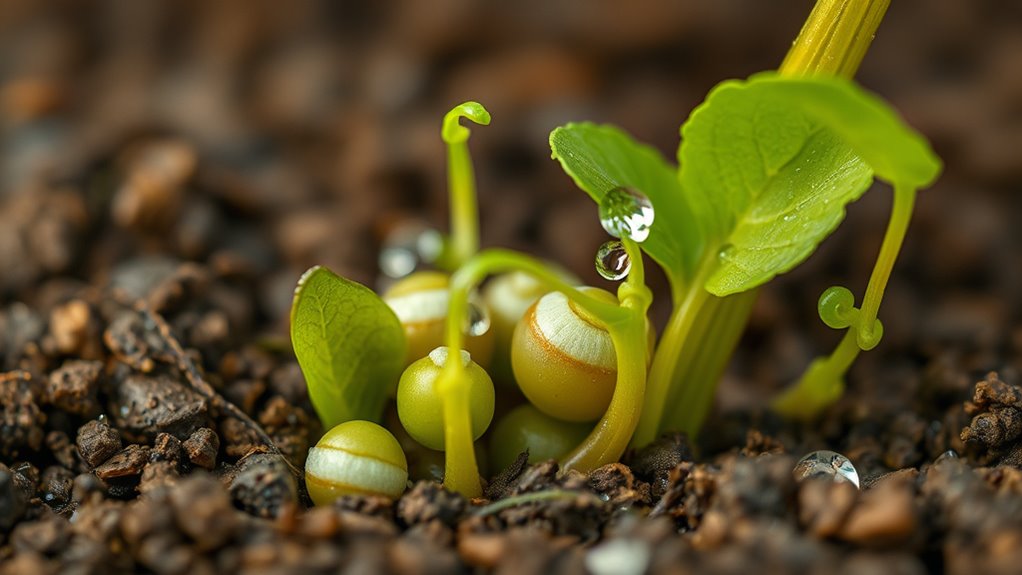

To guarantee successful grape germination, keep seeds moist, at temperatures between 20°C and 25°C, and make sure good soil contact with well-draining soil. Soaking seeds beforehand can speed up sprouting. Once seedlings emerge, protect them from harsh weather and pests while maintaining consistent moisture. For fertilization, test your soil first, then apply balanced nutrients like nitrogen, phosphorus, and potassium at key growth stages. Following these techniques will boost vine health and yields; explore the details to grow your best vineyard.
Key Takeaways
- Ensure soil moisture, proper temperature (20-25°C), and good soil contact for optimal grape seed germination.
- Pre-soak seeds to accelerate sprouting; protect seedlings from harsh weather and pests.
- Conduct soil tests and apply balanced nutrients—nitrogen, phosphorus, potassium—based on vine growth stages.
- Use split fertilization—at bud break and flowering—to maintain nutrient levels and promote healthy development.
- Regularly monitor vine health to adjust fertilization, avoiding over- or under-fertilizing for optimal growth and yield.
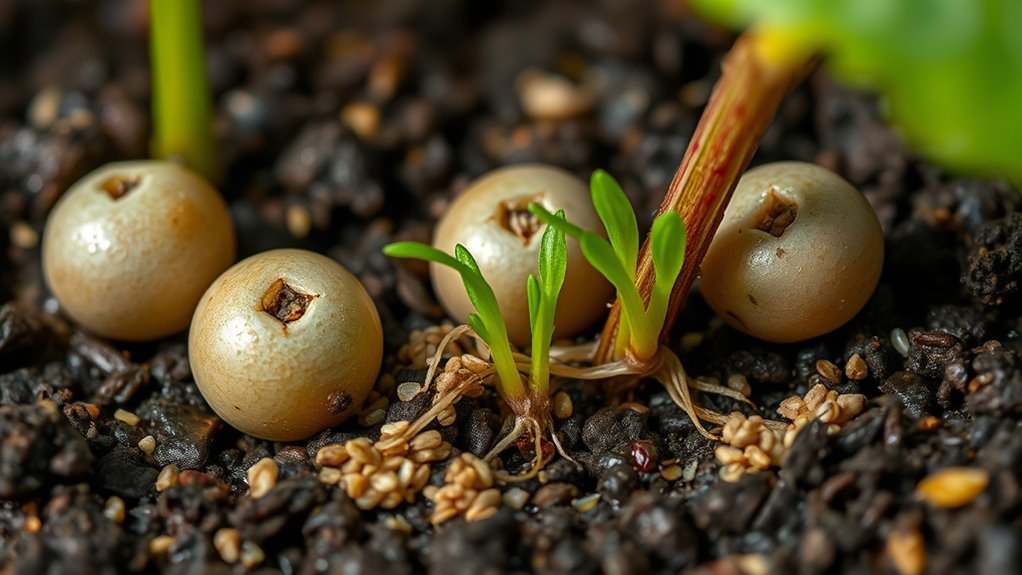
Grape germination and fertilization are essential steps to guarantee healthy vineyard growth and high-quality fruit production. When you plant grape seeds or seedlings, your primary goal is to establish a strong foundation for the vine’s development. Successful germination depends on providing the right conditions—adequate moisture, proper temperature, and good soil contact. You need to ensure the soil is well-draining yet retains enough moisture; too much water can cause seed rot, while too little can prevent sprouting. The ideal temperature for grape seed germination generally ranges from 20°C to 25°C (68°F to 77°F). Keep the soil consistently moist but not waterlogged, and consider pre-soaking seeds to accelerate germination. Once you see the first sprout, it’s important to protect young plants from harsh weather and pests, which can hinder their growth. Providing the right environment is crucial for successful germination.
Fertilization plays a critical role throughout the vine’s lifecycle. When you prepare your vineyard, conducting a soil test helps you determine nutrient deficiencies and pH levels, guiding your fertilization plan. Grape vines thrive in soil with a balanced mix of nitrogen, phosphorus, and potassium. You should apply fertilizers based on these needs, using organic options like compost or manure, which improve soil health over time, or synthetic fertilizers for more immediate nutrient supply. Early in the growing season, a nitrogen-rich fertilizer supports lush leaf and vine development, but excessive nitrogen can lead to overly vigorous growth at the expense of fruit quality. As the vine matures, shifting focus to phosphorus and potassium encourages strong root systems and better fruiting.
Throughout the growing season, you must monitor your vines regularly to adjust fertilization as needed. Over-fertilizing can cause excessive foliage, making grapes prone to disease and reducing fruit quality. Conversely, under-fertilizing can stunt growth and lower yields. Applying fertilizers in split doses—once at bud break and again during flowering—ensures continuous nutrient availability without overwhelming the plant. Organic mulches around the base of the vine can aid in nutrient retention and soil moisture, reducing the need for frequent fertilization.

Burpee SuperSeed Seed Starting Tray | 36 Cell Reusable Seed Starter Tray | for Starting Vegetable, Flower & Herb Seeds | Indoor Grow Kit for Plant Seedlings | for Germination Success
EASIER SEED STARTING: Our Burpee SuperSeed tray with 36 flexible pop-out cells is designed to simplify indoor seed…
As an affiliate, we earn on qualifying purchases.
As an affiliate, we earn on qualifying purchases.
Frequently Asked Questions
What Are the Best Grape Varieties for Different Climates?
You should choose grape varieties suited to your climate to guarantee healthy growth and good yields. For warm, dry areas, consider Mediterranean types like Sultana or Tempranillo. In cooler, wetter regions, varieties such as Pinot Noir or Riesling thrive. Understanding your local climate helps you select the best grapes, making your vineyard more successful. Always match the variety’s needs with your environment for ideal results.
How Does Soil Ph Affect Grape Germination Success?
Soil pH plays a vital role in grape germination success. If your soil’s pH is too acidic or too alkaline, it can hinder seed sprouting and root development. You should aim for a pH between 5.5 and 6.5, where nutrients are most available to young plants. Test your soil regularly and adjust the pH as needed with lime or sulfur to create ideal conditions for successful germination.
Can Organic Fertilizers Improve Grape Yield Quality?
You can definitely improve grape yield quality with organic fertilizers. These natural nutrients enhance soil health, promote strong vine growth, and improve fruit flavor and size. Organic fertilizers release nutrients slowly, supporting sustained development. By using compost, manure, or other organic options, you provide essential elements that boost grape quality without chemical residues. This sustainable approach benefits your vineyard’s productivity and the overall health of your grapevines.
What Are Common Pests During Grape Germination?
During grape germination, pests can threaten your young plants’ growth. Common pests include aphids, which suck sap and weaken seedlings; cutworms, which cut through stems at soil level; and beetles that feed on tender leaves. You should regularly inspect your vineyard, remove infested plants, and consider natural predators or organic insecticides. Staying vigilant helps shield your grapes and ensures healthy development from the start.
How Often Should Fertilization Be Adjusted During Growth?
Think of your grapevines as a delicate symphony, needing just the right notes of nourishment. You should adjust fertilization based on their growth stage, aiming for balance. During early growth, give them a gentle boost; as they mature, fine-tune your approach. Regularly monitor their leaves and soil, and modify your fertilization schedule accordingly, ensuring your vineyard’s melody remains harmonious and healthy throughout the season.

Grape Fertilizer – Liquid Plant Food for Bigger Harvests, Stronger Vines & Better Fruit Development, 8 oz
Helps Promote Vine Growth & Fruit Development – Supports strong vines and balanced fruit production.
As an affiliate, we earn on qualifying purchases.
As an affiliate, we earn on qualifying purchases.
Conclusion
By applying these grape germination and fertilization techniques, you’ll nurture healthy vines that thrive like a well-tuned orchestra. Remember, patience is key—just as a seed needs time to grow into a fruitful vine, your efforts now will pay off in abundant harvests later. Stay consistent and attentive to your plants’ needs, and you’ll see your grapebushes flourish beautifully, turning your garden into a lush, fruitful paradise.

Rapitest Soil Test Kit for Gardens, Vegetables, Flowers and Lawns. USA designed and assembled soil tester completely, quickly and accurately measures/analyzes soil pH acidity and garden nutrients.
Quick, at home results for Soil pH, Nitrogen, Phosphorous and Potash Innovative and inexpensive soil test kit features…
As an affiliate, we earn on qualifying purchases.
As an affiliate, we earn on qualifying purchases.

Soil Seed & Water Bacchus Organic Fertilizer for Grapevines – Concentrated Soil Amendment for Vineyards & Grape Fruit Production – OMRI Listed Organic Fertilizer
KEY BENEFITS : Improves soil health, boost plant vitality, icreases soil organic matter content and improves water retention
As an affiliate, we earn on qualifying purchases.
As an affiliate, we earn on qualifying purchases.