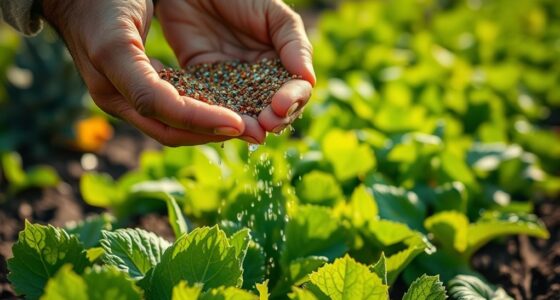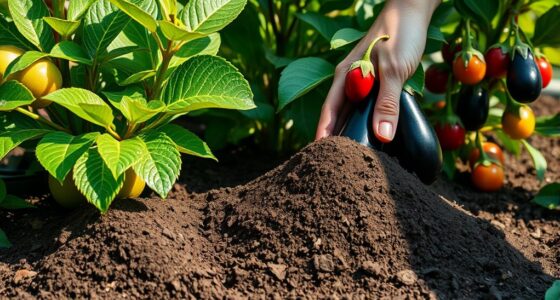

Nitrogen, phosphorus, and potassium are crucial for your plants’ health. Nitrogen helps produce lush, green foliage and supports vigorous growth, but too much can cause pests. Phosphorus is key for root development, flowering, and fruiting, making your plants stronger. Potassium boosts disease resistance, stress tolerance, and overall vitality. Understanding how these nutrients work together ensures healthier plants, and exploring further reveals effective ways to maintain balanced soil nutrition for ideal growth.
Key Takeaways
- Nitrogen promotes lush, green foliage by supporting amino acid, protein, and chlorophyll synthesis.
- Phosphorus is vital for energy transfer, especially in root development, flowering, and fruiting.
- Potassium enhances overall plant health, disease resistance, water regulation, and enzyme activation.
- Deficiencies show distinct signs: nitrogen in older leaves, phosphorus in stunted or purple foliage, potassium in leaf edges browning.
- Balanced fertilization of these nutrients ensures optimal plant growth and prevents deficiencies or excesses.
Understanding the roles of nitrogen, phosphorus, and potassium is vital for optimizing plant growth, as these three elements are the primary nutrients that plants need in large amounts. Each plays a distinct role in supporting different aspects of plant development, and knowing how they function helps you provide the right balance in your soil or fertilizer application.
Nitrogen is fundamental for the synthesis of amino acids, proteins, and chlorophyll. When you supply adequate nitrogen, your plants will develop lush, green foliage and grow vigorously. Without enough nitrogen, leaves turn yellow, growth stalls, and the plant’s overall health declines. Since nitrogen is highly mobile within plants, deficiencies often appear first in older leaves, which turn pale or yellow before other parts show signs of trouble. To guarantee your plants get enough nitrogen, you might use organic sources like compost or manure, or synthetic fertilizers formulated with nitrogen compounds such as urea or ammonium nitrate. Be cautious, though, because excess nitrogen can lead to overly lush growth that’s susceptible to pests and diseases and can hinder flowering or fruiting.
Phosphorus, on the other hand, is vital for energy transfer within the plant, particularly in the form of ATP, which fuels various physiological processes. It’s especially important during root development, flowering, and fruiting stages. When phosphorus is deficient, your plants may exhibit stunted growth, dark green or purplish foliage, and poor root systems. You’ll want to guarantee your soil contains enough phosphorus, often supplied through bone meal, rock phosphate, or commercial fertilizers with high phosphorus content. Phosphorus tends to move slowly in soil, so consistent application or incorporating it into the soil at planting helps maintain adequate levels throughout the growing season. Additionally, understanding the movement of nutrients within soil can help optimize fertilization strategies. Proper soil testing can assist in determining the existing phosphorus levels and prevent deficiencies or excesses.
Potassium influences a plant’s overall health, disease resistance, and ability to regulate water. It activates enzymes necessary for photosynthesis and starch production, strengthening cell walls and improving the plant’s structure. If your plants lack potassium, they may show signs such as leaf edges turning brown or curling, weak stems, and increased vulnerability to pests and diseases. Potassium is readily available in many soils but can become depleted over time, especially in sandy soils or during heavy watering. You can supply potassium through sources like potash, wood ash, or potassium-rich fertilizers. Proper potassium levels help your plants manage stress from drought, cold, or pests, leading to healthier, more resilient growth. Maintaining balanced nutrient levels through soil management is essential for optimal plant health and productivity. Additionally, proper fertilization ensures that nutrient imbalances do not occur, which can hinder plant development and reduce yields.

True Organic Blood Meal – High-Nitrogen Organic Fertilizer for Rapid Vegetative Growth – 3lb Bag Covers 104 Sq. Ft.
Encourages Rapid Growth: True Organic Blood Meal is perfect for heavy feeders like corn, spinach, broccoli, and leafy…
As an affiliate, we earn on qualifying purchases.
As an affiliate, we earn on qualifying purchases.
Frequently Asked Questions
How Do Nitrogen, Phosphorus, and Potassium Interact in Soil?
You might wonder how nitrogen, phosphorus, and potassium interact in soil. These nutrients work together to support healthy plant growth. Nitrogen boosts leafy green development, phosphorus encourages root and flower growth, and potassium enhances overall plant strength and disease resistance. When balanced correctly, they improve soil fertility, ensuring your plants get what they need. Proper management of these nutrients prevents deficiencies and promotes a thriving garden or crop.
What Are Natural Sources of These Nutrients for Organic Farming?
Imagine you’re back in the days of the original iPhone, discovering natural sources for your garden. You can rely on compost and manure, which provide nitrogen, phosphorus, and potassium naturally. Cover crops like legumes fix nitrogen, while bone meal supplies phosphorus. Organic matter and green manure enrich the soil over time. These sources keep your farm healthy, eco-friendly, and true to organic principles without synthetic fertilizers.
How Do Deficiencies Affect Plant Immune Responses?
When your plants lack essential nutrients, their immune responses weaken, making them more vulnerable to pests and diseases. Deficiencies hinder the production of crucial compounds needed for defense, reducing their resilience. You might notice stunted growth, leaf discoloration, or increased susceptibility to infections. To keep your plants healthy, make sure they receive adequate nutrients through proper fertilization, boosting their natural defenses and overall vitality.
Can Excess Nutrients Harm Plant Growth or the Environment?
Excess nutrients can definitely harm your plants and the environment. When you over-fertilize, it can lead to nutrient runoff, polluting water sources and harming aquatic life. For your plants, too many nutrients may cause root burn, stunted growth, or disease susceptibility. Always follow recommended fertilization guidelines to prevent these issues and support healthy growth without risking environmental damage.
What Are the Best Practices for Balanced Fertilization?
Think of fertilization as tuning a musical instrument—you want just enough to hit the right notes. To do this, you should test your soil first, then apply nutrients according to the specific needs. Use balanced fertilizers, follow recommended rates, and avoid over-application. Regularly monitor plant health and adjust as needed. This way, you create harmony in growth while protecting your environment.

Triple Super Phosphate 0-46-0 Fertilizer, high Phosphorus Fertilizer Stronger Roots & Flower Formation, Ideal Super Phosphate for Plants – Flowers, Fruits, Vegetables & Turf, 5 lb
HIGH PHOSPHORUS FERTILIZER: Unlike other phosphorus fertilizers, our triple super phosphate has a 0-46-0 ratio of phosphorus for…
As an affiliate, we earn on qualifying purchases.
As an affiliate, we earn on qualifying purchases.
Conclusion
By understanding how nitrogen, phosphorus, and potassium support plant growth, you can improve your gardening results. It’s common to worry about over-fertilizing, but when used correctly, these nutrients boost plant health without harm. Just follow recommended guidelines, and you’ll see healthier, more productive plants. Don’t let fear hold you back—proper nutrient management makes a real difference. With a little knowledge, you’ll confidently nurture your garden to thrive all season long.

TPS NUTRIENTS Potassium Fertilizer for Plants, Boosts Growth, Budding and Flowering, Liquid Plant Food 8 oz (250mL)
Made for Potassium Support – Formulated to supply potassium for essential plant nutrition.
As an affiliate, we earn on qualifying purchases.
As an affiliate, we earn on qualifying purchases.

Rapitest Soil Test Kit for Gardens, Vegetables, Flowers and Lawns. USA designed and assembled soil tester completely, quickly and accurately measures/analyzes soil pH acidity and garden nutrients.
Quick, at home results for Soil pH, Nitrogen, Phosphorous and Potash Innovative and inexpensive soil test kit features…
As an affiliate, we earn on qualifying purchases.
As an affiliate, we earn on qualifying purchases.