

When interpreting soil test results for fertilizer advice, focus on nutrient levels like nitrogen, phosphorus, and potassium, and check the pH to see if adjustments are needed. Add amendments such as compost or lime based on deficiencies or pH imbalances to optimize nutrient availability. Keeping organic matter high and avoiding over-fertilization helps sustain healthy soil and plants. Understanding these key factors can lead to better garden success—discover more about fine-tuning your soil now.
Key Takeaways
- Analyze soil test results for nutrient levels (N, P, K) to identify deficiencies or excesses.
- Check soil pH to determine if it needs adjustment for optimal nutrient availability.
- Assess organic matter content to decide on amendments like compost or manure.
- Use test data to select appropriate fertilizers that match soil nutrient deficiencies.
- Consider soil health factors (pH, organic matter) to enhance fertilizer efficiency and sustainability.
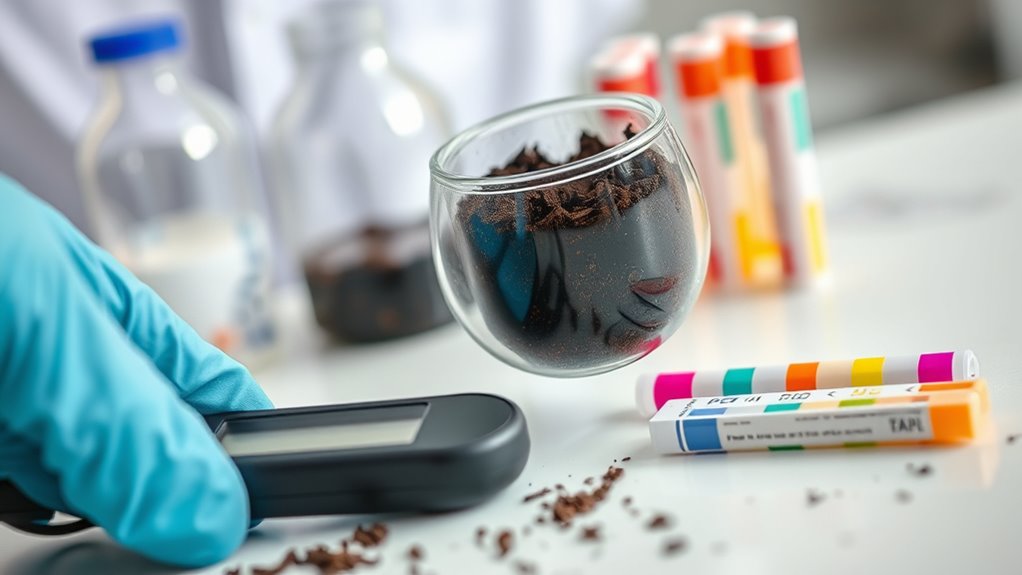
Have you ever wondered how healthy your soil truly is? Understanding your soil’s condition is essential for ideal plant growth, and soil testing offers valuable insights. Once you get your results, you’ll see a detailed analysis of nutrient levels, pH balance, and other key factors. Interpreting these results correctly helps you make informed decisions about fertilizer application, ensuring your plants get what they need without overdoing it.
One pivotal aspect to look at is the soil pH level. If your test indicates that your soil is too acidic or alkaline, you’ll need to consider soil pH adjustment. Adjusting pH isn’t just about adding lime or sulfur; it’s about creating an environment where nutrients are most available to your plants. Lime is commonly used to raise pH in acidic soils, making them more alkaline, while sulfur or other acidifying agents can lower pH in alkaline soils. Proper pH adjustment improves nutrient uptake and overall plant health. It’s a simple but essential step that can greatly boost your garden’s productivity.
Beyond pH, organic matter enhancement plays a key role in improving soil health. If your test shows low organic matter levels, you should focus on adding compost, aged manure, or cover crops. Organic matter enriches the soil structure, increases water retention, and supplies essential nutrients. It also feeds beneficial microorganisms that support plant growth. Incorporating organic matter is a sustainable way to boost soil fertility naturally, reducing your reliance on chemical fertilizers over time. When you enhance organic matter, you create a thriving soil ecosystem that promotes healthier, more resilient plants.
Interpreting your soil test results also involves understanding nutrient levels like nitrogen, phosphorus, and potassium. If any are deficient, you’ll need to amend accordingly, but always consider the current organic matter and pH status first. Correcting pH and organic matter levels can improve nutrient availability, making your fertilizer efforts more effective and long-lasting. Additionally, understanding the nutrient balance can help prevent over-fertilization and environmental runoff, ensuring a sustainable gardening practice.
Frequently Asked Questions
How Often Should I Retake Soil Tests?
You should retake soil tests every 2 to 3 years to guarantee ideal soil health and accurate fertilizer recommendations. Proper soil sample timing is key; test during the same season each time to get consistent results. Testing frequency depends on your crop type and soil conditions, but regular testing helps you adjust fertilization plans effectively, preventing over- or under-fertilization and maintaining healthy, productive soil.
Which Soil Test Is Most Accurate?
The most accurate soil test depends on your specific needs, but generally, a thorough laboratory test offers the highest test accuracy. This test analyzes soil nutrients precisely, revealing what your soil truly needs. Don’t settle for quick DIY kits—they often miss critical details. Investing in a professional lab test ensures you get reliable results, guiding you to the right fertilizer recommendations, and ultimately, healthier, more productive soil.
Can Soil Testing Predict Pest Infestations?
Soil testing can’t directly predict pest infestations, but it plays a essential role in maintaining soil health, which helps manage pests naturally. By understanding nutrient levels and soil conditions, you can identify weak spots that pests exploit and improve soil resilience. Healthy soil promotes strong plant growth, making pests less likely to cause significant damage. So, while not a crystal ball, soil testing supports effective pest management strategies.
How Does Soil Ph Affect Fertilizer Choice?
Soil pH, which indicates soil acidity or alkalinity, directly influences your fertilizer choice. If your soil is acidic, you’ll want to select fertilizers compatible with low pH levels, often those containing lime or calcium. Conversely, for alkaline soils, choose fertilizers suited for higher pH levels to guarantee nutrients are available to plants. Testing your soil helps you determine the right fertilizer compatibility, optimizing plant growth and health.
Are DIY Soil Test Kits Reliable?
DIY soil test kits can be somewhat reliable for basic soil test accuracy, but they often lack the precision of lab tests. You might get a general idea of your soil’s condition, but for detailed fertilizer recommendations, professional testing is better. If you’re serious about optimizing your soil, consider using DIY testing as a starting point, then confirm with a laboratory test for more accurate results.
Conclusion
Remember, a farmer’s best tool is knowledge. By understanding your soil test results, you can make smarter decisions and give your crops what they truly need. Don’t forget—”You reap what you sow.” Taking the time to interpret your soil data today guarantees a healthier, more productive harvest tomorrow. Trust the process, stay informed, and watch your efforts flourish. Your careful attention now will pay off in bountiful results down the line.