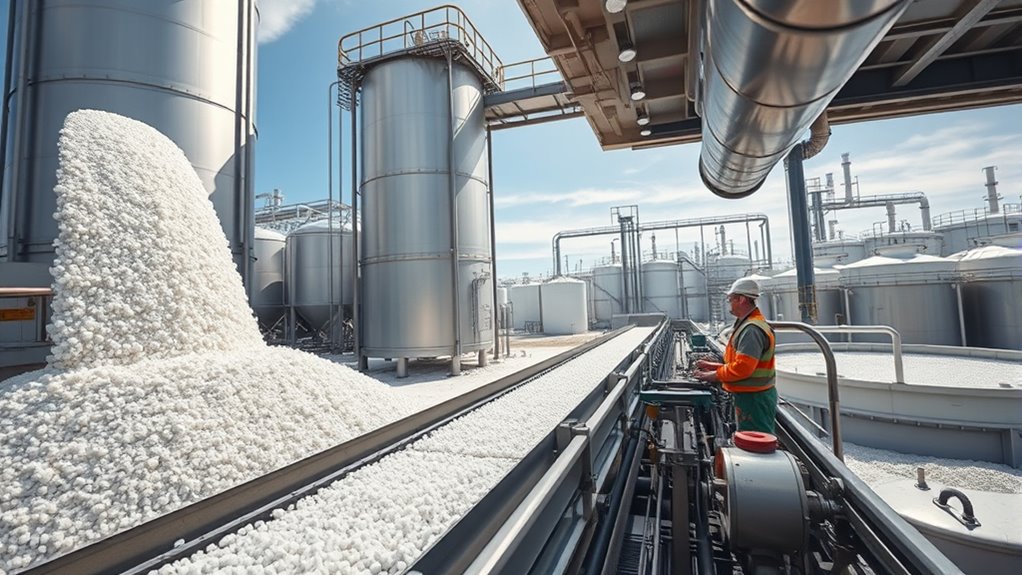

Synthetic fertilizers are made through chemical reactions involving raw materials like ammonia, phosphoric acid, and potash to produce concentrated nutrients such as nitrogen, phosphorus, and potassium. These fertilizers are designed for quick and efficient nutrient delivery, helping to boost crop growth and yields in a short time. They are often applied as granules or liquids, allowing precise control over plant nutrition. To understand the manufacturing process and how they impact agriculture, keep exploring further.
Key Takeaways
- Synthetic fertilizers are produced through chemical reactions combining raw materials like ammonia, phosphoric acid, and potash.
- They are formulated into concentrated forms such as granules or liquids for easy, targeted application.
- The manufacturing process consumes significant energy, mainly from fossil fuels, and releases greenhouse gases.
- These fertilizers provide quick, precise delivery of essential nutrients like nitrogen, phosphorus, and potassium to crops.
- They boost crop yields rapidly but can cause environmental issues like water pollution and soil degradation if overused.
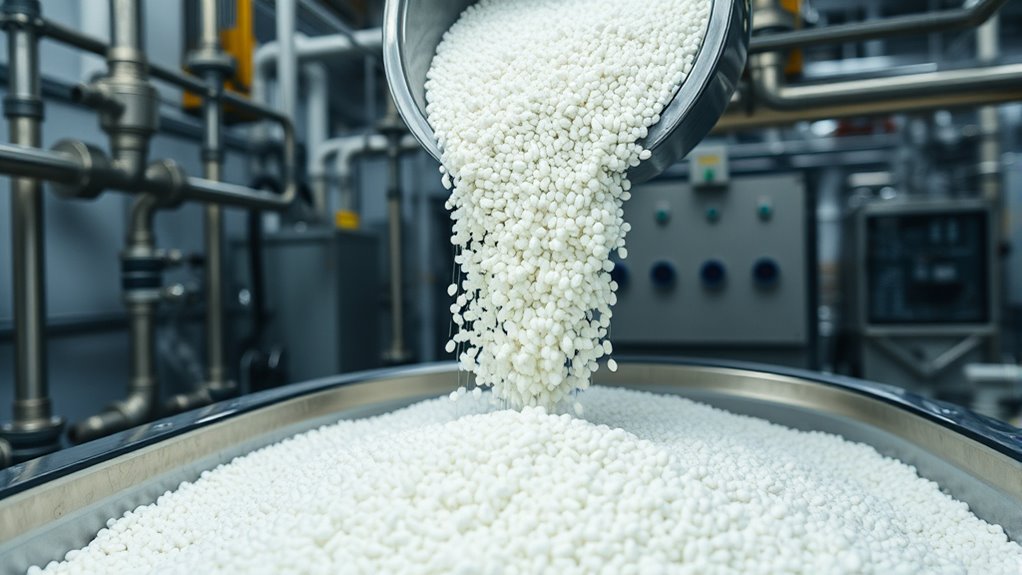
Synthetic fertilizers are man-made substances designed to boost crop growth by providing essential nutrients like nitrogen, phosphorus, and potassium. These nutrients are vital for plant development, and synthetic fertilizers are formulated to deliver them quickly and efficiently. Farmers often rely on these fertilizers because they can markedly increase crop yields in a short period. The manufacturing process typically involves chemical reactions that combine raw materials like ammonia, phosphoric acid, and potash to produce concentrated nutrient compounds. These compounds are then processed into forms like granules or liquids that are easy to apply to fields. Because synthetic fertilizers are highly concentrated, they allow for precise nutrient management, which can optimize plant growth and improve farm productivity.
However, you should also be aware of their environmental impacts. When used excessively or improperly, synthetic fertilizers can leach into soil and water systems, leading to pollution. Nitrogen runoff, for example, contributes to waterway eutrophication, causing algae blooms that deplete oxygen and harm aquatic life. Additionally, the production of synthetic fertilizers consumes substantial amounts of energy, primarily from fossil fuels, which releases greenhouse gases like carbon dioxide into the atmosphere. This process contributes to climate change, further emphasizing the need to weigh sustainable practices. Over time, continuous use of synthetic fertilizers can degrade soil health by diminishing organic matter and disrupting natural nutrient cycles. This decline impacts long-term agricultural sustainability and can lead to increased reliance on chemical inputs.
Given these concerns, many farmers and researchers are exploring alternative methods to fertilization that are more environmentally friendly. Organic farming practices, for example, emphasize compost, manure, and cover crops to enrich soil naturally. These methods enhance soil structure, increase microbial activity, and reduce chemical runoff. Precision agriculture techniques also help optimize fertilizer application by matching nutrient delivery with crop needs, minimizing waste and environmental harm. Additionally, integrating crop rotation, agroforestry, and biological pest control can reduce dependency on synthetic inputs altogether. If you’re interested in sustainable farming, adopting alternative methods not only helps protect ecosystems but also promotes resilient soil health, ensuring that land remains productive for future generations. By balancing crop requirements with environmental stewardship, you can contribute to more sustainable agriculture that minimizes pollution and conserves natural resources.
Frequently Asked Questions
What Are the Environmental Impacts of Synthetic Fertilizers?
You should know that synthetic fertilizers can harm the environment by causing soil contamination and water pollution. When you overuse them, nutrients often leach into nearby water sources, contaminating lakes and rivers. This runoff can lead to algae blooms and harm aquatic life. Additionally, excessive use degrades soil quality over time, reducing its fertility. To minimize these impacts, it’s best to apply fertilizers carefully and follow recommended guidelines.
How Do Synthetic Fertilizers Compare to Organic Alternatives?
Have you ever seen a lush, thriving garden versus one struggling to grow? Synthetic fertilizers quickly boost soil enrichment and provide immediate nutrient balance, but often at the cost of long-term soil health. Organic alternatives, on the other hand, improve soil structure and support sustainable growth. While synthetic options deliver fast results, organic choices foster a healthier, more resilient ecosystem. Which approach would you prefer for lasting plant robustness?
Are There Health Risks Associated With Synthetic Fertilizer Use?
Yes, there are health risks associated with synthetic fertilizer use. You might notice soil contamination over time, which can harm beneficial microbes and affect crop residue quality. Excessive application can lead to nutrient runoff, contaminating water sources and posing health hazards. Additionally, residues from synthetic fertilizers can accumulate in food, potentially impacting your health. It is crucial to manage use carefully to minimize these risks and protect both your environment and personal well-being.
What Innovations Are Emerging in Synthetic Fertilizer Production?
Like a beacon in the fog, emerging innovations in synthetic fertilizer production shine brightly. You’ll see nanotechnology advancements enabling more precise nutrient delivery, reducing waste and environmental impact. Researchers are also focusing on sustainable manufacturing methods, incorporating eco-friendly materials and energy-efficient processes. These innovations help you produce healthier crops while minimizing ecological footprints, paving the way for a future where fertilizer use aligns with sustainable agriculture goals.
How Can Farmers Optimize Synthetic Fertilizer Application?
You can optimize synthetic fertilizer application by conducting soil testing to determine nutrient needs accurately. Use this data to adjust application timing, applying fertilizers when plants need them most, typically during active growth stages. Avoid over-application to prevent runoff and environmental harm. Proper timing and precise nutrient management guarantee your crops receive what they require, boosting yield and minimizing waste. Always follow recommended guidelines for best results.
Conclusion
By understanding how synthetic fertilizers are made and used, you can see their impact on agriculture. For example, imagine a farmer in a developing country boosting crop yields with a balanced mix of synthetic nutrients, helping feed a growing population. While they improve productivity, it’s essential to use them responsibly to avoid environmental harm. Being aware of both their benefits and risks helps you make informed decisions for sustainable farming and food security.