
To achieve high potato yields, select healthy, disease-free seed tubers suited to your climate, and cut larger ones into pieces with at least one eye, curing them before planting. Prepare well-drained, fertile soil rich in organic matter, and plant seed pieces at the right depth and spacing. Maintain consistent moisture, apply balanced fertilization, and control weeds and pests through timely interventions. Rotating crops and choosing high-yield varieties further boosts production—continue exploring to uncover more expert tips.

Prime made for students and young adults
- Fast, free delivery for dorm and study essentials
- Prime Video and Amazon Music included
- Member-only deals
Key Takeaways
- Select healthy, disease-free seed tubers and cure cut pieces to enhance sprouting and yield potential.
- Prepare well-drained, organic-rich soil with proper pH and create ridges for optimal drainage.
- Plant seed pieces at appropriate depth and spacing, and ensure consistent watering to promote healthy growth.
- Apply balanced fertilization and practice weed control through cultivation or mulching to support plant development.
- Implement integrated pest and disease management, crop rotation, and select high-yielding, locally adapted varieties.

Achieving high-yield potato production requires implementing effective cultivation techniques that optimize growth conditions. To start, selecting the right seed potatoes is essential. You want healthy, disease-free tubers with high genetic potential for yield. Choose certified seed stock suited to your local climate and soil conditions. Cutting larger seed potatoes into pieces, each with at least one eye, can help maximize planting material without compromising quality. Make sure to cure the cut pieces for a day or two before planting to reduce the risk of rotting and encourage faster sprouting.
Select healthy, disease-free seed potatoes and cure cut pieces before planting for higher yields.
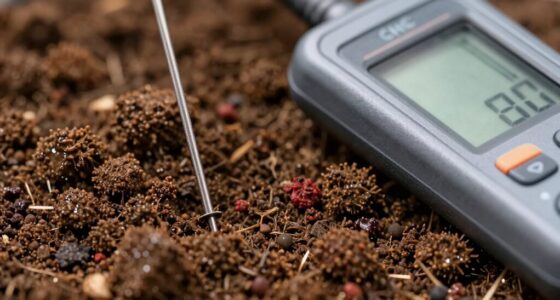
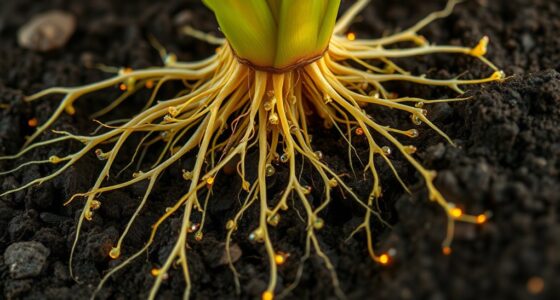
Proper soil preparation is key to high yields. You should aim for well-drained, loose soil rich in organic matter. Before planting, conduct a soil test to determine nutrient levels and pH. Ideally, potatoes thrive in slightly acidic soil with a pH between 5.5 and 6.5. Incorporate organic amendments like compost or well-rotted manure to improve fertility and soil structure. Tilling the soil thoroughly ensures good aeration and helps break up clumps, creating an even planting bed. You also want to create ridges or mounds that can help with drainage and prevent waterlogging, which can lead to tuber rot. Additionally, soil health plays a crucial role in supporting healthy root development and high yields.
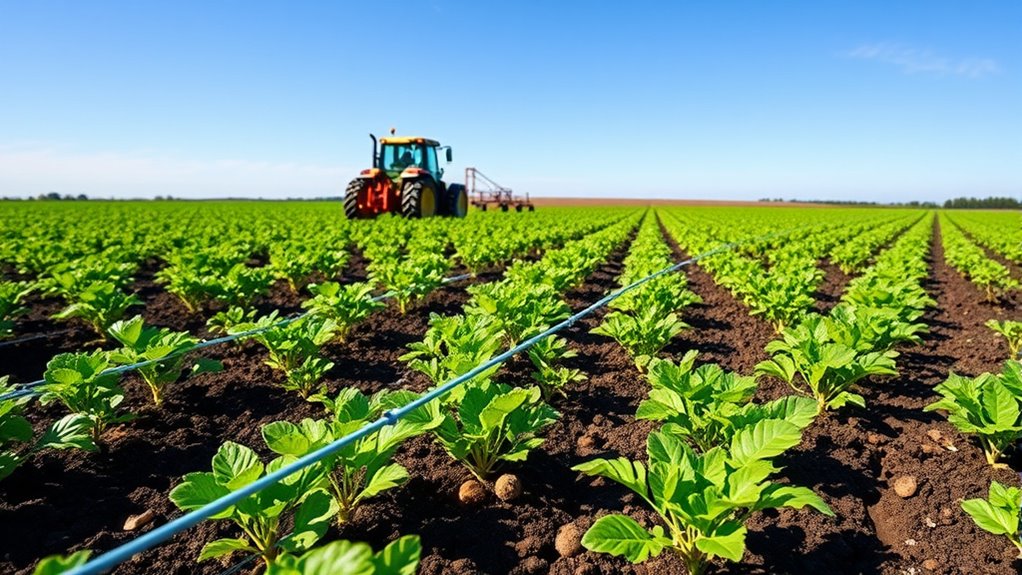
Plant your seed pieces at the right depth—generally about 3 to 4 inches deep—and space them sufficiently apart. Proper spacing allows each plant to develop fully without competing for nutrients or sunlight. Typically, spacing rows 30 to 36 inches apart and placing seed pieces 10 to 12 inches within the row yields good results. Water the planting site immediately after planting to settle the soil around the seed pieces and stimulate sprouting. Consistent moisture is essential during the early growth stages; however, avoid overwatering, which can cause rot or disease. Using appropriate irrigation methods can help maintain optimal moisture levels and improve overall yield.
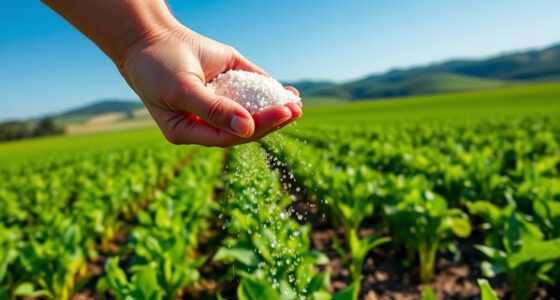
As your potatoes grow, implementing an effective fertilization plan boosts yields. Use a balanced fertilizer rich in nitrogen, phosphorus, and potassium, applying it according to soil test recommendations. Side-dressing with nitrogen during the early tuber development stage encourages healthy foliage and tuber growth. Keep weeds under control through timely cultivation or mulching, as weeds compete for nutrients and moisture. Mulching also helps retain soil moisture, regulate temperature, and minimize soil erosion. Additionally, employing sustainable sourcing practices can improve soil health and promote long-term productivity. Ensuring the credibility of your gold dealer is also essential if you consider diversifying your investments alongside cultivation projects.
Finally, protecting your crop from pests and diseases is critical. Regularly inspect plants for signs of pests like Colorado potato beetles or aphids, and use targeted control measures when necessary. Rotate crops each year to reduce disease buildup and avoid planting potatoes in the same spot consecutively. To further enhance yield potential, consider selecting high-yielding varieties that are well-suited to your growing conditions. With diligent attention to these cultivation techniques, you set yourself up for a bountiful harvest, maximizing your potato yield and ensuring healthy, high-quality tubers.
As an affiliate, we earn on qualifying purchases.
Frequently Asked Questions
What Are the Best Potato Varieties for High Yield?
When choosing potato varieties for high yield, you should consider factors like disease resistance, climate adaptability, and growth duration. Varieties such as Kufri Jyoti, Russet Burbank, and Chieftain are known for their high productivity and robustness. You need to select the right variety based on your local conditions and market demands. By doing so, you’ll maximize your harvest and guarantee better profitability for your potato farming venture.
How Does Climate Affect Potato Production?
Climate greatly influences your potato production. Warmer temperatures can speed up growth but may diminish yield quality, while cooler climates often produce better tuber size and taste. Adequate rainfall ensures healthy development, but too much can cause diseases or rot. Drought stress hampers growth, and frost can damage crops. By understanding your local climate, you can adapt planting times and practices to maximize your potato yield.
What Are Common Pests Impacting High-Yield Potatoes?
You need to know that common pests like Colorado potato beetles, aphids, and potato tuber moths threaten high-yield potatoes. These pests damage leaves, stems, and tubers, reducing crop quality and quantity. You can manage them by regularly inspecting your fields, using integrated pest management strategies, applying appropriate pesticides, and encouraging natural predators. Staying vigilant helps safeguard your potatoes and ensures you achieve high yields efficiently.
How Can Soil Health Be Optimized for Potato Farming?
To optimize soil health for potato farming, you should start by testing your soil to identify nutrient deficiencies. Incorporate organic matter like compost to improve structure and fertility. Practice crop rotation to prevent disease buildup and reduce pest issues. Avoid over-tilling to maintain soil integrity, and manage moisture levels carefully. Using cover crops also helps retain nutrients and suppress weeds, creating a healthier environment for high-yield potato growth.
What Post-Harvest Practices Maximize Potato Storage?
Think of your potatoes as treasures waiting to be uncovered. To keep them fresh, you gotta handle them like fragile gems—cool, dark, and well-ventilated. Avoid washing before storage, as excess moisture invites spoilage. Cure them at 45-60°F for a week to toughen skins. Regularly check for and remove any spoiled potatoes. Proper storage practices like these turn your harvest into a lasting bounty.
As an affiliate, we earn on qualifying purchases.
Conclusion
By applying these techniques, you’re planting the seeds for a potato harvest that’s truly a bountiful harvest. Think of your efforts as tending a thriving garden where each careful step nurtures the plant’s potential. With dedication and the right practices, your yield will blossom like a vibrant garden in full bloom. Remember, high-yield potato production isn’t just about growing potatoes; it’s about cultivating success from the ground up.
As an affiliate, we earn on qualifying purchases.
As an affiliate, we earn on qualifying purchases.
Halloween Picks
halloween
As an affiliate, we earn on qualifying purchases.