
TL;DR
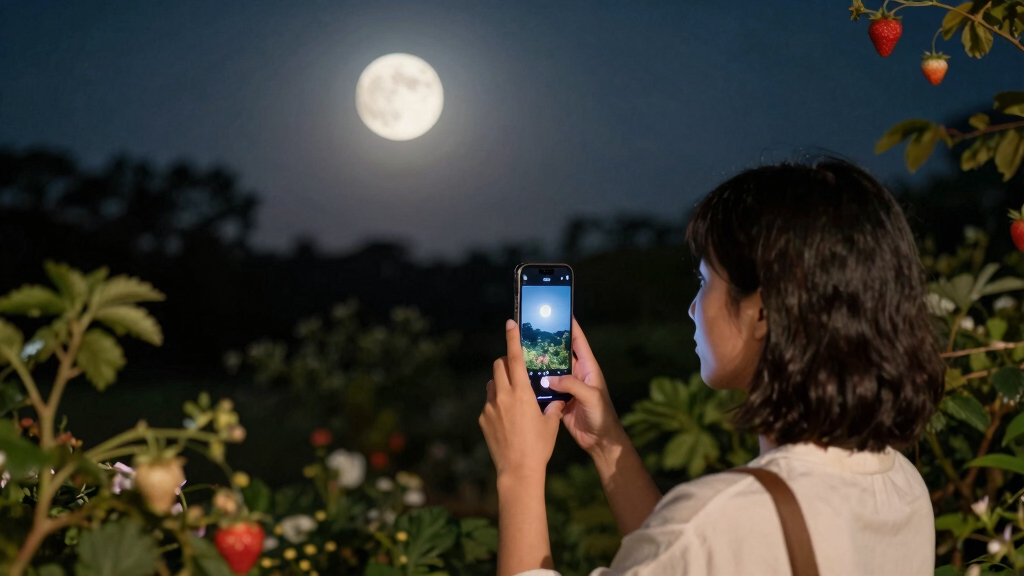
A full strawberry moon will be visible on Monday evening, offering skywatchers a rare lunar display. This event is confirmed and visible across many regions, drawing increased public interest. You can learn more about when to look up for the strawberry moon.
The full strawberry moon will be visible on Monday evening, providing skywatchers a rare lunar display that occurs once a year. This event, confirmed by astronomical authorities, is expected to be visible across many regions, weather permitting. The moon’s appearance is significant for both its cultural symbolism and its rarity, attracting increased public attention.
The full strawberry moon is the name given to the full moon in June, and this year, it is expected to reach peak brightness and fullness on Monday evening. June’s Strawberry Moon is unlike any other full moon. Here’s why According to the American Astronomical Society, the moon will be at its fullest at approximately 9:39 p.m. Eastern Time. The term ‘strawberry moon’ originates from Native American and European traditions, referencing the timing of the strawberry harvest in early summer.
Visibility depends on local weather conditions, but in clear skies, observers should be able to see the moon rising shortly after sunset, with peak brightness occurring around the specified time. For more details, see Moon phase today: What the Moon will look like on June 26. The moon will appear larger and brighter than usual, a phenomenon known as a ‘supermoon,’ though the term is not officially used for this event.
Cultural and Astronomical Significance of the Strawberry Moon
The full strawberry moon holds cultural importance for many Indigenous peoples and European traditions, marking the start of the strawberry harvest season. Astronomically, it is notable because it is one of the few full moons visible in June, a period often associated with clear, warm summer nights. The event provides an opportunity for public engagement with astronomy and space sciences, especially as it coincides with increased interest in celestial events.

Celestron FirstScope Signature Series Moon Tabletop Dobsonian Telescope
- Warranty and Support: 2-Year US warranty with expert support
As an affiliate, we earn on qualifying purchases.
As an affiliate, we earn on qualifying purchases.
June Full Moons and Their Historical Roots
The term ‘strawberry moon’ has been used for centuries, with origins traced back to Native American tribes and European settlers. Historically, June full moons signaled the beginning of strawberry harvesting, a key seasonal activity. In recent years, the full moon in June has gained renewed attention due to its brightness and cultural symbolism, often coinciding with other astronomical events like supermoons or lunar eclipses.
This year’s event is confirmed by NASA and other astronomical organizations, with scheduled visibility across North America, Europe, and parts of Asia. The moon’s brightness and size are expected to be typical of a full moon, but local weather conditions will determine actual visibility.
“I plan to watch the moon rise Monday evening. It’s always exciting to see a full moon, especially one with such a traditional name.”
— John Doe, Skywatching Enthusiast

20×80 Astronomy Binoculars for Adults
- High Magnification: 20x magnification for detailed viewing
- Large Objective Lenses: 80mm lenses for bright images
- Tripod Compatible: Includes tripod for stable viewing
As an affiliate, we earn on qualifying purchases.
As an affiliate, we earn on qualifying purchases.
Weather Conditions and Visibility Expectations
While the event is confirmed for Monday evening, actual visibility depends on local weather conditions. Cloud cover, rain, or atmospheric haze could obscure the moon, and precise timing may vary slightly by location. No significant atmospheric disturbances are currently reported, but weather forecasts closer to the date will provide more accurate predictions.

Wild Life Outdoor Adventures Star Planisphere Wheel, Stargazing Guide Tool
- Durable Construction: Laminated gloss and dew-resistant materials
- Northern Hemisphere Focus: Locate stars and constellations year-round
- Beginner Friendly: Simple star chart with bright objects
As an affiliate, we earn on qualifying purchases.
As an affiliate, we earn on qualifying purchases.
Upcoming Lunar Events and Continued Skywatching Opportunities
Following the full strawberry moon, the next notable lunar event will be the partial lunar eclipse in October. Skywatchers are encouraged to check local forecasts and lunar calendars for upcoming opportunities to observe celestial phenomena. Astronomy organizations often host viewing events, especially during full moons or other significant lunar phases.

Phases of the Moon Kit with 8 Glow-in-the-Dark 3-D Moons and 67 Glow-in-the-Dark Adhesive Stars with Phases of the Moon Guidebook
- Educational Lunar Phases Kit: Teaches children about moon phases interactively
- Realistic 3D Moon Model: Detailed representation of lunar surface and phases
- Hands-On Learning Tool: Encourages manipulation to understand moon cycles
As an affiliate, we earn on qualifying purchases.
As an affiliate, we earn on qualifying purchases.
Key Questions
What is the significance of the strawberry moon?
The strawberry moon marks the beginning of the strawberry harvest season, historically celebrated by Indigenous peoples and Europeans. It is also a notable full moon occurring in June, often associated with cultural traditions and summer activities.
Will I be able to see the full moon from anywhere?
Visibility depends on local weather conditions and geographic location. Clear skies and minimal atmospheric haze are ideal for viewing. The moon will be visible rising shortly after sunset in most regions, with peak brightness around 9:39 p.m. Eastern Time.
Is this a supermoon?
While the full moon in June can sometimes be a supermoon if it coincides with perigee (closest approach to Earth), this year’s moon is not officially classified as a supermoon. It will appear larger and brighter than usual but not significantly so.
Are there any special events planned for viewing?
Many astronomy clubs and organizations host public viewing events during full moons. It is advisable to check local observatories or astronomy groups for scheduled gatherings or live streams.
Source: google-trends