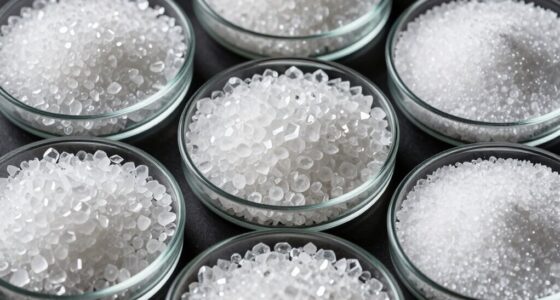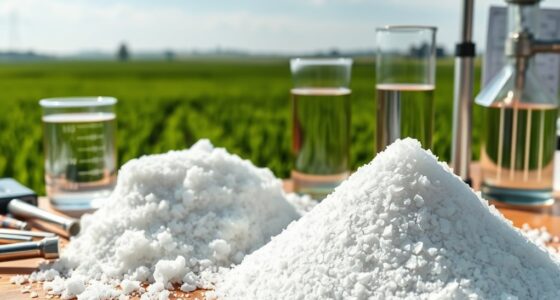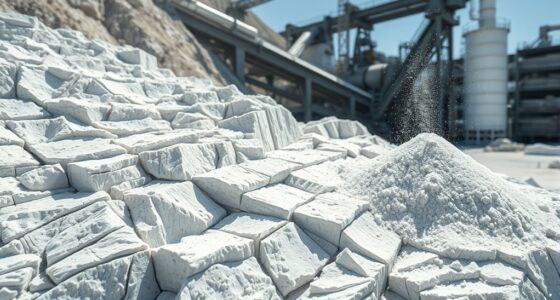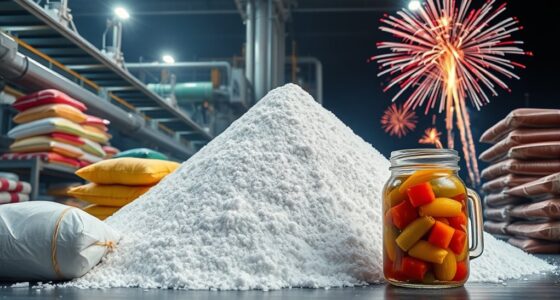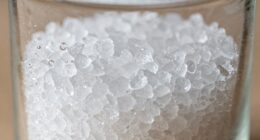
Ammonium sulfate is a key fertilizer that supplies nitrogen and sulfur to crops, supporting healthy growth and higher yields. It’s produced by reacting ammonia with sulfuric acid, a process that’s efficient but requires proper management to reduce environmental risks like soil and water pollution. Beyond agriculture, it’s used in chemical synthesis and industrial applications, thanks to its stability and reactivity. To discover more about its chemistry and diverse uses, keep exploring how this compound impacts different fields.
Key Takeaways
- Ammonium sulfate is produced by reacting ammonia with sulfuric acid, resulting in a highly soluble crystalline fertilizer.
- It supplies essential nitrogen and sulfur, promoting plant growth and improving soil fertility.
- Its chemical properties include being a stable, water-soluble salt that readily releases nutrients when applied.
- Beyond fertilizers, it is used in chemical manufacturing, wastewater treatment, and as a buffering agent.
- Environmental considerations involve managing ammonia emissions and sulfuric acid runoff to minimize pollution.

Ammonium sulfate is a widely used inorganic compound known for its role as a fertilizer and in various industrial processes. Its significance extends beyond agriculture, as it’s also involved in manufacturing, chemical synthesis, and wastewater treatment. When you look into how ammonium sulfate is produced, you’ll find that industrial synthesis plays a central role. The most common method involves reacting ammonia with sulfuric acid, a process that’s efficient and scalable. In this synthesis, ammonia gas is carefully combined with sulfuric acid in controlled conditions, producing ammonium sulfate crystals. This straightforward process allows large quantities to be manufactured economically, meeting the high demands of agriculture and industry.
However, it’s essential to contemplate the environmental impact of this industrial synthesis. Producing ammonium sulfate involves the use of sulfuric acid, which, if not managed properly, can lead to acid runoff, soil contamination, and water pollution. Additionally, the release of ammonia gas during manufacturing or application can contribute to air pollution and acid rain. These environmental concerns require strict regulation and control measures to minimize harm. Despite these challenges, the overall environmental footprint of ammonium sulfate is relatively low compared to other chemical fertilizers, especially when produced with modern, cleaner technologies.
The chemical properties of ammonium sulfate make it an effective fertilizer, providing plants with essential nitrogen and sulfur. You’ll notice its high solubility in water, allowing it to quickly deliver nutrients to crops. Its crystalline form also makes it easy to handle, store, and apply. When used correctly, ammonium sulfate boosts plant growth, improves crop yields, and enhances soil fertility. But over-application can lead to nutrient runoff, which may cause water eutrophication, harming aquatic ecosystems. That’s why responsible use and proper management are critical to balancing agricultural benefits with environmental preservation.
Beyond its use as a fertilizer, ammonium sulfate finds applications in various industries. It acts as a buffering agent in analytical chemistry, helps in the production of other ammonium compounds, and is used in fireproofing materials. Its versatility stems from its chemical stability and reactivity, which makes it suitable for multiple industrial processes. You might also encounter it in wastewater treatment plants, where it helps precipitate heavy metals or adjust pH levels. Additionally, recent research explores the potential of bioluminescent fungi to develop sustainable lighting solutions, highlighting the importance of innovative applications of chemical compounds.

Ammonium Sulfate 21-0-0 Fertilizer, High Nitrogen for Rapid Plant Growth & Deep Green Color, Ideal Soil Acidifier to Lower pH in Alkaline Soil, 5 lb
NITROGEN NUTRIENT PLANT FOOD: Unlike other garden & lawn fertilizers, our ammonia sulfate fertilizer has a 21-0-0 ratio…
As an affiliate, we earn on qualifying purchases.
As an affiliate, we earn on qualifying purchases.
Frequently Asked Questions
How Is Ammonium Sulfate Produced Industrially?
You learn that ammonium sulfate is produced industrially through a synthesis process involving the reaction of ammonia with sulfuric acid. The production methods typically include mixing liquid ammonia with concentrated sulfuric acid, which results in the formation of solid ammonium sulfate crystals. These crystals are then filtered, dried, and packaged for use. This efficient industrial synthesis guarantees a steady supply of ammonium sulfate for various applications, especially as a fertilizer.
What Are the Environmental Impacts of Ammonium Sulfate?
You should be aware that ammonium sulfate can contribute to environmental pollution if overused, leading to water contamination from runoff. It also increases soil acidity, which may harm plant growth and soil health over time. Proper application is essential to minimize these impacts, ensuring that you reduce environmental pollution and maintain balanced soil conditions for sustainable farming.
Can Ammonium Sulfate Be Used in Hydroponic Systems?
Did you know that ammonium sulfate is commonly used in hydroponic nutrient solutions? You can definitely include it because it provides essential nitrogen, which plants absorb through ammonium sulfate absorption. When used correctly, it helps promote healthy growth in your hydroponic system. Just make certain you monitor pH levels, as ammonium sulfate can acidify your solution. This makes it a versatile option for nutrient management in controlled environments.
How Does Ammonium Sulfate Compare to Other Nitrogen Fertilizers?
You’ll find that ammonium sulfate offers a high nitrogen content, making it effective for quick plant growth. Compared to other nitrogen fertilizers, it’s often more cost-efficient, especially for large-scale applications. However, it can acidify soil over time, so you might need to balance it with other amendments. Overall, its nitrogen content and cost efficiency make it a popular choice for many growers seeking reliable, affordable fertilization.
Are There Any Safety Concerns When Handling Ammonium Sulfate?
Handling ammonium sulfate isn’t without risks, so you should be cautious. While it’s safe when stored properly, poor storage safety can lead to spills or exposure hazards. Avoid inhaling dust or contact with skin and eyes, as it may cause irritation. Always use protective gear and store it in a cool, dry place. By following safety guidelines, you mitigate risks and guarantee safe handling of this fertilizer.

Ammonium Sulfate – (NH4)2SO4-5 Pounds
Fine Crystals
As an affiliate, we earn on qualifying purchases.
As an affiliate, we earn on qualifying purchases.
Conclusion
Now that you understand the chemistry of ammonium sulfate, you realize it’s more than just a fertilizer—it’s a powerhouse for plant growth and beyond. Its unique combination of nitrogen and sulfur fuels lush, vibrant crops that can outshine even the brightest stars. By harnessing this compound’s potential responsibly, you tap into a resource that’s truly a game-changer for agriculture and industry. Embrace its power, and watch your efforts transform like a spark igniting a wildfire of success.
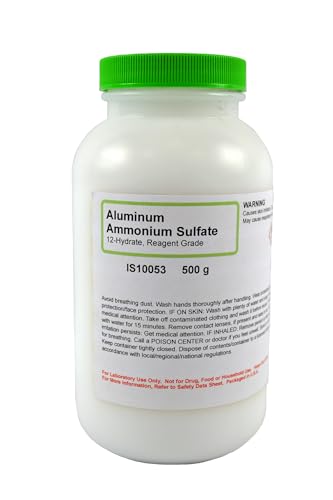
Innovating Science – Aluminum Ammonium Sulfate 12-Hydrate 500 g – Reagent Grade Ammonium Alum for Laboratory Research, Chemical Education, and Industrial Applications
REAGENT GRADE ALUMINUM AMMONIUM SULFATE || Ammonium alum (12-hydrate) in a 500 g quantity for laboratory, educational, and…
As an affiliate, we earn on qualifying purchases.
As an affiliate, we earn on qualifying purchases.

Dr. Tim S Aquatics 022181 Ammonium Chloride Aquarium Treatment
Designed To Achieve Desired Levels In Aquarium Water
As an affiliate, we earn on qualifying purchases.
As an affiliate, we earn on qualifying purchases.