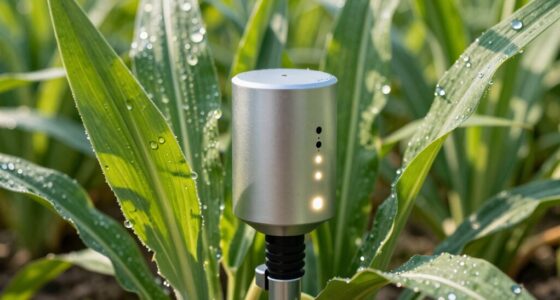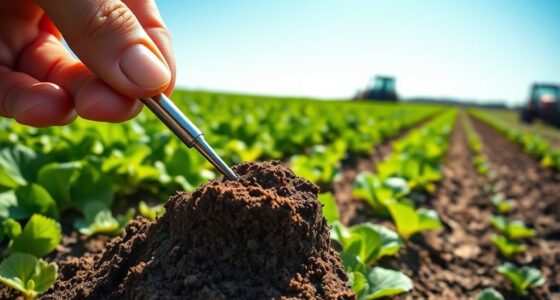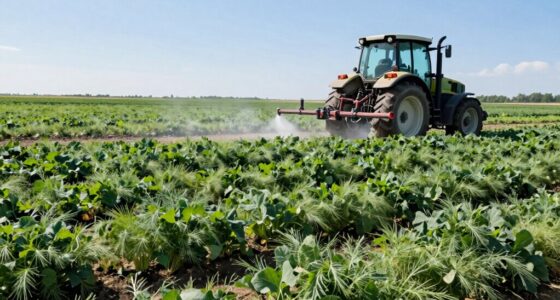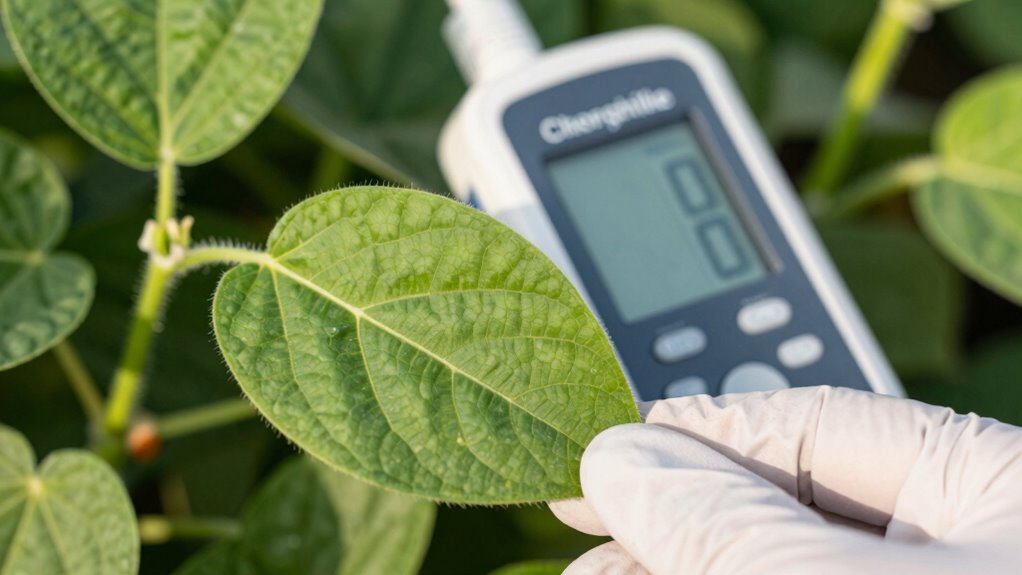

Chlorophyll meters help you make smarter nitrogen decisions by providing real-time, accurate measurements of your crop’s leaf health. These tools give instant feedback on chlorophyll content, indicating nitrogen levels precisely when you need it most. With this data, you can fine-tune fertilizer applications, avoid over- or under-application, and improve crop yields sustainably. Keep exploring how integrating these tools can transform your nitrogen management practices for better results.
Key Takeaways
- Provide real-time, non-destructive measurements of leaf chlorophyll, indicating crop nitrogen status immediately.
- Enable data-driven nitrogen management, reducing over-application and environmental impact.
- Integrate plant health data with soil analysis for targeted, zone-specific fertilization.
- Detect nutrient deficiencies early, allowing timely corrective actions to optimize crop health.
- Support continuous monitoring to refine fertilization timing and improve overall nutrient efficiency.
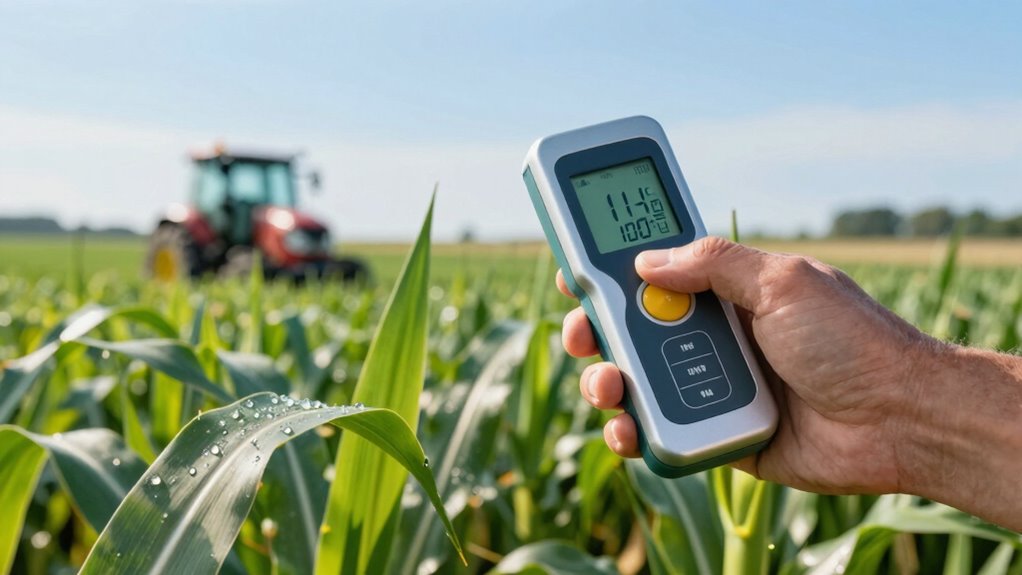
Using chlorophyll meters can substantially improve your nitrogen management decisions by providing real-time, accurate assessments of crop health. These devices give you quick, non-destructive measurements of leaf chlorophyll content, which directly correlates with the plant’s nitrogen status. When you monitor plant health through chlorophyll levels, you gain a clear picture of whether your crops are receiving enough nitrogen or if adjustments are needed. This immediate feedback helps you avoid over-application, reducing waste and environmental impact, while ensuring your plants have the nutrients they need to thrive.
By relying on chlorophyll meters, you can make more informed decisions about nitrogen fertilization based on actual plant conditions rather than estimates or generic schedules. Traditional soil analysis, while valuable, often involves sampling and lab testing that can take days, delaying critical management actions. In contrast, chlorophyll meters provide instant results, enabling you to respond promptly. This real-time data allows you to fine-tune your nitrogen inputs, applying fertilizer precisely when and where it’s needed. As a result, you optimize crop productivity and minimize excess runoff, which benefits both your bottom line and the environment.
The key advantage of using these meters is that they focus on plant health directly. Healthy, nitrogen-sufficient plants typically display higher chlorophyll content, while deficiencies manifest as lower readings. Regular measurements across your fields can help you identify areas that need targeted fertilization, promoting uniform growth and maximizing yield potential. Additionally, integrating chlorophyll meter data with soil analysis results gives you a holistic understanding of your nutrient dynamics. Soil tests reveal nutrient availability and soil conditions, while plant-based readings show how those nutrients translate into actual crop health. Combining these insights enables you to develop smarter, more sustainable nitrogen management plans.
Furthermore, employing chlorophyll meters aligns with precision agriculture practices. Instead of blanket application, you can tailor your nitrogen inputs to specific zones within your fields. This approach not only enhances crop performance but also conserves resources and reduces costs. Over time, tracking chlorophyll levels helps you refine your fertilization strategies, making them more efficient and environmentally friendly. It’s a proactive way to manage crop health, ensuring that your plants receive the right amount of nitrogen at the right time, based on real, observable data. Incorporating digital tools like chlorophyll meters can further enhance your ability to implement precision strategies.
In addition, utilizing chlorophyll meters can provide valuable insights into the effectiveness of your fertilization programs, helping you optimize input timing and amount. Regular monitoring can also alert you to early signs of nutrient deficiencies before visible symptoms appear, enabling even quicker corrective actions. Understanding plant health and its relationship to nutrient management is crucial for sustainable farming. Overall, chlorophyll meters empower you to make smarter nitrogen decisions by linking plant health directly to your management practices. They bridge the gap between soil analysis and crop response, providing actionable insights that lead to healthier plants, higher yields, and more sustainable farming.
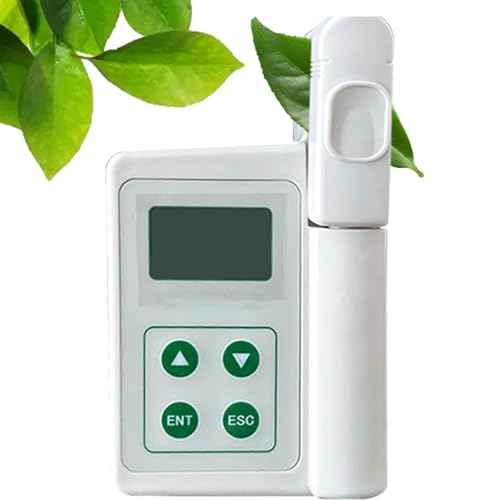
XygZythror Hand-Held Chlorophyll Analyzer, Portable Chlorophyll Meter, Handheld Chlorophyll Analyzer, Accurate Spad Measurement, for Farmers,Gardeners,Scientists
ENHANCE CROP YIELDS AND QUALITY: Chlorophyll Meter fine-tune nutrient management based on accurate data for increased crop productivity….
As an affiliate, we earn on qualifying purchases.
As an affiliate, we earn on qualifying purchases.
Frequently Asked Questions
How Accurate Are Chlorophyll Meters Across Different Crop Types?
Chlorophyll meters are generally accurate across different crop types, but crop variability can affect their precision. You might face calibration challenges, as each crop species has unique leaf characteristics influencing readings. To guarantee accuracy, you should calibrate your meter specifically for each crop type and consider factors like leaf age and health. Regular calibration and understanding crop variability help you make smarter nitrogen decisions effectively.
Can Chlorophyll Meters Replace Traditional Soil Testing Methods?
Chlorophyll meters can’t fully replace traditional soil testing because they primarily assess crop health, not soil health, and may overlook variability in soil nutrients. While they offer rapid, real-time insights, they don’t provide detailed data on soil composition or pH, which are essential for managing crop variability. To make well-informed nitrogen decisions, combining chlorophyll meter readings with thorough soil tests gives you a clearer, more complete picture.
What Are the Cost Considerations for Implementing Chlorophyll Meters?
When considering chlorophyll meters, you should conduct a cost analysis to weigh initial investment against long-term savings. The equipment price varies, so compare models to find one that fits your budget. Keep in mind, equipment maintenance costs can add up, so factor these into your decision. While upfront costs are higher than traditional methods, improved nitrogen management can lead to significant savings and better crop yields over time.
How Often Should Chlorophyll Readings Be Taken During the Growing Season?
You should take chlorophyll readings regularly throughout the growing season, ideally every 1 to 2 weeks, to guarantee accurate sampling frequency. Focus on key growth stages, such as early vegetative, tillering, and heading, for growth stage analysis. Consistent monitoring helps you enhance nitrogen application, prevent deficiencies, and improve crop health. Adjust the frequency based on weather conditions and crop response to maintain ideal nutrient levels.
Do Environmental Conditions Affect Chlorophyll Meter Readings?
Did you know that environmental conditions can cause up to a 20% variation in chlorophyll meter readings? Light variability greatly affects accuracy, so you need to account for changes in sunlight and shading. Regular sensor calibration is crucial, especially under fluctuating environmental conditions. By adjusting for these factors, you guarantee precise readings, helping you make smarter, more informed nitrogen decisions for healthier crops.

Chlorophyll Meter, Nitrogen Meter – Plant Nutrition Tester with 0.0-99.9 SPAD Measurement, Leaf Temperature & Humidity, Portable, Data Storage & PC Software for Agriculture and Research
Maximize Fertilization Efficiency: Optimize fertilization strategies with precise chlorophyll (0.0-99.9 SPAD) and nitrogen content (0.0-99.9 mg/g) measurements. Streamline…
As an affiliate, we earn on qualifying purchases.
As an affiliate, we earn on qualifying purchases.
Conclusion
By using chlorophyll meters, you hold the key to revealing your crop’s hidden potential, like a lighthouse guiding you safely through the fog of nitrogen management. These tools turn complex data into a clear map, helping you make smarter, more precise decisions. With each reading, you’re tuning into your plants’ secret signals, nurturing them just right. In the garden of growth, chlorophyll meters are your trusted compass, steering you toward bountiful, healthy harvests.

Chlorophyll Content Meter 2000mAh, Non-Destructive Plant Leaf Tester, Portable Digital SPAD Meter for Agricultural Crop Nitrogen Management, Soil Plant Analysis Tool
【Wide Range & Precise Measurement】Features a broad measurement range of 0.0-100 SPAD with a high accuracy of 1.0…
As an affiliate, we earn on qualifying purchases.
As an affiliate, we earn on qualifying purchases.

DNEPEI Professional Chlorophyll Meter for Precision Farming, Portable SPAD & Nitrogen Analyzer with Leaf Temperature/Humidity Sensors, 2000mAh Battery & USB Data Export for Environmental Research A
【PLANT CHLOROPHYLL METER】The Handheld Chlorophyll Tester bids farewell to traditional testing methods. You can test live plants without…
As an affiliate, we earn on qualifying purchases.
As an affiliate, we earn on qualifying purchases.