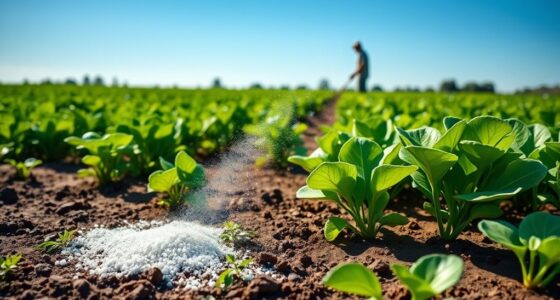
To improve nitrogen management in rice and paddy fields, rely on organic amendments like compost or manure to supply slow-release nutrients and improve soil health. Combine this with precise water control, such as maintaining flooded conditions or implementing alternate wetting and drying techniques, to reduce nitrogen losses. Proper water and organic practices work together to boost yield, enhance nutrient efficiency, and protect the environment. Explore further to discover more ways to optimize your rice cultivation.
Key Takeaways
- Use organic amendments like compost and manure to supply slow-release nitrogen and improve soil health.
- Maintain optimal water levels, such as flooding or alternate wetting and drying, to reduce nitrogen leaching and enhance availability.
- Incorporate organic amendments before flooding to retain nitrogen and minimize losses during water management practices.
- Monitor soil nitrogen levels regularly to adjust fertilizer application and prevent over- or under-fertilization.
- Combine water management with organic amendments to promote efficient nitrogen use and sustainable rice production.

Effective nitrogen management is vital for optimizing rice and paddy field productivity while minimizing environmental impacts. When you focus on integrating organic amendments, you enhance soil health and improve nitrogen use efficiency. Organic amendments, such as compost, manure, or cover crops, supply a slow-release source of nitrogen that feeds your rice plants over time. This approach reduces the risk of nitrogen leaching into water bodies, which can cause pollution, and helps maintain a balanced soil ecosystem. By incorporating these amendments into your routine, you can build a more resilient soil structure, promote microbial activity, and guarantee your rice plants get a steady supply of nutrients throughout the growing season.
Integrate organic amendments to improve soil health and ensure steady rice nutrition.
Water management plays an indispensable role in nitrogen efficiency. Proper water control not only supports healthy rice growth but also influences nitrogen availability and loss. Maintaining ideal water levels in your paddy fields helps prevent nitrogen leaching and denitrification processes that can deplete soil nitrogen and release greenhouse gases. In flooded conditions, nitrification slows down, and nitrogen remains more accessible to plants. However, managing water levels carefully—such as implementing alternate wetting and drying techniques—can optimize nitrogen uptake while reducing water use and environmental pollution. When you monitor and adjust water levels precisely, you create a more controlled environment that minimizes nitrogen runoff and enhances the efficiency of your nitrogen fertilizer applications.
Combining organic amendments with strategic water management creates a sustainable approach to nitrogen use. For example, applying compost before flooding helps retain nitrogen in the soil, while proper water control ensures that nitrogen stays available to your rice plants rather than being lost through runoff or gaseous emissions. Additionally, integrating organic amendments can improve soil moisture retention, which supports better water management and nutrient uptake. As you adopt these practices, you’ll notice healthier plants, increased yields, and a reduction in the need for synthetic fertilizers, which can be costly and environmentally damaging.
Ultimately, your goal should be to develop a balanced system that leverages organic amendments and water management to maximize nitrogen use efficiency. This approach not only boosts rice productivity but also reduces environmental risks like water pollution and greenhouse gas emissions. By paying close attention to soil health and water levels, you create a more sustainable cultivation system that benefits your crop, your wallet, and the environment. With consistent monitoring and adjustments, you can achieve ideal nitrogen management that supports long-term rice field productivity and ecological stability.
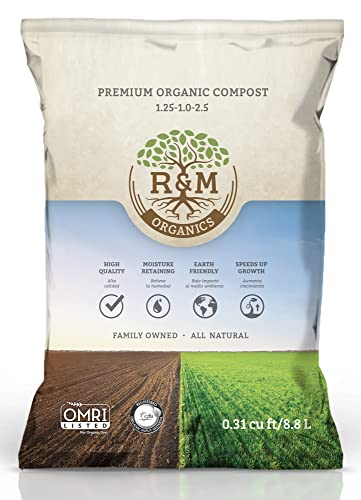
R&M Organics Premium Organic Compost; for Vegetables, Flowers, Plants, and Lawns – All Purpose Fertilizer – Moisture Retention – Low Odor – 10-Pound Bag
All-purpose fertilizer. Derived from 100% dairy cow manure, our compost helps improve your soil by bringing needed nutrients…
As an affiliate, we earn on qualifying purchases.
As an affiliate, we earn on qualifying purchases.
Frequently Asked Questions
How Does Climate Change Affect Nitrogen Management in Rice Cultivation?
Climate change impacts your nitrogen management by altering temperature and rainfall patterns, which disrupt nitrogen cycling in rice fields. You need to adopt climate adaptation strategies to optimize nitrogen use and reduce losses. Increased droughts or floods can lead to inefficient nitrogen uptake, so adjusting fertilization timing and methods becomes vital. Staying flexible and informed helps you maintain sustainable rice production despite changing climate conditions.
What Are the Economic Benefits of Optimized Nitrogen Use?
You’ll see significant cost savings and yield enhancement when you optimize nitrogen use. Efficient nitrogen management reduces fertilizer expenses, cutting your costs, while ensuring your rice plants get the right nutrients for ideal growth. This balance prevents waste and environmental harm, leading to healthier crops and higher yields. By fine-tuning nitrogen application, you maximize profits and sustainability, making your rice cultivation more economically viable and eco-friendly.
How Do Different Rice Varieties Respond to Nitrogen Application?
You’ll notice that different rice varieties respond uniquely to nitrogen application due to genotype variability. Some varieties efficiently uptake nutrients, leading to higher yields with lower nitrogen inputs, while others may require more fertilizer for ideal growth. By selecting varieties with better nutrient uptake capabilities, you can improve nitrogen use efficiency, reduce costs, and minimize environmental impact. Understanding these responses helps you tailor nitrogen management strategies for better productivity.
Can Organic Amendments Replace Synthetic Nitrogen Fertilizers Effectively?
Think of organic amendments as a slow, steady stream compared to synthetic fertilizers’ quick surge. They can replace synthetic fertilizers effectively when used properly, enriching soil over time and improving sustainability. For example, incorporating compost boosts soil health and yields, but it might not provide nitrogen as rapidly as synthetic options. You’ll need a well-planned strategy to balance organic amendments’ benefits with crop needs for ideal results.
What Are the Best Practices for Reducing Nitrogen Runoff?
To reduce nitrogen runoff, you should manage drainage carefully and optimize fertilizer timing. Implement controlled drainage systems to prevent excess water from carrying nitrogen away. Apply fertilizers when plants most need it, avoiding over-application. By synchronizing fertilizer application with crop growth stages and managing drainage efficiently, you minimize runoff, protect water quality, and enhance nitrogen use efficiency. These practices guarantee you use fertilizers responsibly and sustainably.

HENRUN 6 Inch Manganese Steel Weeding Disc for Paddy Efficient Water Land Weeding Control Durability Agricultural Tool High Efficiency Weeding Cutter
Engineered with high grade manganese steel construction , this gardening tool features properties and sharpened that maintain cutting…
As an affiliate, we earn on qualifying purchases.
As an affiliate, we earn on qualifying purchases.
Conclusion
By mastering nitrogen management in rice and paddy fields, you hold the power to transform your crops into the most bountiful, unstoppable green giants the world has ever seen. With every precise application, you’re not just growing rice—you’re creating a lush, unstoppable sea of golden grains that could outfeed entire nations! So, take charge, optimize your practices, and watch your fields turn into unstoppable agricultural marvels that could change the course of food history!

10-10-10 Plant Fertilizer Slow Release – 10 10 10 All Purpose Granular Garden Fertilizer for Vegetables, Tomato, Arborvitae, Shrubs, Rose, Flowers, Fruit, Fig Trees (1/2 Quart)
🌿 Balanced 10-10-10 Granular Fertilizer for Outdoor & Indoor Plants: All-purpose plant food with 10% Nitrogen, 10% Phosphorus,…
As an affiliate, we earn on qualifying purchases.
As an affiliate, we earn on qualifying purchases.

Kereinpo Grain Moisture Meter Precise & Fast Measurements Grain Moisture Tester with Probe, Moisture Meter Probe for Mazie, Wheat, Corn, Paddy and Rice
【Precision Measurement】Kereinpo grain moisture tester is made of superconducting carbon steel nickel-plated material with excellent bending resistance, ensuring…
As an affiliate, we earn on qualifying purchases.
As an affiliate, we earn on qualifying purchases.