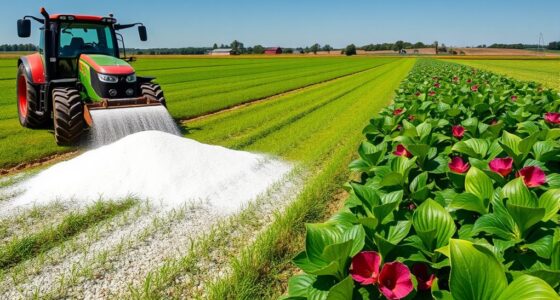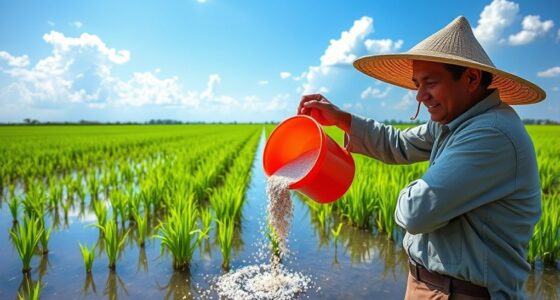

Choosing between urea and ammonium nitrate depends on your crop needs, soil pH, and environmental concerns. Urea is cost-effective and supplies nitrogen steadily, especially in neutral to alkaline soils, but it requires microbial conversion and can emit greenhouse gases. Ammonium nitrate offers quick nitrogen availability and is useful for fast growth but needs careful handling and may leach in sandy soils. For tailored advice on selecting the best fertilizer, understanding these differences will help you optimize your crop’s health.
Key Takeaways
- Urea offers a cost-effective, steady nitrogen release ideal for neutral to alkaline soils with proper incorporation.
- Ammonium nitrate provides immediate nitrogen availability, suitable for quick crop response or deficiency correction.
- Soil pH impacts conversion efficiency: acidic soils slow urea breakdown, increasing nitrogen loss; alkaline soils favor it.
- Ammonium nitrate’s rapid absorption supports fast-growing crops but poses safety and environmental risks if mismanaged.
- Consider crop needs, soil conditions, and environmental regulations when choosing between urea and ammonium nitrate.
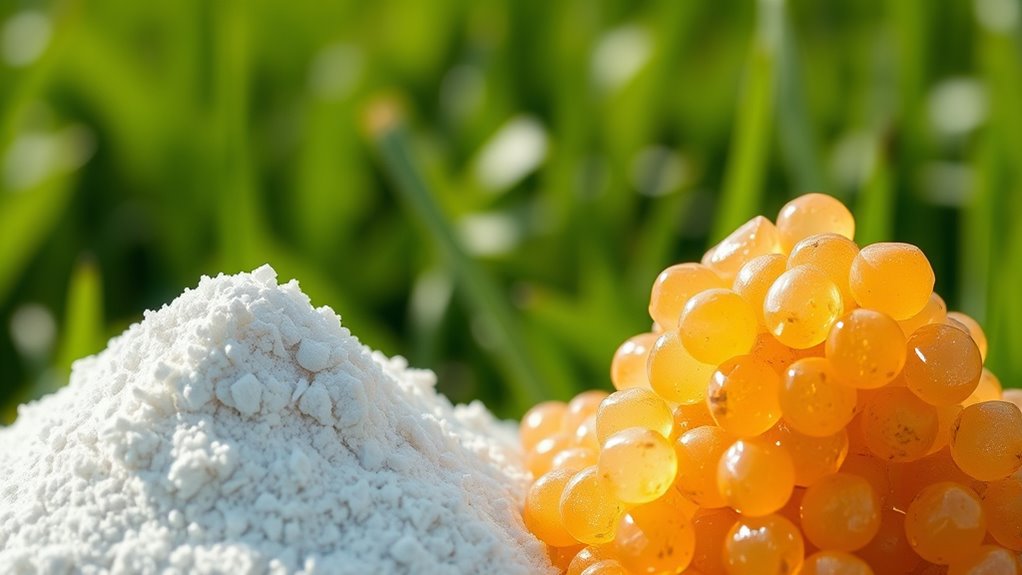
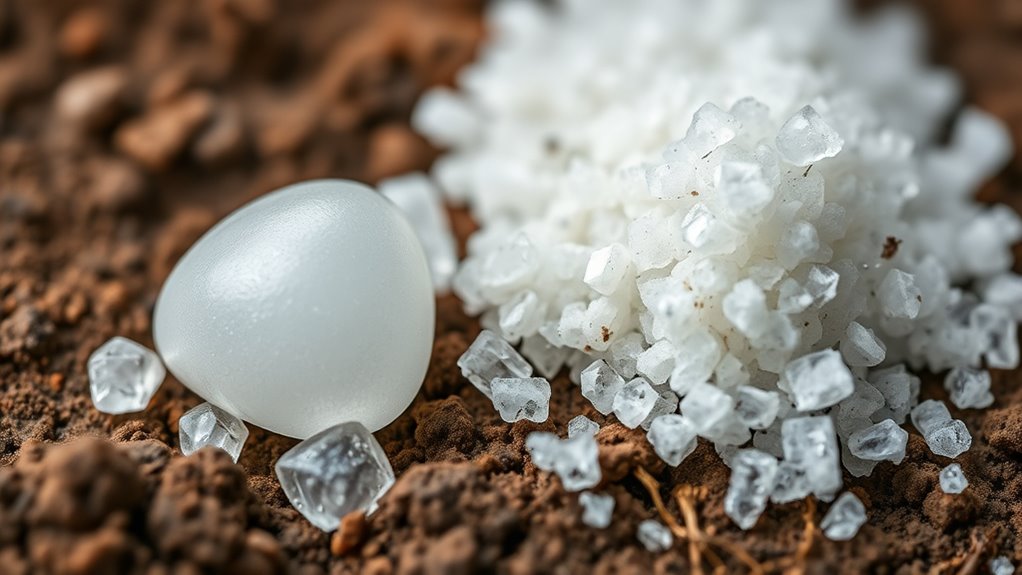
When choosing a nitrogen fertilizer, understanding the differences between urea and ammonium nitrate is essential. Both are popular options for boosting crop growth, but they behave differently in the soil, affecting not just your plants but also the environment. Urea, containing about 46% nitrogen, is a solid, widely used fertilizer that’s cost-effective and easy to store. When applied, it needs to be converted by soil microbes into ammonium and then nitrate, the forms plants can absorb. This conversion process is influenced heavily by soil pH, as it determines microbial activity and nitrogen availability. In acidic soils, this process might be slower, increasing the risk of nitrogen loss through volatilization, which can harm the environment by releasing ammonia gas into the atmosphere. Conversely, in alkaline soils, urea tends to convert efficiently, providing steady nitrogen supply.
Ammonium nitrate, on the other hand, is a liquid or granular fertilizer that contains both ammonium and nitrate forms of nitrogen. Because it supplies nitrogen in readily available forms, plants absorb it quickly, making it ideal for rapid growth or correcting deficiencies. However, its environmental impact is a concern. It’s more prone to leaching, especially in sandy soils, where nitrate can drain into groundwater, causing pollution. Its use is also subject to regulations in many regions due to safety concerns, as it can be misused as an explosive. When considering soil pH, ammonium nitrate interacts differently than urea, as it tends to acidify the soil over time, which might require pH management to prevent nutrient imbalances. Additionally, proper application timing and methods are crucial to minimize environmental risks associated with both fertilizers.
The environmental impact of these fertilizers can’t be overlooked. Urea can contribute to greenhouse gas emissions if not managed properly, especially through nitrous oxide release during microbial conversion. If you’re applying urea on a large scale, you should consider strategies like incorporating it into the soil or applying it at optimal times to minimize emissions. Ammonium nitrate, while effective, poses risks of pollution and safety concerns, so proper handling and timing are vital. Ultimately, your choice hinges on factors like soil pH, environmental considerations, crop needs, and local regulations. Both fertilizers have their advantages and drawbacks, but understanding their behavior in soil helps you make informed decisions that support healthy crops while protecting the environment. Being aware of fertilizer application techniques can further optimize results and reduce negative impacts.

CountryMax Urea Fertilizer 46-0-0, 50LB Bag – High Nitrogen Lawn Fertilizer for Fast Green-Up – Plant Food for Lawns, Gardens, Crops, Trees & Shrubs – Professional Granular Plant Fertilizer
[HIGH NITROGEN 46-0-0 FORMULA]: Professional-grade urea fertilizer delivers 46% nitrogen to help promote rapid plant growth, lush foliage,…
As an affiliate, we earn on qualifying purchases.
As an affiliate, we earn on qualifying purchases.
Frequently Asked Questions
How Does Soil Type Affect Fertilizer Choice?
Soil type greatly influences your fertilizer choice because soil pH affects nutrient availability, and microbial activity impacts nitrogen transformation. In acidic soils, ammonium nitrate might be better since microbes may convert urea into nitrogen more slowly. Conversely, in neutral or alkaline soils, urea works well as microbes efficiently break it down. Understanding your soil’s pH and microbial activity helps you select the most effective fertilizer for your crop’s needs.
Are There Environmental Concerns With Either Fertilizer?
Yes, both fertilizers pose environmental concerns. Urea can increase nitrogen runoff if not properly managed, leading to water pollution. Ammonium nitrate releases greenhouse gases like nitrous oxide during application, contributing to climate change. To minimize these impacts, apply fertilizers carefully, follow recommended rates, and consider soil health practices. Proper management helps protect waterways and reduces greenhouse gas emissions, ensuring sustainable crop production.
What Are Cost Differences Between Urea and Ammonium Nitrate?
You’ll find that urea generally has a lower market pricing compared to ammonium nitrate, making it more cost-effective upfront. In a cost analysis, urea’s production and transportation costs are often less, but keep in mind that application costs might vary depending on your crop needs. Ammonium nitrate can be more expensive but may offer quicker nitrogen availability, so weigh these factors when evaluating your overall fertilizer budget.
Which Fertilizer Is Better for Organic Farming?
For organic farming, you should select natural soil amendments over synthetic fertilizers like urea or ammonium nitrate. Organic certification standards prohibit these chemicals, favoring compost, manure, or other organic-approved inputs. These options improve soil health and support sustainable practices. Using organic-approved amendments guarantees you meet certification requirements and promote eco-friendly crop growth, making them the better choice for organic farming.
How Do Climate Conditions Influence Fertilizer Effectiveness?
Climate variability directly impacts fertilizer effectiveness, so you need to contemplate regional adaptations. In hot, dry conditions, fertilizers may volatilize or leach more quickly, reducing efficiency. In contrast, cooler, moist climates help fertilizers stay active longer. To optimize results, adjust your application timing and type based on your area’s climate conditions, ensuring your crop gets the nutrients it needs without wastage or environmental harm.

Ammonium Sulfate 21-0-0 Fertilizer, High Nitrogen for Rapid Plant Growth & Deep Green Color, Ideal Soil Acidifier to Lower pH in Alkaline Soil, 5 lb
NITROGEN NUTRIENT PLANT FOOD: Unlike other garden & lawn fertilizers, our ammonia sulfate fertilizer has a 21-0-0 ratio…
As an affiliate, we earn on qualifying purchases.
As an affiliate, we earn on qualifying purchases.
Conclusion
Choosing between urea and ammonium nitrate is like selecting the right brush for your canvas—you want the one that brings your crop’s full potential to life. Urea spreads a gentle, steady rain of nitrogen, while ammonium nitrate bursts like a quick shower, fueling rapid growth. Consider your crop’s needs and your farming style. With the right choice, you’ll paint a vibrant, lush landscape of healthy, thriving plants—your fields’ masterpiece in the making.

Rapitest Soil Test Kit for Gardens, Vegetables, Flowers and Lawns. USA designed and assembled soil tester completely, quickly and accurately measures/analyzes soil pH acidity and garden nutrients.
Quick, at home results for Soil pH, Nitrogen, Phosphorous and Potash Innovative and inexpensive soil test kit features…
As an affiliate, we earn on qualifying purchases.
As an affiliate, we earn on qualifying purchases.

High Nitrogen Fertilizer for Vegetables – Liquid Plant Food for Vigorous Leafy Growth, Strong Stems & Higher Garden Productivity, 8 oz
Optimized for leafy vegetables and heavy-feeding garden crops
As an affiliate, we earn on qualifying purchases.
As an affiliate, we earn on qualifying purchases.