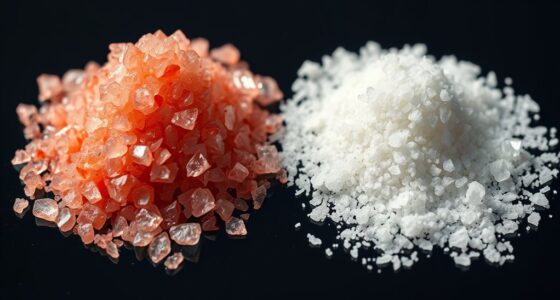
Using potassium fertilizers in high-yield crops like corn, wheat, and soybeans is essential for boosting productivity and soil health. Potassium enhances water regulation, plant enzyme activation, and soil structure, leading to stronger crops with higher yields. It also improves drought tolerance in corn, stem strength in wheat, and seed development in soybeans. Proper application ensures your crops reach their full potential, and exploring further can help you maximize your fertilizer strategies for better harvests.
Key Takeaways
- Proper potassium fertilization enhances growth, yield, and crop quality in high-yield crops like corn, wheat, and soybeans.
- Soil testing guides optimal potassium application, preventing deficiencies and reducing unnecessary fertilizer costs.
- Potassium improves drought tolerance and nutrient translocation, supporting robust development in corn, wheat, and soybeans.
- Balanced potassium use fosters soil health, microbial activity, and sustainable nutrient cycling for long-term crop productivity.
- Strategic potassium management maximizes economic returns by boosting yields and ensuring environmental sustainability.
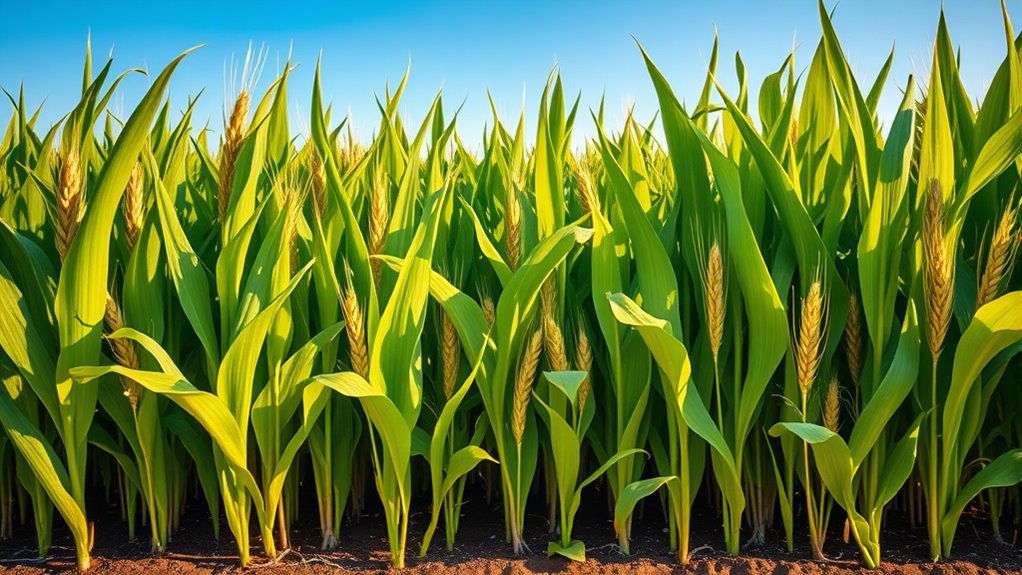
Have you ever wondered why potassium is essential for maximizing crop yields? It plays a crucial role in plant growth, influencing everything from water regulation to enzyme activation. When you pay attention to potassium fertilization, you’re not just boosting your crops’ productivity—you’re also supporting overall soil health. Healthy soils with adequate potassium levels foster better nutrient cycling, improve soil structure, and encourage beneficial microbial activity. This, in turn, creates a sustainable environment for high-yield crops like corn, wheat, and soybeans. If you neglect potassium, you risk nutrient imbalances that can lead to stunted growth, increased susceptibility to diseases, and lower harvests. Ensuring proper potassium levels is a strategic move that benefits both your crop performance and the long-term vitality of your soil.
Proper potassium levels support healthy soil, boost crop yields, and prevent nutrient imbalances.
From an economic standpoint, understanding fertilizer economics is vital. Potassium fertilizers, such as potash, can be a significant expense, but they often pay off through increased yields and crop quality. When you apply potassium efficiently, you reduce waste and optimize input costs, making each dollar spent more effective. Proper fertilization also minimizes the need for excessive applications, which can be both costly and environmentally damaging. By calibrating your potassium use based on soil tests and crop requirements, you’re making smart decisions that maximize return on investment. This approach not only enhances profitability but also aligns with sustainable farming practices, preserving resources for future planting seasons.
For high-yield crops like corn, wheat, and soybeans, potassium influences key physiological processes. In corn, adequate potassium improves drought tolerance and enhances kernel development, leading to higher grain weights. Wheat benefits from balanced potassium levels through better stem strength and nutrient translocation, which can increase both yield and grain quality. Soybeans, being legumes, rely on potassium for nitrogen fixation and seed development. Proper potassium application ensures these plants can produce abundant, nutrient-rich grains. In each case, the right amount of potassium helps crops reach their full genetic potential, resulting in more robust plants and higher harvests.
Ultimately, integrating potassium fertilization into your crop management plan isn’t just about immediate gains. It’s about building resilient, healthy soils that sustain high productivity over time. By understanding the soil health benefits and considering fertilizer economics, you’re making informed decisions that enhance both your harvest and the environment. When used strategically, potassium fertilizer becomes a vital tool in your quest for high-yield, high-quality crops, ensuring your fields remain productive and profitable for seasons to come.

Muriate of Potash 0-0-60 Fertilizer, High Potassium Fertilizer for Plants, Ideal Plant Food & Potash Fertilizer for Plants – Boosts Growth of Turf, Shrubs, Trees, Flowers, Fruits & Vegetables, 5 lb
PREMIUM POTASH FERTILIZER: Derived from premium muriate of potash, our crystal-form potassium plant fertilizer is concentrated & helps…
As an affiliate, we earn on qualifying purchases.
As an affiliate, we earn on qualifying purchases.
Frequently Asked Questions
How Does Potassium Affect Crop Resistance to Pests and Diseases?
Potassium boosts your crop’s pest resistance and disease suppression by strengthening cell walls, making it harder for pests and pathogens to penetrate. When you guarantee adequate potassium levels, your plants develop a more robust immune response, reducing the likelihood of infestations and infections. This nutrient plays an essential role in maintaining overall plant health, so applying the right amount helps your crops stay resilient against common pests and diseases.
What Are the Environmental Impacts of Excessive Potassium Fertilizer Use?
You might worry about environmental harm, but excessive potassium fertilizer can cause serious issues like potassium runoff and soil contamination. When you overapply, nutrients wash into water bodies, harming aquatic ecosystems and reducing water quality. This runoff can also lead to imbalanced soil health, making it harder for plants to absorb nutrients naturally. Being mindful of proper potassium use helps protect the environment and sustain healthy, productive crops.
How Do Soil Types Influence Potassium Fertilizer Effectiveness?
Soil types greatly influence potassium fertilizer effectiveness. If your soil has high clay content, potassium may bind tightly, making it less available to plants. Additionally, soil pH affects potassium uptake; acidic soils can reduce nutrient availability, while neutral to slightly alkaline soils improve absorption. To optimize results, you should test your soil’s pH and texture, then adjust your fertilization strategy accordingly for better potassium use.
What Are the Latest Advancements in Potassium Fertilizer Formulations?
You’ll find that recent advancements in potassium fertilizer formulations focus on advanced coating technologies and slow release formulations. These innovations enhance nutrient efficiency, reduce environmental impact, and extend the availability of potassium to crops. By employing advanced coatings, fertilizers release nutrients gradually, matching plant uptake rates. Slow release formulations further optimize potassium delivery, ensuring sustained availability throughout the growing season, ultimately boosting crop yields and improving fertilizer performance.
How Does Potassium Interact With Other Nutrients in High-Yield Crops?
You’ll find that potassium interacts with other nutrients through nutrient synergy, enhancing overall plant health and yield. It works closely with nitrogen and phosphorus, improving nutrient uptake and efficiency. Maintaining a proper fertilizer balance guarantees these interactions optimize crop growth. When you manage potassium levels carefully, you support stronger root development, better stress resistance, and higher yields, making your fertilization strategy more effective and sustainable.
Muriate of Potash 0-0-60 Fertilizer, High Potassium Fertilizer for Plants, Ideal Plant Food & Potash Fertilizer for Plants – Boosts Growth of Turf, Shrubs, Trees, Flowers, Fruits & Vegetables, 5 lb
PREMIUM POTASH FERTILIZER: Derived from premium muriate of potash, our crystal-form potassium plant fertilizer is concentrated & helps…
As an affiliate, we earn on qualifying purchases.
As an affiliate, we earn on qualifying purchases.
Conclusion
By optimizing potassium fertilizer use in crops like corn, wheat, and soybean, you can markedly boost yields and improve crop quality. Proper management ensures your plants get the nutrients they need to thrive. Don’t you want to maximize your harvest potential? Remember, tailored fertilization strategies make all the difference, so stay attentive to your crop’s needs and adjust accordingly. With the right approach, you’ll achieve healthier plants and higher productivity year after year.

Rapitest Soil Test Kit for Gardens, Vegetables, Flowers and Lawns. USA designed and assembled soil tester completely, quickly and accurately measures/analyzes soil pH acidity and garden nutrients.
Quick, at home results for Soil pH, Nitrogen, Phosphorous and Potash Innovative and inexpensive soil test kit features…
As an affiliate, we earn on qualifying purchases.
As an affiliate, we earn on qualifying purchases.

HyR BRIX Slow-Release 16-7-10 Sweet Corn Fertilizer, 5lb Bucket – Corn Food with Calcium & Sulfur – Essential Micronutrients for Big, Uniform Ears & Sweet Flavor
Formulated for All Corn Types: Ideal for sweet corn, ornamental corn, popcorn, and field corn.
As an affiliate, we earn on qualifying purchases.
As an affiliate, we earn on qualifying purchases.