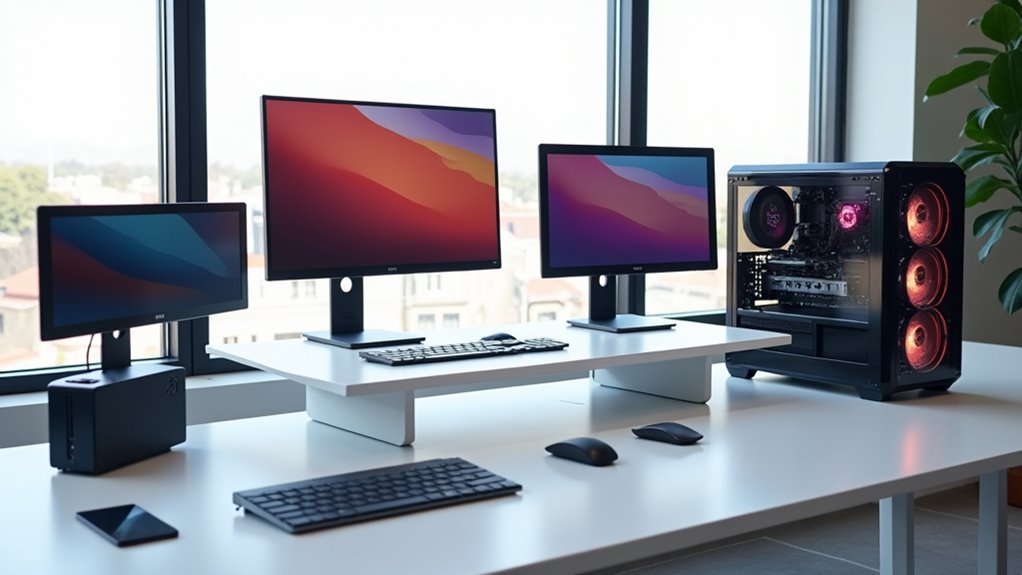

If you’re choosing the best Mac Studio configuration of 2025, I recommend considering your performance needs and budget. For demanding creative work, opt for the M4 Pro with more RAM and storage. If you mainly handle lighter tasks, the base M4 model might suffice. Port options and display support are also key factors. Keep these in mind, and you’ll find the perfect setup. If you continue exploring, you’ll uncover which configuration aligns best with your goals.
Key Takeaways
- Evaluate performance needs: choose M4, M4 Pro, or higher based on your workload demands.
- Consider memory and storage options to optimize multitasking and large file handling.
- Check connectivity ports and display support for seamless peripheral and monitor integration.
- Balance your budget with desired specs, prioritizing future-proofing features like RAM and port availability.
- Match configurations to your specific professional or creative workflows for the best long-term value.

Apple 2024 Mac mini Desktop Computer with M4 chip with 10‑core CPU and 10‑core GPU: Built for Apple Intelligence, 24GB Unified Memory, 512GB SSD Storage, Gigabit Ethernet. Works with iPhone/iPad
SIZE DOWN. POWER UP — The far mightier, way tinier Mac mini desktop computer is five by five...
As an affiliate, we earn on qualifying purchases.
Apple 2024 Mac mini Desktop Computer with M4 Chip

If you’re looking for a compact desktop that combines powerful performance with seamless integration, the Apple 2024 Mac mini with the M4 chip is an ideal choice. Its small five-by-five-inch design fits effortlessly next to your monitor or workspace, proving that size doesn’t limit power. Inside, the 10-core CPU and GPU deliver fast, fluid performance, while 24GB of unified memory and a 512GB SSD handle multitasking and storage with ease. With versatile connectivity options—Thunderbolt, HDMI, USB-C, Ethernet—it’s ready for any task. Plus, it integrates smoothly with your iPhone and iPad, making your digital life more cohesive and efficient.
Best For: individuals seeking a compact yet powerful desktop computer that seamlessly integrates with Apple devices and supports multitasking and creative workflows.
Pros:
- Small, space-saving design that fits easily next to monitors or in tight workspaces.
- Powerful performance with the latest M4 chip, including a 10-core CPU and GPU.
- Excellent ecosystem integration with iPhone and iPad, enhancing productivity and connectivity.
Cons:
- Limited to 512GB SSD storage, which may require external storage for large files.
- No dedicated graphics card, which could impact high-end graphics or gaming performance.
- May be more expensive compared to other compact desktops with similar specs from different brands.
Apple 2024 Mac mini Desktop Computer with M4 chip with 10‑core CPU and 10‑core GPU: Built for Apple Intelligence, 16GB Unified Memory, 256GB SSD Storage, Gigabit Ethernet. Works with iPhone/iPad
SIZE DOWN. POWER UP — The far mightier, way tinier Mac mini desktop computer is five by five...
As an affiliate, we earn on qualifying purchases.
Apple Mac mini Desktop Computer with M4 Chip (256GB SSD, 16GB RAM)
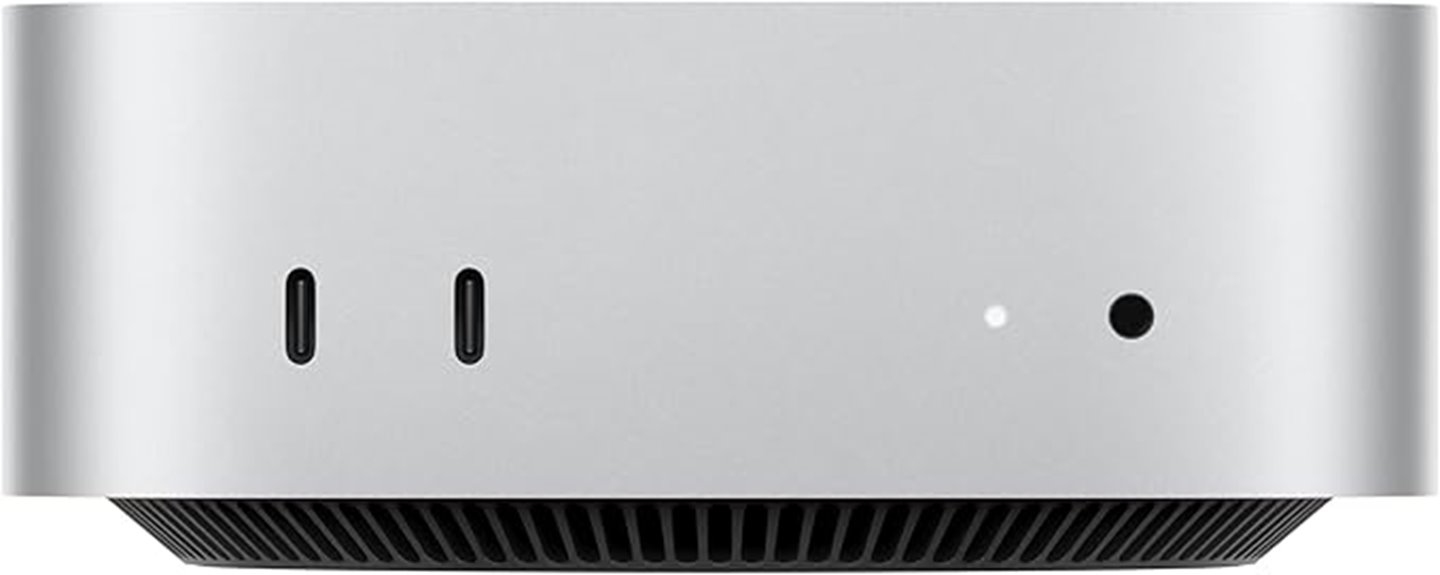
The Apple Mac mini with M4 chip (256GB SSD, 16GB RAM) stands out as an ideal choice for professionals and creatives who need a compact, powerful desktop that seamlessly integrates with their Apple ecosystem. Its small footprint—just 5 inches square and 1.5 pounds—fits easily next to any monitor. Powered by the 10-core M4 chip, it offers excellent performance for demanding tasks, supported by 16GB of unified memory. It supports up to three displays, including 6K, 5K, and 4K options, and features fast connectivity with Thunderbolt 4, HDMI, Wi-Fi 6E, and Bluetooth 5.3. Environmentally friendly and easily upgradeable, it’s a versatile, efficient desktop solution.
Best For: professionals and creatives seeking a compact, high-performance desktop that seamlessly integrates with the Apple ecosystem and supports demanding tasks.
Pros:
- Compact size fits easily next to any monitor, saving space
- Powerful M4 chip with 10-core CPU and GPU delivers excellent performance
- Supports up to three high-resolution displays for versatile workspace setup
Cons:
- Limited to 256GB SSD storage by default, which may require upgrades for heavy data use
- Only two USB-C ports on the front, potentially limiting peripheral connections
- Higher price point compared to some other mini desktop options
Apple 2024 Mac mini Desktop Computer with M4 Pro chip with 12‑core CPU and 16‑core GPU: Built for Apple Intelligence, 24GB Unified Memory, 512GB SSD Storage, Gigabit Ethernet. Works with iPhone/iPad
SIZE DOWN. POWER UP — The far mightier, way tinier Mac mini desktop computer is five by five...
As an affiliate, we earn on qualifying purchases.
Apple 2024 Mac mini Desktop Computer with M4 Pro chip
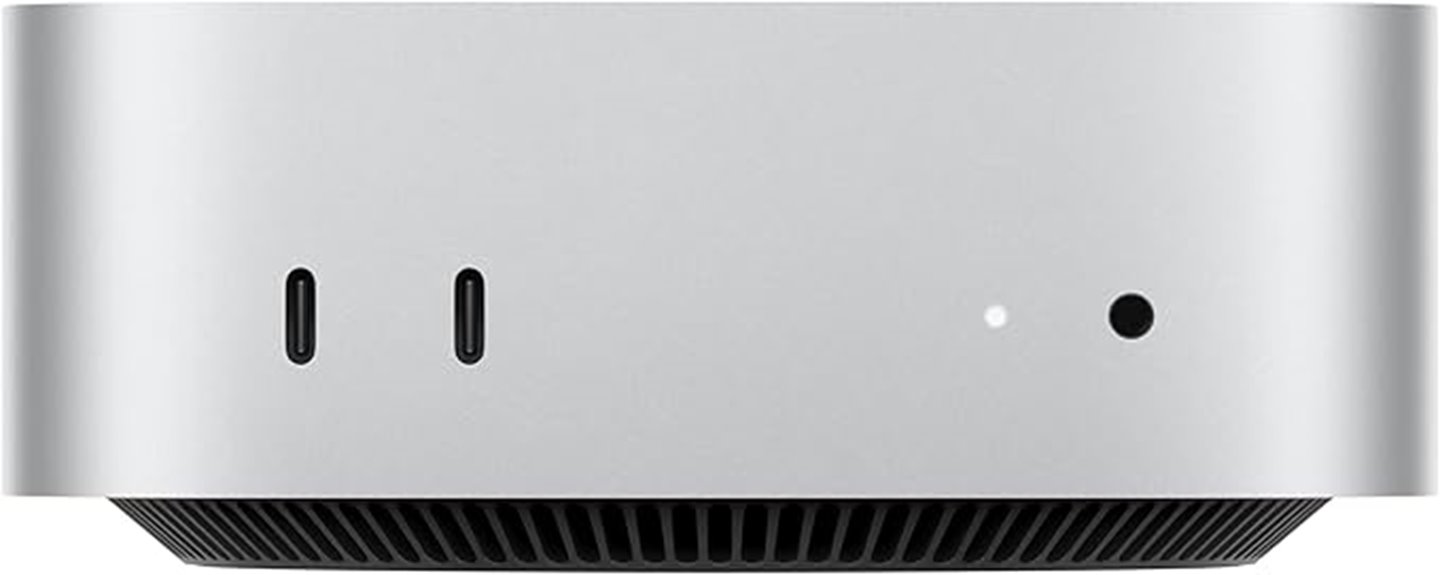
Designed for professionals who need powerful performance in a compact form, the Apple 2024 Mac mini with M4 Pro chip delivers desktop-level capabilities without taking up much space. Its five-by-five-inch aluminum chassis fits seamlessly next to monitors or in tight workspaces. Despite its size, it boasts a 12-core CPU, 16-core GPU, and a 16-core Neural Engine, offering exceptional speed and graphics. With up to 64GB of unified memory and configurable storage up to 8TB, it handles demanding tasks effortlessly. Multiple ports—including Thunderbolt 5, HDMI, and Ethernet—ensure extensive connectivity. Plus, it’s carbon neutral, combining high performance with Apple’s environmental values.
Best For: professionals and creatives who require powerful performance and extensive connectivity in a compact, space-saving desktop.
Pros:
- Compact and sleek design fits easily into tight workspaces
- High-performance hardware with 12-core CPU, 16-core GPU, and up to 64GB of unified memory
- Supports multiple high-resolution displays and versatile connectivity options including Thunderbolt 5 and HDMI
Cons:
- Limited internal upgradeability due to integrated hardware design
- Premium pricing may be a barrier for budget-conscious users
- No built-in optical drive, which may be necessary for some workflows
Apple 2024 Mac mini Desktop Computer with M4 chip with 10‑core CPU and 10‑core GPU: Built for Apple Intelligence, 16GB Unified Memory, 512GB SSD Storage, Gigabit Ethernet. Works with iPhone/iPad
SIZE DOWN. POWER UP — The far mightier, way tinier Mac mini desktop computer is five by five...
As an affiliate, we earn on qualifying purchases.
Apple Mac mini Desktop Computer with M4 Chip (2024)
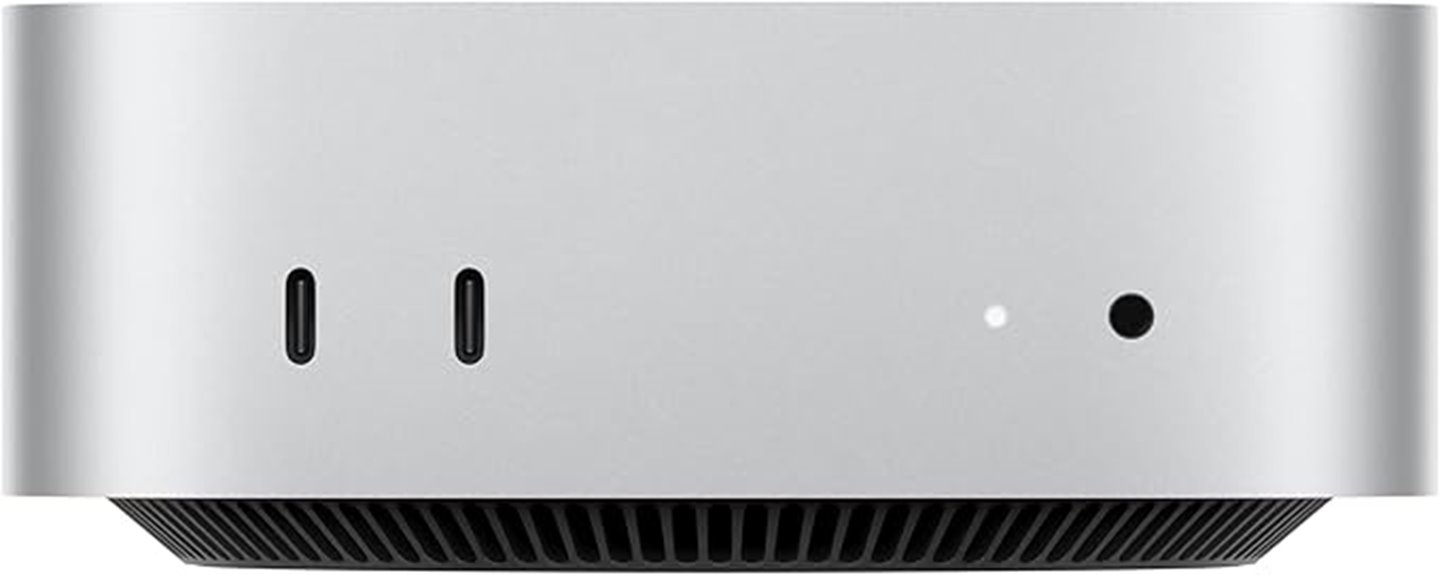
For anyone seeking a compact yet powerful desktop solution, the Apple Mac mini with M4 chip (2024) stands out as an ideal choice. Its small five-by-five-inch design makes it easy to fit next to monitors or in tight spaces, yet it packs impressive performance. Powered by the M4 chip with a 10-core CPU, 10-core GPU, and 16-core Neural Engine, it handles demanding tasks effortlessly. With up to 32GB of unified memory and fast SSD options, it’s versatile for creative work or productivity. Connectivity includes Thunderbolt 4, HDMI, Gigabit Ethernet, and support for multiple high-resolution displays, making it a flexible, all-in-one mini powerhouse.
Best For: professionals, creatives, and small business users seeking a compact, high-performance desktop that seamlessly integrates with the Apple ecosystem.
Pros:
- Compact design fits easily into any workspace or next to monitors
- Powerful M4 chip with 10-core CPU and GPU for demanding tasks
- Supports multiple high-resolution displays and fast data transfer
Cons:
- Limited to 32GB of unified memory, which may be insufficient for extremely intensive workflows
- Only includes one lithium-ion battery, which may require replacement or additional power sources for extended use
- Premium price point may be a consideration for budget-conscious buyers
Factors to Consider When Choosing Mac Studio Configurations
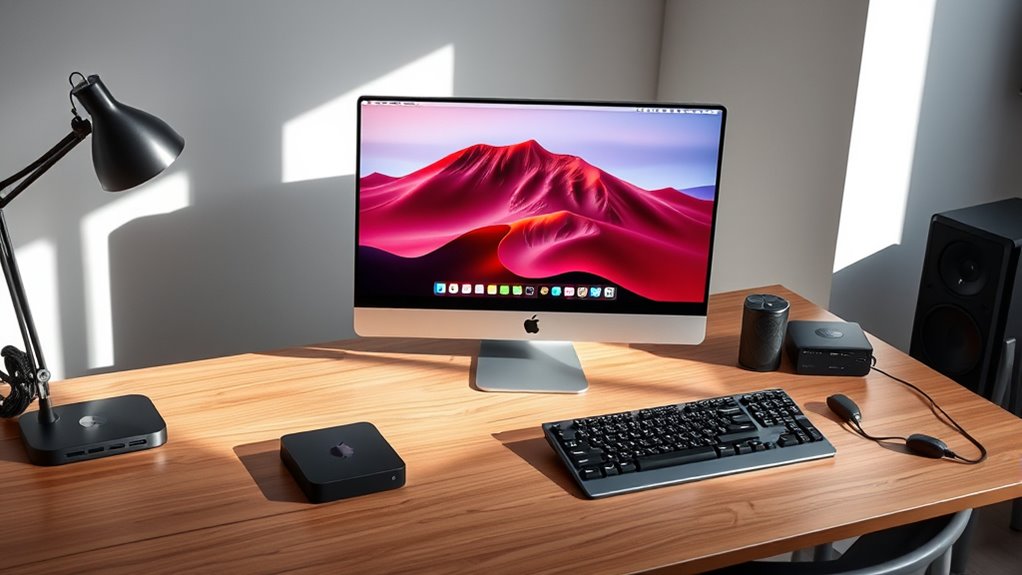
When choosing a Mac Studio configuration, I consider my performance needs, like processing power and memory, to guarantee it handles my tasks smoothly. I also look at storage capacity and connectivity options to match my workflow and peripheral setup. Finally, I evaluate port availability and placement to make sure everything connects easily without clutter.
Performance Needs Assessment
How do you determine the right Mac Studio configuration for your workflow? Start by evaluating the processing power you need. If you handle intensive tasks like video editing, 3D rendering, or software development, choose a model with a multi-core CPU and hardware-accelerated features like ray tracing. Next, evaluate your memory requirements; if you multitask heavily or work with large datasets, opt for higher RAM options such as 24GB or 32GB. Storage capacity is equally important—consider the size of your files and projects to select an SSD that fits your needs. Also, think about your external display setup. If you plan to connect multiple monitors, ensure your configuration supports the number and type of displays you require. This assessment helps match your Mac Studio to your specific performance demands.
Storage Capacity Selection
Choosing the right storage capacity for your Mac Studio depends on your specific workflow and file management habits. If you work with large media files or extensive project libraries, opting for the maximum storage—like 4TB or 8TB—can save you from frequent external drives. Larger SSDs also offer faster read/write speeds, boosting performance for demanding tasks. However, consider your budget, as increasing storage considerably raises the cost. If you prefer future-proofing, higher capacity models make sense, but if you mainly use external drives or cloud storage, a smaller internal SSD might suffice. Think about how much local storage your typical projects require and balance that against your financial limits to choose the most practical option.
Memory Optimization Options
Selecting the right amount of memory for your Mac Studio directly impacts its ability to handle demanding tasks and multitasking. Opting for higher memory configurations, like 24GB or 32GB, can markedly improve performance when working with large files or running multiple applications simultaneously. The amount of unified memory influences how smoothly creative software such as Adobe Creative Cloud or Microsoft 365 operates, especially during intensive tasks. Memory options are usually configurable at purchase and, depending on the model, can be upgraded later, allowing for tailored performance. Proper memory optimization reduces lag and processing delays, making tasks like video editing, 3D rendering, and data analysis more efficient. Balancing memory with storage and processor capabilities helps create a well-rounded, high-performing Mac Studio setup.
Connectivity Requirements
When configuring your Mac Studio, it’s essential to carefully evaluate the connectivity options to guarantee your setup runs smoothly. Make sure your chosen model has the necessary ports like Thunderbolt 4, HDMI, USB-C, and Ethernet to support your peripherals and network needs. Think about how many displays you’ll connect and verify the supported resolutions and connection types for each port. If you handle large data transfers or network-intensive tasks, check if the model offers high-speed Ethernet, such as 10Gb Ethernet. Also, consider wireless standards like Wi-Fi 6E and Bluetooth 5.3 if wireless connectivity matters to you. Finally, confirm there are enough front and back ports for easy access and better cable management within your workspace.
Port Availability & Placement
Ensuring your Mac Studio has the right port availability and placement can make a significant difference in how smoothly your workspace functions. I recommend choosing a configuration with enough Thunderbolt 4 ports to connect multiple high-speed peripherals at once, avoiding the need for constant unplugging. Check that the front-facing USB-C ports are conveniently located for frequently used devices—this saves time and reduces cable clutter. Make sure HDMI and Ethernet ports are available for seamless connection to displays and wired networks, especially if you work with large files or require stable internet. If you use older accessories, confirm the number of USB-A ports meets your needs. Finally, assess the overall port layout to prevent cable tangles and maintain an organized, efficient workspace.
Display Support Compatibility
To get the most out of your Mac Studio, it’s essential to verify that it supports the number and resolution of displays you plan to connect. Make sure the configuration can handle up to three high-resolution monitors, like 6K or 8K displays, simultaneously. Check if the device supports native DisplayPort 1.4 over USB-C for maximum compatibility, especially if you’re using advanced features like HDR or high refresh rates. Confirm whether the HDMI port can handle your monitor’s resolution and refresh rate, such as 4K at 120Hz or 8K at 60Hz. Additionally, ensure the graphics engine supports your preferred display formats, including HDR, Dolby Vision, and HDR10+. Finally, match your monitor’s input options with the available ports—Thunderbolt, HDMI, or DisplayPort—to ensure seamless connections.
Budget Considerations
Choosing a Mac Studio configuration that fits your budget starts with setting a clear financial limit. Knowing your maximum spend helps narrow down options and prevents overspending. It’s important to compare the cost difference between base models and upgraded versions, like extra RAM or larger storage. This helps you evaluate whether the added features are worth the price. Balance your performance needs with affordability, ensuring the setup can handle your tasks without unnecessary expenses. Keep in mind that high-end configurations with advanced chips and more storage options can considerably increase the total cost. Setting a budget range beforehand makes decision-making easier and keeps you focused on models that truly meet your needs without breaking the bank.
Future Expansion Potential
When selecting a Mac Studio configuration, it’s essential to take into account its potential for future expansion. I consider the maximum RAM supported, ensuring it can handle increasing workload demands over time. Storage options are also key; I look for configurations that allow upgrades or expansions to meet growing data needs. The number and types of ports matter too—more peripherals, external drives, or additional displays should be supported easily. I also examine internal hardware capabilities, like PCIe expansion slots, for possible hardware upgrades later. Finally, I check the device’s compatibility with upcoming software updates and peripheral technologies. This foresight helps me choose a Mac Studio that remains powerful and versatile, adapting to future needs without requiring an immediate upgrade.
Frequently Asked Questions
How Does the M4 Pro Chip Differ From the Standard M4?
The M4 Pro chip offers a significant upgrade over the standard M4, mainly with more cores and better graphics capabilities. I’ve noticed it handles demanding tasks like video editing and 3D rendering much more smoothly. The Pro version also includes enhanced neural engine performance for AI tasks. If you need top-tier power and efficiency, I’d recommend the M4 Pro—it’s designed for professionals who require the best from their Mac.
Can I Upgrade Components Like RAM or SSD Later?
You can’t upgrade components like RAM or SSD later on in a Mac Studio, as they’re soldered onto the motherboard. I recommend choosing the right configuration from the start based on your current and future needs. If you anticipate needing more memory or storage down the line, it’s best to opt for higher specs now, so you won’t face limitations or the hassle of replacing parts later.
Which Mac Studio Configuration Offers the Best Value?
If I were choosing, I’d go with the mid-tier Mac Studio, like the M2 Max with 32GB RAM and a 1TB SSD. For example, a graphic designer I know upgraded from a basic model and found the balance perfect—speed, storage, and price. It handles demanding tasks smoothly without overspending. This setup offers great value, especially if you want future-proofing without breaking the bank.
Are There Specific Software Compatibilities for High-End Configurations?
Yes, high-end Mac Studio configurations are compatible with most professional software, especially those optimized for Apple Silicon, like Final Cut Pro, Logic Pro, and Adobe Creative Cloud apps. I’ve found they handle demanding tasks like 3D rendering and video editing seamlessly. Just guarantee your software is updated and check for specific hardware requirements. Overall, these setups support almost all high-performance workflows I’ve tried.
How Do I Choose Between Mac Mini and Mac Studio?
Choosing between a Mac Mini and Mac Studio is like picking between a nimble sports car and a powerful truck. If you need portability and basic tasks, the Mac Mini is perfect. But if you’re pushing professional-grade workflows, the Mac Studio offers unmatched power. Consider your work demands, future needs, and budget. I recommend the Mac Mini for everyday use and the Mac Studio for heavy-duty creative work.
Conclusion
No matter which Mac Studio configuration you choose, remember that technology evolves faster than a DeLorean hitting 88 mph. Think about your needs and budget, and pick the one that fits best—whether it’s the robust M4 Pro or the versatile M4 chip. With the right setup, you’ll be all set to create, innovate, and maybe even time-travel through your projects. The perfect Mac Studio is out there, waiting for you to hit the accelerator.