Potassium fertilizers are key for healthy vegetable gardens because they help regulate water, strengthen plant cell walls, and boost disease resistance, leading to better yields. You can choose from options like potassium sulfate, which supplies sulfur, or potassium chloride, which is cost-effective but contains chloride. Organic sources like compost and kelp meal release potassium slowly and improve soil health. Proper application timing and soil pH are important—keep soil between 6.0 and 7.0 for best results. To learn more, keep exploring how to optimize your fertilizer use.
Key Takeaways
- Potassium fertilizers, like potassium sulfate and chloride, supply essential nutrients for plant growth and disease resistance.
- Organic sources such as compost and kelp meal release potassium gradually, improving soil health.
- Soil pH should be between 6.0 and 7.0 for optimal potassium absorption.
- Proper application timing (early and late season) enhances root development and fruiting.
- Avoid excessive potassium to prevent nutrient imbalances with magnesium and calcium.
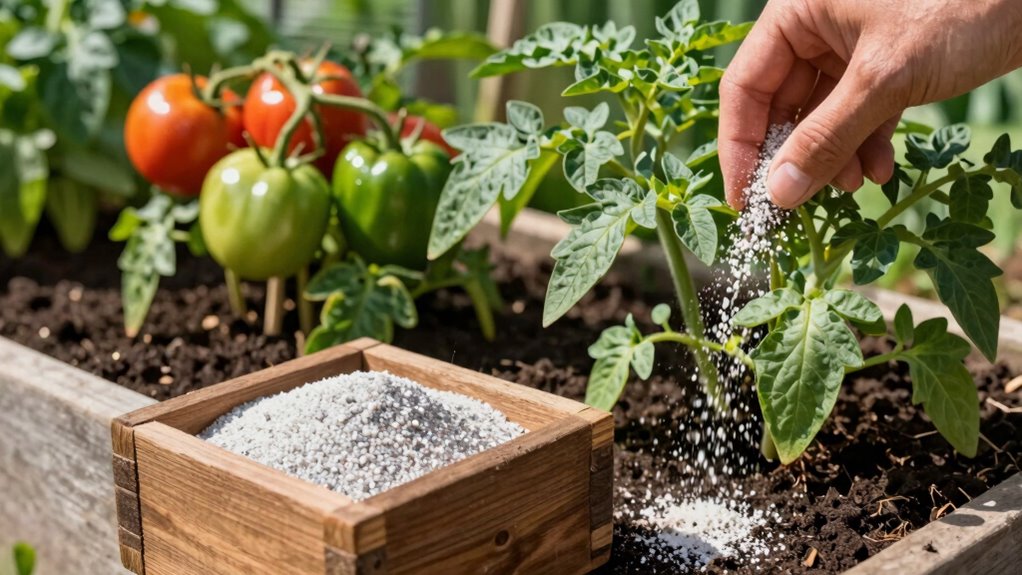
Potassium is an essential nutrient that plays a vital role in the health and productivity of your vegetable garden. It helps regulate water uptake, strengthens plant cell walls, and boosts disease resistance. But to maximize these benefits, you need to pay attention to your soil’s soil pH and how you apply fertilizer. Knowing the right balance of potassium and understanding how to incorporate it through fertilizer application can make a significant difference in your garden’s yield and overall health.
Potassium is vital for healthy plants, water regulation, and disease resistance—balance soil pH and fertilizer application for best results.
Your soil’s pH level directly affects how well plants can absorb potassium. If the soil is too acidic or alkaline, potassium availability decreases, leading to deficiencies that hinder plant growth. Ideally, you want your soil pH to be slightly acidic to neutral, around 6.0 to 7.0, for ideal nutrient uptake. Before adding potassium fertilizers, it’s wise to test your soil pH. If the pH isn’t within this range, adjusting it with amendments like lime or sulfur can improve nutrient availability, including potassium. This step guarantees your fertilizer application is effective, preventing waste and potential nutrient imbalances. Soil pH plays a crucial role in nutrient uptake, especially for essential elements like potassium.
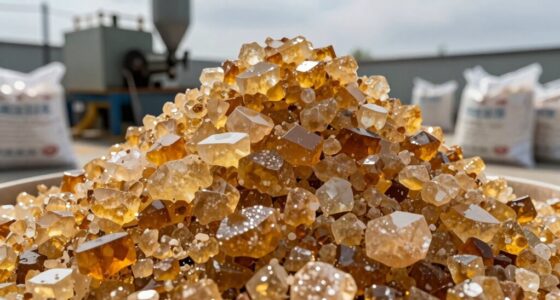
When it comes to fertilizer application, you have several options, including potassium sulfate, potassium chloride, and organic sources like compost or kelp meal. Each type has different rates of potassium content and solubility, so you should choose based on your soil’s needs and your garden’s specific crops. For example, potassium sulfate supplies both potassium and sulfur, making it suitable for soils needing both nutrients, while potassium chloride is a cost-effective choice but contains chloride, which some plants may not tolerate well. Organic options gradually release potassium, improving soil health over time. Additionally, understanding the nutrient balance in your soil helps you avoid deficiencies or excesses that could affect plant health. Proper application techniques are also essential to ensure even distribution and optimal uptake.
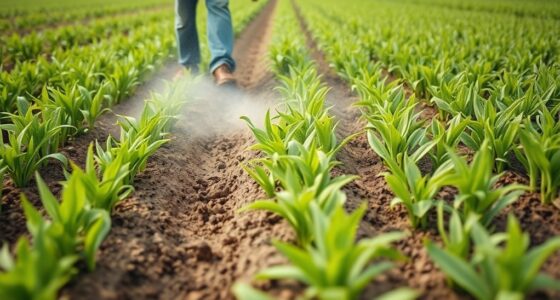
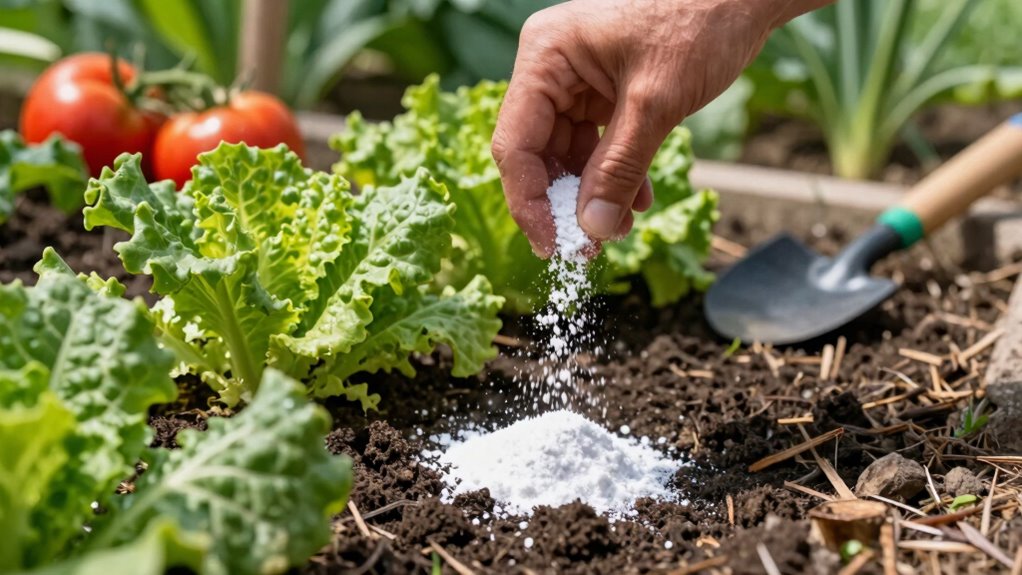
Applying fertilizer correctly is key to making sure your plants receive enough potassium without overdoing it. You can apply it as a side-dress, broadcast it across the soil, or incorporate it into the planting hole. The right timing depends on your crop’s growth stage; applying potassium early in the season helps establish strong roots, while later applications support fruiting and flowering. Be mindful of the recommended application rates, as excessive potassium can interfere with the uptake of other nutrients like magnesium and calcium.

Potassium Sulfate 0-0-50 for Vegetable Gardens, Essential Nutrient for Plant Growth, Soil Enrichment, Crop Yield Optimization (1 lb)
- Nutrient Composition: Provides essential 0-0-50 nutrients
- Soil Enhancement: Improves soil structure and nutrients
- Yield Optimization: Boosts vegetable crop yields
As an affiliate, we earn on qualifying purchases.
As an affiliate, we earn on qualifying purchases.
Frequently Asked Questions
Can Potassium Fertilizers Harm Beneficial Soil Microorganisms?
Potassium fertilizers can harm beneficial soil microorganisms if used excessively, disrupting the soil microbial balance. High fertilizer toxicity levels may kill or suppress helpful bacteria and fungi crucial for nutrient cycling and plant health. To avoid this, apply potassium fertilizers carefully, following recommended rates. Maintaining soil health guarantees beneficial microbes thrive, supporting robust vegetable growth and preventing long-term soil degradation. Proper use minimizes risks and promotes a healthy, balanced garden ecosystem.
How Often Should I Apply Potassium Fertilizers?
You should apply potassium fertilizers based on your plant nutrient needs, which are best determined through soil testing. Typically, applying every 4 to 6 weeks during the growing season works well, but adjust if soil tests show sufficient potassium. Consistent application guarantees healthy vegetable growth without overdoing it. Always follow fertilizer label instructions, and consider soil testing to tailor your potassium fertilizer schedule for maximum results.
Are There Organic Sources of Potassium Suitable for Vegetables?
Yes, there are organic sources of potassium suitable for vegetables. You can use organic compost, which naturally contains potassium and improves soil health. Mineral supplements like kelp meal or wood ash also provide potassium in a natural form. Incorporating these into your garden helps guarantee your vegetables get the potassium they need without synthetic fertilizers, promoting healthy growth and better yields.
What Signs Indicate Potassium Deficiency in Vegetables?
Imagine your garden’s vitality as a thriving symphony, and potassium deficiency symptoms are the discordant notes. You’ll notice yellowing leaf edges, browning tips, and weak stems—classic signs of vegetable nutrient imbalance. If these symptoms appear, it’s a signal that your plants lack potassium, crucial for growth and resilience. Addressing this promptly guarantees your vegetables stay healthy, vibrant, and productive, restoring harmony to your garden’s melody.
Can Excess Potassium Negatively Affect Vegetable Crop Health?
Yes, excess potassium can harm your vegetable crops. Potassium toxicity from over-fertilization causes excess nutrient buildup, which can interfere with the absorption of other essential nutrients like magnesium and calcium. This imbalance weakens plants, leading to leaf scorch, stunted growth, and poor yields. To prevent this, monitor soil levels carefully and avoid over-applying potassium fertilizers, ensuring your vegetables stay healthy and productive.

Kelp Bliss (2lbs) – Kelp Meal for Plants – Kelp Meal Organic Fertilizer
- Natural Kelp Fertilizer: 100% natural, sustainably harvested kelp meal
- Rich in Essential Nutrients: Provides potassium, nitrogen, and phosphorus
- Enhances Soil Fertility: Improves nutrient uptake and soil health
As an affiliate, we earn on qualifying purchases.
As an affiliate, we earn on qualifying purchases.
Conclusion
Think of your vegetable garden as a vibrant orchestra, each element playing a essential role. Potassium fertilizers act as the conductor’s baton, guiding your plants to grow strong, resilient, and flavorful. Without this indispensable leadership, the symphony of your garden may fall flat. By incorporating the right potassium sources, you’re ensuring every plant hits its crescendo, creating a harmonious and bountiful harvest. Remember, a well-tuned garden flourishes under the steady hand of informed care.

Rapitest Soil Test Kit for Gardens, Vegetables, Flowers and Lawns. USA designed and assembled soil tester completely, quickly and accurately measures/analyzes soil pH acidity and garden nutrients.
- Quick at-home soil test: Measures pH, N, P, K accurately
- Complete testing kit: Includes components for 20 tests
- Versatile testing: Tests multiple garden spots
As an affiliate, we earn on qualifying purchases.
As an affiliate, we earn on qualifying purchases.

Phosphorus and Potassium Fertilizer, Liquid Bloom Booster, 8 oz
- High Phosphorus & Potassium: Elevated nutrient levels for plant support
- Supports Root Development: Promotes strong, stable roots
- Enhances Flowering & Fruiting: Boosts blooms and fruit production
As an affiliate, we earn on qualifying purchases.
As an affiliate, we earn on qualifying purchases.