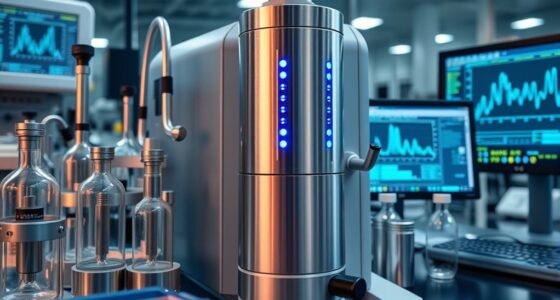
A rotary evaporator is a simple device that helps you remove solvents from mixtures quickly and safely. It works by spinning the mixture in a flask, increasing surface area and preventing bumps, while using a vacuum to lower boiling points. This makes evaporation easier at lower temperatures, protecting your samples. Proper temperature and vacuum control are key for efficiency and safety. Finish here if you want to explore the process in more detail.
Key Takeaways
- A rotary evaporator gently removes liquids from mixtures using spinning and cooling to collect solvents safely.
- It uses a rotating glass container to increase surface area and prevent boiling over.
- The system cools vapor back into liquid with a condenser for easy collection and reuse.
- It works best when kept at the right temperature and under a vacuum to make evaporation smoother.
- Regular maintenance ensures it runs efficiently and protects sensitive samples from damage.
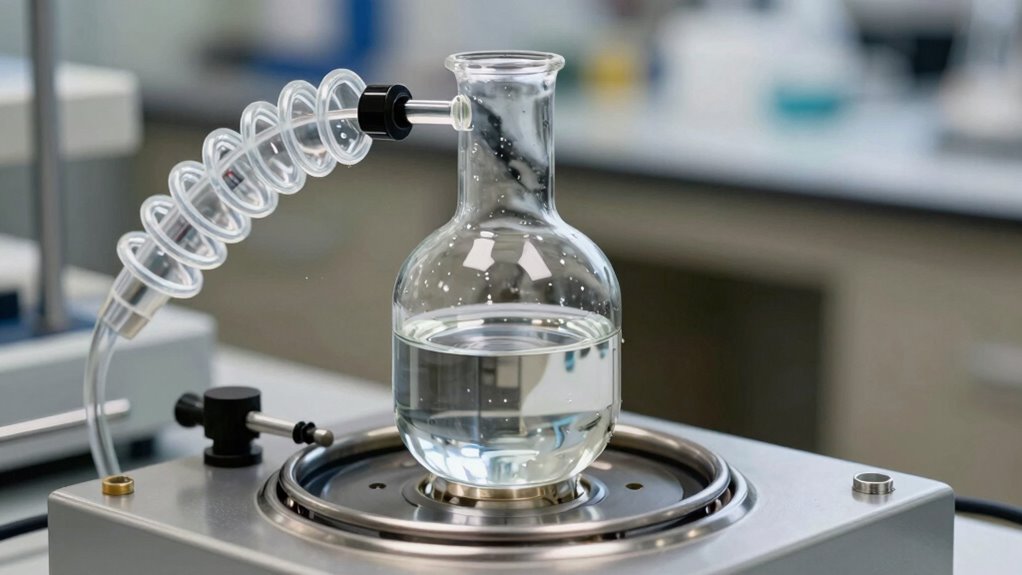
Have you ever wondered how scientists efficiently remove solvents from mixtures during laboratory work? It’s a common challenge, especially when you need to recover valuable solvents or prepare samples for analysis. That’s where a rotary evaporator, or “rotavap,” becomes an essential tool. Its main purpose is to gently and quickly evaporate solvents without damaging the sample. The key to its effectiveness lies in solvent recovery and temperature control. By carefully managing these aspects, you can recover solvents efficiently while protecting your samples from heat damage.
Solvent recovery is about reclaiming the solvent after it’s been separated from the mixture. Instead of wasting it, you can collect and reuse the solvent, saving money and reducing waste. The rotary evaporator makes this process straightforward. As you operate it, the mixture is placed in a rotating flask, which increases the surface area exposed to the vapor. This rotation also helps prevent bumping or boiling over. The system is connected to a condenser, which cools the vapor back into liquid form, allowing you to collect the solvent in a separate flask. This setup maximizes solvent recovery, making the process economical and environmentally friendly. Additionally, understanding the vacuum system is crucial for optimizing evaporation conditions and ensuring efficient solvent removal. Proper system maintenance also helps sustain its performance over time. Regular checks of seals and connections help maintain optimal vacuum levels and prevent leaks that could compromise the process.
Rotary evaporators efficiently reclaim solvents by increasing surface area and preventing bumping, making recovery economical and eco-friendly.
Temperature control is equally important. You need to keep the system at just the right temperature to evaporate the solvent efficiently without harming your sample. Most rotavaps have a water or oil bath that heats the flask. You set the bath temperature based on the solvent’s boiling point. Too hot, and you risk degrading your sample; too cold, and the evaporation slows down. Modern rotary evaporators come with precise temperature controls, so you can fine-tune the heat to match your specific solvent. This careful management ensures a smooth evaporation process that’s both safe and efficient. Maintaining consistent temperature regulation also helps to reduce energy consumption during operation. Proper calibration of temperature controls is essential for achieving reliable and repeatable results.
Another advantage of temperature control is that it helps prevent bumping — sudden, violent boiling that can cause spillage or sample loss. By gently heating the mixture and maintaining a steady temperature, you ensure a controlled evaporation. As the solvent vaporizes, the system’s vacuum reduces the boiling point, allowing evaporation at lower temperatures. This combination of vacuum and temperature regulation makes the process faster, safer, and more gentle on your sample. Proper sample protection is essential to maintain the integrity of sensitive compounds during evaporation. Regularly monitoring and adjusting these parameters ensures optimal performance and longevity of your equipment. Implementing a routine maintenance schedule can also help detect issues early and extend the lifespan of your rotary evaporator.
In essence, a rotary evaporator simplifies the complex task of solvent removal. By focusing on solvent recovery and maintaining precise temperature regulation, it helps you work more efficiently, save resources, and protect your samples. Whether you’re isolating compounds, purifying extracts, or recycling solvents, understanding these fundamental principles will make your work smoother and more effective.

10L Rotary Evaporator 110V Lab Evaporator Rotary with Double Condenser, 0-120rpm Speed,Heating Water/Oil Bath with Intelligent Temperature Control System, Manual Lifting lab Rotavap
Wide Application: Lab evaporator rotary is a device used in chemical laboratories for the efficient and gentle removal…
As an affiliate, we earn on qualifying purchases.
As an affiliate, we earn on qualifying purchases.
Frequently Asked Questions
Can Rotary Evaporators Be Used for Food Processing?
Yes, you can use rotary evaporators in food processing. They’re great for food dehydration, helping remove liquids without heat damage, and flavor extraction, allowing you to capture delicate aromas and tastes. You’ll find them useful for concentrating fruit juices or extracting essential oils from herbs. Just guarantee the equipment is suited for food-grade materials and proper safety standards, so your results are both effective and safe.
What Safety Precautions Are Necessary When Operating a Rotary Evaporator?
In the age of enlightenment, safety is paramount when operating a rotary evaporator. You should follow strict safety protocols, like wearing protective gear and guaranteeing proper ventilation. Always check for leaks, secure glassware, and monitor temperature and pressure to prevent hazards. Hazard prevention is your top priority, so never bypass safety steps. By staying vigilant and adhering to these precautions, you safeguard yourself and ensure smooth, safe operation.
How Energy-Efficient Are Rotary Evaporators?
Rotary evaporators are quite energy-efficient when you optimize their operation. You can reduce energy consumption by setting appropriate temperatures, using the correct solvent volume, and ensuring proper insulation. Regular maintenance also helps improve efficiency, preventing unnecessary energy waste. By focusing on efficiency optimization, you’ll lower power use, save on costs, and keep the evaporation process smooth. Overall, with proper handling, rotary evaporators can be a cost-effective, eco-friendly choice for your lab.
Are Rotary Evaporators Suitable for Small Laboratory Setups?
Rotary evaporators are perfect for small laboratory setups, and they’re more versatile than you’d believe. Their compact design fits easily on limited space, making them ideal for laboratory scale applications. You’ll appreciate how efficient they are for precise solvent removal without taking up much room. Whether working in a tight lab or a compact workspace, rotary evaporators deliver powerful performance, proving that size doesn’t limit their capability.
How Often Should the Equipment Be Maintained or Serviced?
You should follow a regular maintenance schedule for your rotary evaporator, typically every 6 to 12 months, depending on usage. Servicing frequency varies based on how often you operate it and the manufacturer’s recommendations. Keep an eye on seals, hoses, and the motor, and perform routine inspections. Proper maintenance guarantees peak performance and longevity, preventing breakdowns and costly repairs. Always consult your user manual for specific guidelines.

50L Rotary Evaporator, Cost-Effective 50L Rotary Evaporator, High Precision Lab Rotovap, Durable Design for Vacuum Evaporation, Solvent Recovery, Suitable for Universities, Research Institutes & Labs
✈50L Large Capacity & Practical Design: 50L large-capacity evaporation flask meets the needs of large-volume sample concentration and…
As an affiliate, we earn on qualifying purchases.
As an affiliate, we earn on qualifying purchases.
Conclusion
So, now you’re practically a rotary evaporator expert—who knew lab equipment could be so thrilling? Just remember, next time you’re “evaporating” your worries away, it’s all about the magic of spinning and vacuuming. No need to thank me; I’ve just saved you from a lifetime of boring science talk. Now go on, impress your friends with your newfound knowledge—just don’t forget, it’s all about the spin and a little science wizardry!
rotavap condenser and flask set
As an affiliate, we earn on qualifying purchases.
As an affiliate, we earn on qualifying purchases.

110V Laboratory Rotary Evaporator 2L Electric Vacuum Distillation System wtih 120mm Lift for Essential Oils & Lab,Precise Temperature Control
Parameters:1. Capacity of evaporating flask: 1L, Capacity of collecting flask: 1L,Vacuum: -0.098Mpa,Rotating speed: 0 – 120 R/min, Evaporating…
As an affiliate, we earn on qualifying purchases.
As an affiliate, we earn on qualifying purchases.