
Carbon dioxide meters matter in controlled environments because they help you maintain safe and healthy indoor air quality. By accurately monitoring CO₂ levels, you can identify when ventilation needs adjustment to prevent discomfort, odors, or health issues. They also enable you to optimize energy use by avoiding over-ventilation. Using these tools, you stay proactive in ensuring a safe environment. Keep exploring, and you’ll discover how these meters can substantially improve indoor air management.
Key Takeaways
- They ensure indoor air quality by detecting CO₂ buildup and triggering adequate ventilation.
- Real-time monitoring prevents health issues and discomfort caused by poor air circulation.
- They enable energy-efficient operation of HVAC systems through precise airflow adjustments.
- Continuous data helps optimize occupant comfort and safety in spaces with fluctuating occupancy.
- Investing in CO₂ meters allows proactive management and maintains a healthy indoor environment.
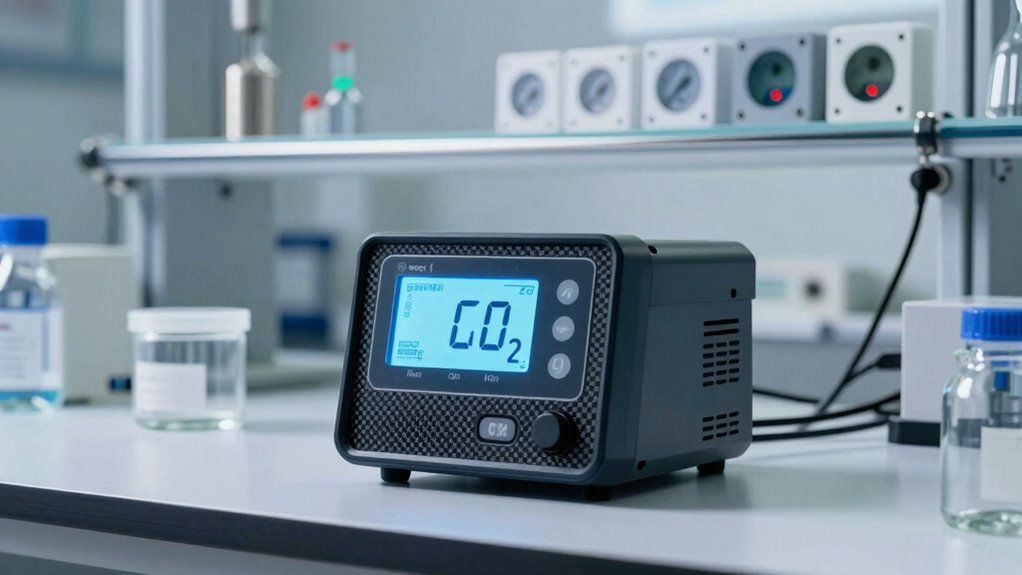
Monitoring carbon dioxide levels in controlled environments is crucial for maintaining indoor air quality and ensuring occupant safety. When CO₂ concentrations rise, it often indicates that the space isn’t ventilating properly, which can lead to discomfort, decreased productivity, and even health issues. By regularly checking CO₂ levels with reliable meters, you can actively manage ventilation and create a healthier environment. Proper indoor air quality isn’t just about comfort; it’s about safeguarding the well-being of everyone inside. Carbon dioxide meters serve as an indispensable tool in achieving this goal, especially in settings like offices, classrooms, laboratories, or any enclosed space where people gather.
Monitoring CO₂ levels is essential for safe, healthy indoor environments and optimal ventilation management.
You might not realize it, but poor ventilation directly impacts indoor air quality, leading to accumulation of pollutants, odors, and excess moisture. When CO₂ levels get too high, it’s a clear signal that ventilation needs adjustment. Using CO₂ meters allows you to monitor these levels in real-time, giving you the data necessary to fine-tune ventilation systems. This process, known as ventilation enhancement, ensures that fresh air circulates effectively, diluting indoor pollutants and maintaining a safe environment. Without a CO₂ monitor, you’d be relying on guesswork or outdated schedules, which can fall short of actual needs. With accurate readings, you can make informed decisions, preventing uncomfortable or hazardous conditions before they develop.
In addition, carbon dioxide meters help you establish baseline indoor air quality measurements. Knowing the typical CO₂ levels during different times of the day or activities allows you to identify patterns and adjust your ventilation accordingly. This proactive approach not only improves air quality but also enhances energy efficiency by avoiding over-ventilation. Instead of running fans or HVAC systems constantly at high settings, you can operate them based on real-time data, saving energy and reducing costs. In environments where occupant density fluctuates, such as conference rooms or classrooms, this targeted ventilation ensures everyone remains comfortable and safe without unnecessary energy expenditure. Understanding the importance of air quality monitoring can lead to healthier indoor environments for everyone.
Ultimately, investing in a reliable CO₂ meter is a straightforward way to take control of your indoor environment. It empowers you to maintain ideal indoor air quality through ventilation enhancement, preventing issues before they impact health or productivity. As you continuously monitor and adjust, you create a space where indoor air quality feels fresh, occupants stay comfortable, and safety is prioritized. Recognizing the significance of environmental monitoring helps ensure sustainable and healthy living practices.

LeeQinersw Air Quality Portable Indoor CO2 Meter Carbon Digital Color Display Ergonomic Placement Suitable for Camping Warehouse, Black
【Enhanced 】Grid semi transparent structure ensures circulation, resulting in more accurate detection of CO, CO2, , temperature, and…
As an affiliate, we earn on qualifying purchases.
As an affiliate, we earn on qualifying purchases.
Frequently Asked Questions
How Often Should Co₂ Meters Be Calibrated for Accuracy?
You should calibrate your CO₂ meters at least every six months to guarantee sensor accuracy. Calibration frequency depends on usage and environmental conditions; if you notice inconsistent readings, it’s best to calibrate more often. Regular calibration maintains measurement reliability, helping you monitor and control CO₂ levels effectively. Don’t forget, keeping your meter calibrated ensures it provides precise data for safe and ideal environment management.
Are There Specific Co₂ Meters Suitable for Small or Large Spaces?
Yes, there are specific CO₂ meters suited for different space sizes. For small spaces, compact, portable meters work well, offering quick readings and ease of use. For larger areas, you should select a more advanced, higher-capacity meter with multiple sensors to guarantee accurate monitoring across the entire space. Proper meter selection depends on your space size, making sure you get reliable measurements to maintain ideal air quality.
Can Co₂ Levels Impact Indoor Plant Growth Significantly?
Imagine your indoor garden thriving, leaves vibrant and lush—co₂ levels play a vital role here. If CO₂ drops too low, plant health suffers, growth slows, and your plants may stifle even in perfect sunlight. By monitoring CO₂ with meters, you guarantee ideal levels, directly impacting growth optimization. Proper CO₂ management keeps your plants energized, healthy, and flourishing, turning your space into a verdant sanctuary.
What Is the Typical Lifespan of a Co₂ Sensor?
A CO₂ sensor typically lasts around 2 to 5 years, depending on usage and maintenance. You should perform regular sensor maintenance, like cleaning and calibration, to guarantee accurate data. Proper data interpretation relies on knowing your sensor’s lifespan; if readings become inconsistent, it’s likely time for a replacement. Staying attentive to these factors helps you maintain reliable CO₂ levels, vital for ideal plant growth and controlled environment management.
How Do Environmental Factors Affect Co₂ Meter Readings?
Ever notice how your CO₂ meter readings jump unexpectedly? Poor air circulation and humidity effects can be the culprits, skewing results. When air isn’t evenly mixed, sensors might misread, making it seem like CO₂ levels are higher or lower than they really are. High humidity can also interfere with sensor accuracy, so keeping environments well-ventilated and controlling moisture helps make certain your readings stay reliable and precise.

Temtop CO2 Monitor Indoor air Quality Monitor Portable CO2 Meter, CO2, Temperature, Humidity Home, Office or School
Multifunctional Indoor Thermometer & CO2 Monitor: This all-in-one device continuously measures CO2 (400–5000 PPM), acts as a precise…
As an affiliate, we earn on qualifying purchases.
As an affiliate, we earn on qualifying purchases.
Conclusion
By now, you realize how vital carbon dioxide meters are for maintaining safe, healthy environments. They help you monitor and control air quality, ensuring comfort and safety for everyone inside. Can you afford to overlook such an essential tool that safeguards health and boosts productivity? Investing in a reliable CO₂ meter isn’t just smart—it’s necessary to keep your controlled environment ideal. Don’t wait until it’s too late; take action today for cleaner, safer air.

LINLAN Glass CO₂ Drop Checker Kit – Accurate Aquarium Monitor, Includes CO2 Monitoring Fluid, White Background Card and Clear Silicone Suction Cup, for Planted Aquarium
【Thick-walled wide-mouth glass design]】: Made of extra-thick borosilicate glass with a tilted opening for enhanced durability and a…
As an affiliate, we earn on qualifying purchases.
As an affiliate, we earn on qualifying purchases.

Amazon Smart Air Quality Monitor – Know your air, Works with Alexa
Know your air – An Alexa air quality monitor that makes it easy to understand what’s in your…
As an affiliate, we earn on qualifying purchases.
As an affiliate, we earn on qualifying purchases.