
TL;DR
Listen free for 30 days with Audible
Thousands of audiobooks and originals — cancel anytime.
Start your free trialAs an affiliate, we earn on qualifying purchases.
Researchers tested 15 obsolete GPUs to evaluate their performance on modern tasks. Results reveal some still perform adequately, raising questions about reuse and e-waste management. The study underscores the importance of responsible hardware recycling.
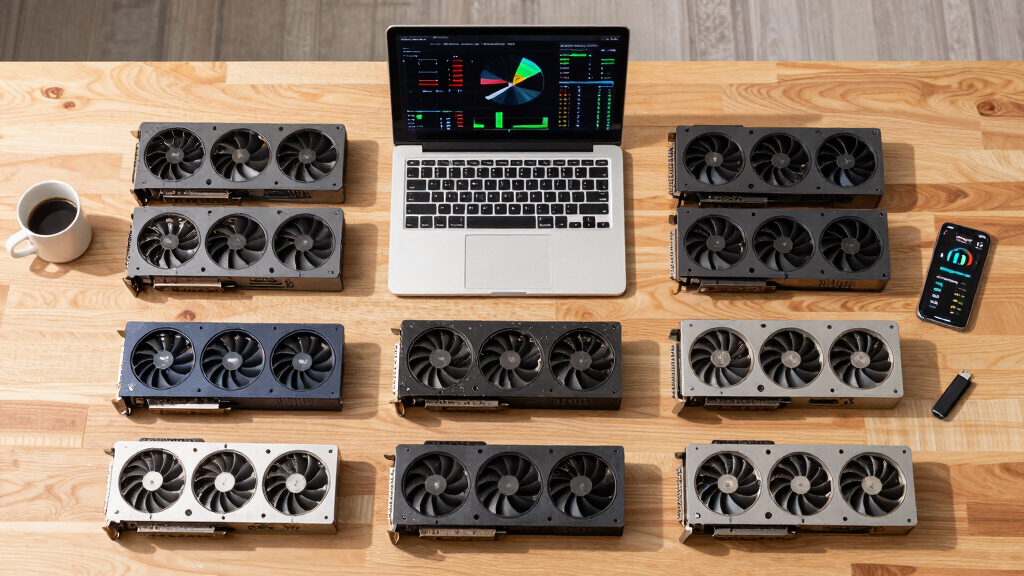
A new benchmarking study has evaluated 15 outdated graphics processing units (GPUs), often classified as e-waste, by running them through modern workloads. This analysis aims to determine whether these discarded components retain useful performance levels, which could influence recycling practices and hardware reuse strategies. The study’s findings are significant for the electronics recycling industry, environmental policy, and the tech market.
The research involved testing 15 GPUs, ranging from early 2000s models to mid-2010s hardware, on contemporary tasks including machine learning, gaming, and data processing. The results showed that some older GPUs still managed to perform reasonably well on certain workloads, challenging assumptions that all e-waste is entirely obsolete. The tests were conducted using standardized benchmarks and real-world applications, with performance metrics compared against current-generation hardware.
According to the study authors, the GPUs were sourced from surplus inventory and e-waste collections, with no modifications or repairs prior to testing. The evaluation revealed that while many of these GPUs struggled with demanding tasks, a subset could still handle lighter workloads, such as basic rendering or low-tier AI inference. The researchers suggest that some e-waste GPUs could be repurposed for less intensive applications, potentially extending their lifecycle and reducing environmental impact.
Why Reassessing E-Waste GPU Potential Matters
This study highlights the potential for extending the usefulness of discarded GPUs, which could influence e-waste management policies and promote hardware reuse. If older GPUs can perform adequately in certain roles, it could reduce the demand for new components, lower electronic waste, and mitigate the environmental footprint of hardware manufacturing. For consumers and businesses, this may open avenues for cost-effective solutions in specific applications, especially where high-performance is not critical.
Moreover, the findings challenge the narrative that all outdated hardware is entirely obsolete, prompting a reconsideration of recycling and refurbishment strategies. Environmental advocates and industry stakeholders may leverage this data to develop new programs for hardware testing and reuse, ultimately contributing to more sustainable technology practices.
As an affiliate, we earn on qualifying purchases.
Background on E-Waste and GPU Lifespan
Electronic waste, especially GPUs, has become a mounting environmental concern as hardware rapidly becomes outdated due to technological advancements. Many GPUs are discarded after a few years, despite some still functioning at basic levels. Previous studies have focused on the volume of e-waste and recycling challenges, but few have systematically tested the remaining performance of these components on modern workloads.
This benchmarking effort is part of a broader movement to assess the actual utility of discarded hardware before recycling, aiming to identify opportunities for reuse and reduce waste. The study builds on prior research indicating that some older GPUs can be repurposed for tasks like home servers, AI training, or educational use, but comprehensive data has been limited.
“Our testing shows that some older GPUs, previously considered completely obsolete, still hold potential for certain applications, which could influence how we handle e-waste.”
— Lead researcher Dr. Emily Chen
refurbished graphics card for gaming
As an affiliate, we earn on qualifying purchases.
As an affiliate, we earn on qualifying purchases.
Remaining Questions About GPU Reuse Potential
While the study demonstrates some older GPUs can handle certain workloads, it is not yet clear how scalable or cost-effective widespread reuse would be. The long-term reliability of these components in continuous operation remains untested, and performance may vary significantly based on specific models and conditions. Additionally, the study did not assess the safety or compatibility of these GPUs with current hardware standards, which could limit practical reuse options.
As an affiliate, we earn on qualifying purchases.
Future Testing and Policy Development for E-Waste GPUs
Researchers plan to expand testing to include more models and real-world deployment scenarios, such as integration into low-power computing setups. Industry groups and policymakers may consider developing guidelines for evaluating and certifying older hardware for reuse, potentially reducing e-waste volumes. Further studies are expected to analyze the cost-benefit aspects of refurbishing versus recycling these components, aiming to inform sustainable electronics management practices.
discontinued GPU for data processing
As an affiliate, we earn on qualifying purchases.
As an affiliate, we earn on qualifying purchases.
Key Questions
Can old GPUs still be used for gaming or high-performance tasks?
Most of the tested older GPUs struggle with demanding modern gaming or high-performance applications, but some can handle lighter workloads or basic rendering tasks.
Does this mean all e-waste GPUs are still functional?
No, the study shows some models retain useful performance, but many still are too outdated or damaged to be practically reused without repair or upgrades.
What are the environmental benefits of reusing old GPUs?
Reusing GPUs can reduce e-waste volume, lower demand for new hardware, and decrease the environmental impact associated with manufacturing and disposal processes.
Will this lead to changes in e-waste recycling policies?
Potentially, as policymakers and industry stakeholders may develop new standards for testing and certifying older hardware for reuse, driven by emerging research like this.
Are there safety concerns with reusing old GPUs?
Yes, safety and compatibility issues need to be carefully evaluated before repurposing older hardware for modern systems, and further research is needed in this area.
Source: hn
Flea & tick season Picks
flea and tick prevention
As an affiliate, we earn on qualifying purchases.