
Cation Exchange Capacity (CEC) measures how well soil can hold and exchange nutrients like calcium, magnesium, and potassium essential for plant growth. It depends on soil mineralogy, organic matter, pH, and texture, with higher CEC indicating better nutrient retention and fertility. Improving CEC involves adding organic amendments, managing pH, and practicing good soil care. Understanding these factors helps you optimize soil health—continue exploring to discover more ways to enhance your soil’s potential.
Key Takeaways
- Cation Exchange Capacity (CEC) measures soil’s ability to retain positively charged nutrients like calcium, magnesium, and potassium.
- Higher CEC indicates greater nutrient retention, reducing leaching and improving soil fertility.
- Soil mineralogy, texture, and organic matter content influence CEC levels.
- Soil pH affects CEC by altering the charge on exchange sites and nutrient availability.
- Regular soil testing helps assess CEC, guiding effective nutrient management and soil amendments.
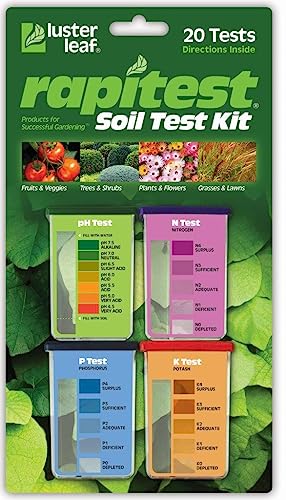
Rapitest Soil Test Kit for Gardens, Vegetables, Flowers and Lawns. USA designed and assembled soil tester completely, quickly and accurately measures/analyzes soil pH acidity and garden nutrients.
Quick, at home results for Soil pH, Nitrogen, Phosphorous and Potash Innovative and inexpensive soil test kit features…
As an affiliate, we earn on qualifying purchases.
As an affiliate, we earn on qualifying purchases.
What Is Cation Exchange Capacity and How Is It Measured?

What exactly is cation exchange capacity (CEC), and why does it matter in soil science? CEC measures how well soil can hold onto positively charged ions, or cations, like calcium, magnesium, and potassium. During soil testing, scientists determine the number of exchange sites—tiny negatively charged spots on soil particles—that attract and hold these cations. The more exchange sites a soil has, the higher its CEC, meaning it can retain more nutrients and supply them to plants over time. To measure CEC, labs usually introduce a known concentration of a specific cation and then analyze how much it’s retained or exchanged. This process helps you understand your soil’s ability to provide essential nutrients, impacting soil fertility and plant growth potential. Additionally, understanding the trustworthiness of AI models used in soil analysis can improve the accuracy of CEC measurements. Proper calibration and validation of these models are essential for ensuring reliable results, especially when employing advanced soil testing techniques.

Farmer’s Secret Soil Revitalizer (32oz) – Organic (OMRI Listed) Dirt Health Booster – Liquid Compost Soil Amendment – Activated Humic Acid – Great for Fall/Spring Application
Feed the soil not the plants – stimulate microbial activity in your soil and boost probability of success…
As an affiliate, we earn on qualifying purchases.
As an affiliate, we earn on qualifying purchases.
The Role of CEC in Soil Fertility and Plant Nutrition

Your soil’s CEC plays a vital role in retaining essential nutrients, making them available for plant use. A higher CEC improves soil fertility by holding more nutrients and reducing leaching losses. This, in turn, enhances plant nutrient uptake and supports healthier growth. Utilizing the right soil amendments can further optimize CEC levels for better crop yields. Additionally, soil pH can influence nutrient availability, making it an important factor to consider in conjunction with CEC.
Nutrient Retention Mechanisms
Cation Exchange Capacity (CEC) plays a crucial role in how soils retain and supply nutrients to plants. Your soil’s mineralogy determines the types and number of exchange sites available for nutrient retention. Soils rich in clay and organic matter have numerous exchange sites, enabling them to hold more cations like calcium, magnesium, and potassium. These exchange sites attract and temporarily hold nutrients, preventing leaching and making them accessible to plant roots. When plants need nutrients, they release hydrogen ions that displace nutrient cations from exchange sites, allowing root uptake. This nutrient retention mechanism ensures a steady supply of essential elements, supporting healthy growth. Additionally, the soil mineralogy influences the variety of cations that can be retained, thereby affecting overall soil fertility. The cation exchange capacity is also affected by soil pH, which influences the charge on exchange sites and the availability of nutrients. Understanding how soil mineralogy influences exchange sites helps you manage soils better for ideal plant nutrition and productivity. The capacity of a soil to perform this function is a key indicator of its potential for soil fertility and sustainable crop production.
Soil Fertility Enhancement
Because of its ability to hold and exchange nutrients, Cation Exchange Capacity (CEC) is a key factor in enhancing soil fertility. High CEC soils can retain essential nutrients, making them available for plant growth and reducing the risk of mineral leaching. However, soil acidity can influence CEC, as increased acidity often lowers nutrient retention, leading to decreased fertility. Managing soil pH helps maintain ideal CEC levels, ensuring nutrients stay available. By improving CEC, you promote a more fertile environment, supporting healthier plant development. This not only boosts crop yields but also minimizes nutrient loss through leaching. In turn, maintaining balanced soil acidity and CEC enhances long-term soil productivity, making your land more resilient and sustainable for future plant growth. Additionally, understanding spiritual practices like meditation can promote mental clarity and emotional well-being, further supporting sustainable agricultural practices through a balanced mind and environment. Recognizing the soil’s physical properties can also help optimize conditions for nutrient retention and plant health.
Plant Nutrient Uptake
The ability of soil to supply nutrients to plants depends heavily on its Cation Exchange Capacity (CEC), which acts as a reservoir for essential ions. A higher CEC allows soil to hold more nutrients, making them available for plant uptake. Soil acidity influences nutrient availability, as acidic conditions can reduce CEC and cause mineral fixation, where nutrients become less accessible to roots. When minerals are fixed, plants struggle to absorb crucial elements like potassium, calcium, and magnesium. Maintaining balanced soil pH improves CEC and minimizes mineral fixation, ensuring nutrients stay in forms plants can readily absorb. This balance promotes healthier plant growth and maximizes nutrient use efficiency, emphasizing the importance of managing soil acidity for ideal plant nutrition. Additionally, understanding the role of attention in soil management practices can enhance the effectiveness of nutrient application and improve overall soil health. Proper soil testing and monitoring can help farmers and gardeners optimize conditions for maximum nutrient availability and plant performance.

SONKIR Soil pH Meter, MS02 3-in-1 Soil Moisture/Light/pH Tester Gardening Tool Kits for Plant Care, Great for Garden, Lawn, Farm, Indoor & Outdoor Use (Green)
Kindly NOTE: This soil tester can not be applied to test pH value of any other liquid. If…
As an affiliate, we earn on qualifying purchases.
As an affiliate, we earn on qualifying purchases.
Factors That Influence CEC in Different Soil Types

Your soil’s texture greatly affects its CEC, with finer particles like clay holding more cations than sandy soils. Organic matter also plays a key role, as it increases the soil’s capacity to retain nutrients. Understanding how these factors vary helps you manage soil health more effectively. Additionally, the use of paint sprayers with appropriate tips and maintenance can improve the application of soil amendments, ensuring better distribution and effectiveness. Proper calibration of tuning equipment can further optimize soil treatment processes for different soil types. Recognizing the impact of soil amendments can also help tailor nutrient management strategies to improve soil fertility and crop yields.
Soil Texture Impact
Soil texture plays an essential role in determining cation exchange capacity (CEC) because different textures influence the amount of surface area available for holding cations. Fine-textured soils like clay have a high surface area due to their small particles, which boosts their CEC. Conversely, coarse textures such as sand have larger particles and less surface area, resulting in lower CEC. Your soil’s composition, including mineral content, affects its ability to retain nutrients. Soils rich in clay minerals and certain types of organic matter tend to have higher CEC because these minerals provide more charged sites for cations. Additionally, soil porosity influences how nutrients are retained and exchanged within different soil types. Understanding how soil texture impacts CEC helps you predict nutrient retention and availability, guiding effective soil management and fertilization strategies. Recognizing the relationship between particle size and surface area can further improve your interpretation of soil nutrient dynamics. Moreover, deforestation and land degradation can alter soil texture and reduce CEC, impacting soil fertility and sustainability.
Organic Matter Role
Building on the influence of soil texture, organic matter considerably affects cation exchange capacity (CEC) across different soil types. Organic matter contains negatively charged sites that attract and hold positively charged ions, increasing CEC. The higher the organic matter content, the greater the soil’s ability to retain nutrients. Microbial activity plays a vital role here, breaking down organic material and releasing nutrients that enhance soil fertility. Active microbes also help maintain and improve organic matter levels, ensuring sustained CEC. So, soils rich in organic matter typically have higher CEC, offering better nutrient retention and exchange. Conversely, soils with low organic content tend to have lower CEC, making nutrient management more challenging. By understanding this, you can better manage soil health for ideal plant growth.
Florasoul® Clay Breaker Soil Amendment (6.6 lbs) – Revitalize Heavy Clay & Compacted Soil – Plant-Based & Vegan Formula – Enhances Drainage & Aeration – for Gardens, Lawns & Flower Beds
SOFTENS HEAVY CLAY SOIL: Stop struggling with hard, compacted ground. Our Clay Breaker naturally improves soil structure, making…
As an affiliate, we earn on qualifying purchases.
As an affiliate, we earn on qualifying purchases.
The Relationship Between Soil Ph and CEC

The pH level of soil markedly influences its cation exchange capacity (CEC), affecting how well it can retain and supply nutrients to plants. When soil becomes too acidic or alkaline, it alters the availability of exchange sites, impacting overall CEC. Soil acidity, for instance, can reduce the number of negatively charged sites that hold cations, decreasing CEC. Conversely, adjusting soil pH through pH adjustment techniques can optimize the charge properties, enhancing nutrient retention. Maintaining a balanced pH helps guarantee the soil’s ability to hold essential nutrients, supporting plant health. By monitoring and managing soil pH, you can influence CEC positively, making nutrients more accessible and promoting better crop growth. Additionally, understanding the factors that influence soil properties can aid in developing more effective soil management practices. For example, certain amendments and practices can modify soil chemistry to improve CEC. Ultimately, understanding this relationship empowers you to improve soil fertility effectively.
How Cation Exchange Capacity Affects Nutrient Retention and Availability

Cation exchange capacity directly influences how well soil can retain and supply nutrients to plants. Soils with high CEC hold onto essential nutrients like potassium, calcium, and magnesium, making them more available for plant uptake. If your soil’s cec measurement is low, nutrients may leach away easily, reducing fertility. Using soil amendments such as organic matter can boost CEC, improving nutrient retention. When evaluating your soil, consider the cec measurement to determine necessary amendments. A favorable CEC level indicates better nutrient retention and overall soil health.
Methods for Improving CEC in Soil Management Practices

Improving soil CEC enhances nutrient retention and plant health, and there are several effective management practices to achieve this. Using soil amendments, especially organic amendments, increases the soil’s ability to hold nutrients. Incorporating compost, manure, or biochar adds humus, which boosts cation exchange sites. Applying organic amendments regularly helps maintain and enhance CEC over time. Additionally, avoiding excessive tillage preserves soil structure and organic matter, supporting higher CEC. You can also adopt crop rotation and cover cropping to build organic matter naturally. Finally, minimizing synthetic fertilizer use prevents soil acidification, which can lower CEC. These practices work together to improve soil quality, making nutrients more available and promoting healthier plant growth.
Interpreting CEC Values for Better Soil and Crop Management

Understanding your soil’s CEC values provides valuable insights into its nutrient-holding capacity, guiding better management decisions. If your soil has a high CEC, it can retain more nutrients, reducing the need for frequent soil amendments. Low CEC soils, however, may require more frequent additions of organic matter or specific soil amendments to improve nutrient retention. When planning crop rotation, consider crops that thrive in soils with your CEC level to optimize nutrient use and minimize leaching. For example, legumes can enhance soil fertility in low CEC soils, while high CEC soils support nutrient-demanding crops. Regularly interpreting CEC helps you tailor your practices, ensuring your soil remains fertile and productive while reducing fertilizer waste and environmental impact. Using appropriate headphones can also help you monitor soil conditions more effectively during fieldwork or soil analysis procedures. Incorporating innovative sound design techniques, such as digital sound synthesis, can improve the accuracy of soil sensor alerts or data collection processes.
Common Misconceptions About Cation Exchange Capacity

Many people assume that a high Cation Exchange Capacity (CEC) automatically means your soil is rich in nutrients or that it requires less fertilization. However, this isn’t always true. A high CEC indicates the soil’s ability to hold cations, but it doesn’t guarantee nutrient availability or soil health. Misunderstanding this can lead to ineffective soil remediation or poor agricultural applications.
High CEC does not necessarily mean nutrient-rich or less fertilization needed.
- High CEC soils may still need tailored fertilization strategies
- CEC doesn’t reflect soil pH or organic matter quality
- Soil remediation efforts focus on more than just CEC values
- CEC alone doesn’t determine a soil’s suitability for specific crops
Understanding these misconceptions helps optimize nutrient management and ensures sustainable soil use.
Frequently Asked Questions
How Does Soil Texture Influence Cation Exchange Capacity?
You might wonder how soil texture affects cation exchange capacity, and it largely depends on soil mineralogy and particle size. Fine-textured soils, like clay, have smaller particles and more surface area, which increases their cation exchange capacity. Conversely, sandy soils with larger particles have less surface area, reducing their ability to hold cations. So, your soil’s mineralogy and particle size directly influence its cation exchange capacity, impacting nutrient retention and availability.
Can CEC Levels Predict Long-Term Soil Health?
You might wonder if CEC levels can predict long-term soil health. While higher CEC indicates better soil nutrient retention and can improve fertilizer efficiency, it doesn’t guarantee overall soil health. Factors like organic matter, pH, and microbial activity also play essential roles. So, monitoring CEC helps you manage nutrients effectively, but it’s just one part of evaluating your soil’s long-term vitality and productivity.
What Is the Impact of Organic Matter on CEC?
Organic matter considerably impacts cation exchange capacity (CEC) by increasing soil organic content. When you add soil organic matter, it enhances nutrient retention, allowing soils to hold onto essential nutrients more effectively. This improves soil fertility and structure, making it easier for plants to access nutrients. As a result, your soil’s ability to exchange cations strengthens, supporting healthier plant growth and sustainable soil management.
Are There Crop-Specific CEC Requirements?
While soils may have similar CEC levels, crop-specific nutrient needs vary greatly. You should tailor soil amendments to meet each crop’s unique requirements, ensuring ideal growth. For instance, high-value vegetables often demand higher nutrient retention, requiring soils with increased CEC. By adjusting your soil amendments accordingly, you enhance nutrient availability, supporting healthy crops. Always consider the crop nutrient demands to match your soil’s CEC, maximizing yields and sustainability.
How Frequently Should CEC Be Tested for Optimal Management?
You should test your soil’s Cation Exchange Capacity (CEC) at least every 2 to 3 years to guarantee ideal management. Regular testing helps you decide when to apply soil amendments, which improve nutrient retention and availability. If you’re growing specific crops or noticing nutrient deficiencies, more frequent testing might be necessary. Keeping track of CEC helps you adjust fertilization practices and maintain healthy soil for better crop yields.
Conclusion
Just like a skilled banker manages your savings, understanding and improving your soil’s CEC guarantees your plants thrive. Think of it as opening the treasure chest of nutrients, much like alchemy turning soil into gold. By mastering CEC, you hold the key to healthier crops and richer harvests. Don’t let misconceptions or overlooked factors hold you back—embrace this knowledge and watch your soil’s true potential unfold, transforming your garden into a fertile paradise.