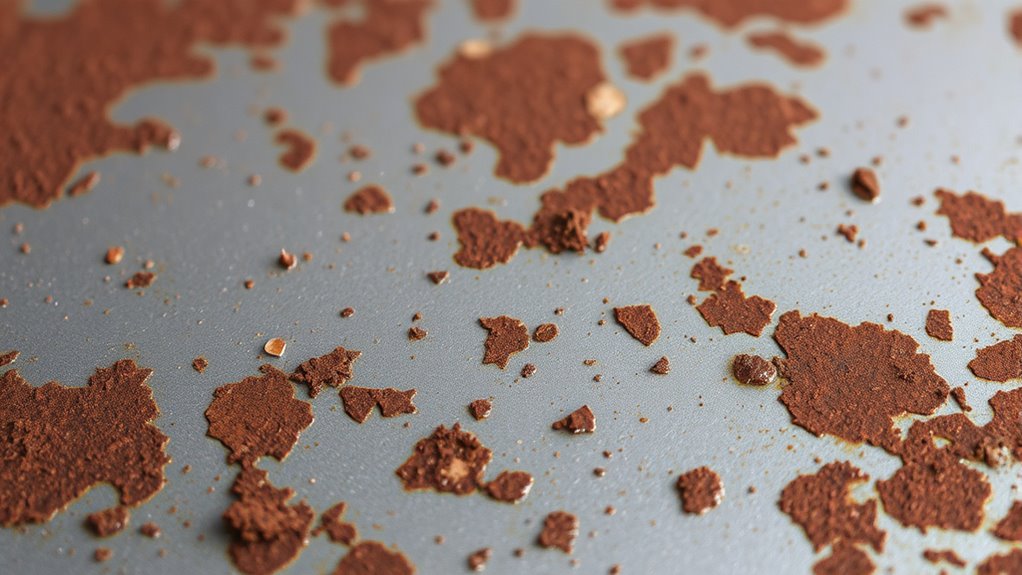

Metal rusts because it reacts with moisture and oxygen in the environment, forming iron oxide that weakens its structure over time. When water acts as an electrolyte, it speeds up the chemical process, leading to flaky, reddish-brown corrosion. Exposure to rain, humidity, or saltwater can accelerate rusting. To understand how to prevent this damage and protect your metal objects, keep exploring the causes and solutions.

Prime made for students and young adults
- Fast, free delivery for dorm and study essentials
- Prime Video and Amazon Music included
- Member-only deals
Key Takeaways
- Rust forms when metal reacts with moisture and oxygen in the environment.
- Water acts as an electrolyte, facilitating electron transfer that accelerates corrosion.
- Iron oxide creates a flaky, reddish-brown coating that weakens the metal.
- High humidity and saltwater environments speed up the rusting process.
- Protective coatings prevent moisture and oxygen contact, reducing rust formation.

Rusting of metal occurs when iron or steel reacts with moisture and oxygen in the environment, leading to the formation of rust. This process is a chemical change driven by the corrosion process, which gradually weaken and damages metal structures. When you leave metal exposed to rain, humidity, or even dew, you initiate a series of reactions that cause rust to develop. The moisture acts as an electrolyte, facilitating the transfer of electrons between iron atoms and oxygen molecules. As a result, iron oxide forms, creating that characteristic reddish-brown flaky coating we recognize as rust.
Rust forms when moisture and oxygen react with iron or steel, creating a flaky reddish-brown coating.
Understanding why metal rusts involves recognizing the role of the corrosion process. It’s not just a surface issue; it’s a chemical transformation that penetrates the metal, compromising its integrity over time. The presence of water accelerates this process, especially in environments with high humidity or saltwater, which increase electrical conductivity and hasten rust formation. You can slow down or prevent rusting by employing protective coatings. These coatings act as barriers, shielding the metal from moisture and oxygen, effectively interrupting the corrosion process. Paints, oils, galvanization, and specialized rust-inhibiting layers are common solutions that create a protective film over the metal surface.
Applying protective coatings is essential if you want to extend the lifespan of iron or steel objects. For outdoor structures, machinery, or tools, a good coating can mean the difference between years of service and rapid deterioration. When you properly coat your metal surfaces, you prevent water and oxygen from coming into direct contact with the metal, thereby stopping rust before it begins. Additionally, some protective coatings contain inhibitors that actively slow down the corrosion process if moisture manages to breach the initial barrier.
Research into sound vibrations and their influence on cellular regeneration suggests that certain frequencies could potentially be used to develop innovative anti-corrosion technologies in the future. However, for now, physical barriers like protective coatings remain the most reliable way to combat rust. It’s important to understand that coatings aren’t foolproof. Over time, they can chip, crack, or wear away, exposing the metal underneath. Regular maintenance and touch-ups are vital to keep the protective barrier intact. If you notice signs of rust or damage to the coating, it’s best to address the issue immediately to prevent further corrosion. By understanding the corrosion process and applying effective protective coatings, you can considerably reduce the chances of your metal rusting and extend its service life. Keeping metal protected from moisture and oxygen is your best defense against rust, and using proper coatings is a practical way to achieve this.
As an affiliate, we earn on qualifying purchases.
Frequently Asked Questions
Can Rusting Be Completely Prevented?
Rusting can’t be completely prevented, but you can markedly slow down corrosion processes with proper rust prevention techniques. Applying protective coatings like paint or sealants creates a barrier against moisture and oxygen, which are essential for rust formation. Regular maintenance, such as cleaning and inspecting metal surfaces, also helps. While total prevention isn’t guaranteed, these methods greatly extend the life of metal and reduce the chances of rust developing.
Does Rusting Weaken Metal Structures Over Time?
You bet it does; rusting can markedly weaken metal structures over time. As the corrosion process progresses, it leads to metal degradation, making materials more brittle and prone to failure. When rust takes hold, it’s like a slow poison, gradually compromising the strength of your structures. Regular maintenance and protective coatings can help, but if left unchecked, rust will continue to eat away, putting safety at risk.
Are Some Metals More Resistant to Rusting?
Some metals are more resistant to rusting because of their corrosion mechanisms and metal composition. For example, stainless steel contains chromium, which forms a protective oxide layer that prevents rust. Aluminum naturally develops a thin, protective oxide coating, making it more resistant. You’ll find that metals like gold and platinum are highly resistant due to their inert nature. Understanding these factors helps you choose metals suitable for specific environments and durability needs.
How Long Does It Take for Metal to Rust?
Rust can appear faster than you think, like a thief in the night. Typically, it takes days to weeks for metal to rust, depending on environmental factors. The oxidation process is accelerated by moisture, salt, and temperature, which all act as catalysts. If you leave metal exposed outdoors, expect rust to form within a few weeks; indoors, it might take months or even years.
Can Rusted Metal Be Restored to Original Condition?
Yes, you can restore rusted metal to its original condition. Start with rust removal by scrubbing off loose rust and applying rust converters or removers. Afterward, perform corrosion repair by sanding and priming the surface. You might also need to repaint or seal the metal to prevent future rust. With proper rust removal and corrosion repair, your metal can look and function like new again.
As an affiliate, we earn on qualifying purchases.
Conclusion
So, next time you see metal rusting, remember it’s not just about moisture and oxygen. Some experts suggest that rusting might actually be a natural way for metals to protect themselves by forming a barrier. While this theory adds depth, it’s still debated among scientists. Regardless, understanding the process helps you prevent rust and extend your metal’s life. Keep an eye on environmental factors—your metal’s health depends on it.
As an affiliate, we earn on qualifying purchases.
galvanized steel protective coating
As an affiliate, we earn on qualifying purchases.
As an affiliate, we earn on qualifying purchases.
Halloween Picks
halloween
As an affiliate, we earn on qualifying purchases.