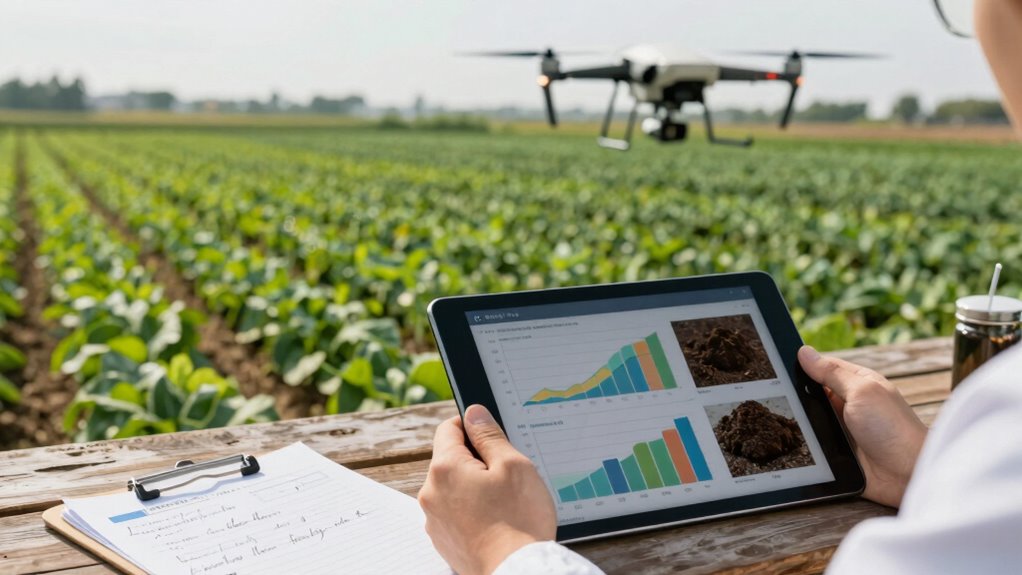

To think like an agronomist, focus on analyzing soil, crop, and environmental data together. Look beyond just numbers—consider soil fertility, pH, organic matter, and moisture levels, and how they interact with weather, pests, and crop management. Ask what trends tell you about soil health and productivity over time. By connecting these factors, you’ll develop deeper insights into what’s impacting yields and how to improve them. Keep exploring to uncover more strategies.

Prime made for students and young adults
- Fast, free delivery for dorm and study essentials
- Prime Video and Amazon Music included
- Member-only deals
Key Takeaways
- Consider the interaction of soil physical properties, nutrient levels, and environmental factors when analyzing data.
- Look for long-term trends to assess soil health, fertility, and the effectiveness of management practices.
- Identify underlying causes of low yields by examining soil tests, crop history, and weather patterns.
- Use data to inform targeted interventions like amendments, fertilization, or crop rotation.
- Connect soil, crop, and environmental data to develop sustainable, holistic management strategies.
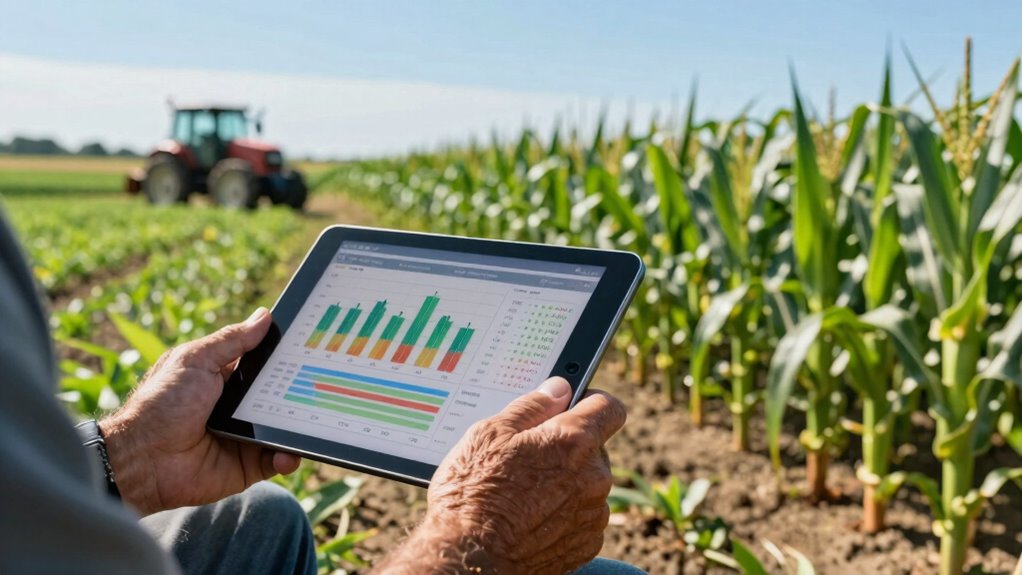
When you’re analyzing agricultural data, thinking like an agronomist means more than just reading numbers; it’s about understanding the story behind the data. Soil fertility, for instance, isn’t just a label on a report—it’s the foundation of healthy crops and high yields. When examining soil test results, you shouldn’t only look at nutrient levels but also consider how these nutrients interact with each other and with the soil’s physical properties. A nutrient deficiency might seem straightforward, but as an agronomist, you recognize that soil pH, organic matter content, and moisture levels influence nutrient availability. If soil fertility is low, you know it’s likely to limit crop yield, so your goal is to identify the root causes and recommend targeted interventions, like adding organic amendments or adjusting fertilization practices. Additionally, understanding the specific home soil conditions can help tailor more effective management strategies.
Understanding soil interactions is key to boosting crop health and yields through targeted, sustainable interventions.
As you analyze crop yield data, you start to see patterns that tell you more than just how much was harvested. You think about what factors influenced these results—was it soil fertility, weather conditions, pest pressures, or irrigation practices? If a field’s crop yield is below expectations, you don’t jump to conclusions; instead, you dig deeper. Maybe the soil’s nutrient levels were insufficient, or perhaps the timing of fertilizer application was off. You consider the entire cropping system and environment, recognizing that yield is a complex outcome of multiple interacting factors. This holistic perspective helps you develop precise strategies to improve future yields. Recognizing the importance of data analysis allows you to better interpret these interconnected factors and make informed adjustments.
Furthermore, thinking like an agronomist means understanding the significance of data over time. One season’s results are useful, but trends across years reveal more about the soil’s health and productivity. If soil fertility has declined over consecutive seasons, you know it’s time to implement more sustainable practices—like crop rotation or cover cropping—to rebuild soil quality. You interpret data not just as static figures but as indicators of underlying processes. Recognizing the importance of soil testing can reveal critical insights into nutrient dynamics and soil health, guiding more effective management decisions. Tracking these trends over multiple seasons allows for accurate forecasting and better planning for future crop cycles. Keeping track of these trends allows for better long-term planning and sustainability in agriculture. This approach allows you to make informed decisions, whether it’s adjusting fertilizer rates, selecting better crop varieties, or modifying irrigation schedules.
In essence, you’re constantly connecting the dots—linking soil fertility with crop yield and the broader environment—so you can optimize productivity while maintaining soil health. Your goal is to use data as a tool for understanding the intricate web of factors affecting agricultural success. Thinking like an agronomist means turning raw numbers into actionable insights, ensuring each decision promotes sustainable growth and maximizes crop yields.
Popular right now

Hisense E6 Cinema Series 55-Inch 4K UHD QLED Smart Fire TV

Shark PowerPro Reveal Plus Cordless Stick Vacuum, Charcoal (IZ376H)

Dyson Ball Animal 2 Total Clean Upright Vacuum Cleaner, Blue
As an affiliate, we earn on qualifying purchases.
Frequently Asked Questions
What Skills Are Essential for Thinking Like an Agronomist?
To think like an agronomist, you need strong analytical skills and a solid understanding of crop rotation and soil fertility. You should interpret data effectively, recognizing how different crops impact soil health and productivity. Critical thinking helps you evaluate soil conditions and make informed decisions. Additionally, staying curious and continuously learning about sustainable practices guarantees you develop well-rounded expertise, ultimately improving crop yields and environmental health.
How Do Agronomists Prioritize Data Analysis?
You prioritize data analysis by focusing on soil health and crop yield to make informed decisions. First, you identify key indicators like nutrient levels and moisture content. Then, you compare data over time to spot trends, helping you adjust practices for better soil management and higher yields. This approach guarantees you’re making data-driven choices that optimize farm productivity while maintaining sustainable soil health.
What Common Mistakes Do Agronomists Avoid When Interpreting Data?
You avoid common mistakes by considering soil variability and pest impact carefully. Don’t jump to conclusions based solely on one data point; instead, analyze patterns across different soil types and pest pressures. Be cautious about ignoring environmental factors that influence crop health. Double-check your data sources and make certain you’re not overlooking subtle indicators. This approach helps prevent misinterpretation and leads to more accurate, actionable insights in your agronomic decisions.
How Does Environmental Context Influence Data Interpretation?
Imagine data as a garden, where soil variability and climate factors are the weather and terrain shaping what grows. Environmental context influences your interpretation by highlighting that soil differences and climate conditions can skew or clarify results. You must see beyond raw numbers, understanding that these factors act like a painter’s brushstrokes, coloring the data’s story. Recognizing this helps you make more accurate, context-aware decisions for *best* crop management.
What Tools Do Agronomists Use for Data Analysis?
You use tools like soil testing and crop modeling to analyze data effectively. Soil testing provides precise nutrient and pH information, helping you make informed decisions about fertilization. Crop modeling predicts growth patterns and yield outcomes based on environmental data. Together, these tools enable you to interpret complex data accurately, optimize crop management, and improve productivity by understanding how different variables interact in your field.
Conclusion
By adopting an agronomist’s mindset, you learn to interpret data critically and contextually. For example, if you notice a sudden drop in crop yield, instead of jumping to conclusions, consider soil health, weather patterns, or pest presence. Think like an agronomist by asking questions and analyzing trends. This approach helps you make smarter decisions, ultimately leading to healthier crops and better yields. Keep practicing, and you’ll develop a keen eye for valuable insights in your data.